Why Venus Became A Hellish Planet
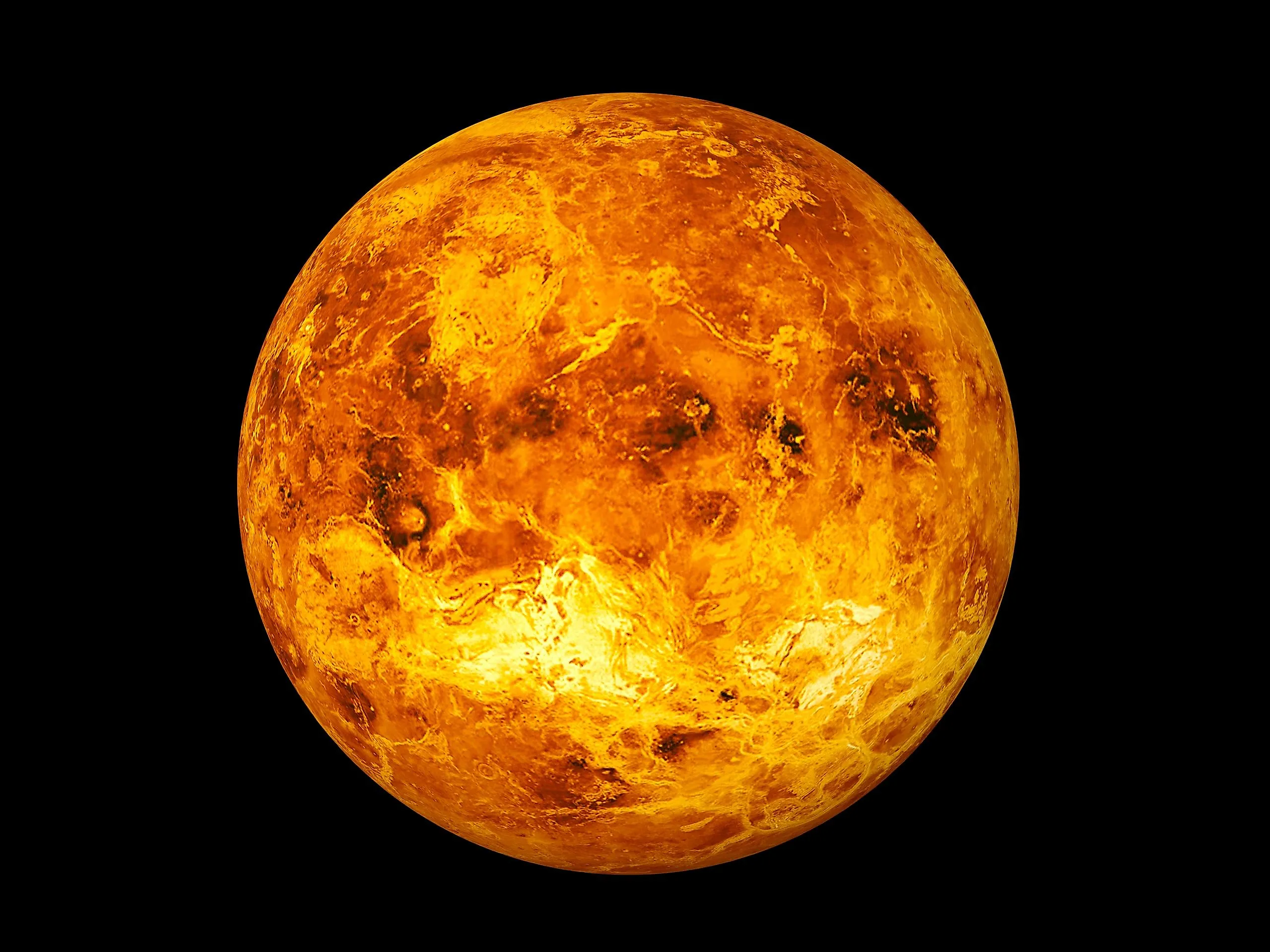
Venus is the hottest planet in the solar system and its surface runs hot enough to melt lead. It sits second from the Sun and swings closer to Earth than any other planet. Scientists call it Earth's twin because the two worlds share nearly the same size and rocky build. A dense carbon dioxide atmosphere traps solar heat and bakes the ground to roughly 872 degrees Fahrenheit. Clouds of sulfuric acid drift above thousands of volcanoes. This is the story of how a world so much like ours became a furnace.
Unbearable Heat

Heat is the first thing that makes Venus deadly to humans. Death Valley National Park holds Earth's record for the highest air temperature ever reliably measured, at 134 degrees Fahrenheit. Venus is the hottest planet in the solar system, with a surface temperature that reaches around 872 degrees Fahrenheit. That is hot enough to melt lead. Water boils at 212 degrees Fahrenheit, and since the human body is roughly 60% water, an unprotected visit to the surface would be fatal within moments.
Venus runs this hot because its dense atmosphere traps heat in a runaway greenhouse effect. The planet also has an "electric wind," an electric field strong enough to strip the components of water from its upper atmosphere. Evidence suggests Venus once held water, likely in surface oceans billions of years ago. The intense heat evaporated that water, and researchers find almost none left in the atmosphere today. The prevailing theory is that this electric field flung the water particles into space, which accounts for where most of Venus' original water went.

Suppose heat were not a factor, and engineers built a suit that could shrug off those temperatures. Even then, the heat would be only the first obstacle. The atmosphere itself presents the next one.
Dangerous Atmosphere

Standing on the surface of Venus, the atmospheric pressure would feel like sitting under 3,000 feet of water on Earth. Reaching the surface at all means first passing through the atmosphere. That atmosphere is mostly carbon dioxide, and the clouds are made of sulfuric acid. Acid rain falls with a pH of about negative 1.2, more corrosive than the battery acid found in a car, which sits closer to a pH of 0.8. The surface heat is so extreme that the acid rain boils away before it ever lands.
The winds are another hazard. In the upper atmosphere, they reach about 224 miles per hour, faster than the strongest sustained winds inside a Category 5 hurricane on Earth.
At the surface, the wind nearly stops, so a visitor might feel only a faint breeze. That calm holds until you consider what covers the ground below.
Massive Volcanoes

Volcanoes cover the surface of Venus, which has more of them than any other planet in the solar system. Scientists have identified over 1,600 major volcanoes, and the smaller ones remain uncounted, with estimates that the total could exceed 100,000. In 2023, researchers analyzing radar images from NASA's Magellan mission found the first direct evidence of a volcanic eruption on Venus, spotting a vent that changed shape and grew between two passes in the early 1990s.
Venus is also home to Maat Mons, the tallest volcano on the planet and its second-highest mountain, rising about 5 miles above the surrounding plains. It takes its name from Ma'at, the Egyptian goddess of truth and justice. Lava flows spread from its base, and its caldera complex measures roughly 16 by 18 miles (26 by 30 km) across. That is slightly larger than the footprint of Chicago.
We know how deadly Venus is even without setting foot there, and that knowledge comes from decades of orbiters and probes sent to study the planet.
Trying to Land on Venus
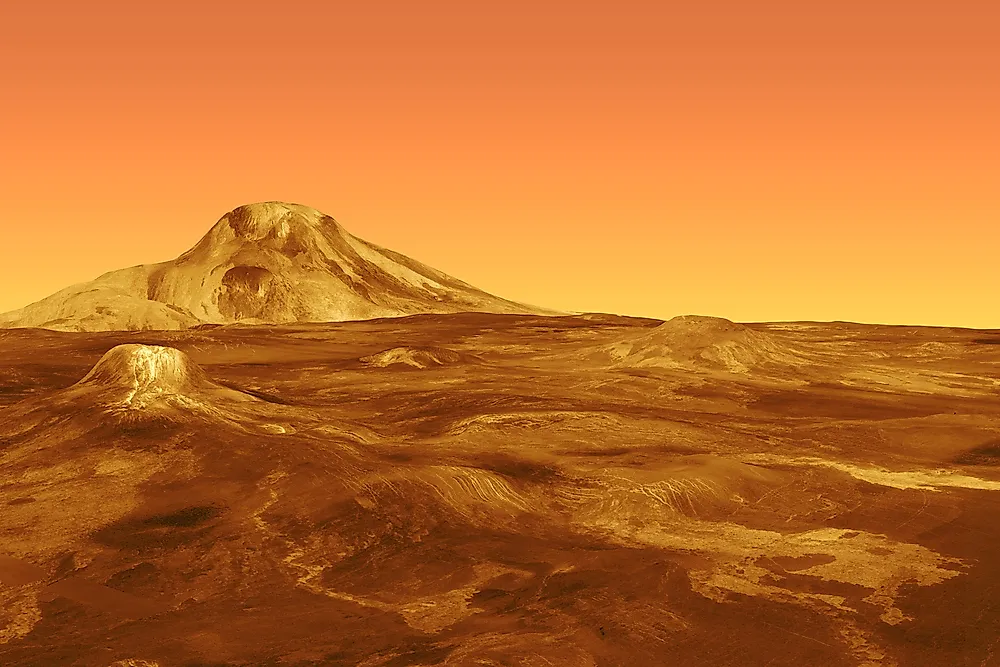
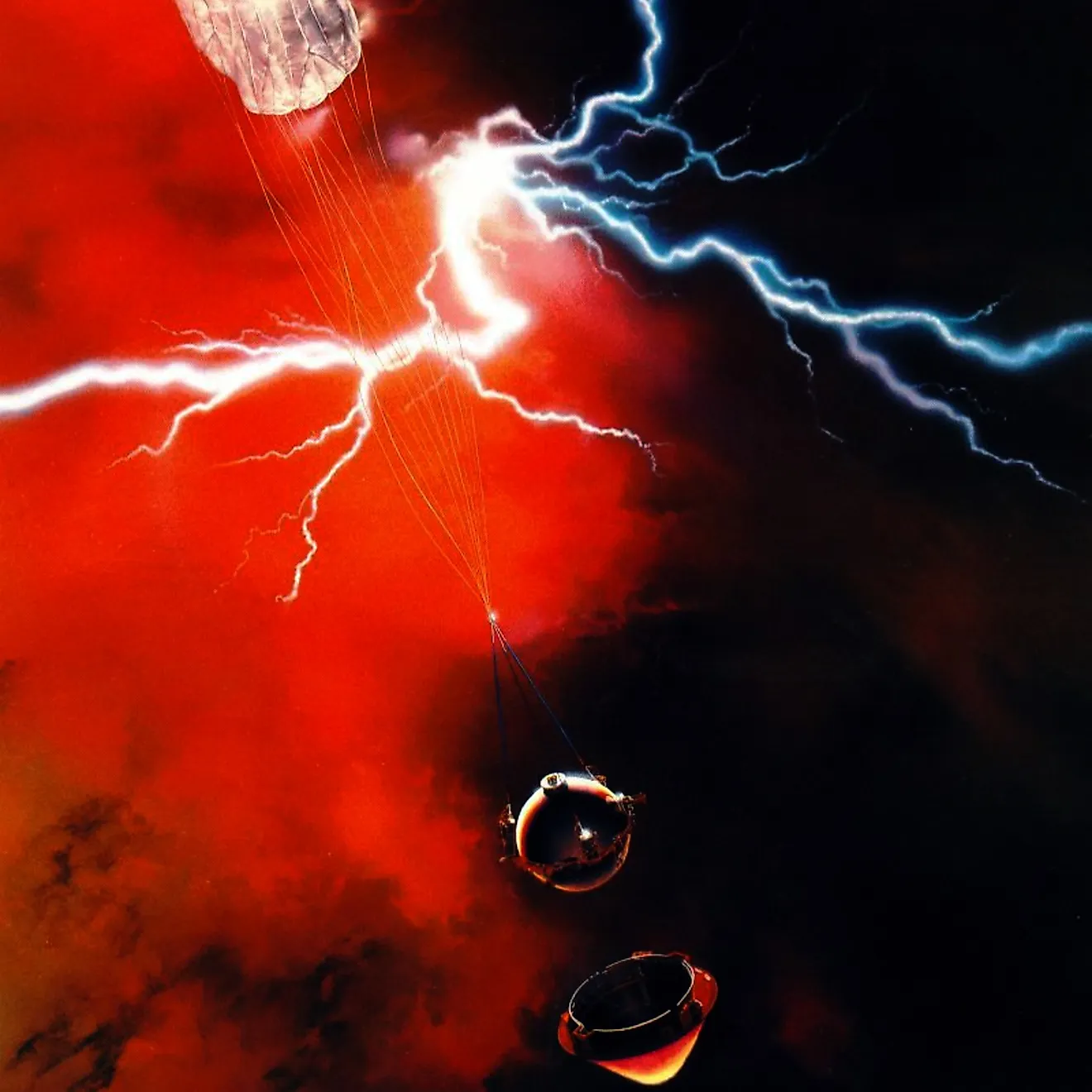
Humanity has landed on Venus, though every success was brief. The Soviet Union sent its Venera probes to Venus through the 1960s, 1970s, and 1980s, and several reached the surface. Few kept working for long once they arrived. The longest-lived lander transmitted for just over two hours before the conditions destroyed it.
The Akatsuki spacecraft, built by the Japan Aerospace Exploration Agency (JAXA), launched in 2010 but missed its first chance to enter orbit when its main engine failed. It looped around the Sun and succeeded on a second attempt in 2015. Akatsuki went on to observe Venus for nearly a decade. JAXA lost contact with the orbiter in 2024, and after more than a year of recovery attempts, declared the mission over in 2025.

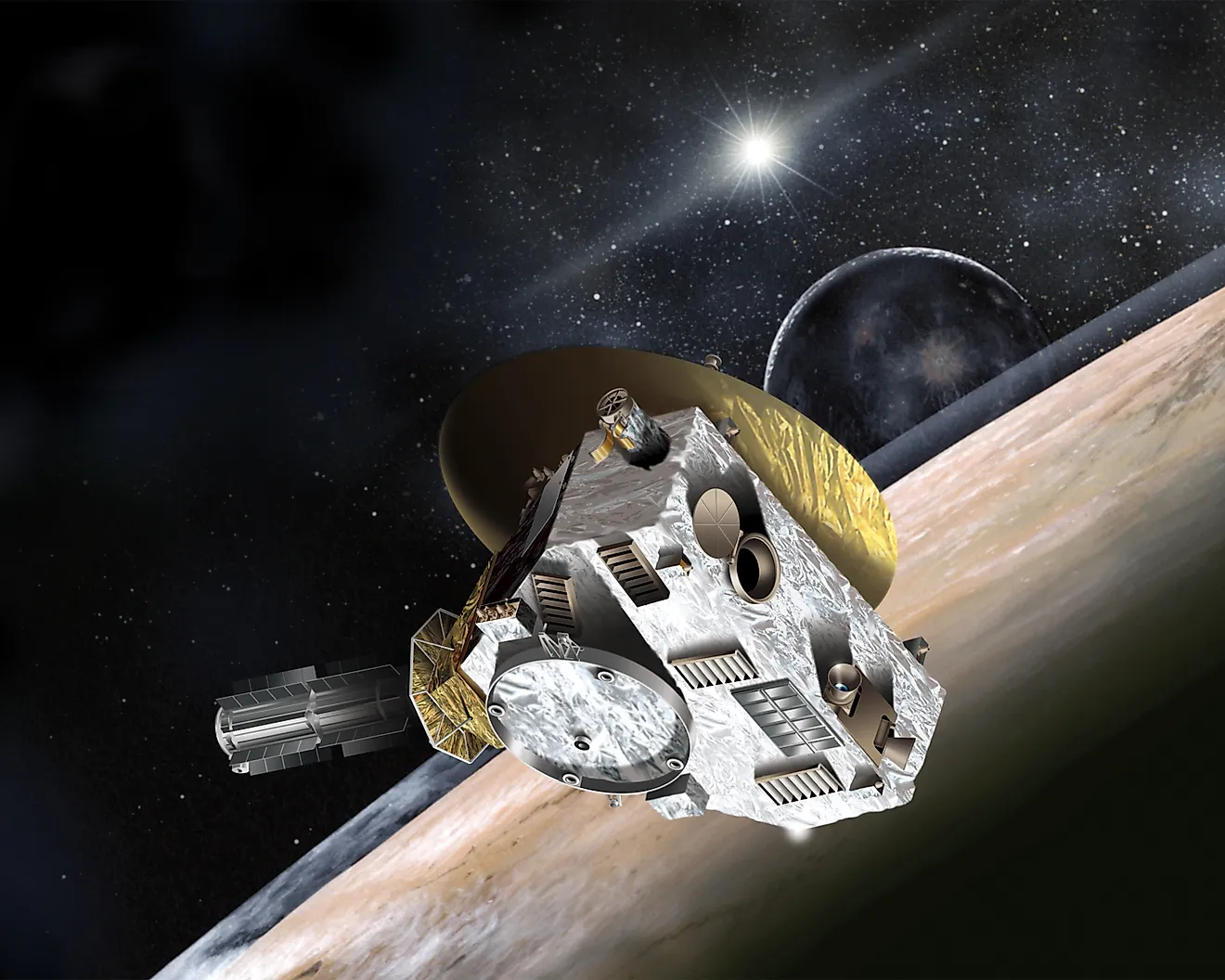
Several new spacecraft are in development to learn more about the planet. NASA plans to launch the DAVINCI mission around 2030, short for Deep Atmosphere Venus Investigation of Noble gases, Chemistry, and Imaging. The mission will study the origin, evolution, and current state of Venus. The spacecraft will first study the planet's clouds during flybys, and about two years in, it will release a probe to sample the atmosphere directly. That probe is designed to descend toward the surface while collecting data and photographing the ground below.

Alongside DAVINCI, NASA intends to launch an orbiter called VERITAS no earlier than 2031. The name is the Latin word for truth and also stands for Venus Emissivity, Radio Science, InSAR, Topography, and Spectroscopy. VERITAS aims to reveal how the paths of Venus and Earth diverged over time. The orbiter will produce the first global, high-resolution topographic and radar maps of Venus. It will also make the first measurement of the planet's core, determining whether it is solid or liquid.
The European Space Agency (ESA) has its own mission, EnVision, planned for 2031. Its goals mirror those of VERITAS, probing why Venus and Earth evolved so differently and studying the planet from its inner core to its upper atmosphere.
Russia's space agency, Roscosmos, plans the Venera-D mission for around 2036. Venera-D is designed to trace the evolution of Venus and to sharpen our understanding of how terrestrial planets develop their climates. For all its lethal conditions, Venus draws scientists worldwide who want to decode its history, because understanding it helps explain the other rocky worlds, including our own.
A Bleak Venus Vacation
Venus shares much of Earth's makeup, yet it remains far from habitable. A suit that could handle the pressure, the heat, the winds, and the volcanoes still leaves a grim destination. Venus turns once on its axis every 243 Earth days, and a single trip of the Sun across its sky takes 117 Earth days. Its axis has almost no tilt, so the planet has no seasons. A visitor standing on the surface would see a desolate plain of active and dormant volcanoes under thick, sunless cloud. Venus may be a world best appreciated from a distance.