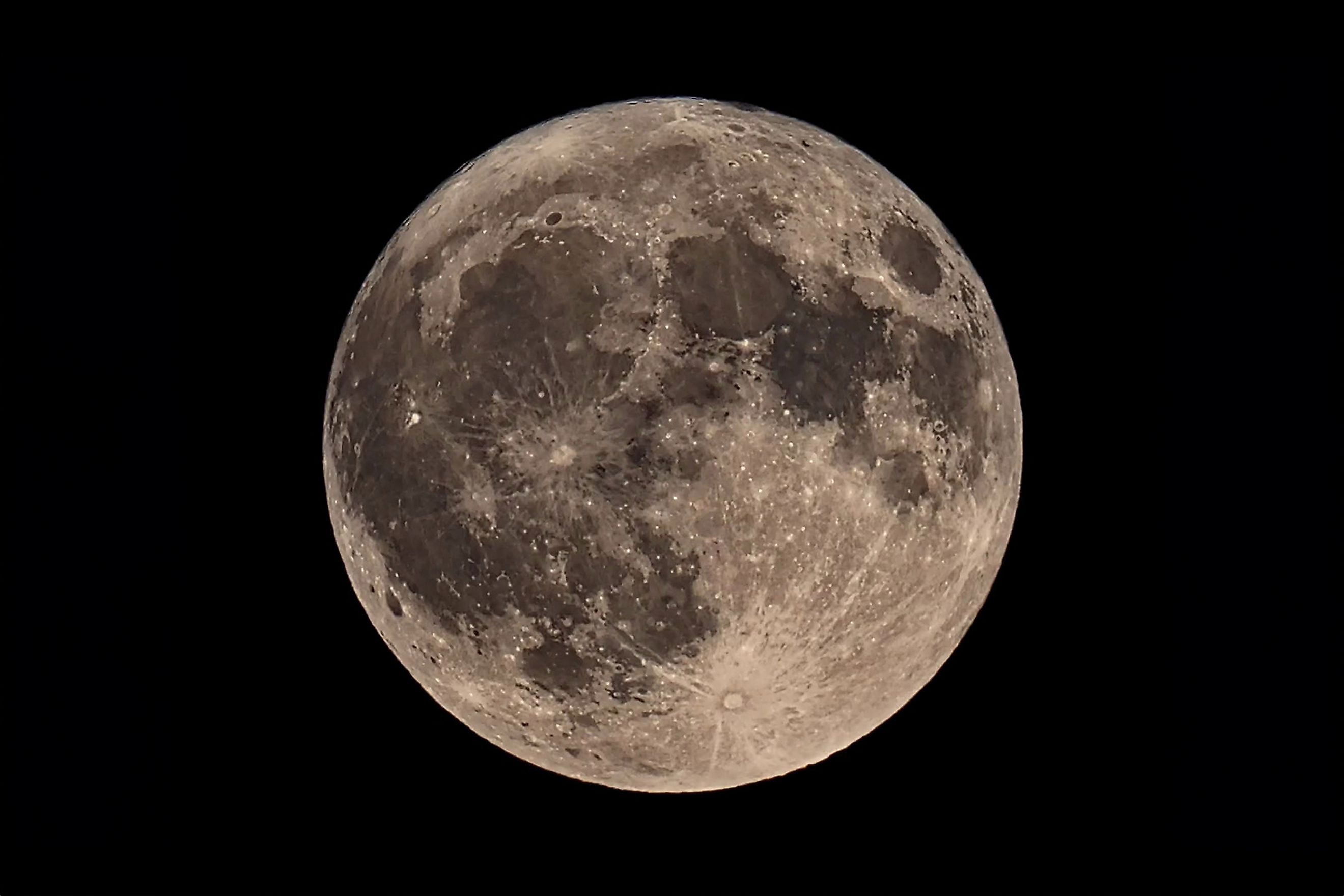
Could the Moon Ever Drift Away?
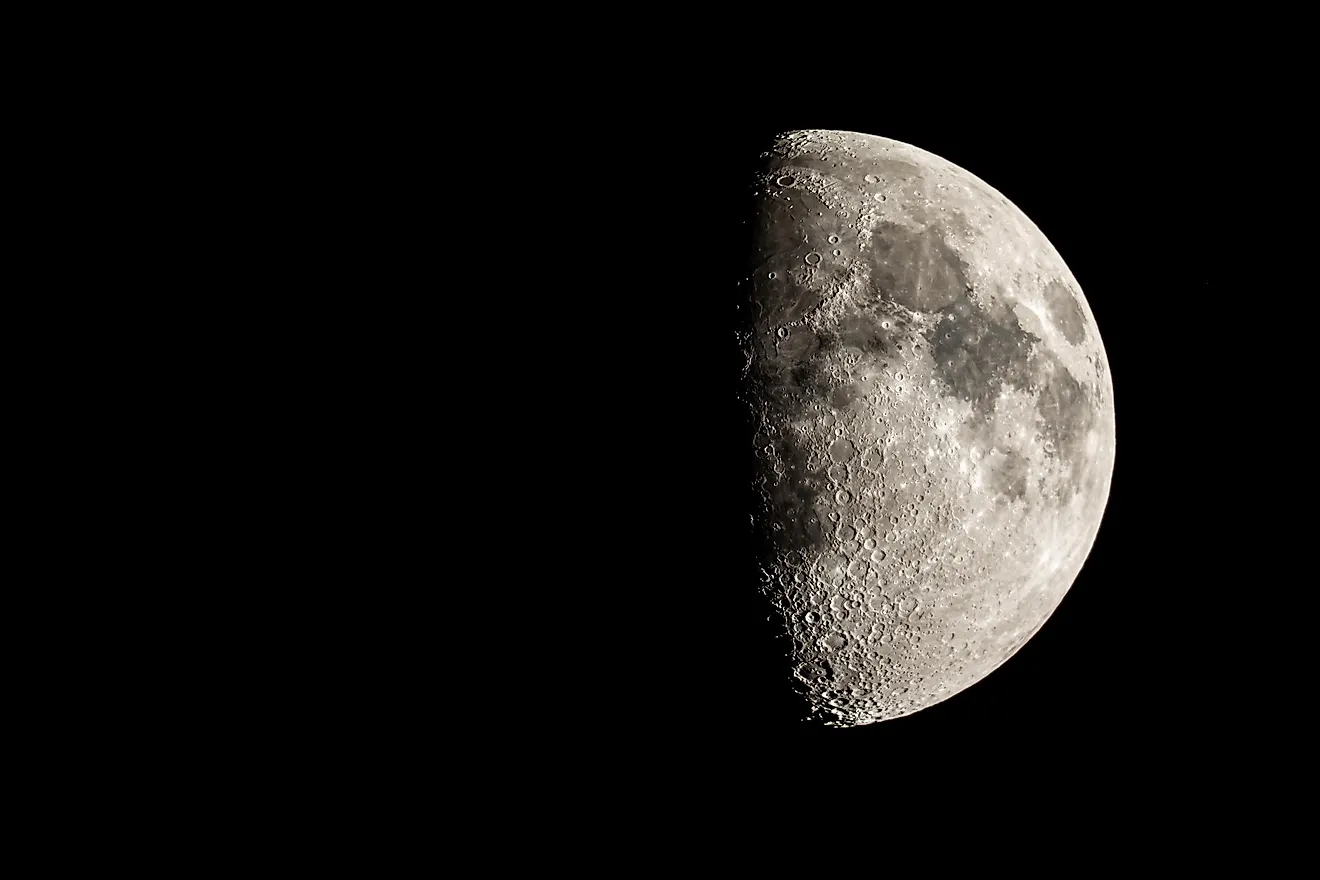
Every year, the Moon drifts about 1.5 inches (3.8 centimeters) farther away from Earth. That is roughly the rate at which human fingernails grow. Across millions of years of geological time, this slow retreat has stretched an ancient day on Earth from roughly three to six hours to 24. It has also reshaped the planet's tides, and set a clock ticking toward the end of total solar eclipses.
The moon is not going to drift a significant distance in any individual's lifetime, but it is moving ever slightly away from Earth. Understanding why reveals a great deal about how the Earth-Moon system works.
How the Moon Got Here in the First Place

About 4.5 billion years ago, a Mars-sized celestial body named Theia collided with early Earth. The impact vaporized rock and launched an enormous cloud of debris into orbit. Over time, that material clumped together and formed the Moon.
According to Theia impact theory of the moon's formation, the Moon initially settled into an orbit somewhere around three to four Earth radii away from Earth, which translates to 11,890 to 15,852 miles (19,135 to 30,339 kilometers). This is compared to its current averaged orbiting distance of about 238,855 miles (384,399 kilometers), a gap all seven other planets in the solar system could fit inside of.
The sky back then with the earliest positioning of the Moon would have looked nothing like it does today. The Moon would have appeared vastly larger than it does now, and its massive gravitational pull generated ancient ocean tides hundreds of feet higher than anything experienced today.
That early Moon was already beginning to drift away. The same physics that shaped its formation also set the terms of its slow departure.
Why the Moon is Moving Away

The mechanism driving the Moon's recession is tidal friction, and it works like a slow-motion energy transfer between the two bodies. The Moon's gravity pulls on Earth's oceans, drawing water toward it and creating the high tides on the side of the planet facing the Moon. Because Earth rotates faster than the Moon orbits, water is always carried a little ahead of the Moon's position before it has time to fall back. This offset causes the Moon's gravity to pull backward on the water ahead of it. That forward tug is what accelerates the Moon ever slightly outward in its orbit.
The energy for that outward push comes directly from Earth's rotation. NASA describes the result clearly: the same interaction that causes the Moon to drift outward also creates friction that slows Earth's spin, resulting in longer days. About 70 million years ago, near the end of the Cretaceous period, a day on Earth lasted about 23.5 hours. Today it runs about 24. Scientists at NASA's Goddard Space Flight Center have confirmed that tidal friction increases the length of Earth's day by approximately 2.3 milliseconds per century.
Across hundreds of billions of years, that is how a three to six-hour Earth day became a 24-hour cycle. To add one full, single hour to the 24-hour day at the current rate, humanity will have to wait another 156,521,700 years.
What Changes as the Moon Drifts

Because gravitational pull is dictated entirely by distance, the Moon's steady retreat means the gravitational force it exerts on the planet is actively weakening with every passing second. This movement of the Moon away from the Earth has observable consequences that have already accumulated for billions of years, and will continue to in ways worth understanding.
The most immediate effect is on the tides. As the Moon moves farther from Earth, its gravitational pull on the oceans weakens slightly. Tides are already much smaller than they were in Earth's early history. Four billion years ago, tidal forces were about 22 times stronger than they are today. Tidal pools, which may have helped concentrate the chemical building blocks of early life through repeated cycles of flooding and evaporation, formed in a world with far greater tidal ranges than today.
The drift also fundamentally threatens one of the most awe-inspiring celestial phenomena to view from Earth: the total solar eclipse. Right now, total solar eclipses are possible because of a happenstance of universal coincidence. The Sun is about 400 times wider than the Moon, but also about 400 times farther from Earth. From the surface of our planet, the two appear nearly identical in size. That alignment is what allows the Moon to perfectly cover the Sun's disk during a total eclipse.
As the Moon drifts outward and appears smaller in the sky, that alignment will eventually fail. According to NASA's Space Place, once the Moon moves approximately 14,600 miles (23,496 kilometers) farther from Earth than it is today, total solar eclipses will no longer be possible. That extra distance required to permanently end total solar eclipses is equivalent to flying a jet a little over halfway around the entire circumference of the Earth. At the current rate, that will happen in roughly 600 million years.
Will the Moon Ever Actually Leave?

This is where the physics becomes especially intriguing: the Moon is moving farther away, but it is not leaving Earth entirely. As the Moon moves outward, its orbital speed actually decreases and its orbital period lengthens. Earth's rotation is simultaneously slowing.
According to NASA, about 50 billion years from now, if the Earth-Moon system were left undisturbed, they would reach a state called mutual tidal locking. The Moon is already tidally locked to the Earth, which means it rotates once on its own axis each time it orbits Earth. This causes only one side of the Moon to face the planet. When mutually tidal locked, the Earth's rotation would slow until one side of the planet permanently faces the Moon, mirroring how the Moon already keeps the same face pointed toward Earth. Once mutual tidal locking occurrs, a one-day rotation of the planet would equal 47 modern Earth days.
At that point, the gravitational exchange driving the recession would stabilize, and the Moon would stop drifting. The National Radio Astronomy Observatory confirms that the Moon will stop moving away from Earth in roughly 15 billion years under current projections, although the 50 billion year figure from NASA accounts for the full mutual tidal locking endpoint.
However, it is likely none of this will happen on a timeline the Solar System will allow. The Sun is expected to exhaust its hydrogen fuel and expand into a red giant in approximately five billion years. At that scale, it will likely engulf Mercury, Venus, and possibly Earth itself. As the Sun expands, its outer atmosphere will create drag on both Earth and the Moon, gradually pulling the Moon's orbit inward rather than allowing it to continue drifting outward. According to current models, if the Moon's orbit approaches close enough to Earth, it will eventually cross what is called the Roche limit, the distance at which Earth's own tidal forces would overcome the gravity holding the Moon together. As a result, the Moon would break apart.
A Partnership Still in Motion
What makes the Earth-Moon system remarkable is how much the Moon's 1.5-inch (3.8-centimeter) annual drift has shaped Earth. It slowed Earth's rotation from about a four-hour day to the 24-hour cycle we live by today, moderated the tides that may have concentrated the chemical ingredients of early life, and created the conditions for total solar eclipses, a phenomenon considered rare among known planetary systems.
The Moon is drifting, but not leaving entirely. No natural process within the current Earth-Moon system produces enough energy to sever that bond. What eventually will end the partnership is not distance but the Sun itself, which will expand and alter the system from the outside long before the Moon has any chance of wandering free. In the meantime, the drift continues at the pace of a growing fingernail, and the Earth keeps slowing, one fraction of a millisecond per century at a time.