Inside the Coldest Place in the Universe
The distinction of 'coldest place in the universe' belongs to the Boomerang Nebula, a glowing cosmic cloud located 5,000 light-years away from Earth in the constellation Centaurus. At 1 Kelvin, or -458°F (-272°C), it is colder than the average temperature of space itself. Our universe is filled with a faint, residual glow from the Big Bang known as the cosmic microwave background, a phenomenon that keeps the average temperature of space at -454°F (-270 °C). The Boomerang Nebula is even colder than that, making it the coldest known natural object ever discovered.
It can be difficult to appreciate just how extraordinary this is, and to imagine a place that is colder than the natural cooling of the universe itself. Scientists have created and maintained temperatures approaching absolute zero in a laboratory setting, but this requires advanced technology and is impossible to sustain indefinitely. The Boomerang Nebula is a natural occurrence, spanning trillions of miles. To this day, it remains one of the strangest and most fascinating objects ever found in deep space.
Discovering a Boomerang in Deep Space

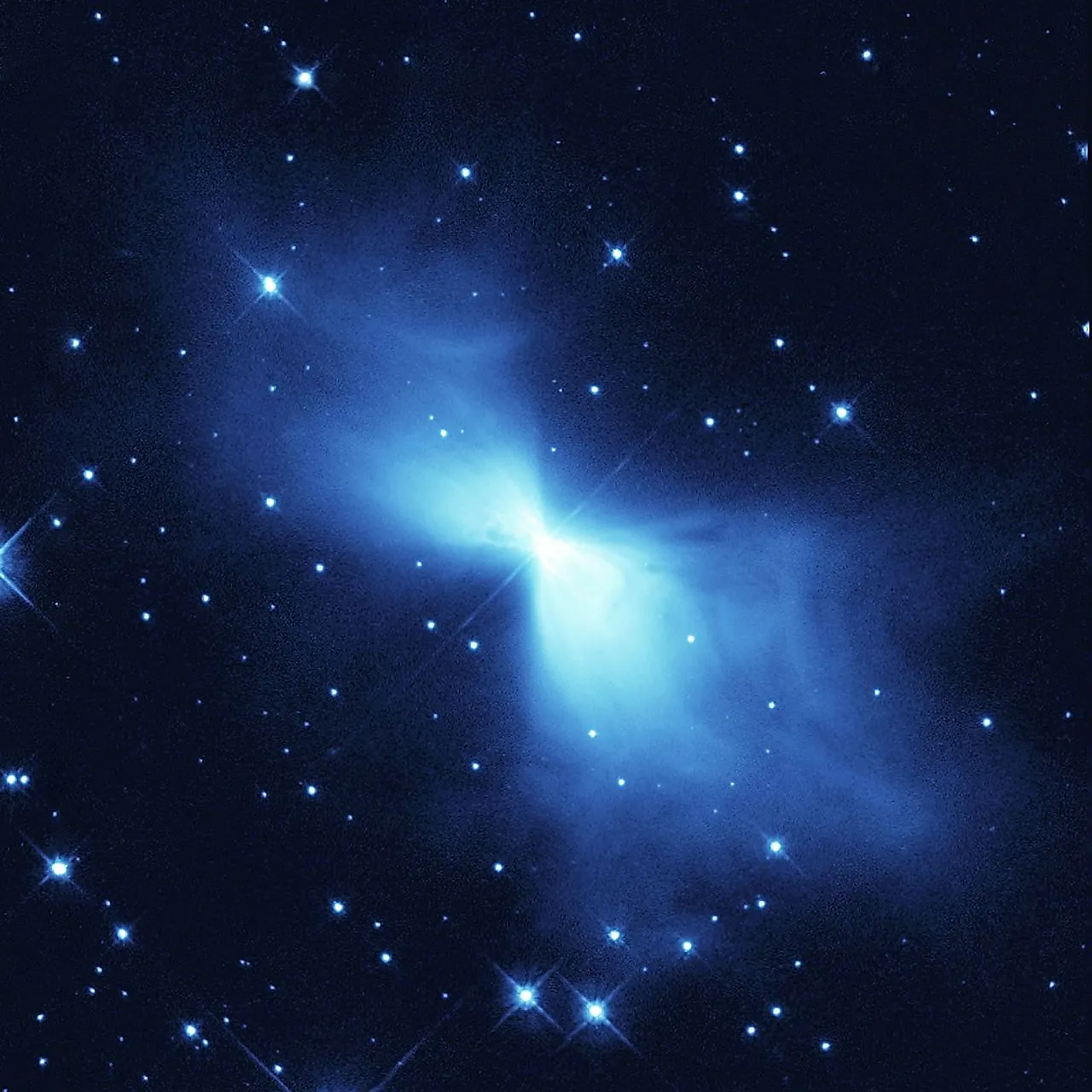
The Boomerang Nebula was identified and named in 1980 by Australian astronomers Keith Taylor and Mike Scarrott. The shape reminded the two astronomers of the famous Australian throwing tool, hence the name 'Boomerang Nebula', which remains to this day. As technology improved, astronomers realized that the name did not accurately reflect the nebula's structure. A more accurate picture emerged in 2003, when high-resolution images courtesy of the Hubble Space Telescope revealed the nebula was not boomerang-shaped after all. Instead, it resembled an hourglass or a bow tie.
As gas expands away in opposite directions from the dying star at the nebula's center, it creates this hourglass or bow-tie shape. And because dense dust clouds hide parts of the structure, it can at first seem like the object is curved like a boomerang. Hubble's advanced imaging system allowed scientists to see the Boomerang Nebula's true shape, one shaped by powerful winds and eruptions as the central star dies.
The Fastest Stellar Collapse Ever Observed

Although it is a planetary nebula, the Boomerang Nebula has nothing to do with planets. It formed when a dying star reached the end of its life and began to shed its outer layers into space, a process known as bipolar outflow. Think of when compressed air becomes cold after being released from a pressurized container, except much larger and much colder. What makes the Boomerang Nebula so extraordinary is the accelerated rate at which it is shedding its mass.
Astronomer Raghvendra Sahai believes the Boomerang Nebula is so much colder than other expanding nebulae because it is shedding material at a rate 100 times faster than similarly dying stars and 100 billion times faster than the Sun. Over the last 1,500 years alone, the nebula has lost nearly one and a half times the mass of our Sun, an exceptionally high rate. That's an almost unimaginable amount of matter.
The Boomerang Nebula has ejected enough material over the last 1,500 years that if we gathered it all together, it would outweigh every single planet in our solar system multiple times over. This rapid expulsion creates a cooling effect so powerful that it takes temperatures below the cosmic microwave background, making the Boomerang Nebula colder than the surrounding universe.
A Cosmic Mystery Remains

To this day, scientists are still debating what exactly initiated such a violent outflow. Some astronomers believe a second star once orbited the dying star at the nebula's center, and once the larger star expanded, the smaller one was absorbed. That interaction could have resulted in the release of enough energy to power the nebula. In that case, the Boomerang Nebula could be the aftermath of a stellar merger, in which a smaller companion star was engulfed by the dying star at its center. On the other hand, some astronomers and researchers have explored whether magnetic fields or processes within the star itself may have contributed to the nebula's unusual outflows. Either way, the Boomerang Nebula's origins continue to challenge astronomers.
What This Nebula Reveals About Our Sun

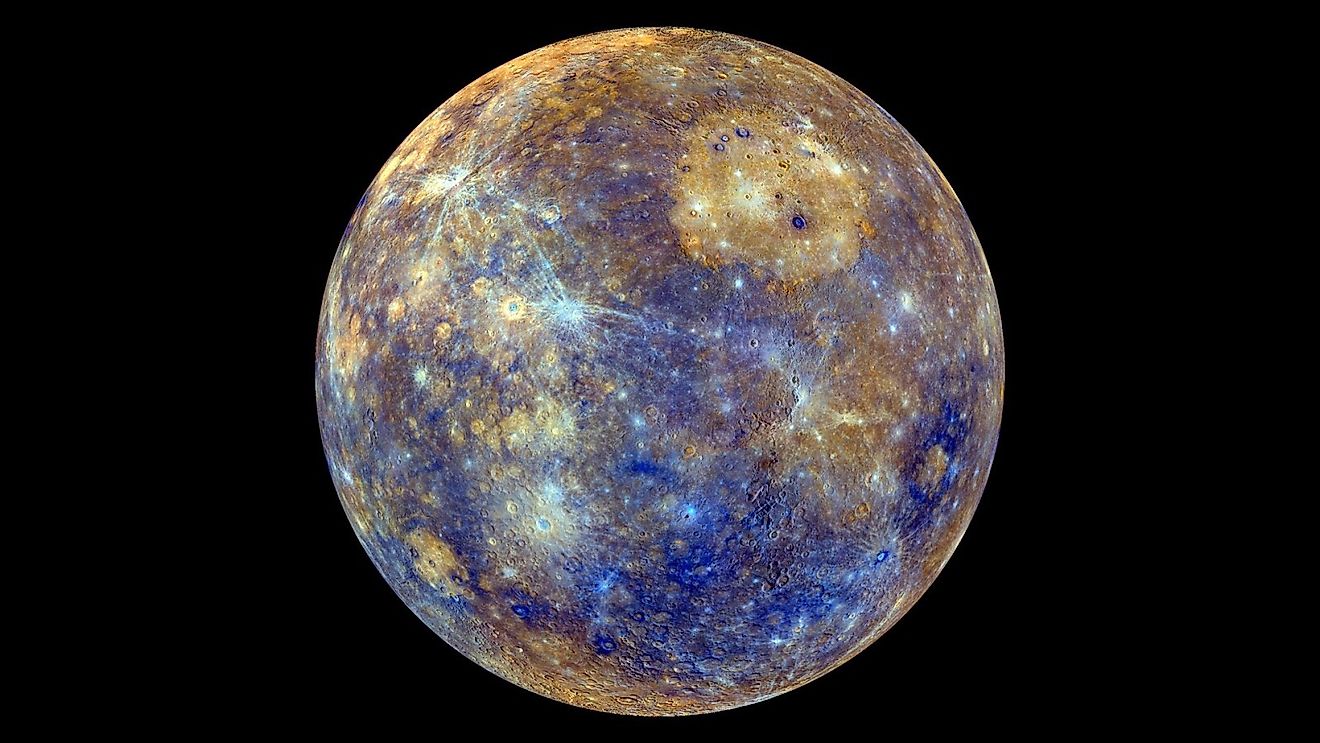
The Boomerang Nebula is more than just a fascination in deep space; it represents a glimpse into the future of our own solar system. Our Sun is roughly 4.6 billion years old and is halfway through its lifespan. In another 5 billion years, our Sun will run out of hydrogen, expand into a red giant, and then begin shedding its outer layers into space. As it expands, the Sun will overtake Mercury and Venus and leave Earth an uninhabitable wasteland long before it can overtake it too.
Eventually, our Sun will shed its outer layers, creating vast clouds of gas around the exposed core. The process might not be exactly what is experienced by the Boomerang Nebula, but it will be similar. At the very end, the remaining core of the Sun will become a white dwarf roughly the same size as Earth but containing most of the Sun's original mass. We can think of the Boomerang Nebula as a way to see our future. By studying it today, we can learn what our Sun will look like 5 billion years from now.
The Universe's Ultimate Deep Freeze
In a universe that is home to black holes, exploding stars, and trillions of galaxies, one of its most fascinating objects is a cold cloud of gas. The Boomerang Nebula is a paradox: a dying star that created the coldest place ever to exist. It is a reminder that some of the greatest environmental extremes are not found in violent explosions, but in places where temperatures are colder than the rest of the universe. It remains one of the strangest known objects and something scientists are still trying to fully understand.