Why The Search For Planet Nine Picked Up Again
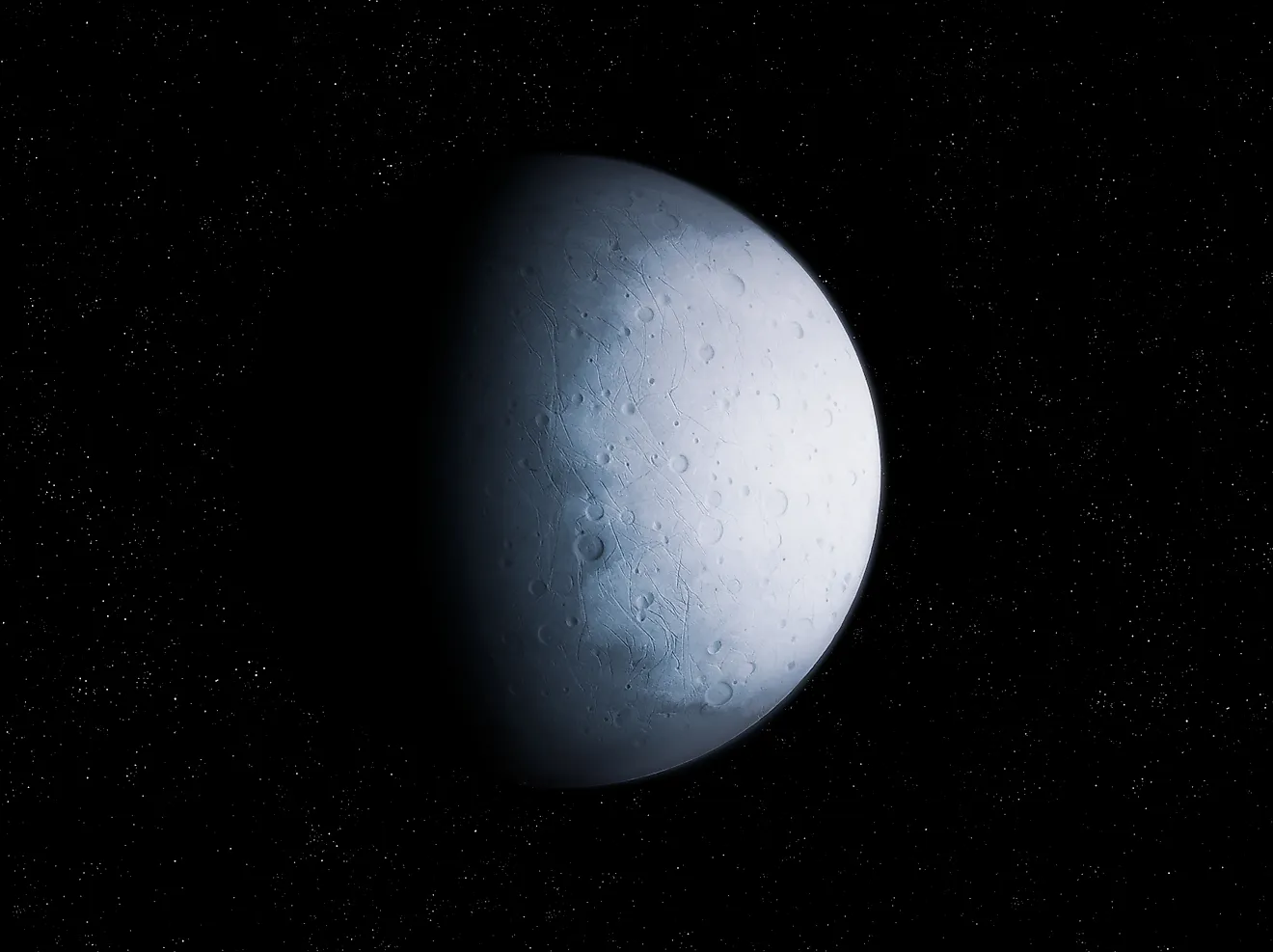
Somewhere beyond Neptune, a world possibly ten times more massive than Earth may be hiding in darkness, taking up to 20,000 years to complete a single orbit around the Sun. Scientists have not seen it directly, but strange patterns in the paths of distant icy objects suggest something enormous may be tugging on them from the edge of the solar system. The solar system currently has eight officially recognized planets, after Pluto was reclassified as a dwarf planet in 2006, though some scientists still debate that definition. The search for an unseen planet beyond Pluto dates back to the 1910s with the idea of Planet X, but recently the mystery has taken on a new name: Planet Nine.
Learn more about what is the cause of the sudden spark for the search for Planet Nine.
The History of Planet X

There is some confusion about Planet Nine, mainly regarding its name. Sometimes it is used interchangeably with the name Planet X. These two names can refer to similar yet different entities. Planet Nine refers to a modern hypothesis proposed in 2016 by Caltech astronomers Konstantin Batygin and Mike Brown. Planet X is a much older concept, most famously associated with astronomer Percival Lowell.
Back in 1915, scientists noticed strange disturbances in Uranus’ orbit. Astronomer Percival Lowell offered the idea of Planet X as a possibility of what might have been the cause of Uranus' orbit being disrupted. He thought that maybe a planet with a strong gravitational pull was interfering with Uranus.

Later work showed that Lowell’s proposed Planet X was not needed to explain Uranus’ orbit; the apparent discrepancies came from earlier measurement and modeling errors, not an unseen giant planet. Still, the idea of a large planet on the fringes of our solar system had entered the consciousness and is what led to the discovery of Pluto. Pluto's 1930 discovery was a major scientific breakthrough, but it was far smaller than the massive body Lowell had predicted, and it is now classified as a dwarf planet. Ten years after Pluto’s demotion, Planet Nine entered the conversation.
What is Planet Nine?

Caltech is world-renowned for its science and engineering programs and manages NASA’s Jet Propulsion Laboratory, which builds and operates many robotic space missions. It was also home to the researchers who argued in 2016 that Planet Nine may exist. In 2016, researchers Konstantin Batygin and Mike Brown announced their belief in the existence of Planet Nine. Unlike the basis of Planet X, Planet Nine has nothing to do with Uranus, but instead has everything to do with the Kuiper Belt.
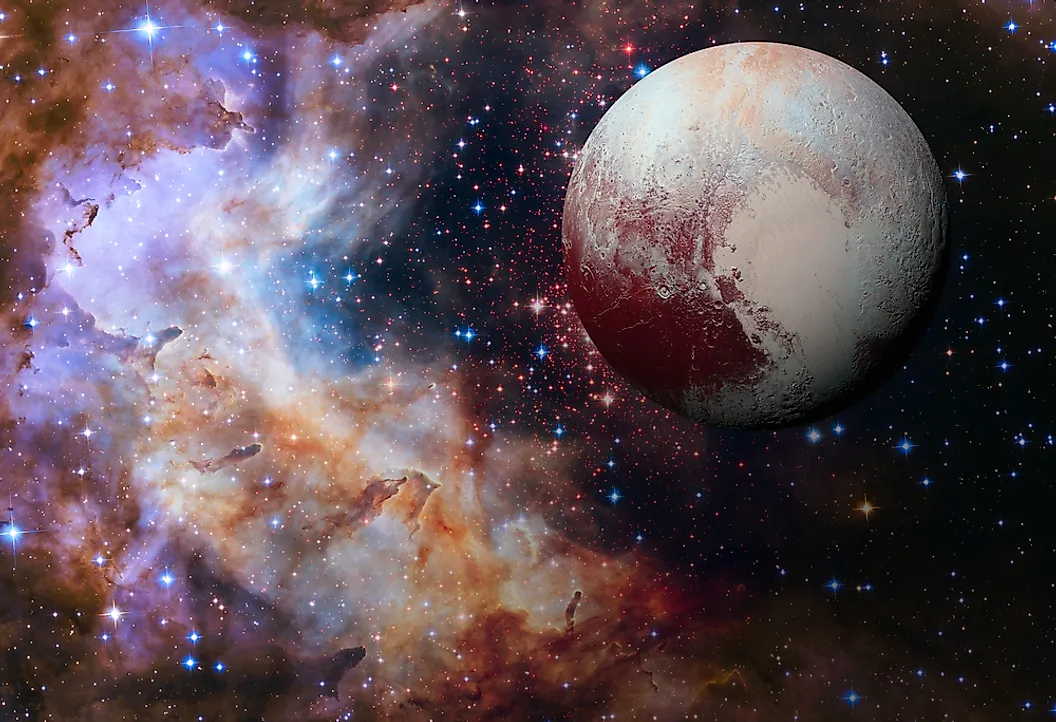
The Kuiper Belt is a region of icy objects that is beyond the orbit of Neptune. Pluto is in the Kuiper Belt along with other dwarf planets and comets. Named after astronomer Gerard Kuiper, the Kuiper Belt contains not just rock and water ice, but also other frozen compounds such as ammonia and methane. Although thousands of trans-Neptunian objects have been observed, astronomers estimate that the Kuiper Belt contains millions of small, icy bodies, including hundreds of thousands larger than 100 kilometers. Planet Nine, if it exists, would not be an ordinary Kuiper Belt object but a distant planet-mass body whose gravity could shape the orbits of some far-out trans-Neptunian objects.
Astronomers noted that some dwarf planets and small icy objects in the region followed unusual orbits and clustered together. Brown and Batygin argued that the clustered orbits of some distant trans-Neptunian objects could be explained by an undiscovered planet-mass body on a far larger orbit beyond Neptune and Pluto. They believe that Planet Nine would have a mass about 10 times that of Earth and would take between 10,000 and 20,000 years to complete a single full orbit around the Sun.
Planet Nine has not been directly observed, and the hypothesis remains debated; some astronomers argue that the apparent clustering could simply be a statistical illusion.
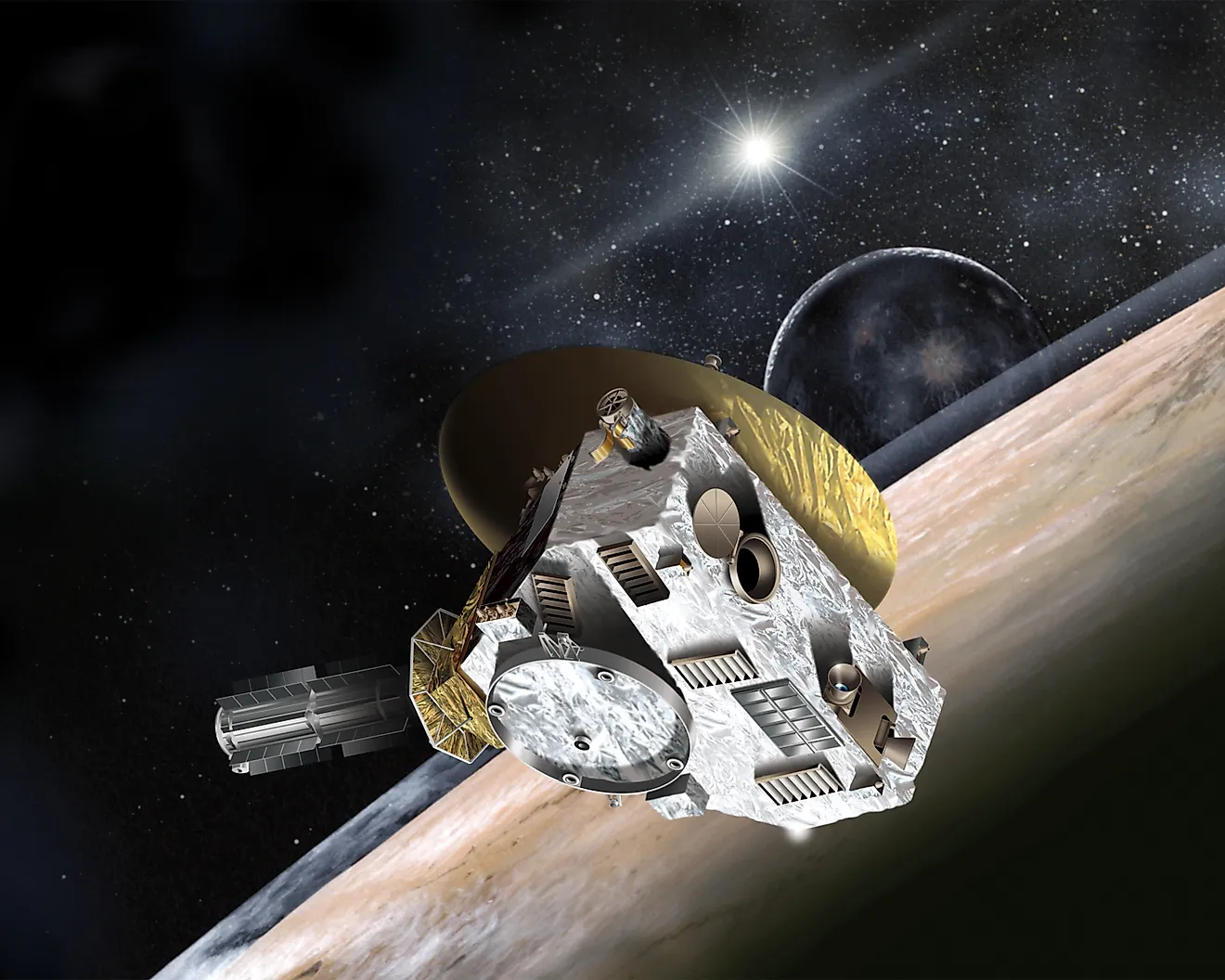
The only problem now is how we can know for certain whether a planet is affecting these objects in the Kuiper Belt. Space travel so far out in our solar system is not easy. New Horizons reached Pluto in 2015 after about nine years and flew past the Kuiper Belt object Arrokoth in 2019, but sending a spacecraft to a specific hypothetical Planet Nine location would still be a long and difficult mission. Although spacecraft have reached Kuiper Belt distances, a mission to an unknown Planet Nine would be impractical until its location is known, so telescope surveys remain the realistic way to search.
The Significance of Telescopes

Astronomers have used powerful telescopes in Hawaii, including the Keck Observatory and Subaru Telescope on the dormant volcano Maunakea, to search for Planet Nine. Keck’s twin optical and infrared telescopes are among the world’s most productive ground-based observatories, while Subaru’s wide-field, 8.2-meter design makes it especially useful for scanning large areas of sky for faint, distant objects. However, because Subaru is in high demand, Planet Nine searches have received only limited observing time in some cycles.
Both of these telescopes have been aimed towards the Kuiper Belt, but neither has been able to spot Planet Nine. However, a new observatory that has been causing a lot of recent buzz may change things.
The Rubin Observatory

Rubin Observatory, on Cerro Pachón in Chile, is a major hope for the Planet Nine search because its wide-field survey will repeatedly image much of the southern sky and can reveal faint moving objects.
Back in the 1990s, several scientists began to brainstorm a telescope that would focus primarily on dark matter. The concept of the dark matter telescope began to gain traction in 2001 when it was acknowledged by the Astrophysics Survey Committee. The idea behind this dark matter telescope is that it could detect even the faintest objects at the fringes of our solar system, perhaps even an unknown planet. In 2010, the telescope received federal funding.
In 2015, construction officially began on the telescope, and people gathered for the stone-laying ceremony, including Chile's president. Running concurrently with the build, construction began in California on the 3200-megapixel camera that would be the heart of the telescope. In 2018, the telescope began to come together, and in 2019, it received the official name Vera C. Rubin Observatory.

The 3,200-megapixel LSST Camera, the largest digital camera ever built, was installed in 2025, and it began acquiring images with Rubin on April 17, 2025. In October 2025, Rubin formally moved from construction to operations, beginning final preparations for the decade-long Legacy Survey of Space and Time, scheduled to begin in 2026. Rubin’s data system will compare new images with reference images to flag moving or changing sources, including asteroids, trans-Neptunian objects, supernovae, and other transient events.
With this telescope now operational and capable of repeatedly scanning much of the southern sky, there is a chance that scientists will be able to view what might previously have been out of sight. Many scientists believe that this telescope is the best shot at finding Planet Nine. One researcher, Scott Sheppard, believes that the Observatory has about a 70 to 80 percent chance of finding Planet Nine if it truly is lurking behind Pluto.
What Does This Mean for the Future?
If Planet Nine exists, it could help explain the unusual clustering and high-inclination orbits seen among some distant trans-Neptunian objects. If discovered, this would also lay one of our solar system’s biggest mysteries to rest.
Humanity loves to look into space and wonder how many distant lands lie just out of sight. If Planet Nine is found, that will only continue to fuel our imagination.