10 U.S. States With The Highest Obesity Rates
Obesity in the United States is not spread evenly across the map. The highest adult obesity rates cluster in Appalachia and the lower Mississippi Valley, where economic hardship, rural distances, and limited access to care and healthy food often intersect.
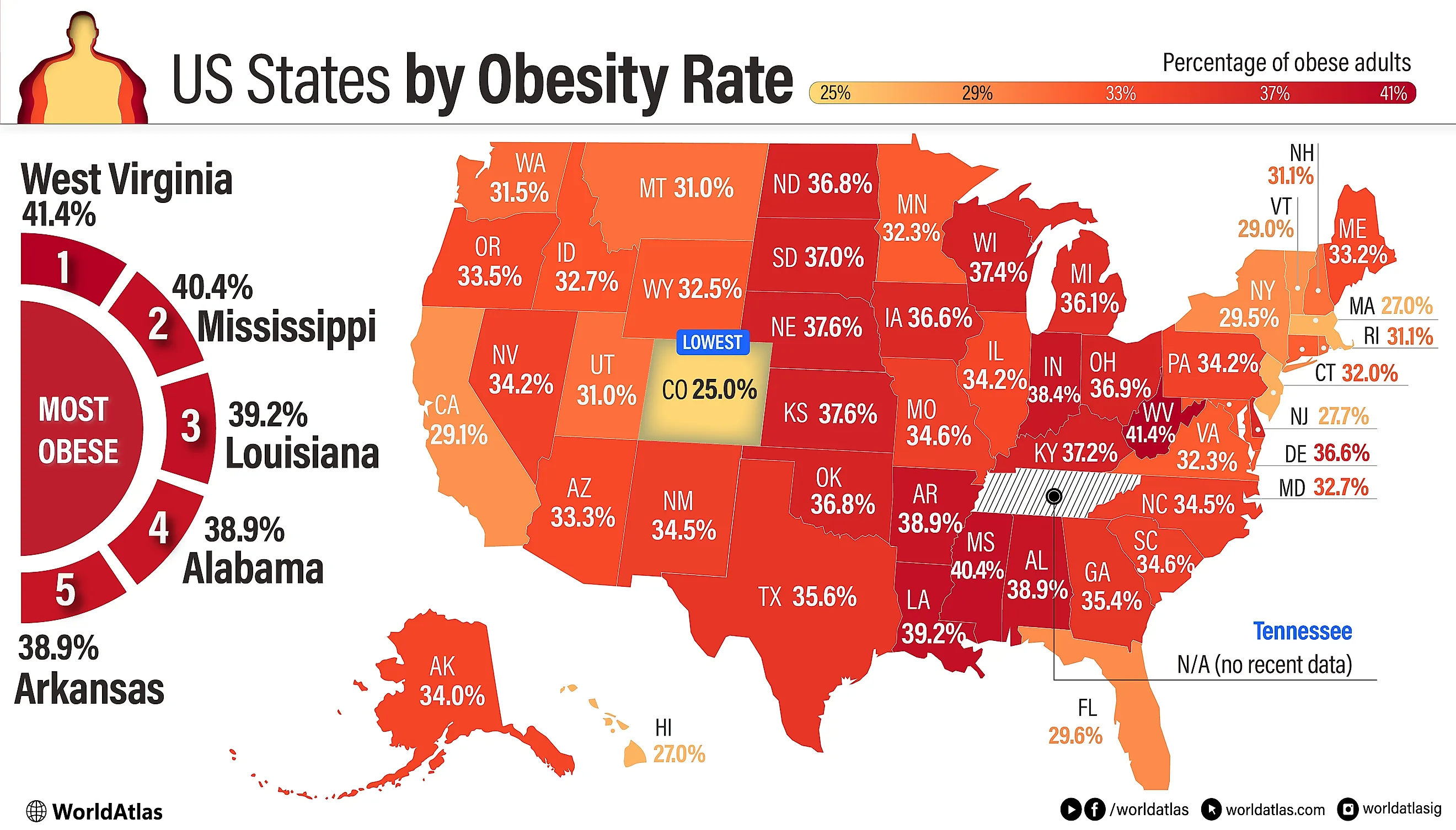
Using CDC Behavioral Risk Factor Surveillance System data, West Virginia leads the nation with an adult obesity rate of 41.4%, followed by Mississippi at 40.4% and Louisiana at 39.2%. Rounding out the top 10 states with the highest obesity rates are Alabama, Arkansas, Indiana, Kansas, Nebraska, Wisconsin, and Kentucky, all between 37.2% and 38.9%.
These concentrations of obesity overlap with elevated rates of type 2 diabetes, high blood pressure, and heart disease, putting added pressure on local health systems and household budgets. Understanding where obesity is most common, and how geography, income, and infrastructure shape everyday choices, helps explain why some communities face steeper health risks than others.
10 U.S. States With The Highest Obesity Rates
| Rank | State | Adult obesity rate (2024) |
|---|---|---|
| 1 | West Virginia | 41.40% |
| 2 | Mississippi | 40.40% |
| 3 | Louisiana | 39.20% |
| 4 (tie) | Alabama | 38.90% |
| 4 (tie) | Arkansas | 38.90% |
| 6 | Indiana | 38.40% |
| 7 (tie) | Kansas | 37.60% |
| 7 (tie) | Nebraska | 37.60% |
| 9 | Wisconsin | 37.40% |
| 10 | Kentucky | 37.20% |
1. West Virginia - 41.4%

More than two in five adults in West Virginia (41.4%) have obesity, the highest share of any state. A largely rural, mountainous state, it faces long travel distances to groceries, clinics, and recreation options, which can limit access to healthy food and preventive care. Economic hardship and higher rates of disability also shape daily activity levels. Community programs are expanding walking trails, farmers markets, and nutrition education, while health systems emphasize screenings for diabetes and heart disease. For visitors, outdoor attractions like state parks and river valleys offer reminders that active living is possible year-round. Small changes, supported locally, can improve health across communities today.
2. Mississippi - 40.4%

In Mississippi, 40.4% of adults have obesity, giving the state the second-highest rate in the country. The state's mix of rural counties, Delta agriculture, and small-town life can mean fewer full-service groceries, limited preventive care, and long commutes that reduce daily activity. Cultural food traditions, often rich, fried, and sweet, remain a point of pride but can add calories when portions are large and produce is scarce. Public-health efforts focus on healthier school meals, community gardens, walking trails, and diabetes and blood-pressure screening. From the Gulf Coast to Jackson, expanding access to fresh foods and safe places to move is key to reversing the trend for families across the state.
3. Louisiana - 39.2%

Louisiana ranks third nationwide, with 39.2% of adults living with obesity in 2024, based on CDC Behavioral Risk Factor Surveillance System data. That rate exceeds the national adult obesity average of roughly 33%. State health statistics also show that Louisiana has elevated rates of type 2 diabetes and cardiovascular disease, conditions closely associated with excess weight. County-level data reveal higher obesity prevalence in rural parishes, where residents face longer travel distances to primary care and limited access to full-service grocery stores. Federal food-access mapping identifies multiple low-access areas across the Delta and northern parishes.
4. Alabama - 38.9%

In Alabama, 38.9% of adults have obesity, a level that ties the state for fourth place among the highest-obesity states. The state also reports adult diabetes prevalence above 15%, one of the highest rates nationally, closely tracking obesity patterns. Alabama's Black Belt counties show especially elevated obesity rates, which state health data link to higher poverty, fewer primary-care providers, and limited grocery access. According to the USDA, many rural Alabama counties qualify as food deserts, while transportation data show longer average travel times to medical care. Recent state efforts have tightened school nutrition rules and expanded chronic-disease screening through county health departments.
4. Arkansas - 38.9%

Arkansas matches Alabama at 38.9% adult obesity, sharing the fourth-highest rate in the nation. The state also reports adult hypertension rates above 40% and diabetes prevalence near 14%, conditions strongly correlated with obesity in CDC and state health analyses. USDA mapping shows large portions of eastern and southern Arkansas designated as low-access food areas, particularly in Delta counties. Physical activity data from the CDC indicate Arkansas adults are less likely than the national average to meet aerobic exercise guidelines. Arkansas has broadened school nutrition standards statewide and supports community-based programs aimed at preventing obesity-related chronic disease.
6. Indiana - 38.4%

Roughly 38.4% of adults in Indiana have obesity, giving the state the sixth-highest prevalence. State health data show Indiana's adult diabetes rate exceeds 13% and cardiovascular disease mortality remains above the national average, conditions strongly associated with obesity. County-level CDC maps identify higher obesity prevalence in southern and east-central Indiana, areas that also report lower median incomes and fewer recreational facilities. Indiana’s health department now backs prevention efforts that promote physical activity, nutrition education, and healthier workplaces across the state.
7. Kansas - 37.6%

Kansas records a 37.6% adult obesity rate, tying it for seventh-highest in the U.S. State health records show adult hypertension affects more than 36% of Kansans, and diabetes prevalence approaches 12%, both closely linked to obesity rates. Rural western and southeastern Kansas counties report the highest obesity levels, overlapping with USDA-designated low-access food areas and hospital closures that reduce preventive care access. CDC physical-activity data also indicate Kansas adults fall below national averages for meeting aerobic exercise guidelines. Kansas invests in community wellness grants, stronger school nutrition programs, and rural health initiatives to curb obesity-related disease.
7. Nebraska - 37.6%

Nebraska also reports 37.6% of adults with obesity, sharing seventh place alongside Kansas. State health data show adult hypertension affects roughly one in three Nebraskans, and diabetes prevalence exceeds 10%, both conditions strongly associated with obesity. County-level CDC maps identify higher obesity rates in central and western Nebraska, where populations are more rural. USDA food-access data indicate many of these counties have limited proximity to full-service grocery stores. Physical-activity surveillance also shows Nebraska adults are less likely than the national average to meet aerobic exercise guidelines, reinforcing the link between geography, access, and obesity outcomes statewide.
9. Wisconsin - 37.4%

In Wisconsin, 37.4% of adults have obesity, ranking the state ninth nationwide. State health statistics show adult hypertension affects more than 32% of residents, while diabetes prevalence is approximately 11%, both closely associated with excess weight. County-level CDC maps indicate higher obesity rates in northern and central Wisconsin, regions with older populations and fewer health-care providers per capita. In Wisconsin, USDA analyses flag numerous rural census tracts where residents must travel long distances to reach a full-service grocer. Physical-activity surveillance also shows Wisconsin adults are less likely than the national average to meet aerobic exercise guidelines, reinforcing structural contributors to obesity across the state.
10. Kentucky - 37.2%

Kentucky rounds out the top ten, with 37.2% of adults living with obesity. The state also reports adult diabetes prevalence above 13% and one of the nation's highest cardiovascular mortality rates, conditions closely linked to obesity in CDC analyses. Eastern Kentucky counties, particularly in Appalachia, show the highest obesity levels and also have fewer primary-care physicians per capita, based on state health workforce data. Federal food-access maps highlight wide stretches of eastern Kentucky as low-access zones for healthy retail options. Kentucky’s public-health agencies emphasize diabetes-prevention programs, smoking-cessation support, and local nutrition initiatives run through county health departments.