Where Los Angeles Would Get Water If The Colorado Failed
Los Angeles would not run dry, and the reason has almost nothing to do with luck. The city draws from four separate systems, only one of which touches the Colorado, and the Colorado's share of its supply is smaller than most people assume. The bigger risk is not that the taps stop but that the substitutes are all constrained in their own ways, and that the cheapest of them was exhausted decades ago. Southern California has already halved its imported water use, from 2.5 million acre-feet a year to about 1.2 million, which is the single most important fact in this whole discussion. And this is no longer hypothetical: in August 2026 the Bureau of Reclamation issued new operating guidelines requiring 3.2 million acre-feet in Lower Basin contributions through 2028.
Here is what the city actually runs on, what each backup can and cannot deliver, and where the water would come from in order.
What Los Angeles Actually Runs On

The mix shifts every year with the Sierra snowpack, which is itself the point. In the 2026-27 operating plan, the Los Angeles Aqueduct is projected to supply about 47 percent of the city's water, with roughly 37 percent purchased from the Metropolitan Water District, 13 percent from local aquifers and 3 percent from recycling.
In drier years the ratio flips. LADWP's own long-run figures put the Eastern Sierra at about 35 percent, groundwater at 12 percent and MWD purchases at 52 percent.
So Los Angeles is a city with one supply it owns outright and one it buys, and the balance between them is decided by snowfall three hundred miles away.
The Colorado Is A Smaller Share Than People Assume
This is the number that reframes the question. The Colorado does not supply Los Angeles directly. It supplies the Metropolitan Water District, and MWD supplies Los Angeles.
MWD has two major imported sources: the Colorado River via the Colorado River Aqueduct, and Northern California via the State Water Project. So if the Colorado failed entirely, Los Angeles would not lose 37 percent of its water. It would lose the Colorado portion of that 37 percent, with MWD leaning harder on the other half of its portfolio.
Call it somewhere between a tenth and a fifth of the city's supply, depending on the year and how MWD allocated the shortfall.
Metropolitan Is A Buffer, Not A Source

MWD is a cooperative of 26 member agencies serving 19 million people across six counties, and its entire design purpose is to be the shock absorber.
Member agencies including LADWP hold their own supplies and buy from MWD to cover the gap. That structure means a Colorado shortfall does not hit any one city directly. It hits MWD's balance sheet and gets distributed across a service area of nineteen million people, which is a very different problem from a single utility losing a single pipe.
The First Move Is The State Water Project

The immediate substitute already exists and is already plumbed in.
The State Water Project runs 444 miles from Oroville Dam on the Feather River, through the Sacramento-San Joaquin Delta, down the San Joaquin Valley and over the Tehachapi Mountains, where pumps lift the water 2,000 feet before it drops into Southern California. It ends at Lake Perris near Riverside.
MWD would shift its purchases toward Northern California immediately. No new construction, no new rights, just a different valve.
Except The Delta Has Its Own Crisis
Here is why that is not a solution so much as a different problem.
State Water Project allocations swing wildly by year and have been cut to single-digit percentages of requested amounts in bad droughts. The Delta is also the subject of decades of litigation over endangered fish, notably delta smelt and salmon runs, which constrains how much can be pumped and when.
Both of Southern California's imported supplies depend on snowpack. The Colorado depends on the Rockies, the State Water Project on the Sierra Nevada, and dry years have an unhelpful habit of arriving in both ranges at once.
The Los Angeles Aqueduct Would Be Asked For More

LADWP owns this one, which makes it the most attractive place to look.
Two aqueducts run from the Eastern Sierra, delivering an average of about 430 million gallons a day. The original is gravity-fed the whole way. The second, opened in 1970 and running 137 miles from Haiwee Reservoir, needs pumping.
In 2026-27 the system is expected to carry about 227,000 acre-feet, down from 269,000 the year before, because runoff is at 66 to 79 percent of average depending on the basin.
Owens Valley Has Nothing Left To Give


This is the constraint people forget, and it is a legal one rather than a physical one.
Los Angeles already took this valley once. Owens Lake went dry by 1926 and became the largest single source of dust pollution in the country, and the city is now legally obliged to spend roughly 60,000 acre-feet of water a year keeping the lakebed damp. That water is a permanent deduction from what the aqueduct can export.

The Mono Basin is capped too. Exports are tied to Mono Lake's surface elevation under a State Water Board decision, and at the current level LADWP may take 16,000 acre-feet and no more.
The aqueduct cannot simply be turned up. Its ceiling was set by lawsuits.
Groundwater Would Be Pumped Harder

Local aquifers currently supply around 12 to 13 percent, and that is the number with the most room to move in an emergency.
The San Fernando Basin is the city's largest, and Los Angeles holds substantial adjudicated rights to it. Basins across the county are court-managed, which means pumping is legally allocated rather than open, but a declared emergency changes what is politically possible.
The catch is contamination. Parts of the San Fernando Basin sit under decades of industrial solvent pollution, and LADWP has had to build treatment capacity before that water is usable. Groundwater here is not a tap you open. It is a tap you open after building a treatment plant.
Stormwater Capture Is Quietly Scaling
Los Angeles is built to throw rain away. Its rivers are concrete channels designed to move stormwater to the ocean as quickly as possible, which is a rational flood control decision that wastes an enormous resource.
That is being reversed. LADWP reported capturing 31.9 billion gallons of stormwater in a single season, recharged into local basins rather than discharged.
It will never be a primary supply, because it depends on rain falling in a place defined by not having much. But it converts a liability into a deposit.
Recycling Is The Actual Answer
Here is the largest untapped source in the city, and the numbers are almost absurd.

Los Angeles treats more than 450,000 acre-feet of wastewater a year and discharges most of it into the Pacific. That volume is roughly equal to the city's entire annual water demand.
In other words, Los Angeles already possesses, in liquid form, about as much water as it uses. It simply throws it into the ocean.
Pure Water Los Angeles
The plan to stop doing that is under construction.
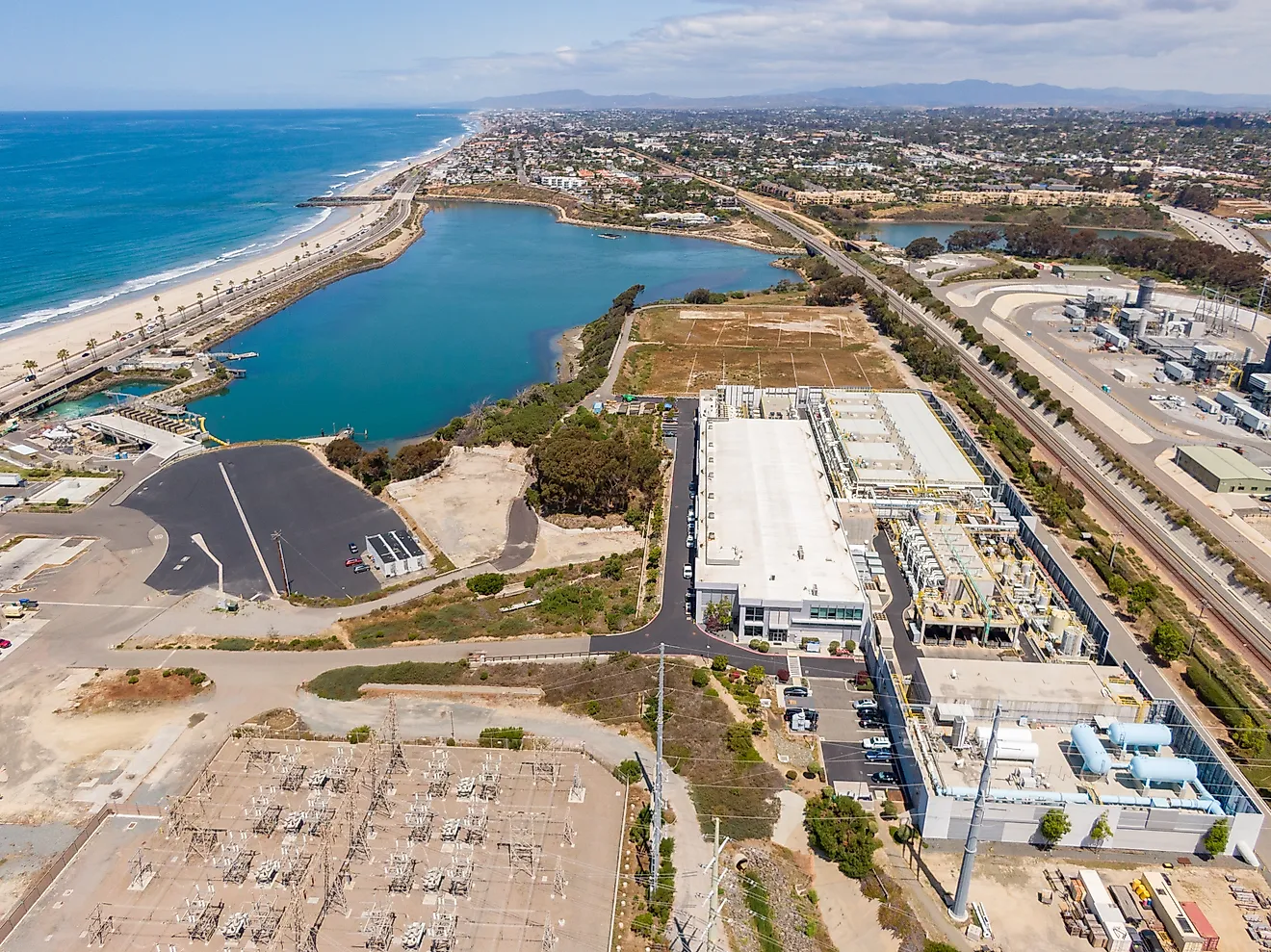
LADWP and LA Sanitation are building an advanced purification system intended to produce up to 230 million gallons a day of purified recycled water, the centerpiece of the city's goal of reaching a 70 percent local water supply. The Los Angeles Groundwater Replenishment Project at the Donald C. Tillman plant, described as the largest water project in the state, will add up to 20 million gallons a day on its own.
These are the projects that determine whether the Colorado question matters in 2040.
Pure Water Southern California
MWD is building its own version at regional scale.
Its board unanimously certified the Final Environmental Impact Report after more than five years of analysis, for what would be one of the largest water recycling programs in the world. It appears by name in MWD's Colorado River negotiating position, as an augmentation project that other basin states might help fund in exchange for shared benefits.
That is worth noticing. Recycled wastewater in Los Angeles is now a bargaining chip in interstate river negotiations.
Hoover Dam Powers The Pipe That Carries The Water
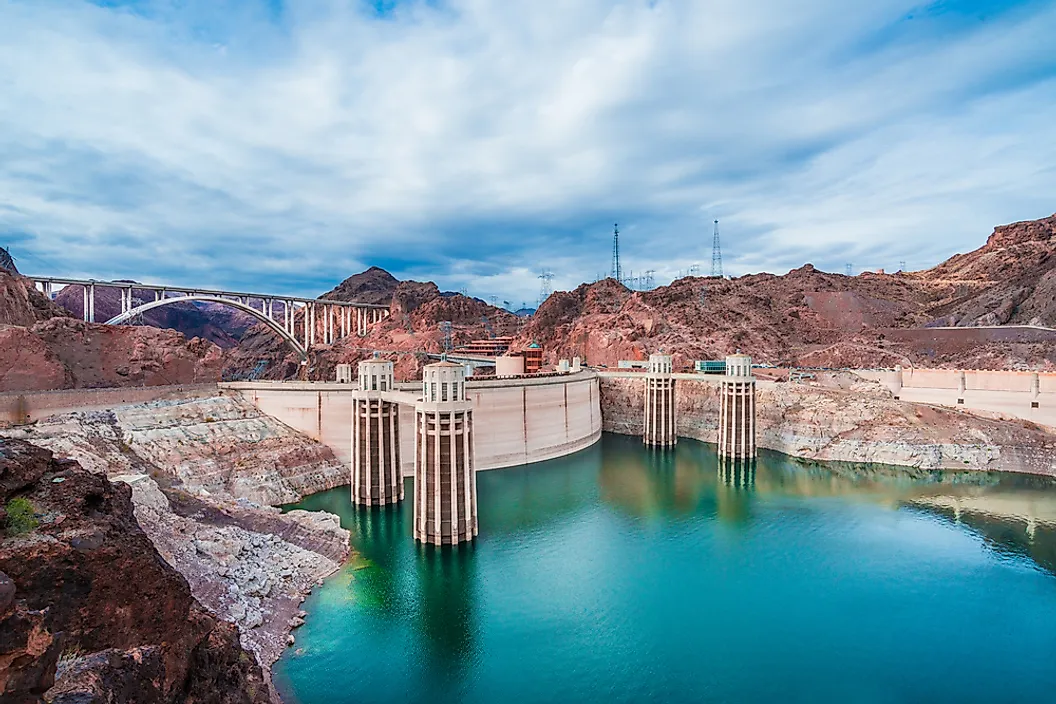
This is the failure mode almost nobody accounts for.
The Colorado River Aqueduct runs 242 miles from Parker Dam and has to lift water over mountains to reach the coast, which takes an enormous amount of electricity. A key source of that electricity is Hoover Dam.
MWD lists protection of power generation at Hoover among its formal priorities in the post-2026 negotiations, for exactly this reason. If Lake Mead drops far enough to stop the turbines, the problem is not only that there is less water. It is that the pumps moving what remains lose their power supply.
Southern California Already Cut Its Imports In Half
The most reassuring number available, and it is a measured one rather than a projection.
Over roughly two decades of investment in storage, conservation, recycling and groundwater recovery, Southern California reduced its imported water use from about 2.5 million acre-feet a year to around 1.2 million. Half.
The region did that while its population grew. Whatever else is true about Western water, the demand side has already delivered a result that the supply side has not.
It Has Already Survived A Version Of This
In 2003 MWD lost between 700,000 and 800,000 acre-feet of Colorado River water when California was forced back toward its basic 4.4 million acre-foot entitlement.
That is a substantial fraction of what the Colorado River Aqueduct carries. It prompted major operational changes and a rethink of how the system was managed, and the taps stayed on.
MWD's Colorado River manager has pointed to that episode directly when discussing what comes next, which is a reasonable thing to lean on. It is the closest thing to a live-fire test the system has had.
The Rules Changed In August 2026
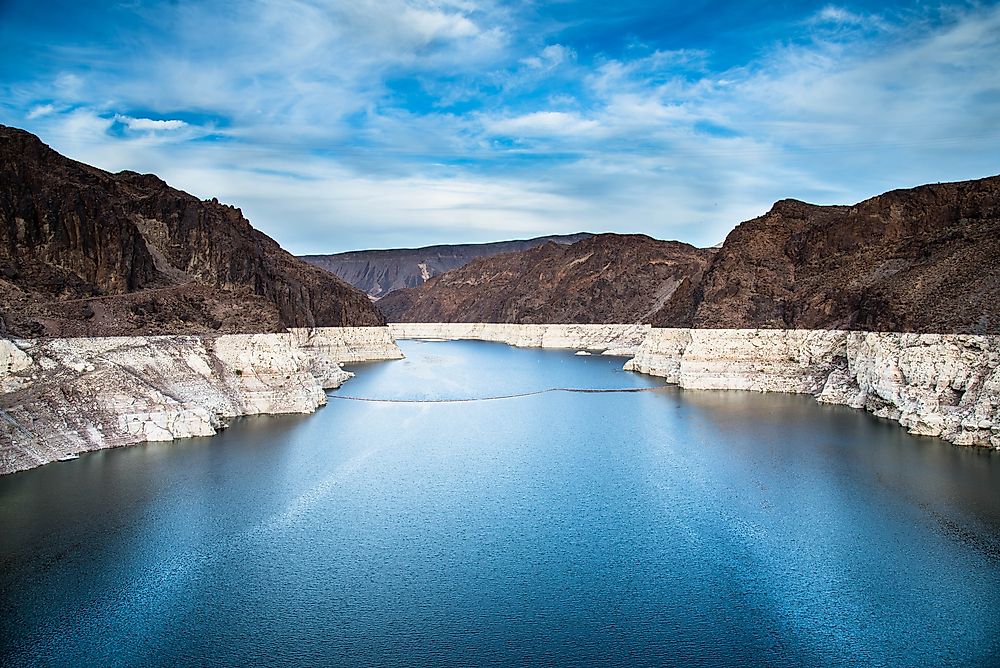
The 2007 Interim Guidelines governing Lake Powell and Lake Mead were written to expire at the end of 2026, and the seven basin states spent years failing to agree on a replacement.
In August 2026 the Bureau of Reclamation released the 2027-2028 Operating Guidelines along with the Record of Decision for the Post-2026 Final Environmental Impact Statement. The framework requires 3.2 million acre-feet in Lower Basin contributions through 2028.
MWD's general manager responded by calling for renewed effort toward a long-term interstate agreement, which is the diplomatic way of saying a two-year framework is not a solution. The negotiation everyone expected to conclude has instead been extended.
What Failure Would Actually Look Like

Not empty taps. Something slower and more expensive.
Agriculture absorbs the first and largest cuts, because farms hold senior rights in the Imperial and Coachella valleys and fallowing fields is cheaper than rationing cities. Urban water gets more expensive as MWD replaces cheap gravity-fed river water with pumped Delta supply and purified wastewater. Outdoor watering restrictions become permanent rather than seasonal. Recycling projects that currently have twenty-year timelines get accelerated.
What does not happen is Los Angeles running out. A city with four separate supply systems, a legal claim on the Eastern Sierra, an adjudicated aquifer underneath it, and 450,000 acre-feet of wastewater going into the ocean every year has options. They are just costlier than the river.
The Honest Answer
If the Colorado failed tomorrow, Los Angeles would get its water in this order: more from the State Water Project, more from local groundwater, the same from the Eastern Sierra because that is capped by law, and progressively more from recycled wastewater as the plants come online.
The cost would land on ratepayers and on farmers, in that order of visibility and reverse order of severity. And the deadline that mattered has already slipped once, which tells you the pressure has not gone anywhere.