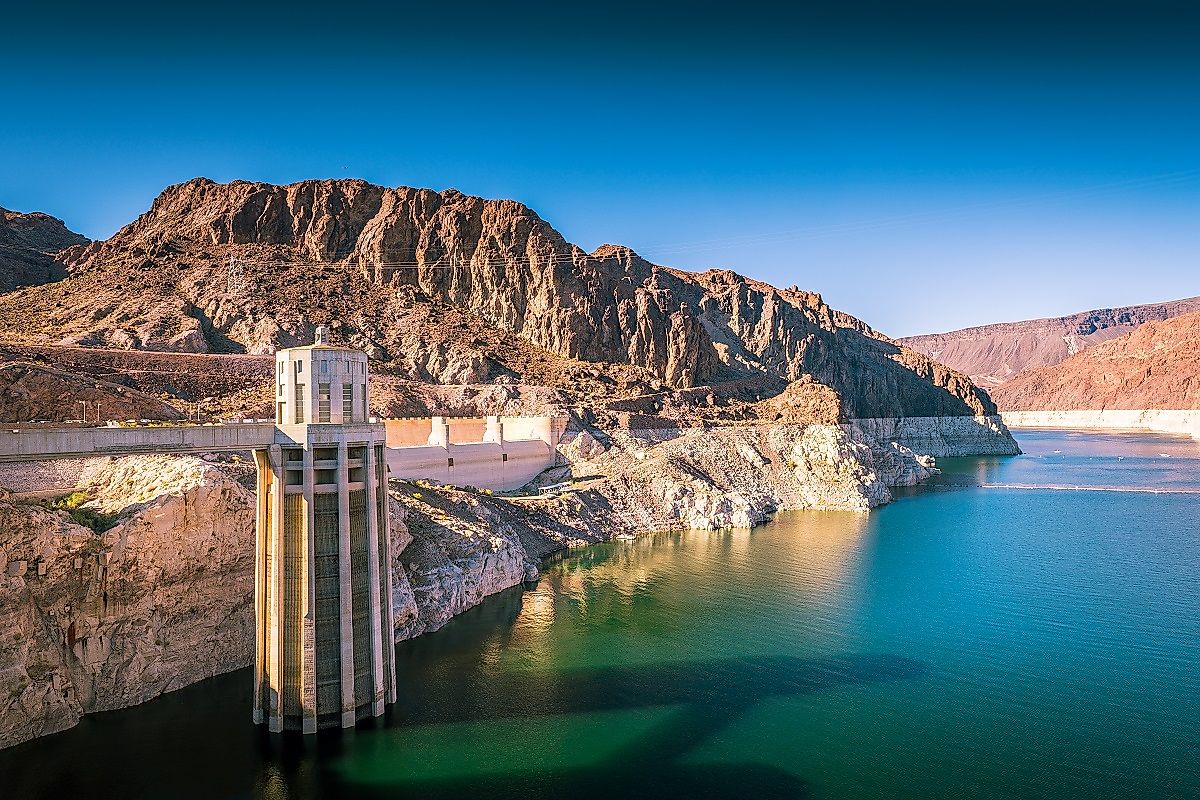
What Happens If Lake Mead Runs Dry
Over 25 million people in Nevada, Arizona, and California would lose their primary water supply. The Hoover Dam would cease to generate hydroelectric power. Millions of acres of farmland across the American Southwest could lose access to irrigation supplied by the Colorado River. Many flora and fauna that inhabit the lake would lose crucial habitat.
These are not inherent doomsday scenarios, but rather outcomes that would occur if Lake Mead runs dry.
Lake Mead is currently approaching levels where dead pool becomes a concern, in which water levels are so low that it can no longer flow downstream. With drought worsened by climate change drawing more water out of the Colorado River, federal forecasters project the reservoir could fall to record lows over the next several years, deepening a crisis that has been building for over two decades.
Loss of Drinking Water

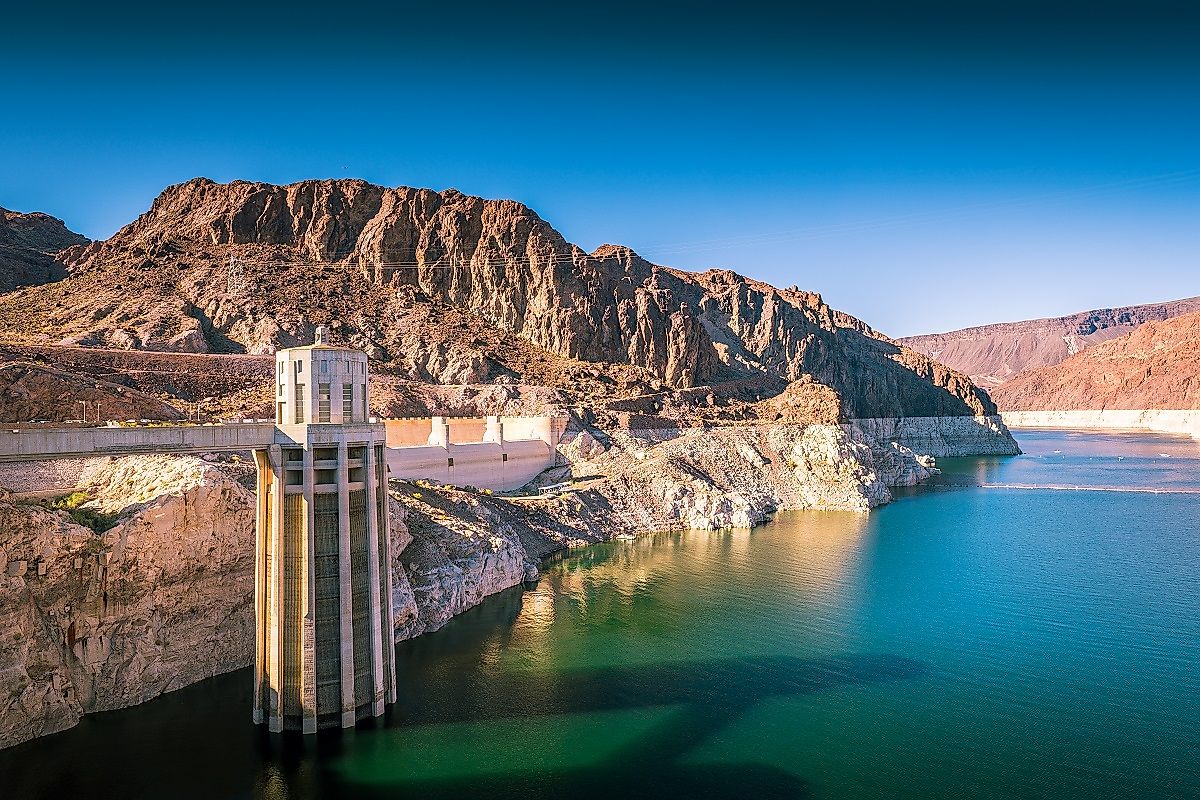
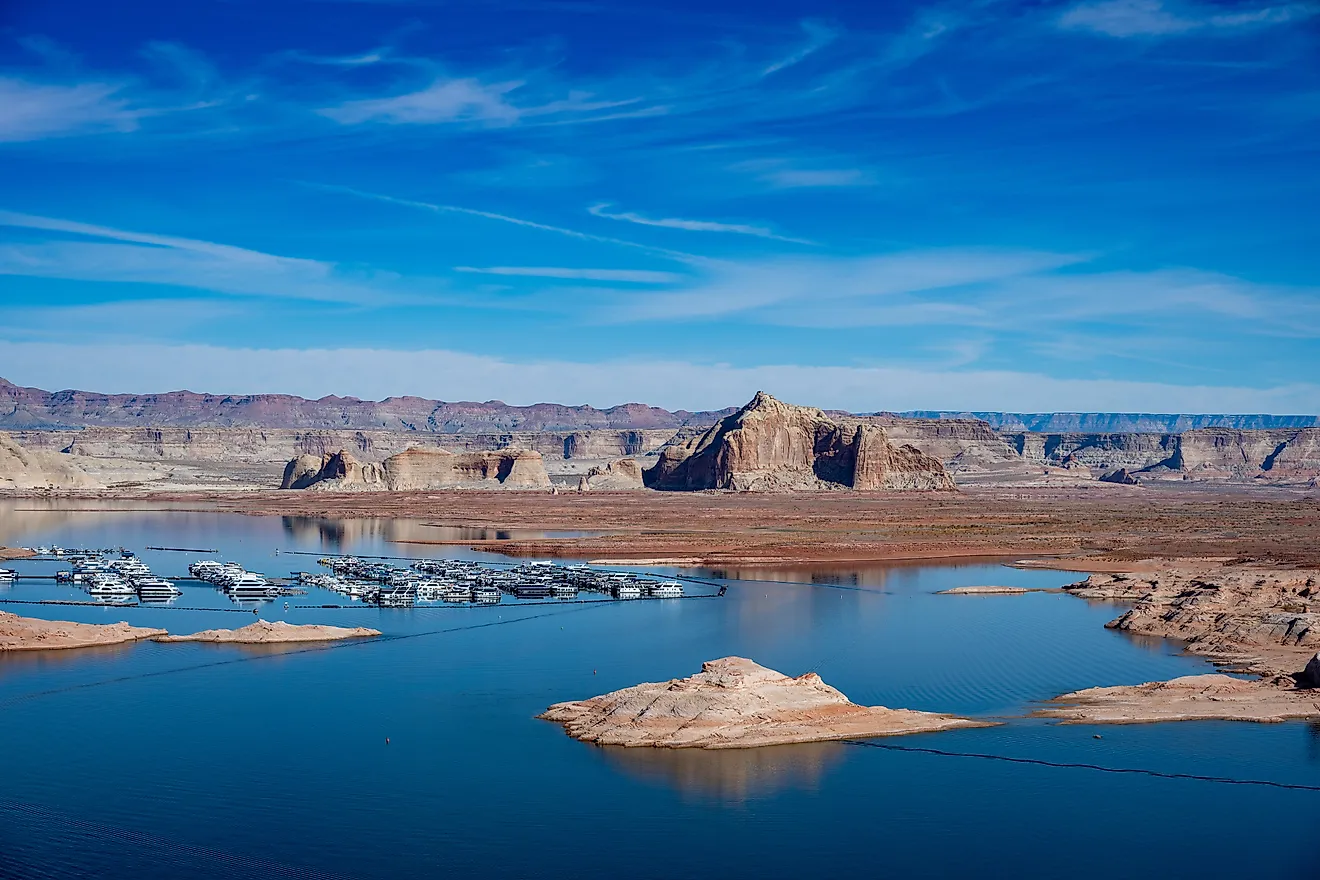
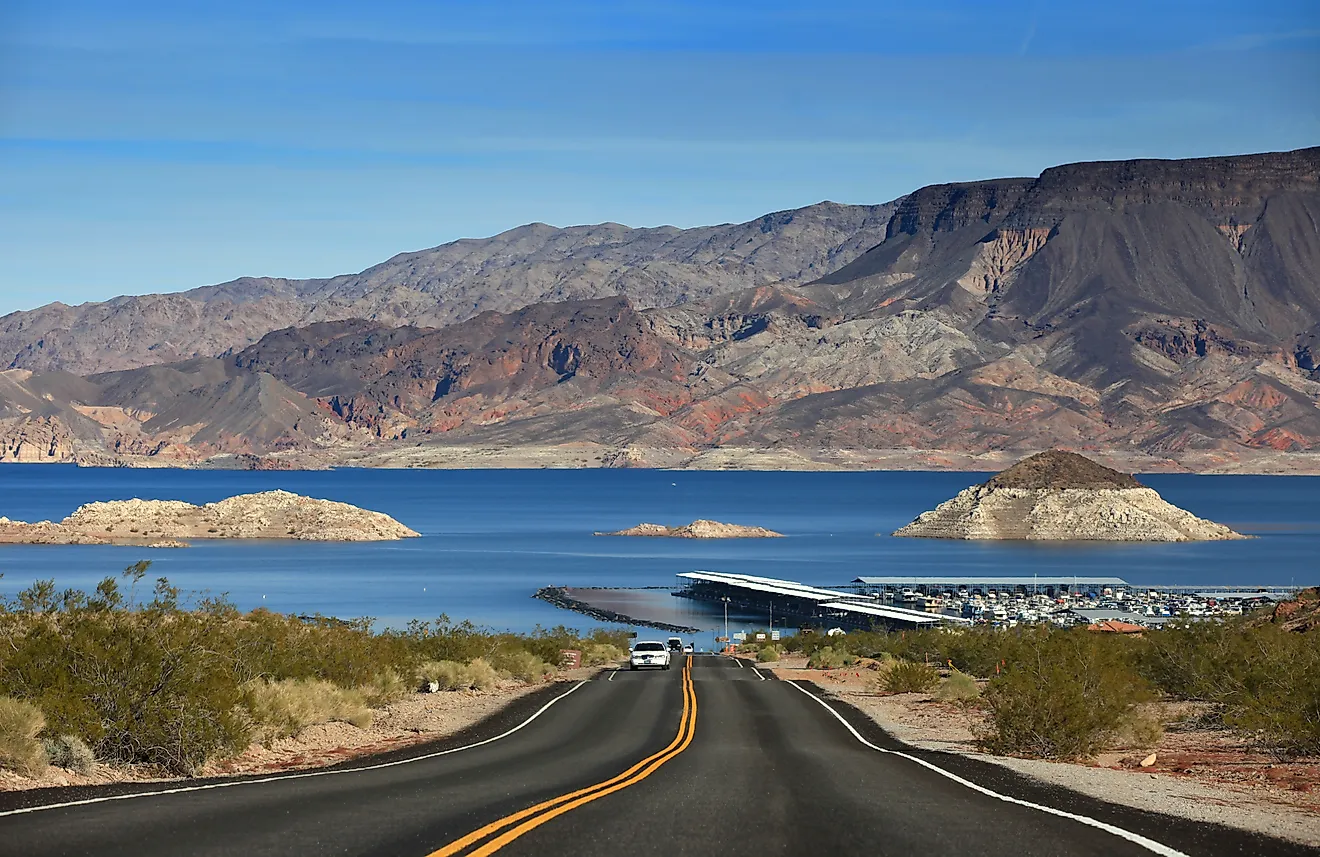
Lake Mead is a reservoir formed by the Hoover Dam on the Colorado River. It is one of the largest manmade reservoirs in the world, straddling the border between Nevada and Arizona. Since 1999, periods of extended drought paired with increased water demands driven by population growth have caused a drastic drop in lake levels. Along with other Colorado River reservoirs, Lake Mead is declining because the Colorado River's flows have declined. The Colorado River Basin supplies water to 40 million people across seven states and Mexico. Since 2000, snowpack in Colorado's Rocky Mountains has been consistently reduced during the ongoing megadrought.
Lake Mead provides some of the fastest-growing metropolitan areas in the United States with drinking water, including Las Vegas, Phoenix, Tucson, Los Angeles, and San Diego. California and Arizona are both primary consumers of Lake Mead's water. While both states have been reducing their water usage in efforts to preserve the lake, California still draws a substantially larger share than Arizona. In 2022, water levels dropped so low that the reservoir's low-level pumps, constructed in 2020 specifically for worsening drought conditions, were turned on for the first time. As water levels continue to drop, the water crisis remains a concern for these cities.
Loss of Hydroelectric Power

Lake Mead generates hydroelectricity through the Hoover Dam using the force of falling water. The water in the lake flows through steel-lined tunnels called penstocks and falls with force to turn turbines housed in two powerhouses, one in Nevada and one in Arizona. Each turbine spins a generator, producing electricity that is stepped up in voltage and transmitted across hundreds of miles. Out of all the electricity produced by the Hoover Dam, 19% goes to Arizona, 23% goes to Nevada, and 58% goes to California.
In December 2021, Lake Mead dropped to an elevation of 1,067 feet, levels which resulted in 25% less hydroelectricity being produced. In June 2022, the surface elevation measured just 1,043 feet. At this point, the lake was well within the range that concerns water managers, though still far above dead pool status, which is when the water is so low that it cannot flow to a dam and is too low to flow downstream. According to the US Bureau of Reclamation, Lake Mead would reach dead pool at an elevation of 895 feet. The reservoir currently sits roughly 150 feet above that mark, and federal projections show it declining further through 2026 and 2027.
If levels keep falling, Hoover Dam's hydropower production could drop sharply. Federal officials have warned of the potential for an additional reduction of up to 40% in the dam's generating capacity as water levels decline. Limiting this source of inexpensive and renewable energy would result in higher power costs across the region, while subsequently challenging the integration of renewable energy into the electricity grid.
Agriculture and Food Production

The agriculture industry is also heavily reliant on Lake Mead. Agriculture accounts for roughly three-quarters of the Colorado River's direct human water use, and cattle-feed crops such as alfalfa and hay alone consume about a third of the river's entire flow. Persistent drought conditions, climate change, and increased water demand have all affected farmers. The reservoir provides agricultural water rights to farms, ensuring access to adequate water for irrigation.
Access to water for irrigation is important in arid regions, such as the southwestern United States, as it experiences insufficient rainfall for large-scale farming. As farmers face water shortages, they have been forced to adopt conservative water strategies, including drip irrigation and advanced water recycling techniques. While these techniques limit waste and ensure water is used effectively, without Lake Mead's water supply, most agriculture in the southwestern United States would be impossible.
Ecological Consequences

Without the oasis that is Lake Mead, many species of wildlife would not be able to survive the harsh conditions of the Mojave Desert. Lake Mead is home to many species of mammals, including desert bighorn sheep, mountain lions, beavers, coyotes, and bats. The lake is also home to over 240 species of birds, 41 species of reptiles, 12 species of amphibians, and an abundance of fish.
The drop in water levels can fluctuate water temperatures, damage riparian habitats, and place pressure on native species. The loss of riparian forests has affected crucial habitat for several bird species, and the declining water levels have pushed the native humpback chub, bonytail chub, Colorado pikeminnow, and razorback sucker toward the brink of extinction.
Could Lake Mead Actually Run Dry?

A total dry-out is not what the current projections show. As of 2026, Lake Mead sits roughly 150 feet above dead pool, and even worst-case federal forecasts keep it well above that threshold for years. But the trajectory is what alarms scientists and water managers. If Lake Mead were to approach dead pool, the consequences would extend far beyond the reservoir: drinking water supplies, hydroelectric power generation, agriculture, and crucial wildlife habitats across the Southwest would all face severe pressure. Lake Mead's declining water levels are a reminder that the Colorado River cannot sustain the demands once placed on it, and that the choices the basin states make in the next few years will shape whether that new reality ever arrives.