The Largest Water Towers In The United States
Montgomery Township, Pennsylvania, is home to the largest tank on this list. Operated by the North Wales Water Authority, the General Hancock Water Tower holds 4.1 million gallons. Keokuk, Iowa, has a 136-foot-wide tank that holds 4 million gallons, while Rogers, Arkansas, has a tower with the same capacity. Near Sioux Falls, a 3-million-gallon tower provides storage for both the city and the Lewis & Clark Regional Water System. These outliers were built to meet regional peak demand and emergency storage needs. Usable storage and water demand help determine how long service can continue during an outage, along with system hydraulics and backup equipment.
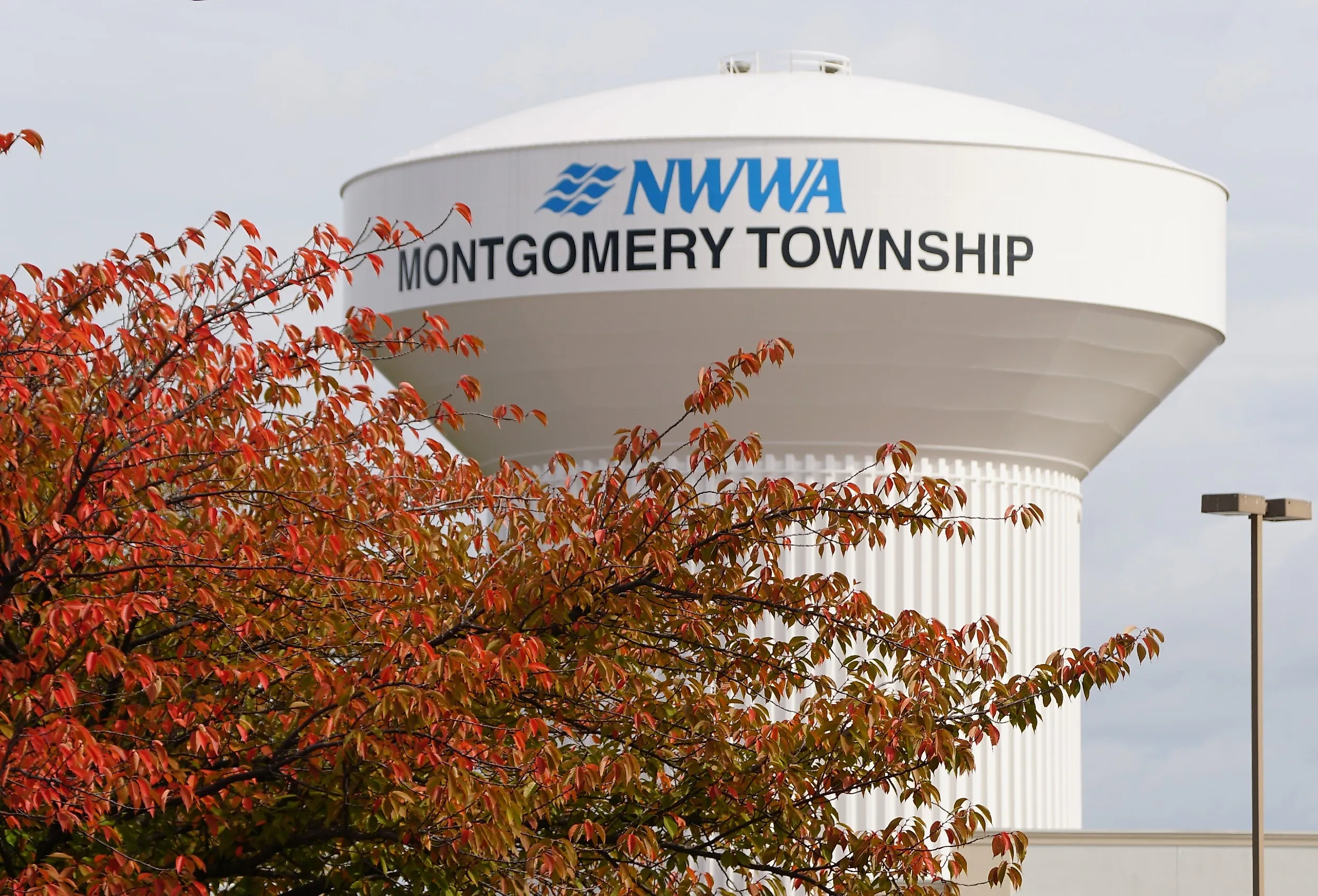
Montgomery Township, Pennsylvania

The General Hancock Water Tower operated by the North Wales Water Authority holds 4.1 million gallons, giving it more capacity than any of the other towers listed here. Located in Montgomery Township, it stands 175 feet tall and measures 135 feet in diameter.
The fluted-column elevated steel tank rests on a 90-foot-wide support column that rises 105 feet. Its design and capacity match another North Wales Water Authority tank, and the pair rank among the largest fluted-column elevated steel water tanks in the United States.
Construction took three years, with Carroll Engineering handling site engineering, approvals, bid assistance, and construction-contract administration. The added storage improves service reliability and strengthens the local fire-protection supply.
Sioux Falls, South Dakota

Located on 85th Street in Sioux Falls, South Dakota, this 3-million-gallon water tower is one of the older ones on this list, as it was completed in 2012. Lewis & Clark owns and operates the 85th Street tower in southern Sioux Falls, where it serves as a joint connection point for Sioux Falls and Lincoln County Rural Water System.
Lewis & Clark and Sioux Falls each needed 1.5 million gallons of storage in the area, so they agreed to build one 3-million-gallon tower, with Sioux Falls paying half the construction cost and receiving access to half the capacity.
The tower can rival some of the tallest water towers in the US in terms of height, with an overall height of 190 feet and a bowl diameter of 114 feet. In 2018, the water tower was dedicated in honor of former Lewis & Clark chairman Gary Hanson and board member Roger Lamp.
Saginaw, Michigan

The Saginaw Water Tower in Michigan is the newest water tower on this list. The 3-million-gallon, 160-foot tower provides backup pressure and additional storage for a regional system serving more than 150,000 customers.
The project used a $15 million state forgivable loan supported through the Drinking Water State Revolving Fund and American Rescue Plan, plus city water-system funds, while Spicer Group provided engineering and construction-management services. The tower was officially opened in July 2026 and cost $18 million in total, although it's been in service since April 2026.
The primary purpose of this water tower is to provide pressurized water during outages. Before the tower entered service, Saginaw crews had only about three to five minutes to restore pumping before the system risked losing pressure; the tower extends that response window to several hours. The tower has several modern features, such as an 84-inch access tube and a natural gas generator.
Spokane, Washington

Like the Sioux Falls, Saginaw, and Rogers towers, Spokane's reservoir is a composite elevated tank with a steel vessel supported by a reinforced-concrete pedestal. A composite elevated tank is a newer form of water tank, made of carbon steel and supported with a concrete support pedestal. Companies such as Caldwell can build tanks with as much capacity as 3 million gallons, but one in Spokane, Washington, was raised in November 2024 with a far larger capacity.
Known as the Spokane International Airport Reservoir, it holds 3.66 million gallons of water. Built by Landmark, the reservoir has a 150-foot high-water level and a 69-foot-diameter pedestal, the largest pedestal the company had built at the time. For this project, Landmark provided pedestal wall forms and a floating scaffold. The city listed a $13.27 million construction estimate for the locally and state-funded project.
Rogers, Arkansas

In 2025, Landmark completed the construction of one of the largest composite elevated water tanks in the US in Rogers, Arkansas. The Rogers tank holds 4 million gallons and has a listed high-water level of 100 feet, with a 45-foot operating head range.
The foundation required nearly 1,400 cubic yards of concrete and 70 tons of reinforcing steel, while vibratory stone columns improved the unsuitable soil beneath it. Stone vibratory columns were placed in the earth as well to ensure the soil structure would be strong enough to support this tower.
That same year, the older Rogers water tower was removed, and the land was reused for a cell phone tower. This water tower had been disconnected from the water supply since 2018.
Keokuk, Iowa

Located in Keokuk, Iowa, this water tower ties with Rogers in terms of water capacity at 4 million gallons. The 4-million-gallon Keokuk tower entered service in December 2011 to help a system with an average daily demand of 12 to 14 million gallons supplied from the Mississippi River. It is 150 feet high, with the water tank itself being 136 feet wide.
This water tower was made to offer reprieve to the water system and the staff who previously had to constantly make adjustments to keep up with demand. Keokuk's three elevated towers provide 6 million gallons of capacity, while a 3-million-gallon clearwell brings the system's total finished-water storage to approximately 9 million gallons.
What Makes Water Towers So Important?
Storage capacity is what sets these towers apart. Utilities size elevated tanks around peak demand, fire-flow requirements, and emergency reserves. The largest examples may serve major industrial users, growing populations, or multiple water systems. Several major towers fall outside this list. The North Wales Water Authority operates another 4.1-million-gallon fluted-column tank in Chalfont, Pennsylvania, matching the General Hancock tower in capacity and design. Loudoun Water in Virginia has two 3-million-gallon composite tanks on one site, while Farmington Hills, Michigan, has a 3-million-gallon tower that rises 209 feet. These examples show why notable water towers cannot be judged by one measurement alone: capacity, height, location, and system function all matter.