Why There Are No Bears In Some Western National Parks
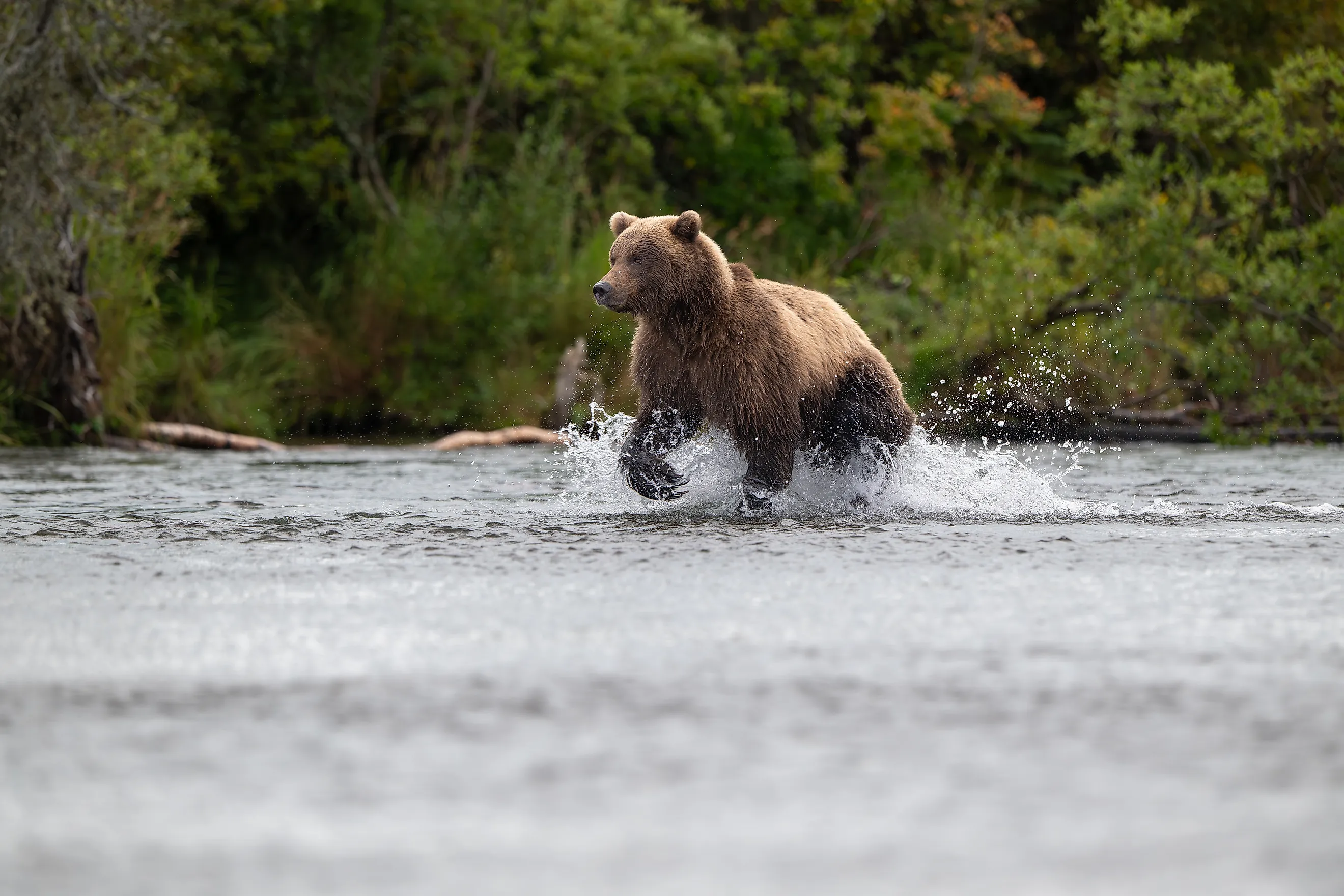
Visit a national park in the western United States and you have a decent chance of watching a black bear shoulder its way through a campground. What you almost certainly will not see is a grizzly. That absence is not an accident of geography. It is the result of one of the most thorough and least-discussed wildlife eliminations in American history. Before European settlement, roughly 50,000 grizzly bears ranged across nearly the entire West, through the same valleys and peaks that would later become the country's most-visited national parks. Today they hold on in a few northern pockets. This is the story of where they went, and why the bear you meet on a trail is almost always the other kind.
The Role of Humans

The single biggest reason grizzlies vanished from the West is blunt: people killed them, deliberately, at scale. To settlers pushing west in the nineteenth century, a grizzly was a threat to livestock and to human safety, and the standard response was not to learn to coexist but to eliminate it. By the late 1800s, hunters were shooting bears on sight and taking them with heavy steel traps. Then it became policy. Federal and local agencies ran organized poisoning campaigns across the United States, laying out strychnine baits because poison was a cheap way to kill large predators over enormous areas. It worked with terrible efficiency. One detail captures the whole arc of it: the grizzly still stands on the California state flag, more than a century after the last wild grizzly in the state was killed in the 1920s.
A Shrinking Home

Killing was not the only force working against them. As settlers logged, mined, and plowed the West, they carved up the exact kind of country a grizzly depends on, and a grizzly depends on a lot of it. An adult male can range across hundreds of square miles in a single season, following food from one mountain range to the next. Roads, farms, fences, and rail lines chopped that open terrain into disconnected scraps, too small and too broken for a wide-ranging predator to move through safely. Grizzlies also breed slowly, so a population that gets boxed in does not bounce back in a hurry. Sever the corridors between habitats and the math turns against the bear fast.
What About Black Bears?

So why do black bears get to stay? Mostly because they are smaller, more adaptable, and far less interested in cattle, which meant they never landed on the extermination list the way grizzlies did. They are still out there across plenty of western parks, including Yosemite, Sequoia, and Olympic, though they tend to keep their distance, the product of decades of wildlife management and some very serious rules about coolers. That is the key thing to understand about most "bear warnings" at a western park: they are almost always about black bears, and the danger is less that a bear will hurt you and more that it will methodically take your campsite apart in search of a granola bar. A black bear that learns to pop open a car door is a management headache. A grizzly, to the people settling the West, was something to be wiped out entirely.
Where Grizzlies Still Exist Today

Grizzlies still thrive across western Canada and Alaska, and in the lower 48 they hang on mainly in the northern Rockies, in Montana, Wyoming, and Idaho, with the Greater Yellowstone Ecosystem as the anchor. When the lower-48 population was listed as threatened under the Endangered Species Act in 1975, Greater Yellowstone held an estimated 136 bears. Today the number is close to a thousand, and the wider contiguous United States supports more than 2,000. That is a real conservation success, one of the genuine bright spots in American wildlife recovery. It is also worth keeping in scale: a thousand bears in Yellowstone is a triumph, and it is still a rounding error against the fifty thousand that once had the run of the West.
The Fight for Recovery
The bear's future is genuinely unsettled, and it is being argued out right now. In April 2024, the Fish and Wildlife Service and the National Park Service approved a plan to airlift a small number of grizzlies into the North Cascades of Washington, a range they once roamed, and rebuild a self-sustaining population over several decades. Then the plan stalled. No bears have been moved, no timeline has been set, and under a new administration the effort has quietly gone dormant.
The states, meanwhile, have been pulling in the opposite direction. Montana and Wyoming petitioned to strip federal protection from their grizzlies and hand management to the states outright; in 2025 the Fish and Wildlife Service declined, finding no basis to delist. A revised federal plan, due in early 2026, threads the needle by keeping grizzlies protected under the Endangered Species Act while giving state managers somewhat more day-to-day flexibility. For now, the bear stays on the federal list, and the question of what the West owes the animal it nearly erased is a long way from settled.