Why Highway Rock Cuts Are Full Of Copperheads
Drive through almost any stretch of hill country and you will pass them: steep walls of broken rock blasted out of a hillside to make room for the road. These roadside "rock cuts" look like nothing more than scenery, but to a copperhead they are something close to a dream home. Again and again, these man-made rock faces turn out to be crawling with the snakes. So what is it about a highway rock cut that copperheads find so irresistible? Here is why rock cuts are so often full of them.
A Rock Cut Is Copperhead Paradise

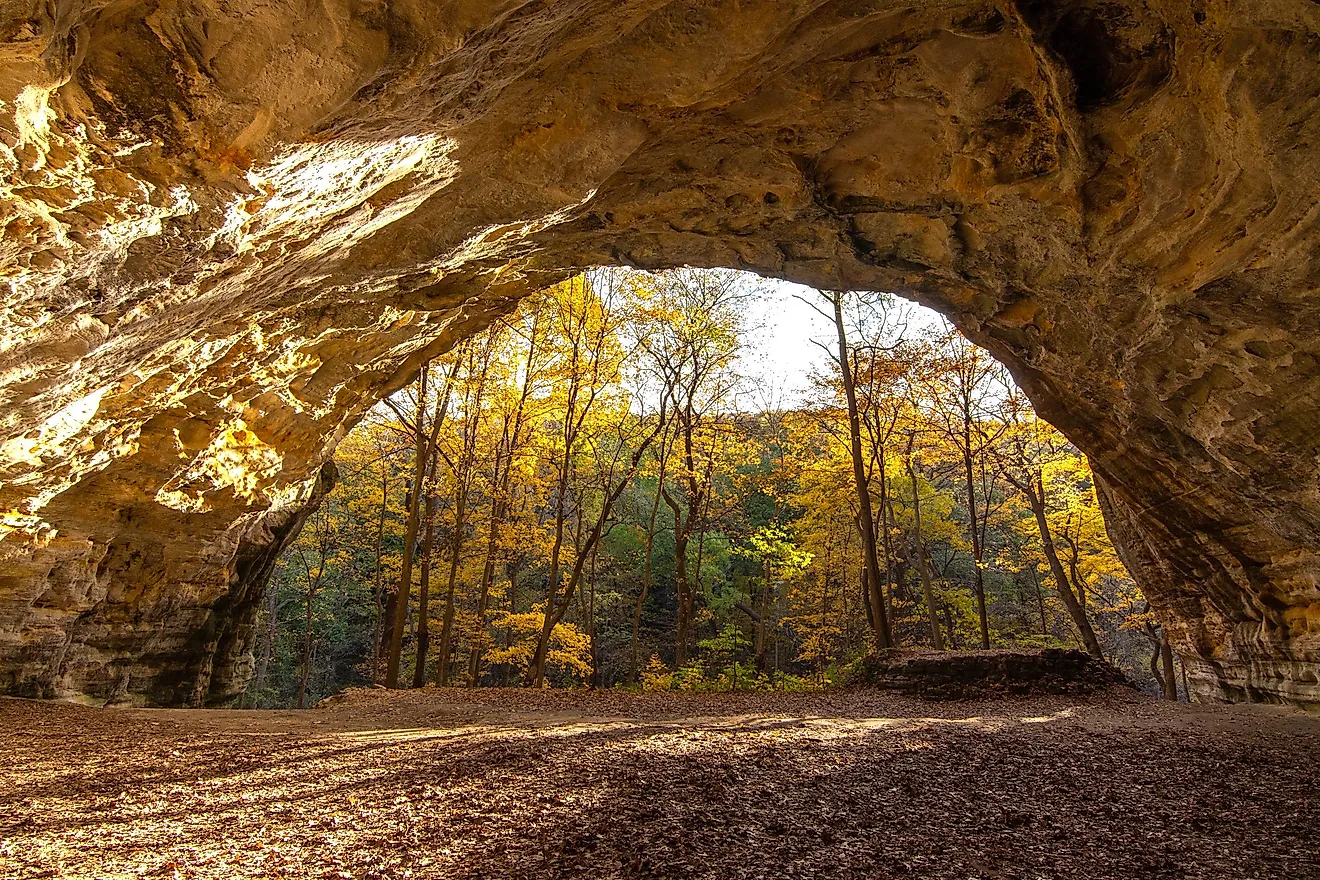
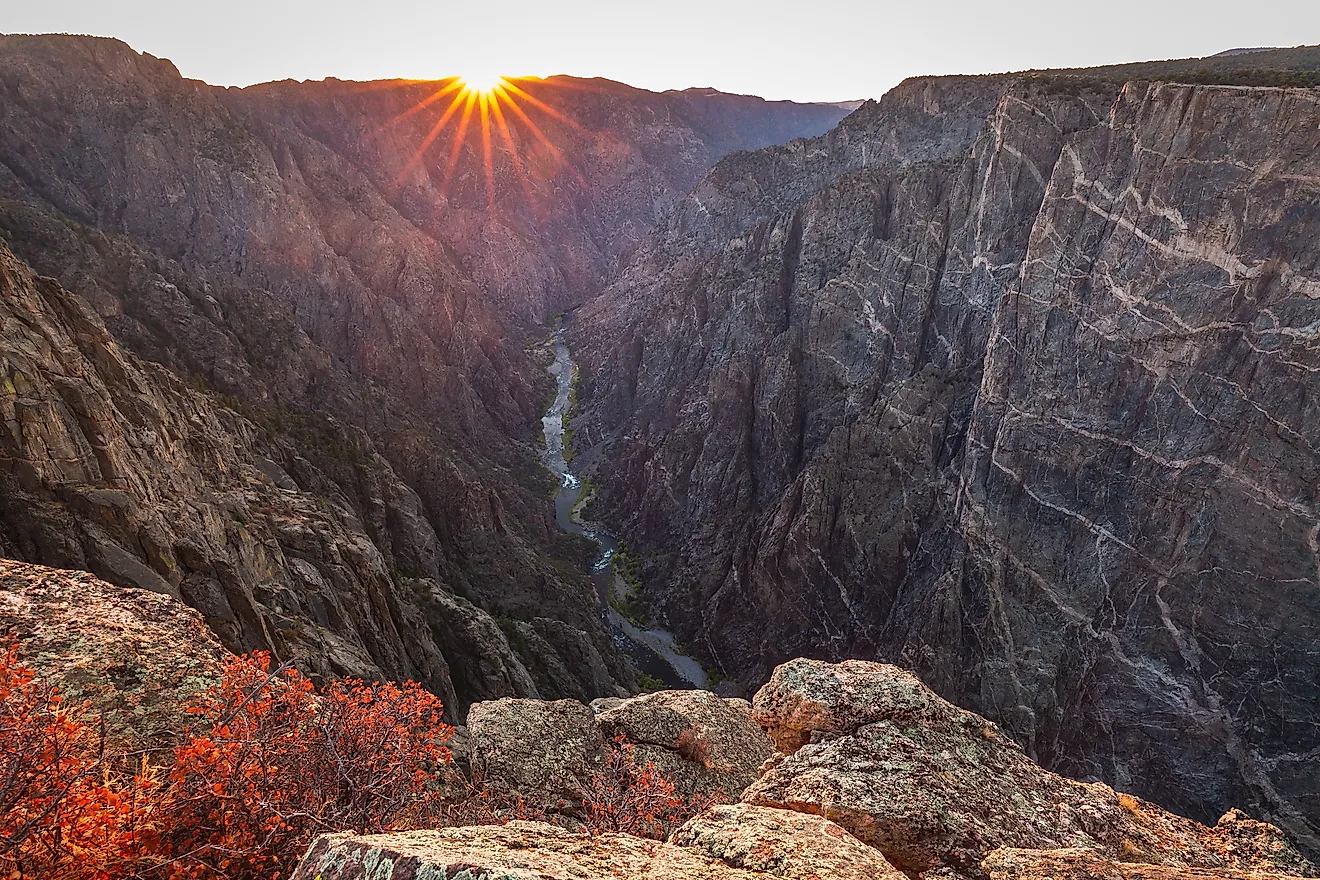
The short answer is that a rock cut accidentally builds the exact habitat copperheads love most. In the wild, copperheads gravitate to rocky, wooded hillsides, exposed outcrops, ledges, and slopes of broken rock called talus. Blasting a road through a ridge instantly manufactures all of that at once: a tall face of fractured stone, riddled with cracks and crevices, with piles of loose rubble heaped at its base. It is the kind of rugged, rocky terrain that might take nature centuries to produce, created in a single afternoon of construction.
Warm Rock to Bask On

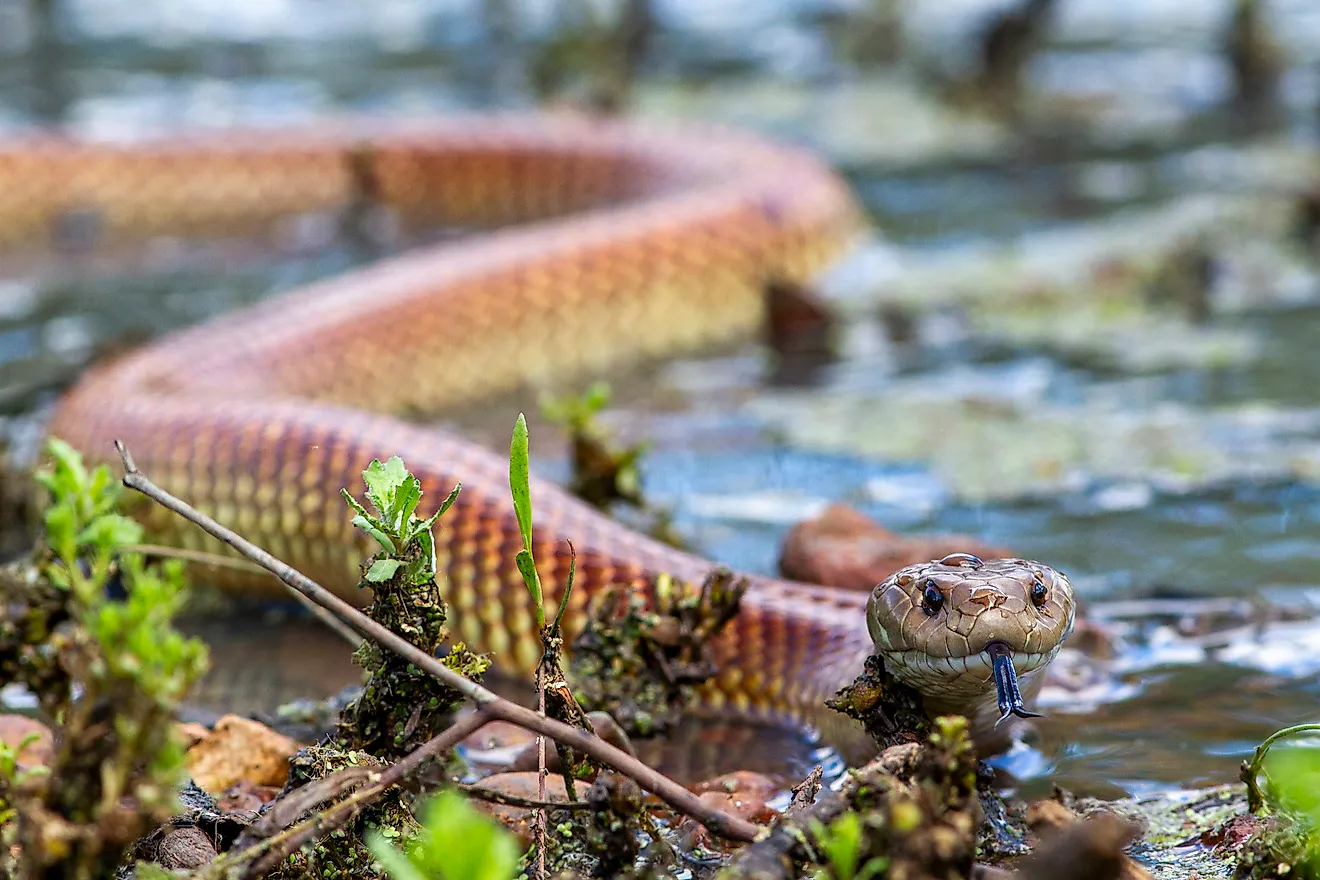
Copperheads are cold-blooded, so they rely on outside warmth to power their bodies, and a rock cut is essentially a giant solar collector. The exposed stone faces, especially those angled toward the south or west, soak up the sun all day and radiate that heat back out, and the nearby asphalt does exactly the same. That makes a rock cut a reliable sun-trap where a copperhead can stretch out and raise its body temperature, which is why they are so often spotted basking on these rocky banks in spring and fall.
Crevices to Den In

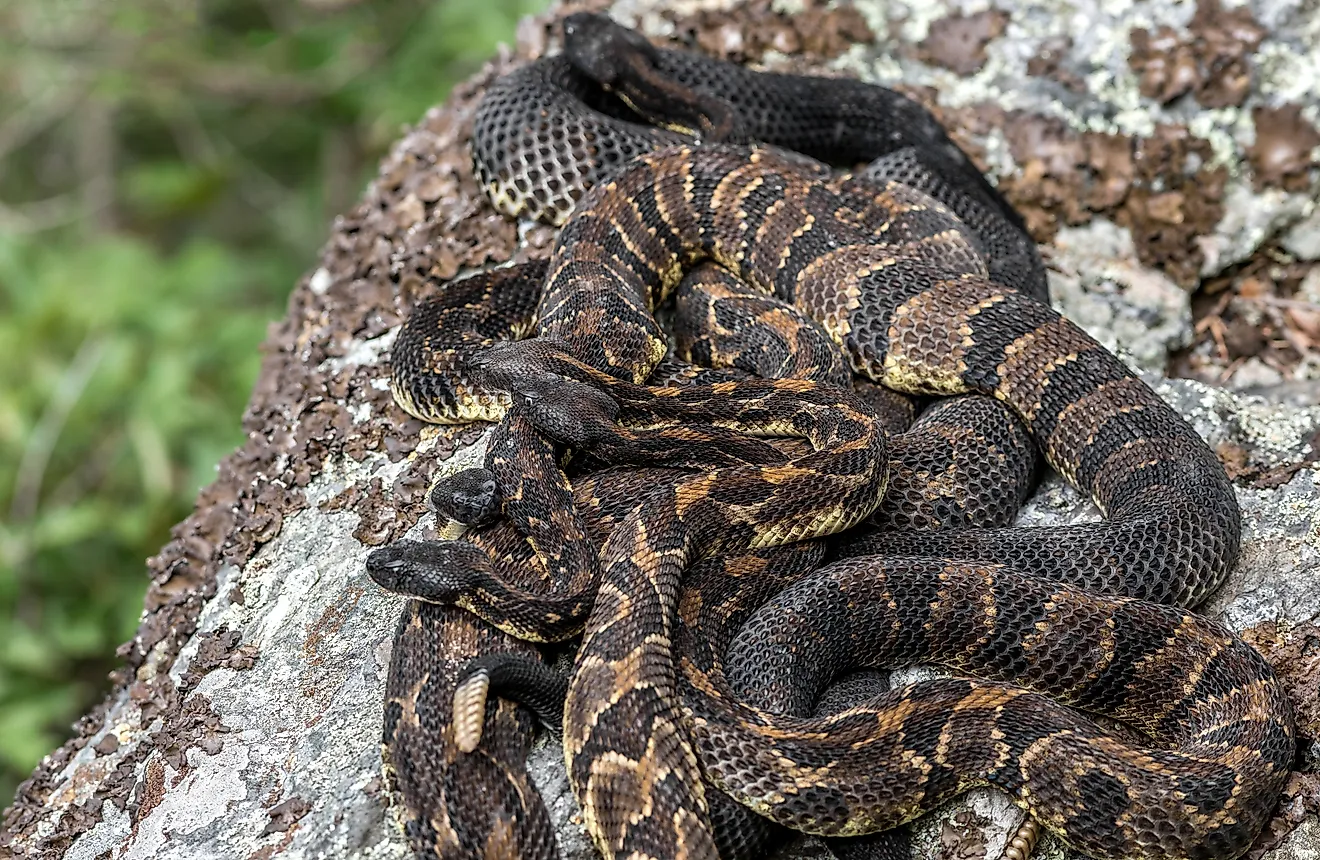
Just as importantly, a rock cut offers a place to survive the winter. The deep cracks and piles of talus extend well below the frost line, creating frost-free pockets that make excellent hibernacula, the dens where snakes wait out the cold. Copperheads are social denners that often overwinter communally, packing in with other copperheads and sometimes timber rattlesnakes or rat snakes, and they return to the same den generation after generation. A fresh rock cut can quickly become one of these traditional winter addresses.
A Rock Cut Full of Food

All that rock comes with a well-stocked pantry. The warm, brushy, disturbed strip of ground along a roadside, combined with the countless nooks in the rock, is prime real estate for mice, voles, and other rodents, which are exactly what a copperhead likes to eat. As a patient ambush hunter, the copperhead can simply coil up in a crevice and wait for a meal to wander past. Shelter, warmth, and food all stacked together in one place make a rock cut very hard for the snake to beat.
Right Alongside the Road

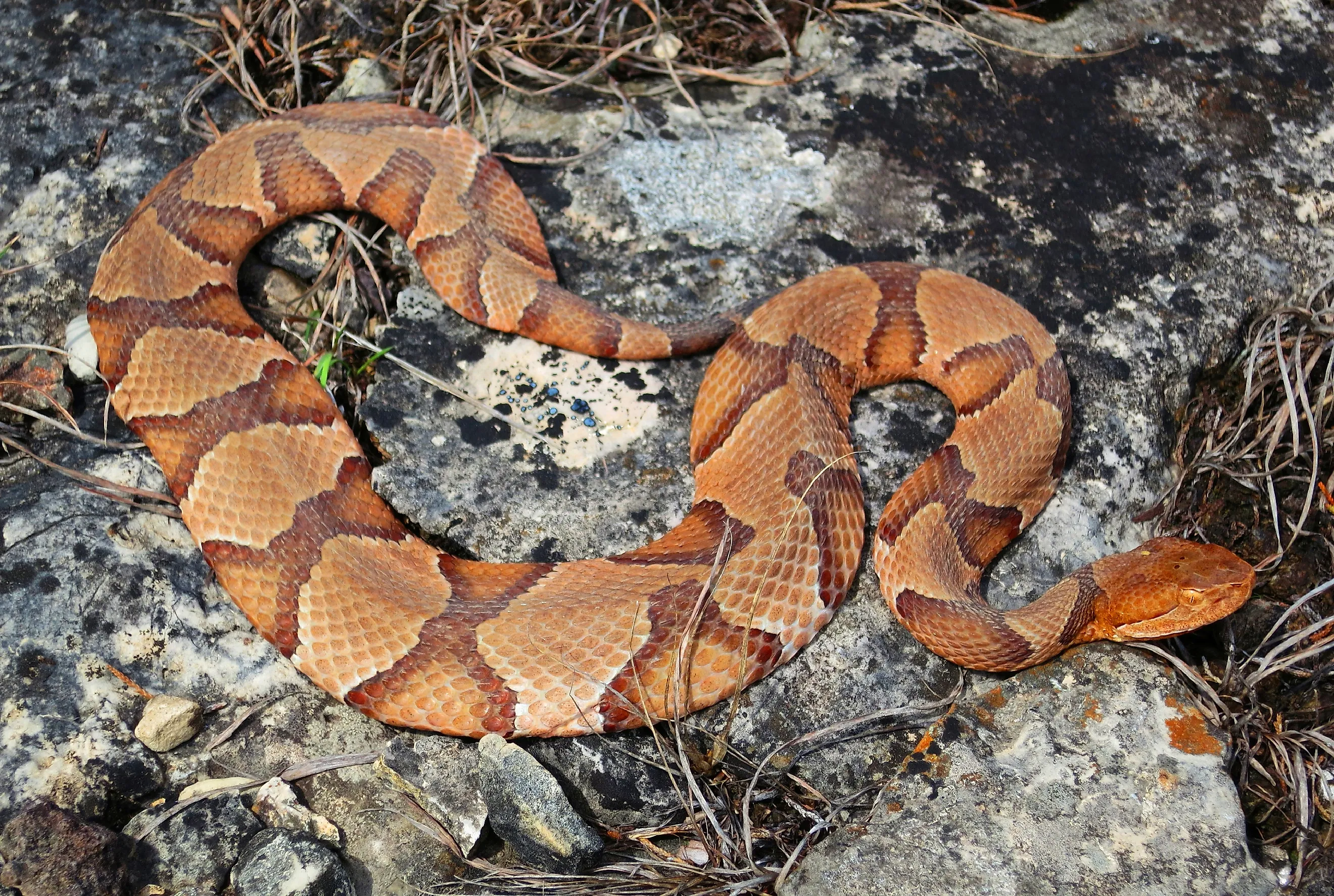
The catch, of course, is that all of this sits right next to where people are. Rock cuts line the very roads, pull-offs, and trailheads where drivers stop and where hikers and climbers scramble over the rocks, which puts copperheads and humans in close quarters. Making matters trickier, copperheads tend to freeze and rely on their superb camouflage rather than flee, so they are easy to step on or reach past without ever noticing. The simple rules are to watch where you put your feet on rocky road banks and to never, ever reach blindly into a crevice. Sadly, that same roadside life also makes these snakes frequent victims of passing traffic. So a highway rock cut is far more than scenery; it is an accidental copperhead resort, offering sun, shelter, and supper all in one rocky stretch, which is exactly why these snakes turn up in them so reliably.