How Rattlesnakes Find Their Way Back To The Same Den
Researchers studying translocated western diamondbacks summarized the state of knowledge in a single admission: rattlesnakes exhibit strong site fidelity and homing may occur because familiar locations are learned, but the cues snakes use to orient and navigate are not well understood. The behaviour is beyond dispute. More than half of displaced rattlesnakes in one Arizona study found their way back. How they do it is still being worked out, and the leading answer involves a chemical trail rather than a map.
The Homing Is Documented

The evidence comes from researchers deliberately moving snakes and watching what happened.
In a translocation study at a protected Arizona site, more than half the displaced rattlesnakes made their way back to where they had been taken from. In British Columbia, 12 of 14 western rattlesnakes returned to within 500 meters of their capture point in under a month.
That is not a slow drift back toward familiar country. It is directed movement toward a specific place.
They Follow Each Other's Scent

The mechanism with the strongest support is chemical rather than visual.
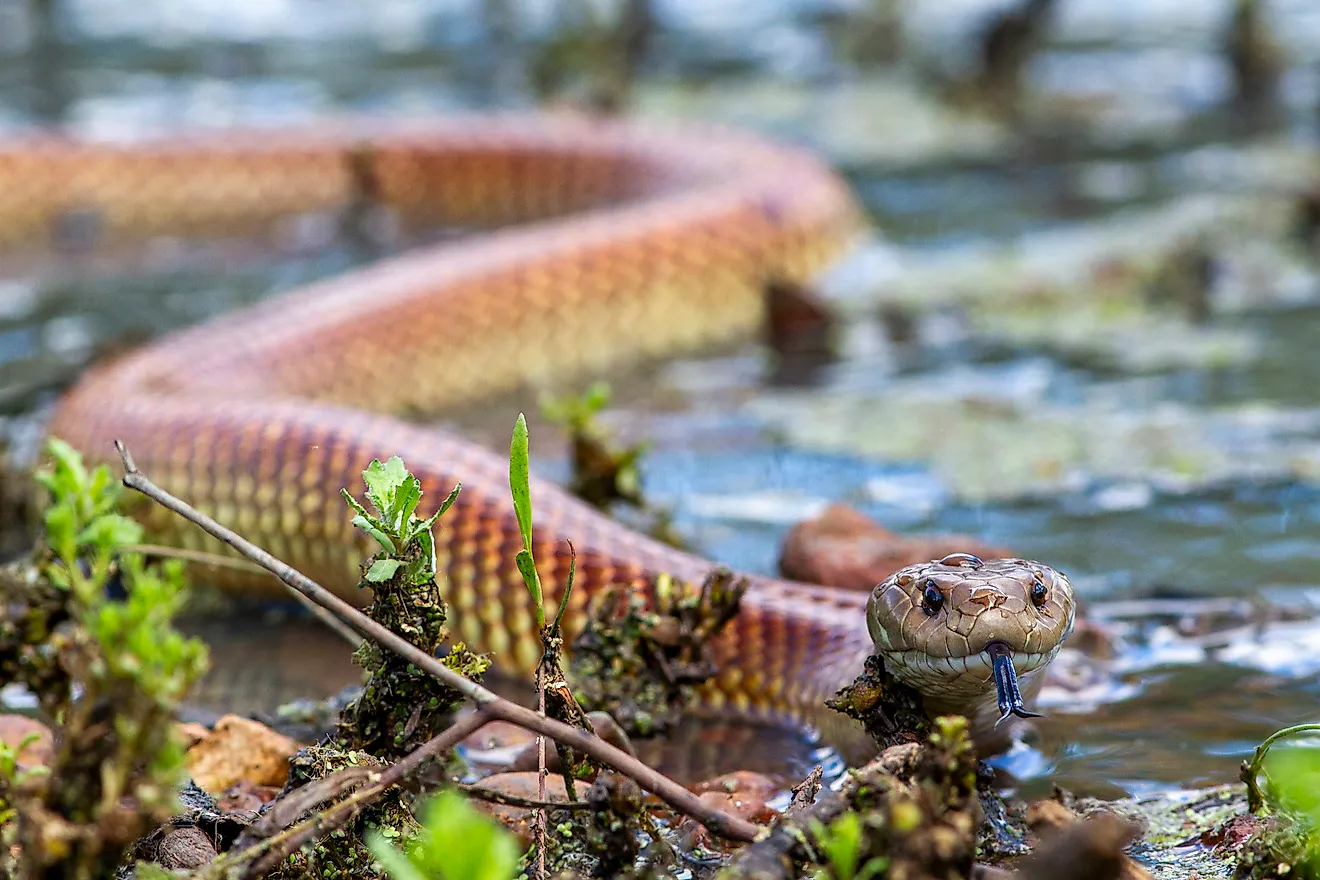
Rattlesnakes lay pheromone trails and other snakes follow them, reading the chemical signature through the vomeronasal organ in the roof of the mouth. The flicking tongue collects particles and delivers them to it.
Newborn timber rattlesnakes, born well away from the den, follow adult scent trails back to a place they have never visited. The route does not have to be learned because it is written on the ground.
Which Makes The Trail The Weak Point

A navigation system written in scent is only as durable as the surface carrying it.
A road, a development or a cleared field across a migration route breaks the chemical record. Adults may still manage on memory. The first-year snakes relying entirely on the trail do not arrive.
That is why habitat fragmentation damages these populations faster than the loss of acreage alone would suggest.
Moving Them Reshapes Their Brains

The most striking finding in this literature is anatomical rather than behavioral.
A study of free-ranging northern Pacific rattlesnakes found that experimentally increasing navigational demands produced measurable changes in the cortical forebrain, establishing a causal relationship between navigation and brain morphology.
Navigating is not a passive process for these animals. Asking more of it physically alters the organ doing the work.
Displacement Costs Them
The snakes that cannot get home pay for the attempt in distance and in survival.
Snakes subjected to long-distance translocation showed activity areas and mean daily movement distances 1.8 to 4.6 times larger than non-translocated snakes in the year they were moved, returning to normal the following year.
Multiple studies associate long-distance translocation with higher mortality, with abnormal movement rates increasing exposure to predation. A University of Idaho study of prairie rattlesnakes in Wyoming found both increased mortality and weight loss.
Short Moves Work, Long Ones Do Not

The practical finding from all this research now shapes how nuisance snakes are handled.
Short-distance translocation within an animal's existing home range produces far better outcomes than moving it somewhere new, and is the standard recommendation.
Keep a snake inside the area it already navigates and the chemical and spatial information it holds remains valid. Take it beyond that and the information is worthless.
Site Fidelity Runs In Families

Generations of successful navigation back to one place produce a genetic signature.
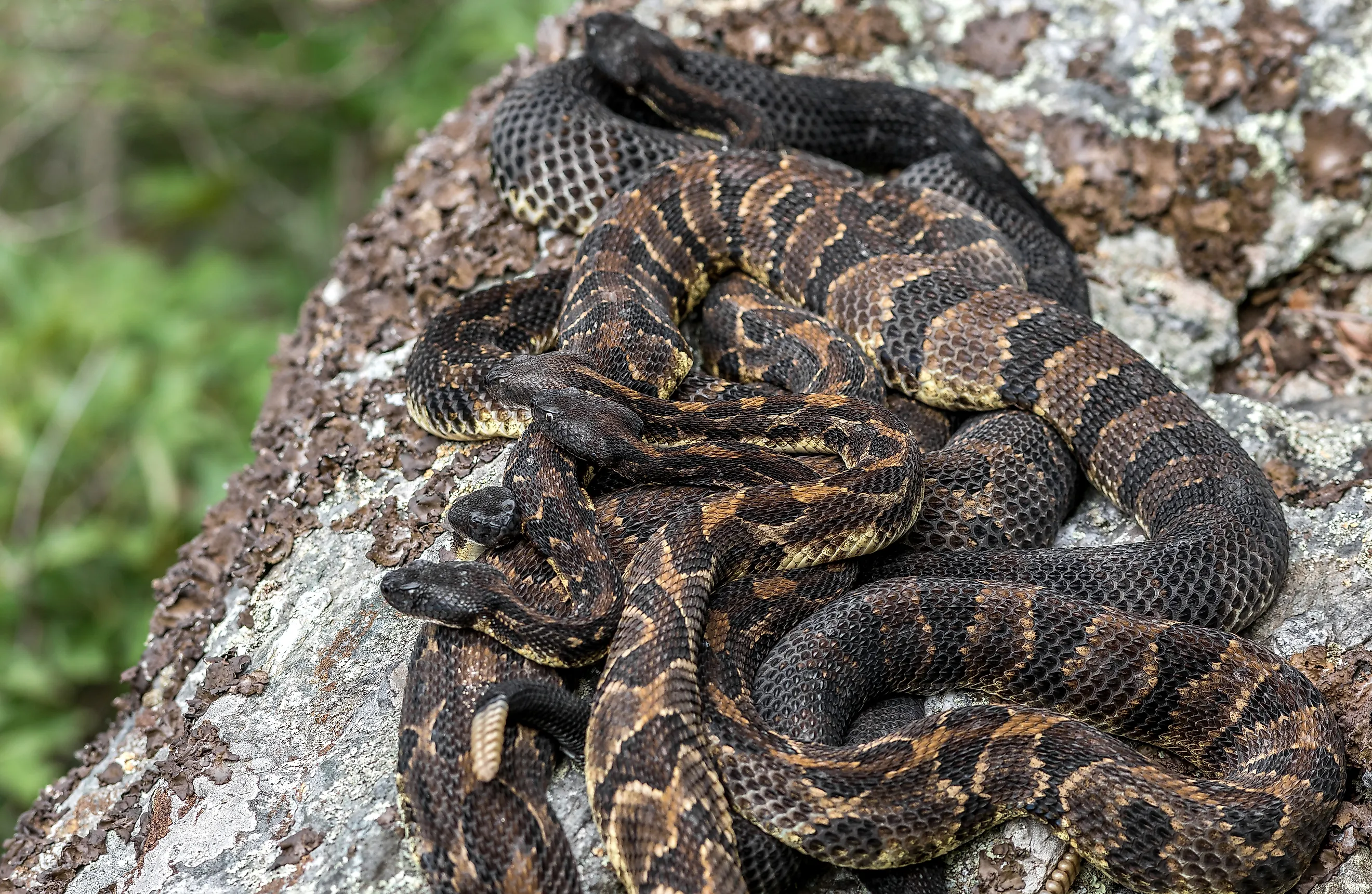
Timber rattlesnakes show high fidelity to hibernacula with only occasional exchange between sites, and the animals in a given den are consequently highly interrelated. Genetic work in New York found snakes in fragmented habitat staying within isolated islands and mating within them.
Females show particular fidelity to the den where they were born, which anchors the lineage to one rock face.
Massasaugas Cannot Relearn It

One species demonstrates how little margin there is when the navigation fails.
Studies have found that massasaugas were unable to survive the winter when moved outside their home range, presumably because they could not locate suitable hibernation sites in the time available.
The snake does not simply need to find somewhere. It needs to find somewhere specific, and the search window closes when the weather does.
Spring Reverses The Process

The outbound journey in spring is what makes the return journey possible.
After emerging, midget faded rattlesnakes stay near the den entrance for two to three weeks before moving to shedding habitat. Males and non-gravid females then migrate up to seven kilometers, among the longest movements recorded for any rattlesnake.
Every one of those miles has to be reversed in fall. The scent trail laid going out is the route coming back.
The Short Answer

Rattlesnakes find their way back primarily by following pheromone trails read through the vomeronasal organ, supplemented by learned familiarity with the ground they cross every year. Researchers are candid that the full set of cues remains unresolved.
What is not in doubt is the result. Over half of displaced snakes return, 12 of 14 did so in one Canadian study, and the ones prevented from getting home travel up to four and a half times further than normal, lose weight and die at higher rates. The navigation is good enough that interfering with it is measurably harmful.