The American Towns That Are Sinking Fastest
Parts of Corcoran, California, have sunk more than 11 feet in about 14 years. That is enough to bury the first floor of a two-story house, and it happened so gradually that most residents never noticed it day to day. Land subsidence, the slow sinking of the ground, is happening across the United States, usually because people pump more water out of underground aquifers than nature puts back. In a few places, it is happening fast. These are the American towns where the ground is dropping most quickly.
Why The Ground Sinks

Most of the fastest sinking in the United States has one cause: groundwater pumping. Underground, many aquifers are layered with sand, gravel, and clay. When water is pumped out faster than rain and rivers can refill it, the clay layers squeeze together like a sponge being wrung out, and the land on top drops. A recent study of the country's largest cities found that groundwater use accounts for most of the sinking measured across them.
Other forces play a role too. Along the Gulf Coast, loose river sediments naturally compact over time, a process worsened by levees that keep new sediment from replenishing the land. In Alaska, warming temperatures are thawing permanently frozen ground, causing it to slump. And in some oil-producing areas, pumping oil and gas from deep below can also cause the surface to settle.
Corcoran, California

Corcoran, a farming town in California's San Joaquin Valley, sits near the center of one of the fastest-sinking areas in the country. During the worst drought years, NASA satellites measured the ground near town dropping about an inch and a half each month. In some years, parts of the area have sunk nearly 2 feet.
The cause is groundwater pumping. For generations, farms in the valley have drawn water from deep aquifers to irrigate crops, and as the water is removed, layers of clay beneath the surface compress and the land above settles. Corcoran has spent millions of dollars raising its flood levee, because the ground beneath it keeps dropping. Once the clay compacts, the lost space is permanent.
El Nido And Chowchilla, California

Farther north in the valley, the small farming community of El Nido and the town of Chowchilla sit in a second major "subsidence bowl," where NASA has measured sinking of up to 2 feet a year during drought. In one eight-month stretch, the ground near El Nido dropped about 10 inches.
The sinking has damaged canals, bridges, and wells across the region. Some irrigation canals have lost much of their ability to carry water, because their channels have sagged and buckled as the land beneath them dropped. Farmers have responded by drilling deeper wells, which can worsen the problem.
Wenden, Arizona
Wenden, a tiny community in western Arizona, is sinking as large farms pump water from beneath the desert. The ground here is falling about 2 to 3 inches a year, damaging roads, wells, and buildings.
Arizona places few limits on groundwater pumping in many rural areas, and in places like Wenden, large agricultural operations have expanded quickly. As the water table drops, the land settles, and in parts of Arizona, long cracks called earth fissures have split open across fields and roads.
Katy And Fulshear, Texas

The fast-growing suburbs west of Houston are sinking faster than any other part of the region. Near the new neighborhoods between Katy and Fulshear, local sensors show the ground dropping more than an inch a year, according to the Houston Chronicle.
As former rice fields and ranches turned into subdivisions, demand for water from the local aquifer soared. A 2025 study of the country's largest cities found Houston to be the fastest-sinking big city in the nation, and its western suburbs are where the problem is most severe. Officials are building a pipeline to bring in surface water from Lake Houston, hoping to ease pressure on the aquifer and slow the sinking.
Grand Isle, Louisiana

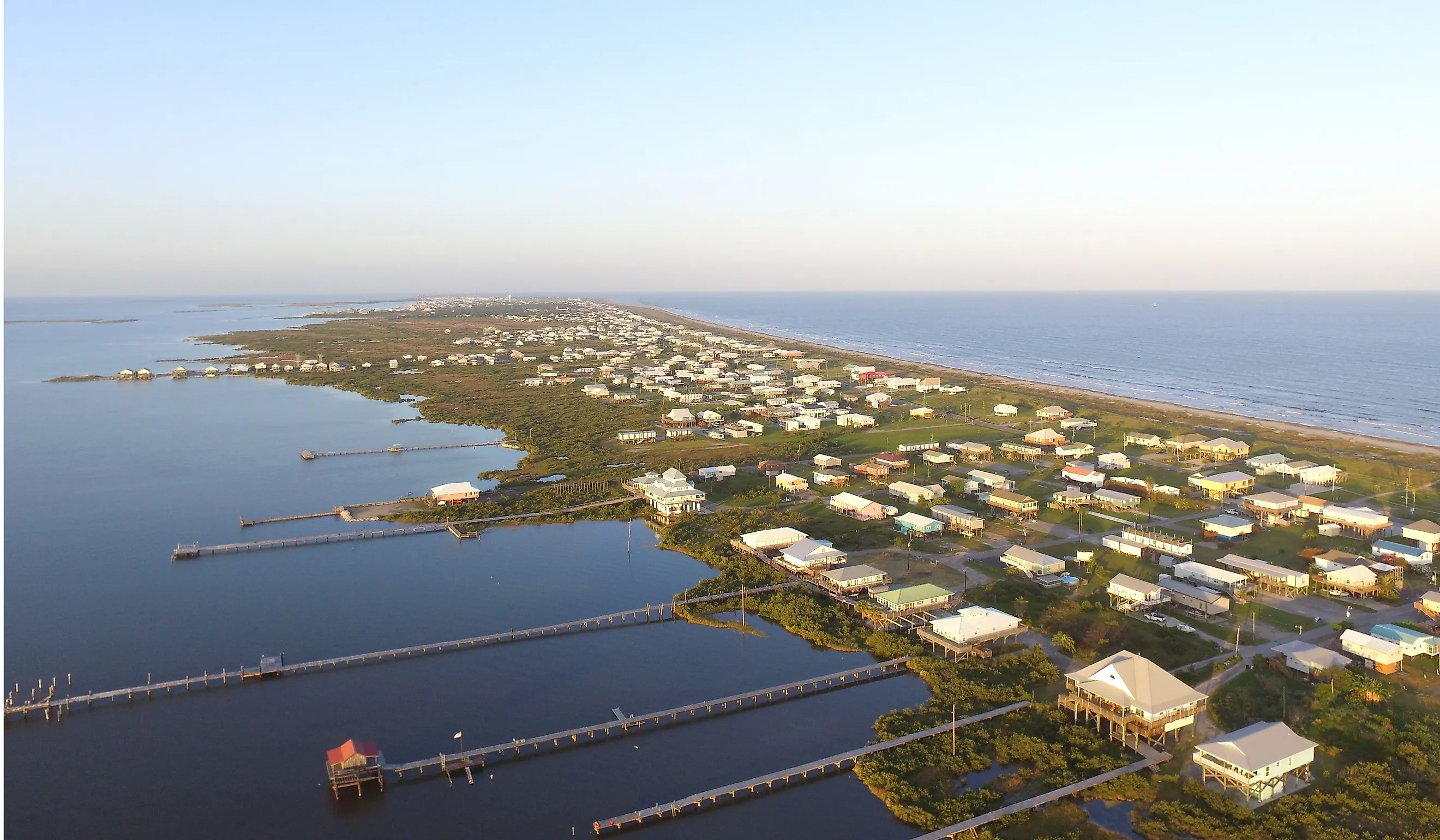
Grand Isle, Louisiana's only inhabited barrier island, has one of the fastest rates of relative sea-level rise in the United States. Much of that comes not from rising water but from sinking land, as the soft sediments of the Mississippi River Delta compact and settle.
Without the river's sediment to rebuild it, the island and the surrounding marshes slowly lose elevation, leaving homes, roads, and levees more exposed to hurricanes and flooding. The town has raised many of its buildings on tall pilings to keep ahead of the water.
Newtok, Alaska

In western Alaska, the village of Newtok faces a different kind of sinking. As the climate warms, the frozen ground beneath the village, known as permafrost, has been thawing, causing the land to slump and collapse while river erosion eats away at its edges.
The damage became so severe that residents began moving to a new village site, called Mertarvik, on higher, more stable ground across the river. It is one of the first communities in the country to relocate because of land loss.
Can It Be Stopped?
Subsidence caused by pumping can be slowed, though rarely reversed. In the Houston area, a regional district created in the 1970s to regulate groundwater pumping has dramatically reduced sinking near the coast by shifting cities to surface water. California passed a statewide groundwater law in 2014 that aims to bring pumping into balance over the coming decades. For towns built on thawing permafrost or sinking delta soils, the options are harder, ranging from raising buildings to moving entire communities. In every case, the ground beneath these towns is a reminder that the water we take out has to come from somewhere.