US Towns That Look Like The English Countryside
English cottages with crooked chimneys, Tudor-style houses, and streets lined with old trees might seem more at home in the Cotswolds than in Wisconsin or Ohio. Yet several American towns were built with the English countryside in mind. Some borrowed architectural details from centuries-old villages, while others followed the English garden-city movement, which emphasized green spaces, residential neighborhoods, and walkable town centers.
The stories behind these places are just as interesting as their buildings. One California builder became known for cottages inspired by English storybook illustrations. A Wisconsin businessman traveled to England to study housing for factory workers. Elsewhere, architects recreated the appearance of English market squares and country houses, leaving behind communities where those designs remain part of everyday life.
Carmel-by-the-Sea, California

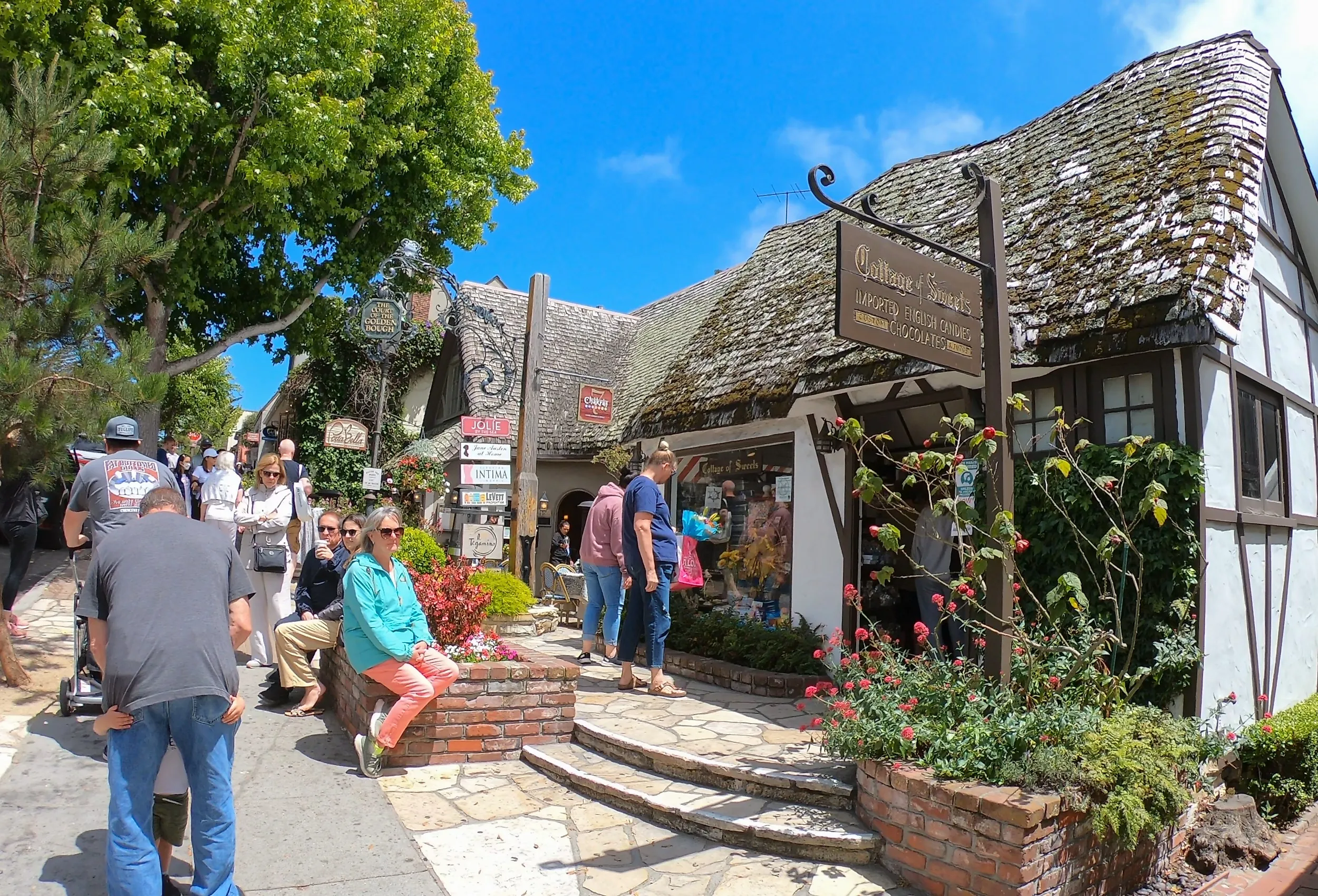
Hugh Comstock had no formal architectural training when he began building the cottages that would eventually become a defining part of Carmel-by-the-Sea. His wife, Mayotta, made handmade dolls, and Comstock designed a storybook-style cottage for her business. His work caught the attention of other residents, who wanted houses with the same unusual appearance.
Comstock drew inspiration from English illustrator Arthur Rackham, whose fairy-tale drawings depicted crooked cottages and exaggerated rooflines. His houses had curved wooden shingles, rounded doorways, rough plaster walls, and stone chimneys that looked deliberately uneven. Between 1924 and 1929, he built approximately 20 cottages around Carmel.
Several survive along Torres Street, including Hansel and Gretel near Sixth Avenue. The cottages resemble old English homes, although they were constructed in the 1920s. Most remain private residences, while the Tuck Box on Dolores Street, another Comstock design, has long been associated with Carmel's English-style architecture.
Mariemont, Ohio

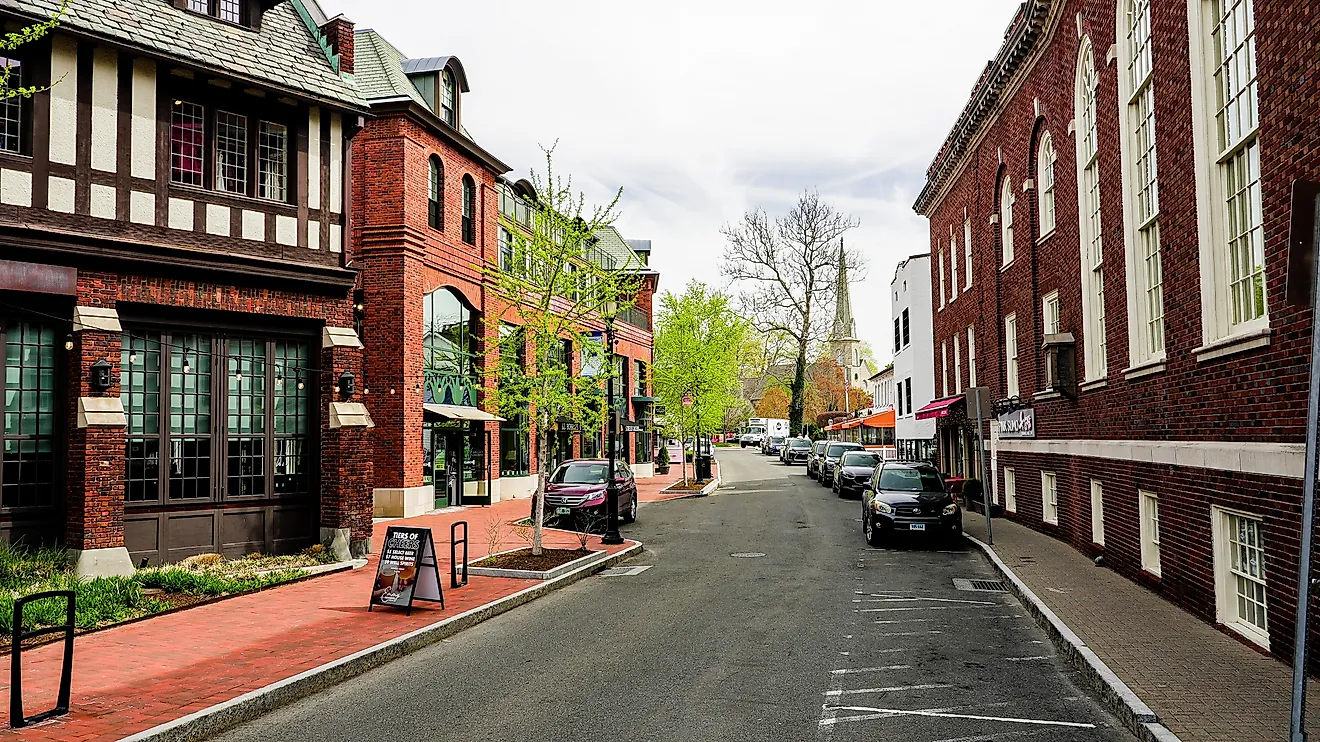
The houses around Sheldon Close could easily be mistaken for buildings in an English village. Their timber-framed facades, steep roofs, and clustered arrangement were inspired by Elizabethan architecture. Nearby Oak and Chestnut Streets have buildings influenced by the Jacobean period, another style associated with historic English homes.
Mariemont owes much of its appearance to Mary Emery, a Cincinnati philanthropist who wanted to create better housing for working families. In the early 1920s, she hired planner John Nolen to design a village with homes, schools, parks, and businesses within easy reach of one another. English garden-city principles helped shape the layout, although the architects also incorporated American Colonial and other styles.
The Village Square remains the center of Mariemont, with Tudor-style buildings housing businesses, restaurants, and the historic Mariemont Inn. The village also maintains the tradition of an elected town crier, a position associated with centuries of English civic history. Mariemont received National Historic Landmark designation in 2007 for its significance in American community planning.
Kohler, Wisconsin
Walter J. Kohler Sr. believed factory workers deserved more than rows of identical houses. As president of the Kohler Company, he traveled to Europe with architect Richard Philipp to study residential communities, paying particular attention to the garden villages of England. What they saw influenced the Wisconsin community that would carry the family name.
The planned village took shape with English-style cottages built from brick, stucco, stone, and timber. Steep roofs, bay windows, clipped hedges, and garden spaces helped establish its appearance. Richard Philipp designed many of the houses, while the Olmsted Brothers landscape architecture firm contributed to the community's planning.
One of the largest buildings was the American Club, completed in 1918 to accommodate unmarried immigrant workers. Residents originally paid $27.50 a month for a private room, laundry service, and three meals a day. The building also had recreational facilities and classrooms where workers could study English and prepare for American citizenship. The sprawling Tudor Revival structure later became a hotel.
Kohler's residential neighborhoods still contain houses designed during the village's early development, while the American Club stands on Highland Drive as a reminder of its industrial beginnings.
Lake Forest, Illinois

Market Square has been part of downtown Lake Forest since 1916, when architect Howard Van Doren Shaw designed a shopping district with brick buildings, pitched roofs, and clock towers. The English Arts and Crafts influence is particularly apparent in the south building at 672 North Western Avenue, where a tower rises above the storefronts.
Shaw's design created a commercial center around a landscaped square, with shops arranged along Western Avenue and Bank Lane. The buildings drew from several architectural traditions, including English medieval and Arts and Crafts styles. Rather than developing as a row of unrelated storefronts, the square was planned as a coordinated commercial district.
Lake Forest's English influence also appears at the Deer Path Inn on East Illinois Road. The hotel opened in 1929 and was designed in the style of a Tudor manor house, with half-timbering and steep gables. It continues to operate as a hotel, retaining its traditional English architectural character.
Market Square remains an active shopping district, while the city's Tudor-style railroad station at 720 North McKinley Road adds another example of English-inspired architecture to downtown Lake Forest.
Winnetka, Illinois

Tudor Revival houses became so common in Winnetka during the early 20th century that the style helped define the village's residential architecture. Steep gables, decorative timberwork, tall brick chimneys, and leaded-glass windows gave many homes the appearance of English country cottages.
The first Tudor Revival houses appeared around the turn of the century, with construction increasing during the 1920s. Architects William Otis, Spencer Solon Beman, and Mayo & Mayo were among those who contributed to the style's popularity. Some houses were designed as substantial country residences, while others adapted the same English details for more modest suburban homes.
The Joseph H. McNabb House at 950 Hill Road, designed by Spencer Solon Beman in 1927, is one of Winnetka's designated Tudor Revival landmarks. Another example stands at 939 Tower Road, where architect Fred Keck designed the Erwin P. Snyder House in 1923. The house at 888 Tower Road, built in 1909, shows how early the style had taken hold.
Winnetka's English-inspired architecture also extends to its commercial buildings. Along Green Bay Road and in the village's shopping districts, Tudor-influenced brick buildings reflect the same design preferences that shaped nearby residential streets.
English Architecture With American Histories
The English appearance of these towns came from different ambitions. Mariemont and Kohler were planned to improve residential life, while Carmel's cottages grew out of one builder's imagination. Lake Forest adopted English architectural details for its commercial center, and Winnetka's homeowners embraced Tudor Revival designs during a period of suburban growth.
Their original purposes have changed considerably. Factory housing became a hotel in Kohler, Lake Forest's century-old Market Square continues to accommodate businesses, and the cottages Hugh Comstock built in the 1920s remain part of Carmel's residential streets. These buildings have outlasted the architectural fashions that first brought them to American towns.