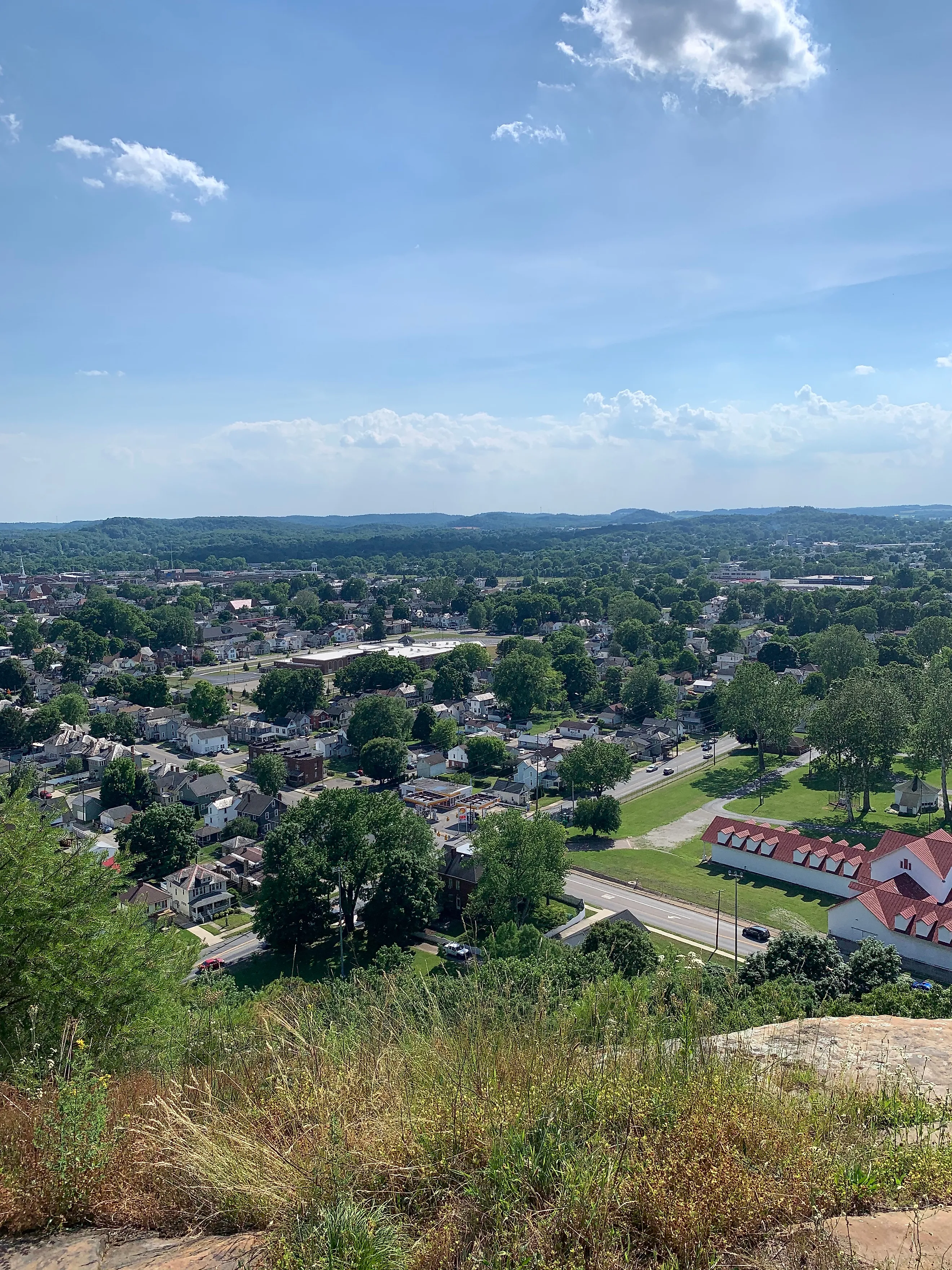
The Oldest Fairgrounds In America
Pretty much every county fair worth its funnel cake claims to be the oldest in America. The Topsfield Fair north of Boston dates its founding to 1818, the Brooklyn Fair in Connecticut to 1809, and the York State Fair in Pennsylvania to a charter granted in 1765.
The fairgrounds themselves are an entirely different matter, as these early fairs moved from town to town for decades. That's why we've ranked the grounds, not the event, using the year the fair was first held on the site it still uses.
Naturally, we rely on the date published by the fair, its agricultural society, or a state historical marker, and cancellations for war and the pandemic are noted but not counted.
So, grab a candy apple and a fistful of ride tickets, and let's see which grounds were judging hogs before the Civil War.
1. Brooklyn Fairgrounds, Brooklyn, Connecticut (1849)

A Connecticut state historical marker on Route 169 in Brooklyn, a farm town in the rural northeastern corner of the state known as the Quiet Corner, calls the Brooklyn Fair the nation's oldest continuous agricultural fair.
The Brooklyn Fair began in 1809 as a harvest gathering of the Pomfret United Agricultural Society, neighboring farmers who incorporated as the Windham County Agricultural Society in 1820.
The first fairs rotated between Brooklyn, Pomfret, and Woodstock until the society bought land at what's now the corner of Route 169 and Fairgrounds Road in 1849, and the fair has been held there ever since. The fair is held in late August, and its highlights include the only operating harness racing track in Connecticut.
2. Fairfield County Fairgrounds, Lancaster, Ohio (1852)
{"embedUrl":"https://www.instagram.com/p/DeXaOjXn7JG/embed/"}
Ohio's county fair season wraps up in October with the Fairfield County Fair, which is, according to its organizers, the "last and best of the season."
The Fairfield County Agricultural Society held its first fair in a local farmer's field in Lancaster, 24 miles southeast of Columbus, in October 1851, and in 1852 bought the land that became the permanent Fairfield County Fairgrounds.
By 1880, the grounds had grown to 36 acres, and a new half-mile racetrack was built that year. In the 19th century, the society also staged horse races at night under gaslight, a feat it says no other fair managed. The fair runs the second week of October.
3. Geauga County Fairgrounds, Burton, Ohio (1853) (TIE)

Every Labor Day weekend, a quarter of a million people head to Burton, a village of maple syrup producers and Amish farms 30 miles east of Cleveland, for the Great Geauga County Fair.
The fair has been held at the Geauga County Fairgrounds on the edge of the village since 1853, and it's Ohio's oldest continuous county fair, according to the Ohio Historical Society marker on the grounds.

The first one was held in October 1823 on the village square in neighboring Chardon, the county seat. Two of the fairgrounds' historic buildings are on the National Register of Historic Places: the Domestic Arts Hall, built in 1856 and rebuilt in 1889, and Flower Hall, built in 1890.
3. Hamilton County Fairgrounds, Carthage, Cincinnati, Ohio (1853) (TIE)
Vine Street in the Cincinnati neighborhood of Carthage has been the home of the Hamilton County Fairgrounds since 1853. The Hamilton County Agricultural Society runs what was long called the Carthage Fair and dates to 1819.
Its first president was William Henry Harrison, an Ohio farmer and War of 1812 general who became the ninth president of the United States in 1841. The fair claims to be the first west of the Allegheny Mountains to pay cash prizes for livestock.
The 30 acres of green space the society owns is hemmed in by industry, which developed around it in the 19th and 20th centuries. The fair was canceled in 1861 and 1862 during the Civil War, and the grounds were put to use as a National Guard training camp in 1918. Renamed the Hamilton County Fair as the farms around Cincinnati gave way to suburbs, it takes place in late June.
3. Alex T. Duffy Fairgrounds, Watertown, New York (1853) (TIE)
The small wooden ticket booth at the Alex T. Duffy Fairgrounds in Watertown, the seat of Jefferson County in New York, has been there since 1853, the earliest documented date for the grounds. The Jefferson County Fair is older still: the Jefferson County Agricultural Society organized in October 1817 and held its first cattle show and fair in September 1818. The society calls it the longest continuously operating fair in the United States, a title Steuben County also claims.
The facility's 67 acres on Coffeen Street belong to the City of Watertown, which renamed them for Alex T. Duffy, a civic booster who served 29 years as the agricultural society's president. Outside fair week in mid-July, the grounds are the city's main recreation area, with a ballpark and arena.
6. Steuben County Fairgrounds, Bath, New York (1854)
Horse racing was a big draw for the Steuben County Fair of 1819 and was still popular when the event moved to its permanent home 35 years later. Regular annual fairs began in 1853 on a farm in Bath, the county seat at the southern edge of the Finger Lakes, and the following year moved to a six-acre parcel on East Washington Street.
The Steuben County Agricultural Society bought the land in the 1860s and has used it every year since. Highlights include the Pioneer Log Cabin, built in 1884, the one-room Babcock Hollow schoolhouse, and the local history museum run by the Steuben County Historical Society. The 2027 fair marks its 208th anniversary.
7. Walworth County Fairgrounds, Elkhorn, Wisconsin (1855)
One hundred dollars an acre, at ten percent interest, was a steep price for farmland in 1855. That's what the Walworth County Agricultural Society paid to a local landowner for the six acres in the village of Elkhorn, the Walworth County seat, that are still part of its fairgrounds.
The village put up $300 to fence the land, build pens and sheds, and dig wells. The society had formed on April 28, 1842, and held its first recorded fair and cattle show in the nearby village of East Troy in October 1850. The original modest acreage has grown to 99 acres, and the six-day Walworth County Fair over Labor Day is one of the oldest and largest county fairs in Wisconsin. Between fairs, the grounds are used for horse shows and the Elkhorn Antique Flea Market.
8. Skowhegan State Fairgrounds, Skowhegan, Maine (1856)

Maine was still part of Massachusetts when the Somerset Central Agricultural Society held its first fair in Skowhegan, a mill town on the Kennebec River. The Skowhegan Fair was first held in January 1819, a year before Maine became a state, and the present fairgrounds were acquired in 1856 and have been rebuilt more than once.
The grandstand burned in 1934, was replaced in 1935, and in 1999 was destroyed in an arson attack, along with Constitution Hall, another of the fair's buildings. A paddock was added in 2002, and the fair now runs for ten days with a demolition derby, truck pulls, harness racing, and a pig scramble, in which kids chase down piglets. Between fairs, the grounds host horse shows and community events like the Artisan Bread Fair, Maple Festival, and Halloween Haunted Hayride.
9. Bloomsburg Fairgrounds, Bloomsburg, Pennsylvania (1859)
Fans of Taylor Swift probably already know that the then-16-year-old country singer played her first major concert at the Bloomsburg Fair in 2006. That year, 413,203 visitors passed through the turnstiles for the week-long event, which began in 1855.
Visitor numbers were far more modest during that first event held in Caleb Barton's field at the lower end of what's now Main Street: the one-day agricultural exhibition attracted 1,000 customers paying ten cents to get in.
Among the exhibits that first year was a grain drill, a horse-drawn machine that plants seeds in rows, shown by Barton. In December 1858, Barton's firm offered the fair's agricultural society ten acres at the west end of town, which it leased for $10 an acre a year.
The society enclosed the site with a seven-foot board fence in 1859, in time for the first fair on the grounds it still uses. Barton House, built in 1855, still stands on the Bloomsburg Fairgrounds and opens for tours during fair week. Harness racing takes place on the site's quarter-mile dirt track.
Where the Fairgrounds Still Stand
All of these fairgrounds were hosting fairs before the first shots of the Civil War were fired in 1861, and every one of them still opens its gates to the public each year. Since then, cattle shows have added midway rides, demolition derbies, and the occasional future pop superstar, but the fairgrounds themselves haven't moved.
So, the next time you're juggling a corn dog in one hand and a lemonade in the other, take a moment to look at the ground under your feet. At these nine fairs, it's quite possible your great-great-grandparents stood in that same spot, arguing over whose pig deserved first prize.