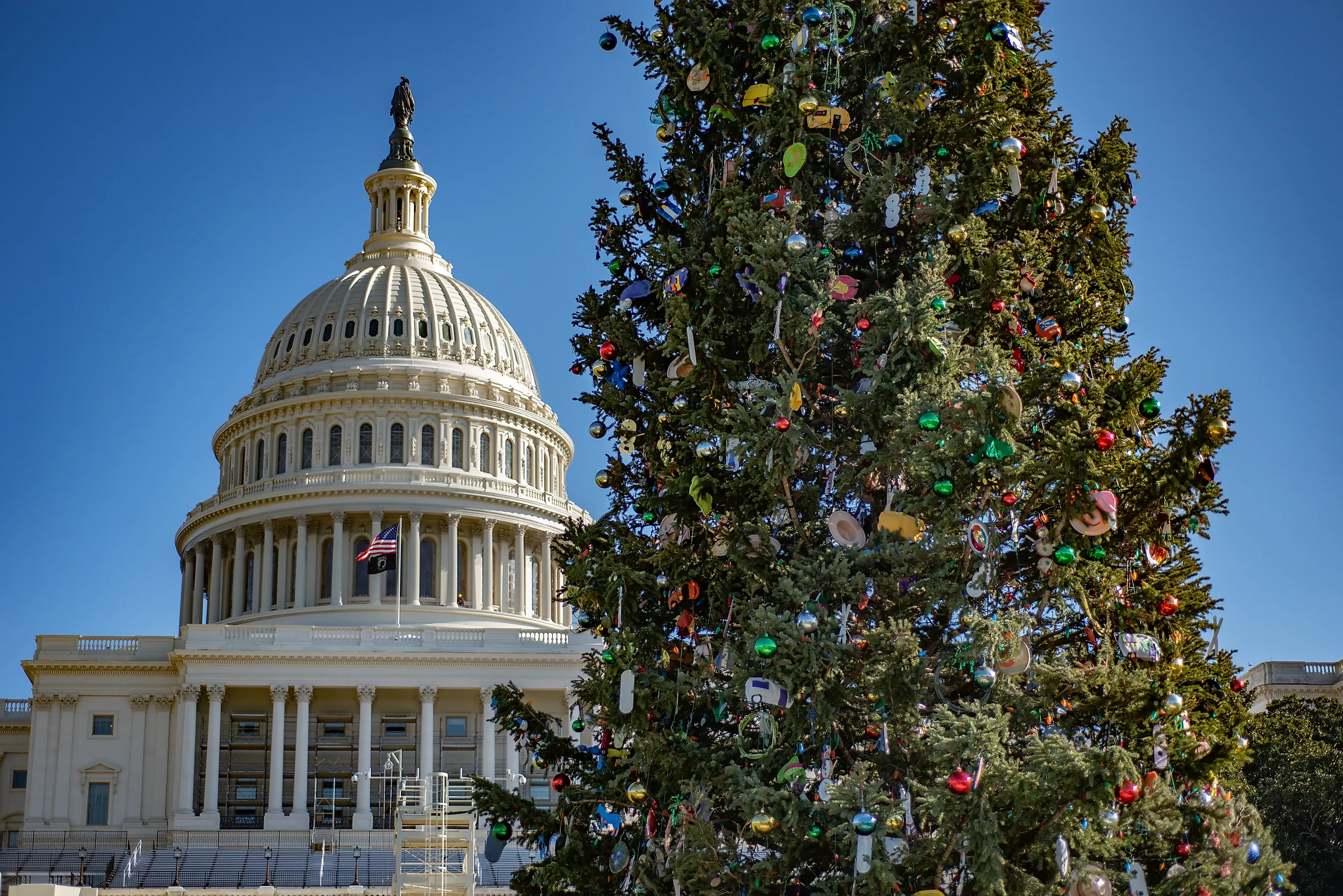
The National Forest Supplying This Year’s Capitol Christmas Tree
The Capitol Christmas Tree has come from a national forest almost every year since 1970, and the 2026 pick shows how different that is from a national park. This year's tree is a 76-foot Engelmann spruce from the Nez Perce-Clearwater National Forests in north-central Idaho. The spruce was the backup. The forests' own Capitol tree project promises to show the country "a true working forest." Their 4 million acres carry timber, grazing, mining, and recreation. Their story stretches through three wild rivers, an 1860 gold strike, and a pair of 1934 fires that burned more than 250,000 acres of the Selway River drainage.
The Backup Tree From Musselshell Meadow
A grand fir won the first round. Jim Kaufmann, Executive Director of Capitol Grounds and Arboretum at the Architect of the Capitol, chose an 80-foot grand fir on the Salmon River Ranger District in August 2026. Forest Service employees had identified more than 60 candidate trees for his weeklong visit.
By late September, officials had found yellowing needles and signs of needlecast disease on the fir. Officials said the disease could have affected the tree's condition on the trip east. The forests switched to a backup identified in advance, a 76-foot spruce on the Lochsa-Powell Ranger District.
Crews harvested the spruce on October 24, 2026, at Musselshell Meadow on the outskirts of Weippe. The ceremony opened with remarks and a blessing from Nez Perce Tribe Chaplain Shannon Wheeler. He spoke beautifully on the sacred laws of the land. A crane then lifted the tree, swung it around, and lowered it onto its trailer.
Two National Forests Under One Name

The plural in the forests' name is literal. President Theodore Roosevelt created the Clearwater National Forest by executive order in 1908. On February 6, 2013, the Forest Service combined its administration with the neighboring Nez Perce National Forest, and the two now report to one supervisor's office in Kamiah.
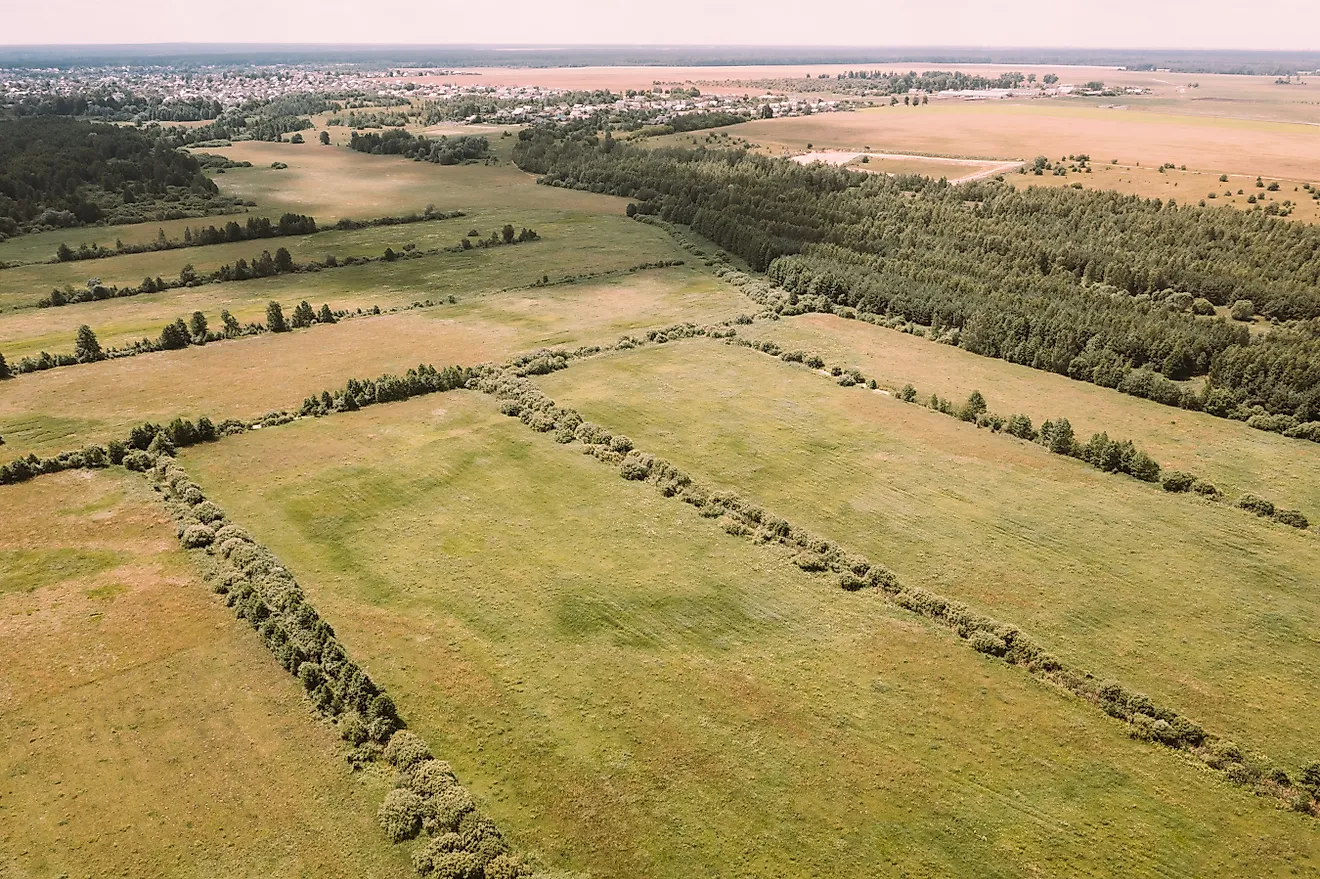
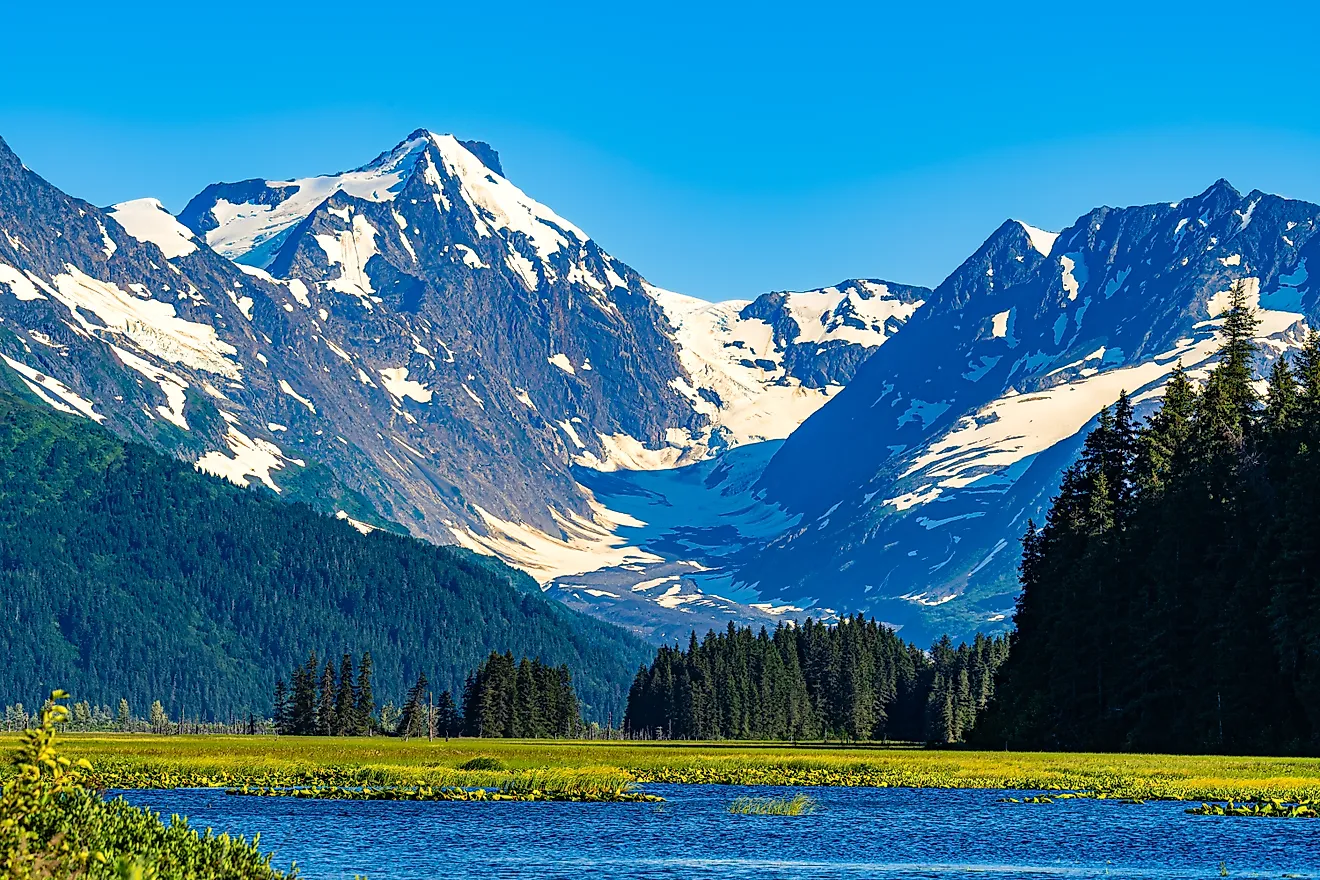
Together the two forests span 4 million acres of north-central Idaho, and the terrain swings hard across them. Dry, rugged canyons line the Salmon River, moist cedar forest fills the drainage of the Selway River, and the Palouse brings rolling uplands.
The replacement spruce grew on the Clearwater side of the partnership. Musselshell Meadow became part of the Bitterroot Forest Reserve in 1897, on ground now inside the Clearwater National Forest. Federal forest officers built a cabin there in 1902, and the government has kept a presence at the meadow ever since.
Built For Many Uses, Including Christmas Trees
National park rules would not have allowed this harvest. Federal regulations bar removing plants, or any part of them, from National Park Service land. National forests carry a multiple-use mandate instead, set in federal law. The Nez Perce-Clearwater lists timber, grazing, and mining among its managed resources, along with water quality and recreation.
Timber shows up in this year's sponsor list. Idaho Forest Group, the presenting sponsor, operates five sawmills in northern Idaho.
Mining reaches farther back. A small party of prospectors under E. D. Pierce found gold in the Clearwater country in the fall of 1860. The group founded the town of Pierce that December.
The public gets its own version of the Capitol harvest. A Christmas tree permit on the Nez Perce-Clearwater covers a tree up to 12 feet tall, cut whole with a stump no higher than 6 inches. Western red cedar and whitebark pine are off-limits. So are wilderness areas, tree plantations, and active timber sales.
Wild Rivers Through Working Woods

Three rivers that cross these forests entered the national wild and scenic rivers system on October 2, 1968, under the original Wild and Scenic Rivers Act. The Middle Fork Clearwater River designation covers 185 miles in all, including the Selway and the Lochsa River. The protected stretch of the Lochsa extends upstream to the Powell Ranger Station, a station that shares its name with the tree's home district.
Ridges north of the Lochsa carry the Lolo Trail, the route Lewis and Clark followed across the mountains in 1805 and again in 1806. Near Musselshell Meadow in September 1805, William Clark met young Nez Perce boys after the expedition crossed the Bitterroot Mountains.
The meadow mattered long before that. Camas grows there, and the Nez Perce prized its root and still gather at the site. The Middle Fork corridor lies within lands the Nez Perce ceded in the Treaty of 1855. That treaty reserved tribal rights that members still exercise along these rivers, and the Nez Perce Tribe is an official partner on the 2026 project.
Fire Wrote Much Of The Map

Wind picked up on August 21, 1910, and raged for three days and nights as millions of acres burned across the region. Ralph S. Space, the Clearwater's supervisor from 1954 to 1963, later wrote that he could find no record of lives lost on that forest.
Another round came in 1934. The Pete King and McLendon Butte fires ignited on August 11 and burned for 32 days, covering 252,250 acres combined. Two Civilian Conservation Corps crewmen died on the Pete King fire, struck by falling trees.
Policy changed course in 1972. The Forest Service approved allowing lightning fires to play their natural ecological role in part of the Selway-Bitterroot Wilderness, which covers about 1.34 million acres across Idaho and Montana.
Engelmann spruce handles fire poorly. Its thin bark and shallow roots make it vulnerable even to low-intensity fires. New trees grow from windblown seeds, often taking root in exposed mineral soil.
Idaho's Third Turn In A Rotating Tradition

House Speaker John W. McCormack suggested a Capitol tree in 1964, and a 24-foot Douglas fir went into the West Front Lawn that year. A severe windstorm in the spring of 1967, along with root damage, cost that tree its life. The Forest Service has supplied the Capitol tree since 1970, drawing it from one of the 154 national forests.
Idaho has filled the slot twice before, with the same species both times. The Boise National Forest sent a 65-foot Engelmann spruce in 2003, and the Payette National Forest followed with an 80-foot Engelmann spruce in 2016. The 2026 tree makes three Engelmann spruces from three Idaho forests.
The two most recent trees show how far the rotation travels. Alaska's Tongass National Forest sent an 80-foot Sitka spruce in 2024. Nevada's Humboldt-Toiyabe National Forest followed in 2025 with a 53-foot red fir named "Silver Belle." The Nez Perce-Clearwater had never supplied a Capitol tree before this year.
Over The Rivers And Through The Woods

Handmade Idaho ornaments will decorate the tree, and organizers asked partners to help make 10,000 of them. The same list called for 50 handmade tree skirts for offices in Washington, DC. The 2026 theme is "Over the Rivers and Through the Woods."
US Senators Mike Crapo and Jim Risch ran a statewide essay contest for Idaho fourth graders. Entrants had to explain why healthy forests and clean water matter in Idaho. The winner reads the essay at the lighting ceremony, scheduled for early December.
Grangeville hosts the first tour stop on October 29. The full journey covers more than 2,000 miles, with a November 5 visit to Craters of the Moon National Monument. The schedule ends on November 19 at Joint Base Andrews in Maryland, where access requires military identification.
A Working Forest On The West Lawn
Most onlookers on the West Lawn will see one lit Engelmann spruce and thousands of ornaments made by Idahoans. The forest behind it is busier than the tree suggests. Timber sales, three wild rivers, and the Clearwater gold country of 1860 all belong to the same story. So do a camas meadow, tribal rights reserved by treaty, and the ground that burned in 1910 and 1934.