How Long It Takes An Abandoned Farm To Turn Back Into Forest
Walk away from a farm field in the eastern United States and nature starts the clock before you reach the road. Weeds claim the furrows the first summer, the first trees arrive within five years, a closed canopy of young forest stands inside 30 or 40, and something a hiker would call real woods takes shape within a human lifetime. The full answer, though, comes in layers: a field looks like forest in a few decades, works like a mature forest in a century or so, and needs several centuries to earn the deep, messy grandeur of old growth. Ecologists call the process old-field succession, it is one of the most studied sequences in all of ecology, and the proof covers entire states, because most of the forest in the eastern US today is not ancient wilderness at all. It is somebody's great-great-grandfather's farm.
Year One: The Weeds Take The Deed

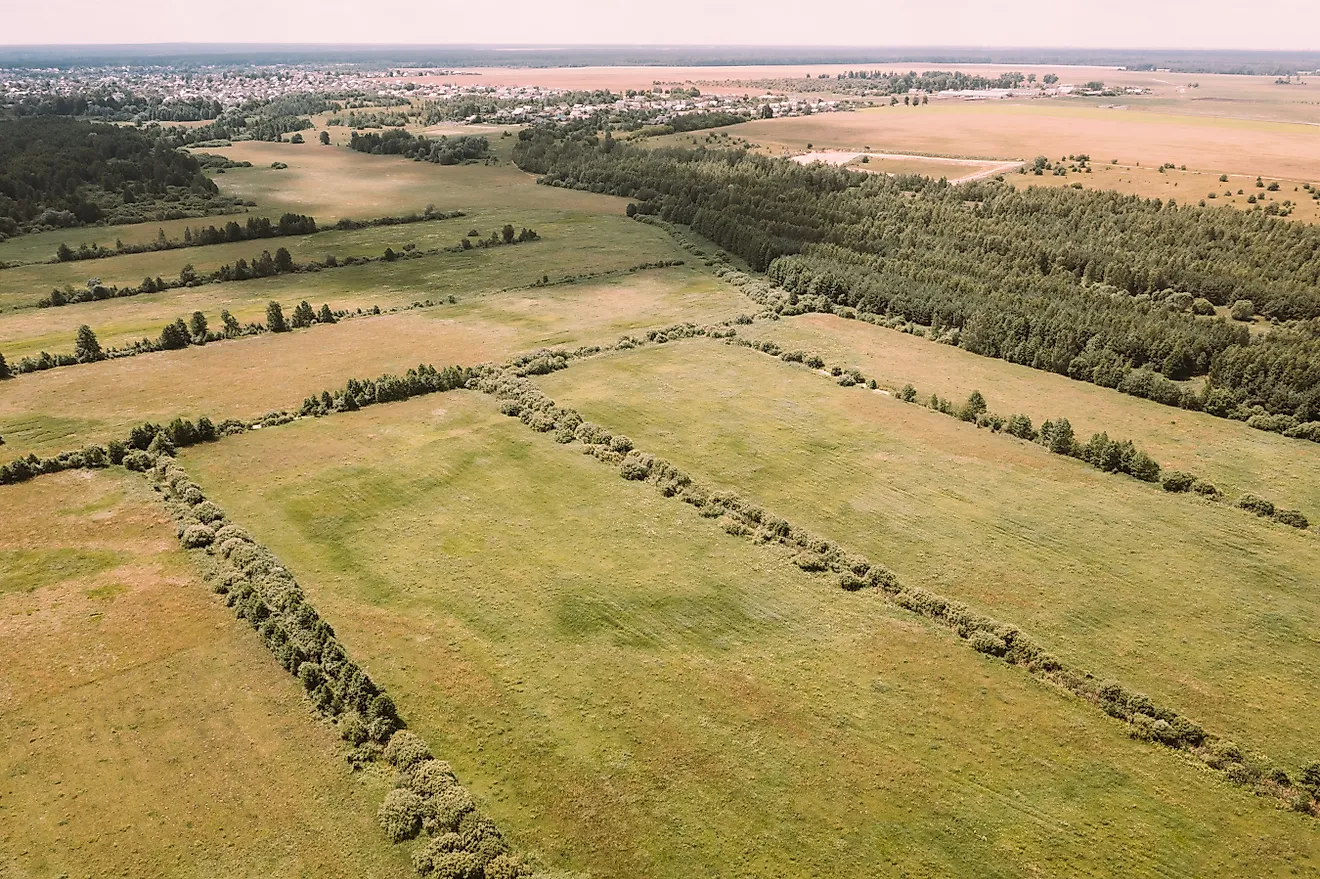
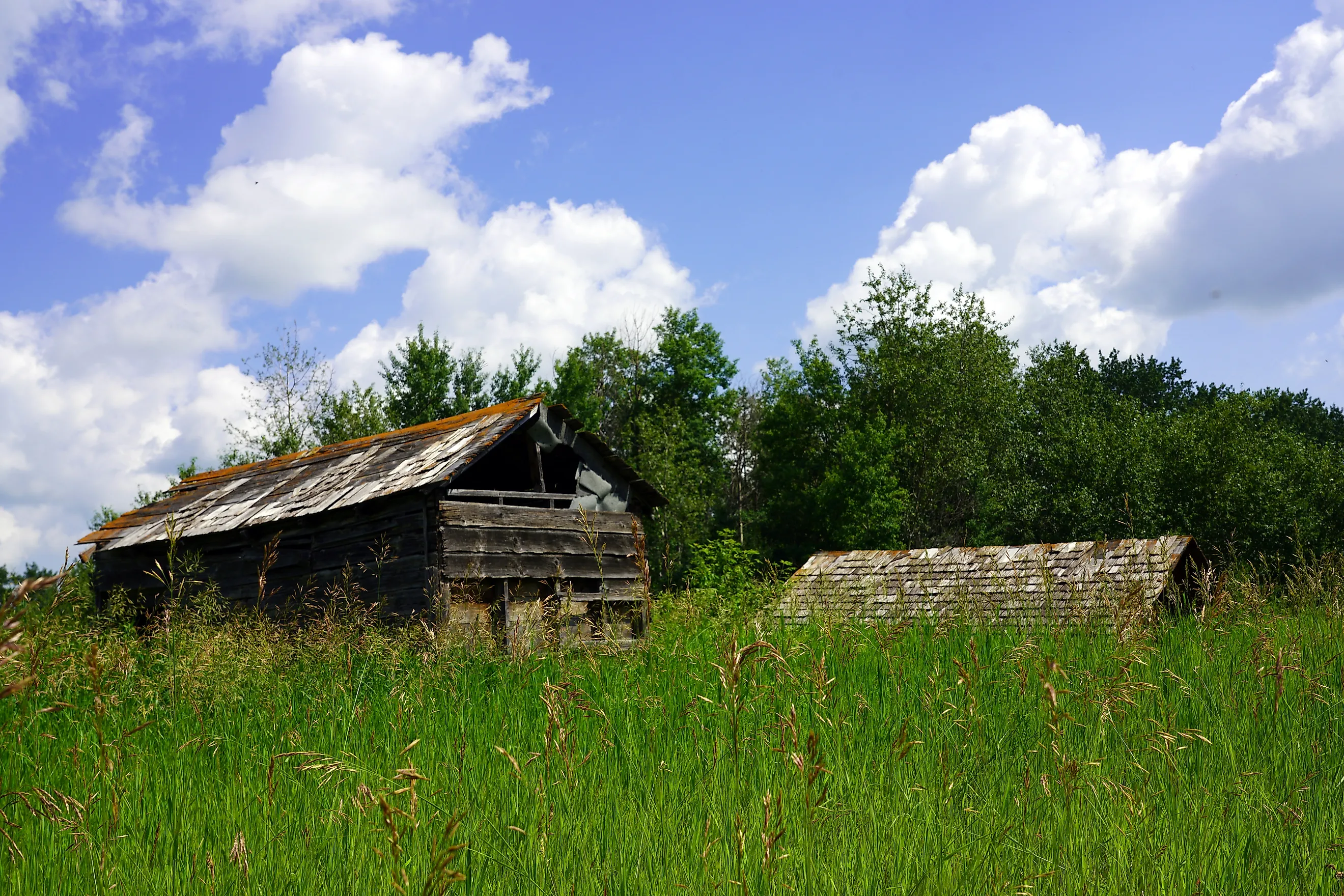
Succession's opening act is scrappy and fast. Bare soil is an all-you-can-claim buffet for the plants built to find it, and the first growing season after abandonment belongs to annuals, crabgrass, ragweed, horseweed, foxtail, species that live hard, seed enormously, and die by frost. Within two or three years the perennials muscle in and the field turns gold and tawny: goldenrod, asters, and broomsedge take the open ground, blackberry and sumac start massing along the edges, and the former cornfield becomes the meadow that painters love and farmers dread.
The meadow years matter more than they look. The tangle shades and cools the soil, roots rebuild its structure, and the field fills with mice, sparrows, and insects, which brings in the foxes and hawks, a whole economy assembling in the weeds. Most importantly, the meadow is now catching seeds, because the next wave of ownership arrives by air and by bird.
The Cedar And Pine Invasion

Somewhere between years five and fifteen, the field's first trees appear, and they are always the same cast of sun-loving opportunists: eastern red cedar standing sentinel in old pastures, pines wherever their winged seeds can ride the wind, with aspen and birch playing the role up north and sweetgum, black cherry, and tulip poplar joining across the South and the mid-Atlantic. These pioneer species share a strategy, grow fast, tolerate blazing sun and poor soil, and ask no shelter, which makes an abandoned field their idea of paradise.
The planting crew works for free. Wind delivers the pine and poplar; birds perching on fence lines and lone cedars deliver cherry and cedar seeds pre-fertilized; squirrels bury walnuts and forget them; and blue jays, the unsung foresters of the East, carry acorns by the thousands each fall and cache them in open ground, planting tomorrow's oaks decades ahead of schedule. Within 15 to 25 years the saplings merge into thickets, and the field stops being a field.
A Forest That Cannot Raise Its Own Kids

By year 30 to 50, the pioneers have closed the canopy and the land is, by any casual definition, forest: shade underfoot, trunks in ranks, the old field legible only in the suspiciously even age of the trees. But this first forest carries a built-in eviction notice. Pines, cedars, and aspens are shade-intolerant, meaning their own seedlings cannot survive in the darkness the parents now cast, so the very success of the pioneer canopy guarantees it will be the last pioneer generation on the site.
The understory tells the future. Beneath the pines, a different set of seedlings, oak, hickory, maple, beech, species that germinate happily in shade, bides its time in the gloom, growing slowly on borrowed light. Every windstorm, ice storm, and beetle outbreak that drops a pioneer opens a skylight, a waiting hardwood takes the slot, and the forest swaps its membership one gap at a time. Nothing dramatic announces the change; the woods simply turn over like a slow crowd.
The Hardwood Takeover

Between roughly years 50 and 150, the relay completes. The old-field pines age out, their span naturally shorter than the hardwoods rising through them, and the oaks, hickories, maples, and beeches that waited in the understory claim the canopy for keeps, because unlike the pioneers, they can reproduce in their own shade. The forest now regenerates itself, layer by layer, which is the quiet definition of maturity: a wood that no longer depends on open ground.
At a century or so, the forest functions like the real thing, full canopy, deep leaf litter, woodpeckers and warblers and salamanders, but true old-growth character remains far off. The giant trunks, the standing dead snags, the huge rotting logs, the pit-and-mound floor sculpted by centuries of windthrown root balls, those accumulate over 150 to 500 years, which is why even the finest second-growth woods feel tidier than ancient forest. Age, in a forest, is mostly measured in dead wood, and dead wood takes lifetimes to stockpile.
The Stone Wall Test
The grand proof of the whole timeline is New England. By the mid-1800s, clearing for crops and sheep had stripped roughly three-quarters of the region's land; then the Erie Canal and the railroads opened deeper soils out west, the farms emptied over a few generations, and the forest walked back in on exactly the schedule above. Today the region runs about three-quarters forested again, a near-perfect inversion inside 150 years, and an estimated 240,000 miles of stone walls now run uncanny and mossy through deep woods, property lines for fields that no longer exist, built by farmers whose pastures are now someone's favorite hiking trail.
The land never fully forgets, though. Foresters can read an old farm centuries later: a forest floor suspiciously flat where the plow erased the natural pit-and-mound texture, trees all one age, a cellar hole, a lilac blooming miles from any house, a wall running through the trees. European studies push the memory further still, detecting the signature of ancient farming in forest soils and plant communities many centuries after abandonment. Succession rebuilds the forest; it files the farm's paperwork in the dirt.
What Speeds It Up And What Stalls It

The timeline above assumes the eastern rulebook, ample rain and a forest next door, and both clauses matter. A field beside mature woods gets seeded fast and can close canopy on the quick end of every range; an isolated field waits on wind and wings and can lag decades behind. Heavy deer herds slow everything, mowing down the seedling bank year after year, and the modern wildcard is invasive shrubs, with thickets of multiflora rose, autumn olive, and buckthorn capable of locking a field in arrested adolescence for decades, a succession traffic jam ecologists now manage by hand.
And in dry country, the answer changes entirely, because succession runs toward the local climax, not toward trees by default. An abandoned wheat field on the Great Plains becomes prairie again, not oak woods; a Nebraska farmstead surrenders to grass and wind rather than maples. The forest only returns where forest was the land's native answer, which, east of the plains, it almost always was.
The Patient Answer
So the honest timeline reads like a ledger: weeds by the first autumn, a meadow in three years, pioneer trees inside ten, a canopy you can stand under in 30 to 40, a self-replacing hardwood forest between 50 and 150, and old-growth majesty somewhere past two or three centuries, with the stone walls of New England standing as 240,000 miles of receipts. The reassuring part is how little the process needs from anybody: no planting, no plan, just seeds, birds, light, and time. Land, it turns out, remembers what it wanted to be, and east of the prairies, what it wanted to be was almost always a forest. Walk away and it gets started.