The Oldest Amusement Park Rides Still Operating In America
America's oldest amusement park rides bring the nostalgia and creativity of a bygone era to modern parks, allowing visitors the chance to experience both a piece of history and examples of engineering innovation. A wooden carousel on Martha's Vineyard dates to 1876, while a classic wooden roller coaster built in 1920 continues to carry riders along its tracks in Rochester, New York. Over the years, many of these rides have undergone renovations, refurbishments, and even name changes. However, their original structures and concepts remain largely intact. This list shares 9 historic rides that can be visited and ridden, each offering a combination of history, scenery, and sensory appeal, whether it's the swooping terrain of the Pennsylvania hills, the waves and salt air of the Pacific Ocean, or the melodies of a Wurlitzer band organ.
Flying Horses Carousel, Martha's Vineyard

Built in 1876 by Charles W. F. Dare Co. of New York Carousel Manufacturing, the Flying Horses Carousel is the oldest operational platform carousel in the US. Located in Oak Bluffs, Massachusetts, on Martha's Vineyard, it originally featured real horsehair manes and tails, which most of the hand-carved wooden horses still have. The stationary horses are brightly painted and have glass eyes.
The carousel was moved to Martha's Vineyard in 1884, originally built for Coney Island, where it operated before moving. An additional aspect of the ride, which very few carousels have, is a brass ring. As the ride spins, riders try to grab the ring to win a free ride. The carousel sits near Lake Avenue and Circuit Avenue in a bright red building. It was originally steam-powered but converted to electricity in 1900. The music comes from a 1923 Wurlitzer band organ. It was designated a National Historic Landmark in 1987.
Jack Rabbit, Rochester, New York

Jack Rabbit, located at Seabreeze Park in Rochester, New York, is the oldest continuously operating roller coaster in the US. Designed by renowned coaster architect John A. Miller and constructed by Harry C. Baker in 1920, the classic wooden coaster has an innovative design element known as under-friction wheels, also known as upstop wheels. Safety wheels under the track "lock" the train to the rails, a feature still used in modern coasters. This allows for steeper drops and greater speeds. Traveling down 2,130 feet of track, the ride has a 75-foot initial drop, seven dips, and an enclosed tunnel. The tunnel was added in 1928. At the time it was built, it was the fastest coaster in the world.
Refurbishments over the years include various materials such as stainless steel and fiberglass, as well as three different types of trains. Today, it has individual seats and a more comfortable lap bar. In 2015, American Coaster Enthusiasts (ACE) recognized the coaster as an ACE Roller Coaster Landmark, which designates rides of historic significance. It also received a Centennial Coaster plaque from ACE in 2026, recognizing more than a century of continuous operation.
Jack Rabbit, West Mifflin, Pennsylvania

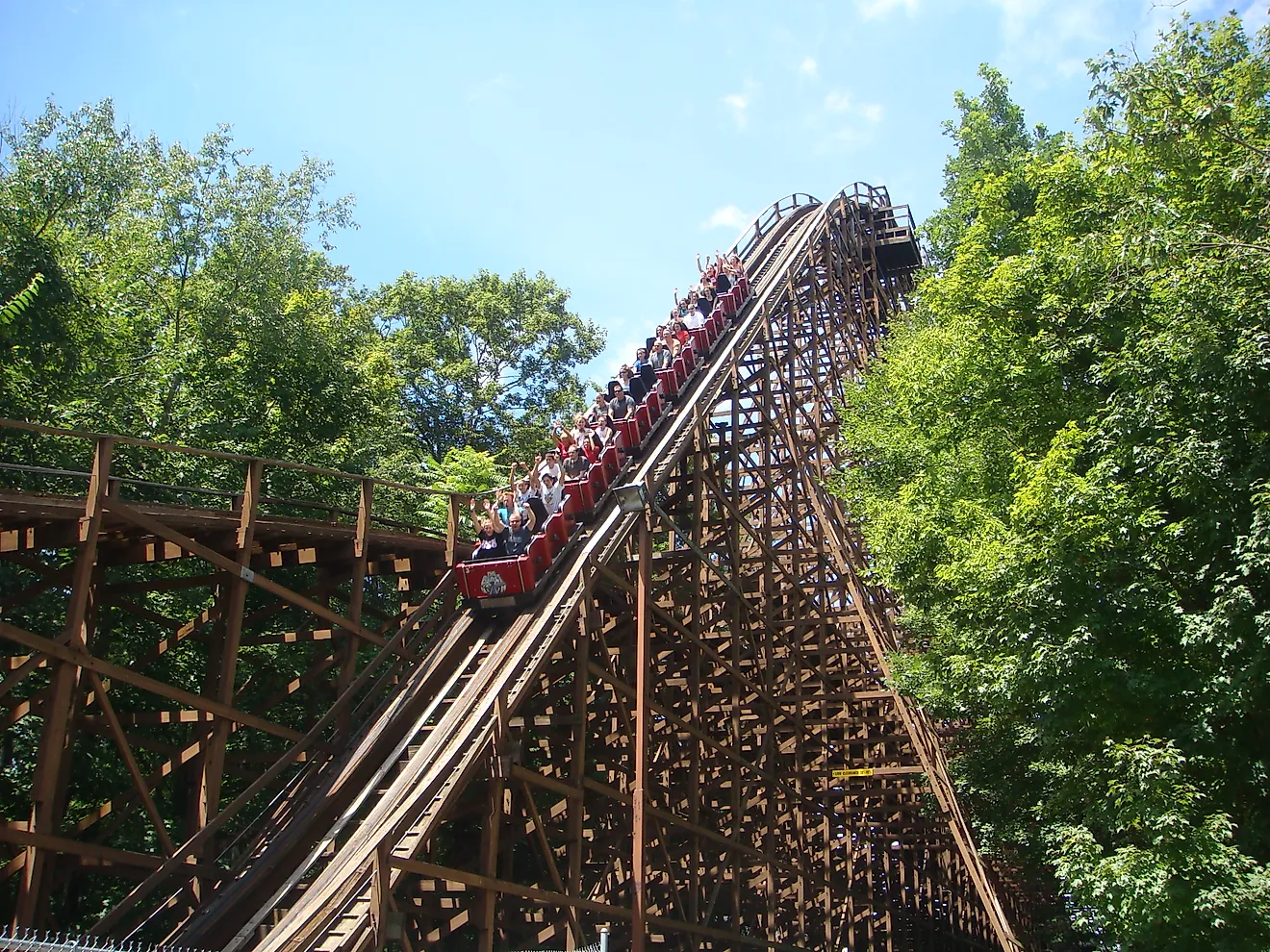
Kennywood Park is the site of another coaster named Jack Rabbit, built in 1920. Also built by Miller and Baker, it holds the title of second-oldest operating coaster in the US. With approximately 2,132 feet of track, it has an out-and-back layout, meaning it leaves the station, climbs a lift hill and drops, travels until it reaches a turnaround where it makes a 180-degree turn and returns to the station. The ride climbs 45 feet and drops into a 70-foot double-dip, creating a major airtime, or weightlessness, sensation and distinguishing it from the New York version of the Jack Rabbit. It has the same under-friction wheel design as the New York coaster.
Kennywood's Jack Rabbit also holds an ACE Coaster Landmark, designated in 2010. The Pennsylvania park is an old-timer itself, dating to 1898 when it originated as a picnic grove and trolley park created by the Monongahela Street Railway Company as a recreational destination at the end of the line. The park is a designated National Register Historic District.
Giant Dipper, Santa Cruz, California

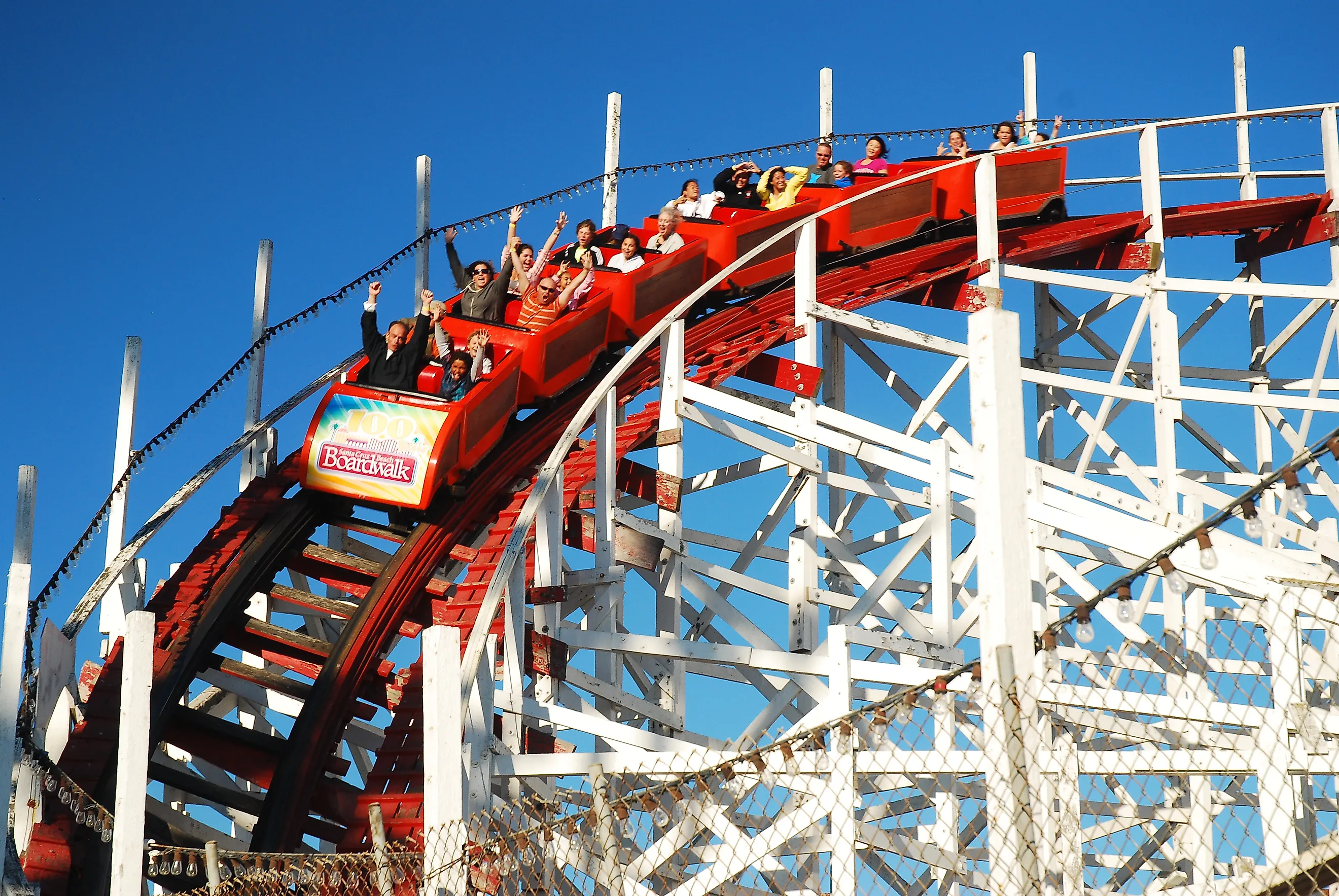
Giant Dipper, built in 1924, sits on the Santa Cruz Beach Boardwalk in California, where it welcomes passersby to experience its thrilling layout. Designed by roller coaster architects Frank Prior and Frederick Church and constructed by carousel and coaster builder Arthur Looff, it has an initial 65-foot drop and travels up to 55 mph at top speed. It provides a thrilling ride with tight twists, a curved station, a dark tunnel, and 2,640 feet of track. The cars have been replaced or updated over the years. The classic wooden boardwalk ride appeared in movies such as Lost Boys and Sudden Impact. In 1987, the preserved wooden roller coaster was named a National Historic Landmark. It also holds an American Coaster Enthusiasts (ACE) Roller Coaster Landmark award.
Giant Dipper, San Diego, California

Another California coaster, situated south of Santa Cruz on the Pacific coastline, the Giant Dipper was designed and built in 1925 by roller coaster architects Frank Prior and Frederick Church. It is similar in style to the Santa Cruz coaster of the same name. Located in Belmont Park in San Diego, the wooden coaster is 73 feet tall and reaches speeds of 55 mph alongside the Pacific Ocean. The track is about 2,600 feet long and features banked turns and twisting drops. It was briefly renamed Earthquake before returning to its original name.
The Giant Dipper is a National Historic Landmark and became an ACE Roller Coaster Landmark in 2010. The 101-year-old Belmont Park, opened in 1925 as the Mission Beach Amusement Center, is near the Mission Beach Boardwalk. The park closed in 1976 and reopened in 1990 after restorations, thanks to a Save the Coaster Committee formed by private citizens.
Grand Carousel, West Mifflin, Pennsylvania

Another Kennywood Park ride, the Grand Carousel invites visitors to take a spin on its hand-carved horses, topped with a decorative canopy and embellished with cherubs, jesters, and more than 1,400 lights. The William H. Dentzel Company built it for the 1926 Philadelphia Sesquicentennial Exposition. It wasn't finished in time for the event and instead went to Kennywood in 1927. The carousel has 50 jumping horses, 12 stationary horses, a lion, a tiger, and four chariots. Traditional carousel music comes via a 1916 Wurlitzer band organ. Both the carousel and the organ have been restored over the years.
Cyclone, Brooklyn, New York
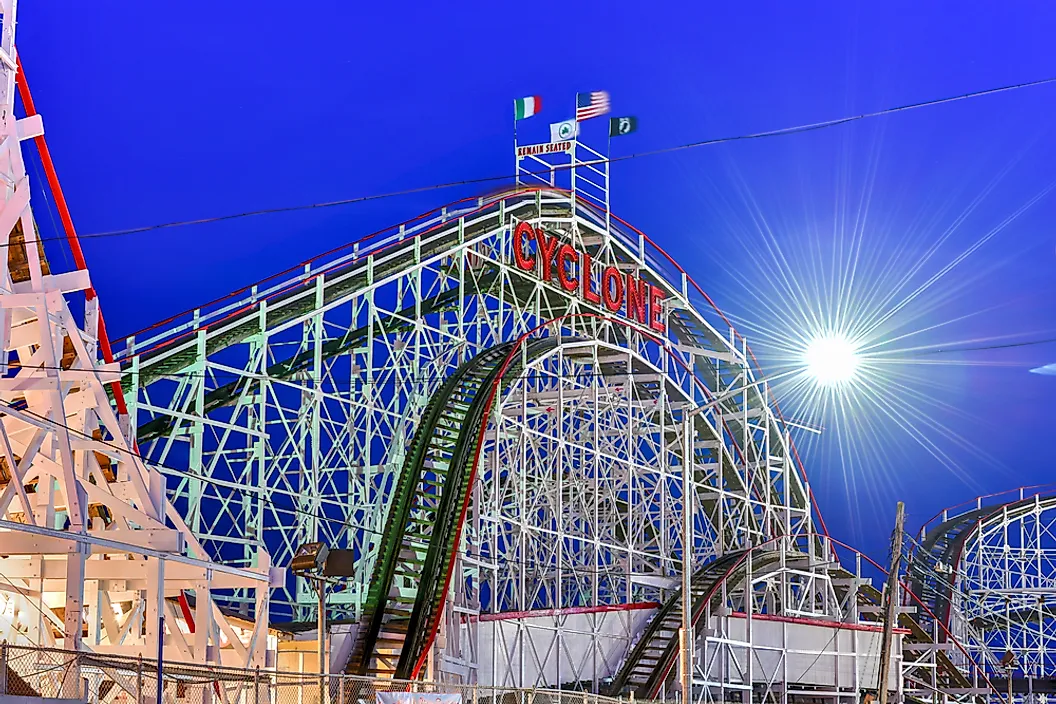
Luna Park at Coney Island is home to the Cyclone, an iconic roller coaster that opened to the public in 1927. Designed by Vernon Keenan, it climbs 85 feet and drops at a 59-degree angle, reaching speeds of 60 mph along 2,640 feet of track. The coaster creates a close-quarters effect as there are no seat dividers between passengers. The Cyclone was named a New York City Landmark in 1988 and is listed on the National Register of Historic Places. Luna Park, one of the first amusement parks in the US, opened in 1903. The original park closed in 1944 and then opened in 2010 on the former site of Astroland, near the original site.
Wildcat, Bristol, Connecticut

An ACE Coaster Landmark award recipient, Wildcat is set at Lake Compounce in Bristol, Connecticut. Designed by Herbert Paul Schmeck and built by the Philadelphia Toboggan Company in 1927, the coaster rises to about 85 feet with a roughly 78-foot drop, while reaching speeds up to 48 mph on about 2,746 feet of track. Wildcat has a double out-and-back design, which means it travels to the far end from the station, returns to pass the station, goes back to the far end, and then returns.
Over the years, Wildcat has received upgrades, including seat dividers, magnetic brakes, individual seat belts, and repainting of the train and track. It was reconstructed with new wood in 1985 and retracked in 1998-99, with another multi-year retracking project completed in the 2020s to provide a smoother ride while retaining the classic coaster experience. Opened in 1846 as a lakeside picnic area, Lake Compounce is the oldest continually operating amusement park in the US.
ThunderHawk, Allentown, Pennsylvania

ThunderHawk can be ridden at Dorney Park in Allentown, Pennsylvania, one of the very few historic trolley parks remaining. Designed by coaster architect Herbert Paul Schmeck, it was built by the Philadelphia Toboggan Company in 1923 and opened to the public in 1924. Opened as The Coaster in 1924 and renamed ThunderHawk in 1989, the original out-and-back design was reconfigured around 1930 into a shorter figure-eight layout. It features an approximately 80-foot hill and top speeds of 45 mph. It underwent renovations in 2016, including new paint, trains, and updated lighting, and received an ACE Coaster Landmark plaque from ACE in 2021. In 2024, as part of the centennial celebration, the ride's maroon and gold cars received new hawk emblems.
America's Oldest Operating Amusement Park Rides
These rides reflect the entertainment and nostalgia associated with summer vacations, road trips, and carefree days. They provide the opportunity to take a leisurely spin on a hand-carved horse in Massachusetts or fly along Monongahela Valley terrain in Pennsylvania. Many remain in their original locations, such as Dorney Park's ThunderHawk, whereas others, like Martha's Vineyard's Flying Horses Carousel, were relocated to their current settings. In addition to contributing to the rise of early 20th-century leisure travel through the development of trolley parks and lakeside picnic groves, such as Seabreeze Park and Lake Compounce, these coasters and carousels demonstrate innovative engineering and connections to American history. Their historical and cultural significance is further reflected in their designations as National Historic Landmarks and ACE Coaster Landmarks.