8 Most Rattlesnake Infested Areas In North Dakota
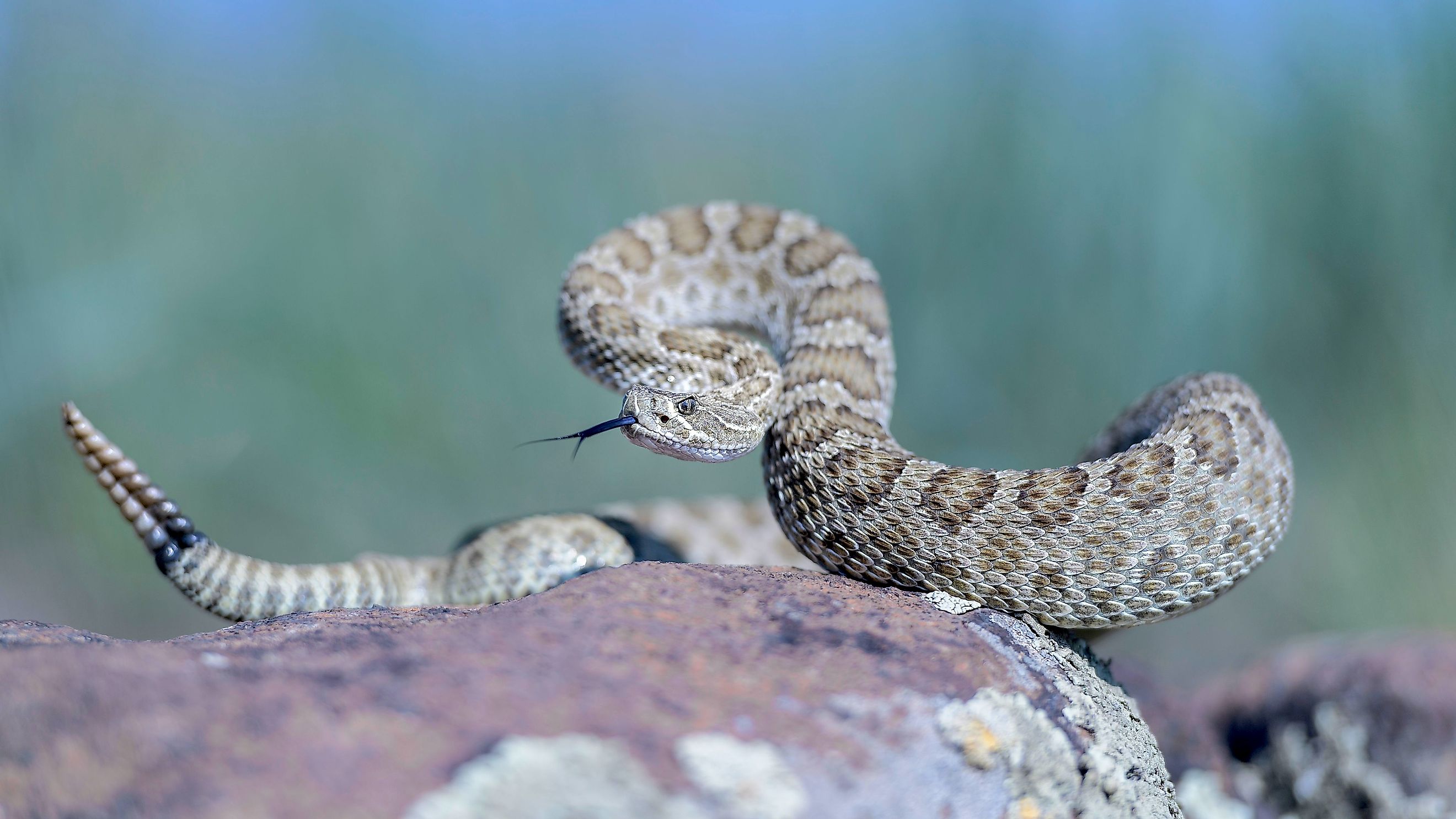
For anyone scared of snakes, the good news is that, outside Alaska and Hawaii, North Dakota has the fewest snake species. The not-so-good news is that one of those eight species is the prairie rattlesnake (Crotalus viridis). Although they are primarily found in southwestern North Dakota, they have started to appear in counties bordering the Missouri River on the east. However, their populations are most concentrated in the Badlands of Theodore Roosevelt National Park and the Dakota Prairie Grasslands, especially the Little Missouri and Cedar River National Grasslands.
Theodore Roosevelt National Park

Prairie rattlesnakes are found throughout the plains, including Theodore Roosevelt National Park. Although they are not as common as they once were in Theodore Roosevelt's time, they can still be found inhabiting abandoned prairie dog burrows within the park. The park's Badlands landscape provides shade and shelter that prairie rattlesnakes will utilize for protection. Additionally, the park is laced with around 100 miles of hiking trails that wind through the Badlands.

Although rattlesnakes ignore humans to avoid detection, it is always important to stay alert while hiking, as they will not always sound their rattle or give warning before striking.
Missouri River

Rattlesnakes were not previously believed to be east of the Missouri River until a field study was conducted by North Dakota State University in 2015. The study discovered the only known den on the east side of the Missouri River in North Dakota, observing 22 prairie rattlesnakes basking in the sun outside of the den. The rattlesnakes were captured and examined to check their body condition and gender. Not only was there a healthy number of young rattlesnakes that were born the year before, but also larger males than are often seen in western North Dakota and pregnant females. This study confirmed not only can rattlesnakes swim in the Missouri River, but they are establishing themselves on the east side of it.
Little Missouri State Park

Little Missouri State Park is a quiet backcountry experience in western North Dakota. It contains some of the most rugged Badlands terrain in North Dakota. Understandably, rattlesnakes have found a home inside the park. While visitors can enjoy over 40 miles of trails traversing the scenery, they do need to be aware of rattlesnakes' presence within the park. This is especially true while stopping to take in the views of the waterways rolling through the park, like the Little Missouri River. Prairie rattlesnakes will inhabit the rocky, south-facing river bluffs of river valleys. Little Missouri State Park is also open seasonally, meaning the time when there are the most visitors in the park coincides with the season rattlesnakes are most active.
Little Missouri National Grasslands

Speaking of Little Missouri, the Little Missouri National Grasslands is the largest national grassland in the United States and part of the Dakota Prairie Grasslands. The grasslands cover over one million acres, featuring buttes, plateaus, rolling hills, and woodlands that can be traversed by hiking, biking, or horseback riding. Rattlesnakes are common in the grasslands, particularly on the Maah Daah Hey Trail, a 144-mile hiking and biking trail that stretches through the grasslands. Other than ledges with 300-foot drops into river bottoms, hikers also need to be aware that rattlesnake encounters are commonplace along the trail.
Cedar River National Grasslands

The Cedar River National Grasslands is another part of the Dakota Prairie Grasslands where rattlesnakes are common. Although it is adjacent to the Cedar River, the grasslands contain no river bottoms and are mostly composed of rolling hills and dry gullies. The Cedar River grasslands comprise 6,717 acres along the southern boundary of North Dakota and on the northern boundary of South Dakota. There are no developed campgrounds, no recreational opportunities, and no designated trails. The mix of open grasslands, level plains, rolling hills, and small streams is home to small birds that prairie rattlesnakes will prey on, as well as birds of prey, like red-tailed hawks, which will predate rattlesnakes.
Cannonball River

The prairies along the Cannonball River are also known as prairie rattlesnake habitat. The Cannonball River rises in the Badlands of southwestern North Dakota and flows east before it enters the Missouri River. The upper part of the Cannonball River is a rugged plateau with rolling prairie and many buttes, including White Butte, the highest point in North Dakota, at an elevation of 3,506 feet. Since prairie rattlesnakes can be found in habitats as high as 9,500 feet in elevation, it is no wonder they have found a home along the Cannonball River.
Lake Oahe

Lake Oahe is formed by the Oahe Dam on the Missouri River. It stretches from central South Dakota into North Dakota. The lake has an area of around 370,000 acres that is paired with 2,250 miles of shoreline. Up to 1.5 million people visit the lake each year to camp, hunt, and fish. The walleye in the lake is a particular draw for many anglers. However, there have been reports of some fishermen keeping rattlesnakes at bay with the oar of their boat. Additionally, since Lake Oahe is a reservoir, rattlesnakes can sometimes be crowded into smaller areas around the shores when the water levels are higher.
Lake Sakakawea

Rattlesnakes are a part of life in the Badlands, even in areas where the Badlands meet the water, like Lake Sakakawea. Lake Sakakawea is another artificial reservoir on the Missouri River. The lake stretches 180 miles inside North Dakota, making it the largest lake entirely within the state. Like Lake Oahe, it is popular among anglers, boaters, campers, and swimmers. The rocky shoreline of Lake Sakakawea makes for optimal snake habitat. In several places around the lake, like Little Missouri Bay Recreation Area, there are warning signs about snakes in the area.
Rattlesnakes In North Dakota
Yes, rattlesnakes do inhabit North Dakota. No, they are not limited to just one area. While they are found in the southwest region of the state, they occupy national parks, state parks, rivers, and lakes. Meaning, anywhere humans recreate, rattlesnakes could be living there. Even if a rattlesnake sees a human on the trail or lakeshore, the human will not necessarily see the rattlesnake. Prairie rattlesnakes prefer to remain hidden amongst thick prairie grasses or in shaded badlands formations far away from people.