The Last Stands Of American Elm Still Alive
The American elm is an endangered deciduous tree that thrived in the rich soils of riverbanks, swamps, and floodplains. Throughout history, this towering tree was a critical part of the overstory of North American forests and a central part of forest ecosystems. But today, due largely to Dutch elm disease (DED), this tree is dwindling in numbers.
Part of the family Ulmaceae, the American elm is native to eastern North America and can grow to 100 feet (30 meters) in height with a wide, vase-like canopy that shades the understories of the surrounding woodland. The bark is gray-brown and has deep ridges, and the leaves are oval and their edges doubly serrated. In the spring, the tree boasts small, dark purple flowers, and later in the season, small clusters of fruit called samaras emerge.
The American elm not only shades the lower stories of the forest, but its leaves also provide a critical food source for many species of moths and butterflies. These species include the Mourning Cloak (Nymphalis antiopa) and Painted Lady (Vanessa cardui).
This towering tree is part of the IUCN Red List as an endangered species as a result of DED, a fungal disease that has devastated the American elm's population in the US. DED is caused by a sac fungi called Ophiostoma novo-ulmi. This fungus originated in Japan and was first discovered in the US in the 1930s. By 1940, the fungus had spread more than 5,500 square miles, and by 1989, surveys estimated that 75% of the tree's population had already been lost, approximately 50-100 million trees in total.
All is not lost, though. The American elm lives on, and conservation efforts are underway to combat DED and bring back the tree's numbers. These are just some of the areas of the US where the American elm can still be seen in all its splendor.
Acadia National Park, Maine

Acadia National Park is a large national park in the US that covers around 50,000 acres of well-preserved land along the middle of Maine's Atlantic coast. The park is home to mountains, lakes, streams, wetlands, and, of course, forests. Acadia National Park hugs the boundary of two different forest zones in North America, the eastern deciduous forest and northern boreal forest. This diversity means the park is home to a wide range of different tree species, including oaks, maples, ash, birch, sycamore, and beeches. It is also home to the American elm, in part due to ongoing conservation efforts.
The Palisades, New York

The Palisades region of New York State sits west of the Hudson River and has a rich history and a diverse habitat. Headquartered in Bear Mountain, New York, is the Palisades Interstate Park Commission. Established in 1900, this organization oversees 24 parks and more than 150 square miles spread across the states of New York and New Jersey. Parks in this region include Bear Mountain State Park, Harriman State Park, Minnewaska State Park, Rockland Lake State Park, and Highland Lakes State Park. American elms can be found across this region, including in smaller parks like Wave Hill Park. Wave Hill is home to one of the oldest American elms in New York City, and visitors can see this ancient giant when they visit the park's gardens.
Green Mountain National Forest, Vermont

Green Mountain National Forest covers almost 400,000 acres across the mature woodlands of the Joseph Battell Wilderness and the peaks of the Green Mountain. This forest makes its way along the ridge of the mountain and the border of Vermont and Massachusetts, encompassing approximately six percent of Vermont's total area. Conservation work is currently underway in Green Mountain National Forest to preserve its American elms and to ensure future generations of the tree's survival through strategic crossbreeding.
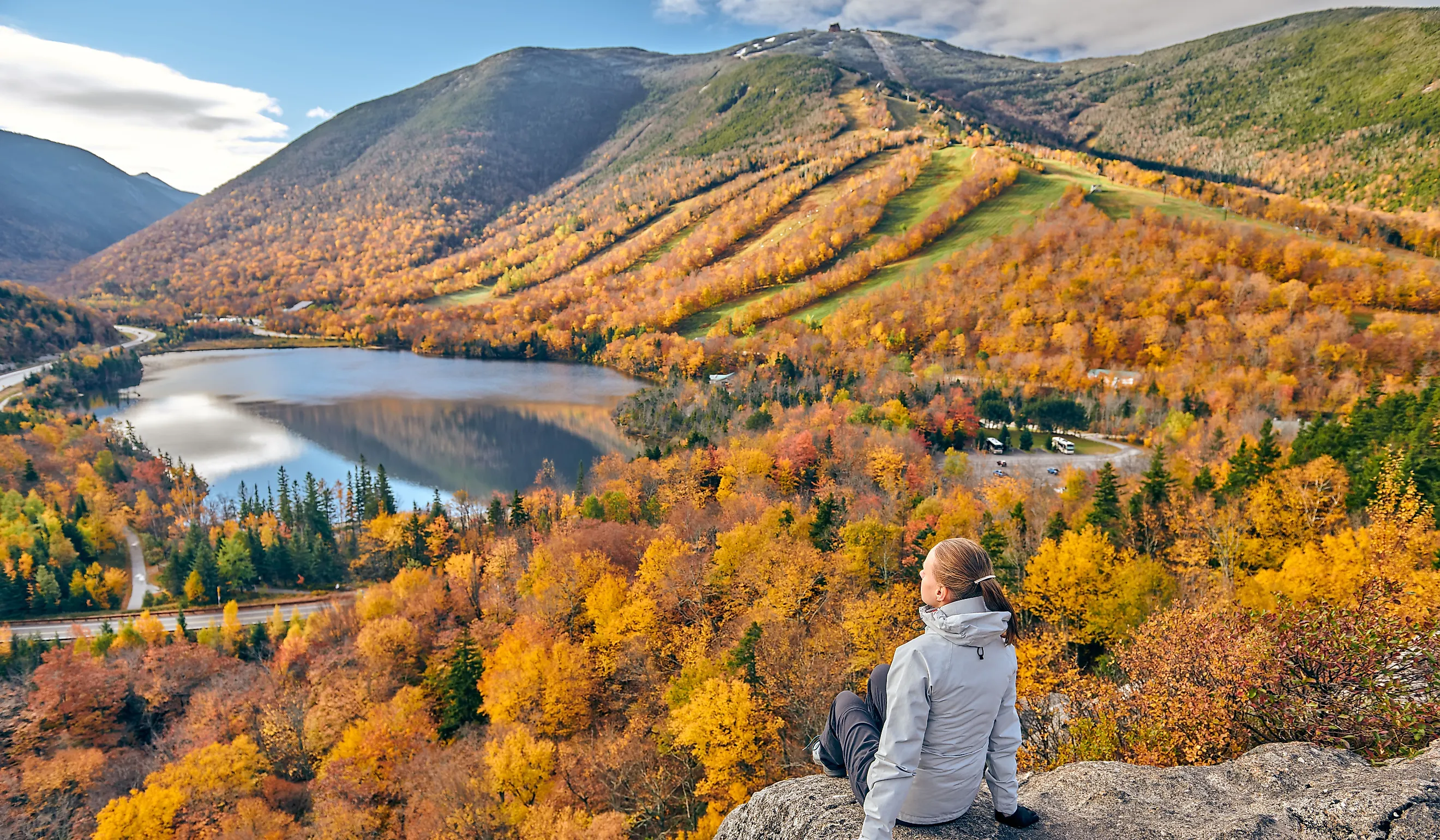
White Mountain National Forest, New Hampshire

White Mountain National Forest covers over 800,000 acres of untouched mountain wilderness in New Hampshire and some parts of Maine. It is covered with ecologically rich hardwood forests and is one of only two national forests in the New England region. The White Mountains, a subrange of the Appalachians, dominate this area, and the forest includes 160 miles of the Appalachian Trail.
These woodlands also restore a large number of water sources and are part of 35 watersheds, including over 12,000 acres of wetlands and 4,000 miles of streams. These watersheds make the forest ideal for American elm conservation efforts. Currently, work is being done to conserve the floodplains in New Hampshire as part of a broader plan to restore American elm numbers since American elms are uniquely well-suited for healthy floodplains.
Katahdin Woods and Waters National Monument, Maine

Katahdin Woods and Waters National Monument in Maine are part of the Northern Appalachian-Acadian Ecoregion, and the forest found here is a transitional forest between a southern broadleaf deciduous forest and a northern boreal forest. This area is home to a mix of hardwoods, including sugar maple, beech, and yellow birch. It is also home to black spruce, white spruce, red maple, and tamarack in wetland areas. This region is part of a broader project to improve American elm genetics to make the trees more hardy to DED, making it a great location to look for the majestic trees.
National Arboretum, Washington, D.C.

The U.S. National Arboretum is a research facility and public garden run by the U.S. Department of Agriculture (USDA) in D.C. Established by the National Arboretum Act, on March 4, 1927, the arboretum is home to a large collection of trees, both common and endangered. Visitors can access the display gardens at the National Arboretum, which is home to a comprehensive collection of plant groups critical to the American landscape.
Like Katahdin Woods and Waters National Monument, the National Arboretum is part of a broader project to improve American elm genetics and is a great place to visit if you're looking to spot one of these majestic trees.
Conserving American Woodland

The American elm has been under threat since the 1930s due to Dutch elm disease (DED). Even with the constant threat of disease and slowly dwindling numbers, this towering canopy-defining tree remains an important part of the American landscape. Those looking to take in the trees' beauty can most easily track it down in one of the many areas where conservation efforts are underway to preserve and regrow the American elm population, including many national forests.