What Would Happen If The Gulf Stream Stopped
Kill the Gulf Stream and it would not even vanish. The current most people picture is only the visible tip of a far bigger machine, the Atlantic Meridional Overturning Circulation, which hauls warm water north near the surface and sends cold water back south in the deep. It moves roughly a million power stations' worth of heat, and that warmth is why northwestern Europe stays mild for how far north it sits. The IPCC expects it to weaken this century, with medium confidence it will not fully collapse before 2100. But scientists keep modeling a shutdown anyway, because the consequences stretch well past Europe, reaching the American East Coast, the Indian monsoon, the West African rains, and the trade winds of the Pacific. Every effect below is a modeled result, not a forecast, and few of them land where you would expect.
Northwestern Europe Would Become Much Colder

Britain, Ireland, Scandinavia, and other parts of northwestern Europe receive a climatic advantage from heat carried into the North Atlantic. Remove much of that transport and the regional temperature map changes dramatically. The Met Office's 2025 high-impact scenario found that an AMOC collapse could lower UK temperatures by about 5 degrees Celsius compared with the climate that would otherwise occur. That comparison is important because greenhouse warming would continue at the same time. A future Britain could therefore be warmer than Britain today yet around 5 degrees colder than it would have been with a functioning AMOC.
A 2025 Geophysical Research Letters study led by René van Westen reached a similar conclusion using the Community Earth System Model. A strongly weakened AMOC produced pronounced cooling over northwestern Europe even when global warming was held to roughly 2 degrees Celsius or less. The largest effects appeared during winter. Continental interiors farther east experienced smaller changes, while areas closest to the North Atlantic responded most strongly. Europe would end up with an extraordinary climate contrast, with greenhouse gases pushing global temperatures upward while reduced Atlantic heat transport pulls one region sharply in the opposite direction.
Winter Cold Could Become Far More Intense

Average temperature does not capture the most striking European result. Van Westen's 2025 experiments found stronger winter cold extremes and substantially greater day-to-day temperature swings after a major AMOC decline. Sea ice played a large role. In the experiment without additional greenhouse warming, winter ice expanded southward across much more of the North Atlantic, reaching roughly 50 degrees north. Ice-covered water releases less ocean heat into the air above it, reinforcing the chill over nearby land.
Global warming changes the size of this response. In simulations with intermediate warming, sea ice remained farther north and the European cold anomaly weakened, although it remained substantial. This makes the timing of any collapse crucial. The same AMOC failure could produce different European winters depending on how much warming had already occurred.
The winter signal also becomes more erratic. The 2025 study found larger short-term temperature fluctuations as North Atlantic storm activity increased. A future winter in northwestern Europe could therefore involve rapid swings between air masses alongside a colder seasonal average. The result is more complicated than a simple return to historical cold winters. It represents a new climate state created by greenhouse warming, expanding sea ice, and a radically altered Atlantic temperature pattern.
Europe Would Face More Drought

The change in European rainfall is unusually consistent across recent collapse experiments. A 2025 study in Hydrology and Earth System Sciences tested AMOC-collapse climates with the Community Earth System Model and found drier conditions across Europe in every collapse scenario examined. Under pre-industrial conditions, reduced precipitation drove most of the change. When researchers combined the collapse with greenhouse warming, higher potential evapotranspiration removed additional moisture and intensified seasonal drought. The largest increases in drought probability appeared across the Mediterranean. The Met Office reached a similarly stark result for Britain, estimating that summer rainfall could fall by as much as 40 percent in its 2025 high-impact AMOC-collapse storyline. Rivers and reservoirs would receive less dependable replenishment during the warm season, while soils could enter autumn with larger moisture deficits. The combination of lower rainfall and stronger evaporation is particularly important because a modest change in annual precipitation can still produce a much larger agricultural drought when water disappears faster during summer.
British Farming Could Lose Large Areas of Arable Land
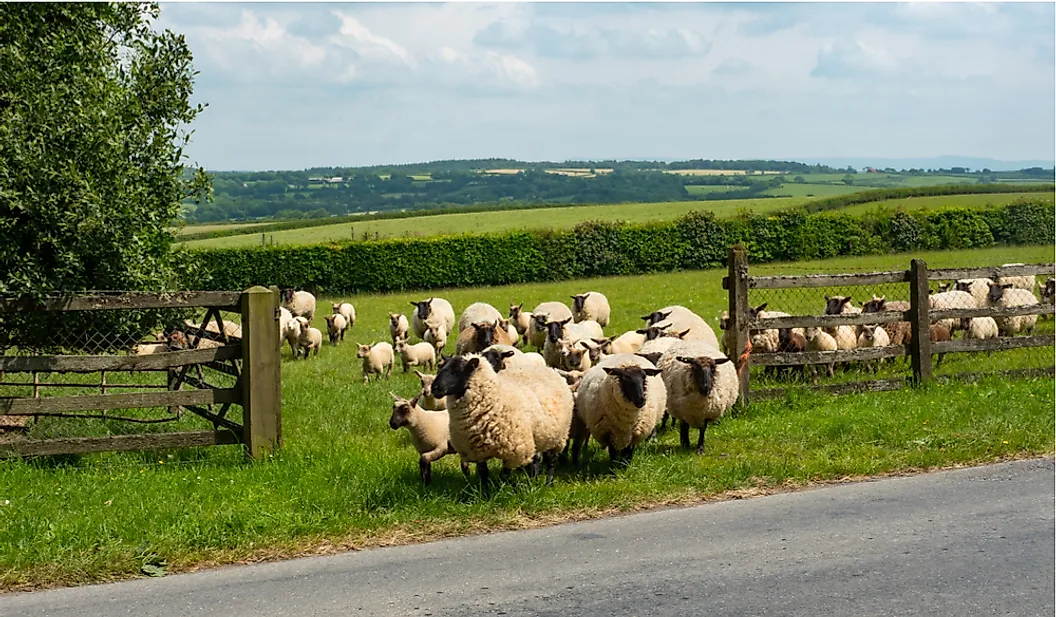
Great Britain is the subject of one of the clearest attempts to translate an AMOC collapse into farm economics. A 2020 Nature Food study modeled British land use under gradual climate change and a separate scenario involving an abrupt circulation collapse. The AMOC scenario produced widespread cessation of arable farming. Estimated agricultural-output losses were an order of magnitude larger than those caused by smooth climate change in the same analysis.
Rainfall was central to the result. Lower growing-season precipitation created serious water limitations even where temperature changes alone might have remained manageable. The researchers tested irrigation as an adaptation and found that it could recover some production, although the required water volumes and costs appeared prohibitive. That finding makes Britain particularly interesting because much of its farming currently depends on rainfall instead of the extensive irrigation systems used in drier agricultural regions.
The Atlantic Tropical Rain Belt Would Move South

A collapse in the far North Atlantic can move rain close to the equator because the AMOC transports heat between hemispheres. With much less oceanic heat crossing northward, the Northern Hemisphere cools relative to the Southern Hemisphere. Tropical rainfall tends to follow the warmer side of that divide. Climate experiments consequently shift the Atlantic portion of the Intertropical Convergence Zone southward. The IPCC identifies reduced Sahel summer rainfall with high confidence under substantial AMOC weakening. This matters around Senegal, Mali, Burkina Faso, Niger, and neighboring countries because a large share of annual rain arrives during a relatively short summer season. Moving the tropical rain belt changes where Atlantic moisture converges and falls. Areas south of the old rain belt can gain precipitation while northern tropical regions lose it. The effect therefore looks less like a uniform drying of the tropics and more like a relocation of one of Earth's great rainfall systems.
The South Asian Monsoon Could Weaken

India lies an ocean away from the North Atlantic, yet its summer monsoon responds to the same hemispheric temperature imbalance. The IPCC gives medium confidence to a decrease in South Asian summer rainfall following substantial AMOC weakening. Cooling across the Northern Hemisphere changes pressure patterns and weakens the northward displacement of tropical rainfall that helps sustain the monsoon.
The regional details are much more interesting than a single rainfall percentage. Climate models can produce drying across India while changing moisture transport over the Bay of Bengal differently. Mountain ranges, coastlines, and existing monsoon winds redistribute that moisture, giving nearby regions contrasting outcomes.
Such changes would arrive during the season when South Asia receives much of its annual water. Agriculture across India, Pakistan, Bangladesh, and Nepal is closely tied to monsoon timing, and summer rainfall fills the reservoirs that supply water through the drier months. A weakened or displaced monsoon would therefore affect water supply even where annual rainfall did not collapse. That South Asian rainfall sits among the established AMOC risks is a measure of how far the influence of Atlantic heat transport extends.
Sea Level Would Rise Along Northeastern North America

Boston, New York, and other communities along the northeastern coast of North America face an AMOC effect that has little to do with melting ice. Atlantic currents help maintain differences in sea-surface height across the western North Atlantic. When those currents weaken, water redistributes and coastal sea level rises. The IPCC gives medium confidence that substantial AMOC weakening would raise regional sea level along the northeastern North American coast. Climate models also consistently produce particularly large dynamic sea-level increases near roughly 40 degrees north.
A smaller real-world example of the mechanism comes from direct observation. NOAA's Geophysical Fluid Dynamics Laboratory examined an exceptional sea-level rise along the Northeast Coast during 2009 and 2010. Researchers found that an observed 30 percent AMOC downturn contributed to the event by changing offshore temperature, salinity, and ocean density. Atmospheric conditions added to the rise, so the episode was not an AMOC-collapse analogue. It did show that changes in overturning can measurably influence coastal water levels. A full collapse would add this regional effect to the global sea-level rise already produced by warmer oceans and melting land ice.
Northern European Winter Storms Could Become Stronger or More Frequent

North Atlantic storms draw energy from sharp temperature contrasts. An AMOC collapse creates an exceptional one by cooling the northern ocean while regions farther south remain comparatively warm. The 2025 van Westen study found enhanced North Atlantic storm-track activity after collapse, accompanied by much larger day-to-day temperature variability over Europe. The Met Office's 2025 UK storyline likewise projects an increased frequency of winter storms, and the IPCC assigns medium confidence to an increase in Northern European storms under substantial AMOC weakening. The exact track matters as much as storm strength. A modest shift can move the busiest corridor of low-pressure systems toward one coastline and away from another. Changes in sea ice would add another temperature boundary across the northern ocean. Britain and the North Sea region could therefore face a winter climate that is colder yet still energetic, with Atlantic lows moving through a much sharper ocean-atmosphere temperature gradient than the one that shapes today's weather.
North Atlantic Plankton Could Fall Dramatically
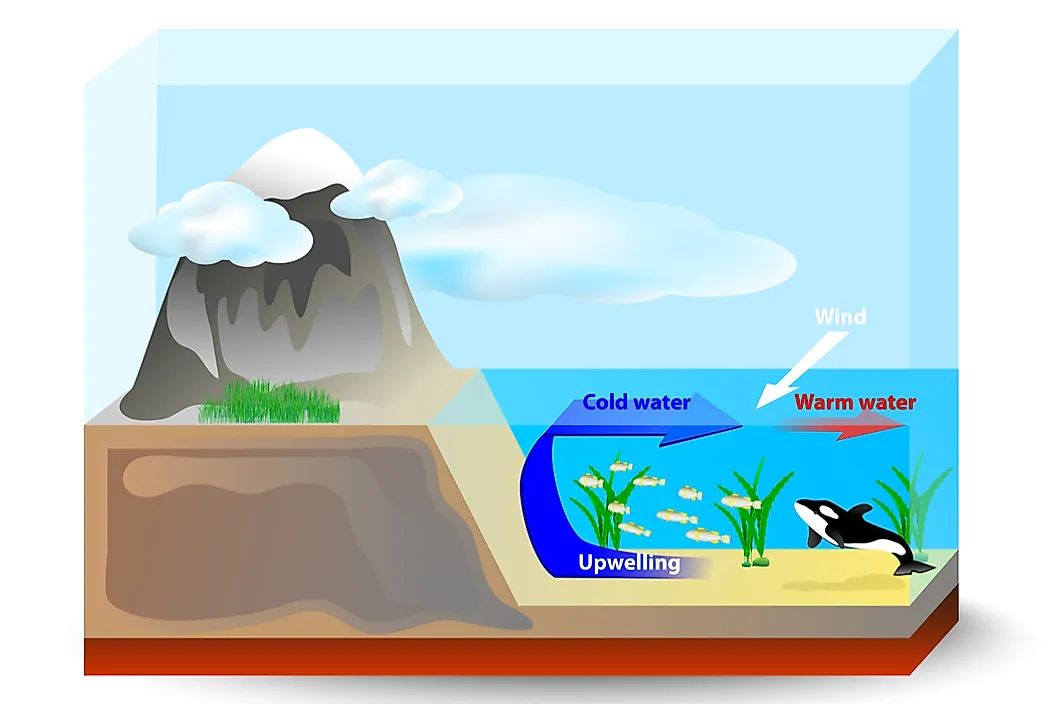
Some of the most consequential changes would be almost invisible from shore. A 2005 Nature experiment by oceanographer Andreas Schmittner simulated an Atlantic-overturning disruption and found North Atlantic plankton biomass falling to less than half its initial level. The cause was physical. Winter mixed layers became shallower, leaving surface waters more isolated from the deep nutrient reservoir that normally helps replenish them.
Phytoplankton form the productive base of much of the marine food web, so a decline on that scale does not stay microscopic. Schmittner's model also produced an approximately 20 percent reduction in global marine biological productivity. Modern models differ in magnitude, and a 2005 experiment cannot supply a precise forecast for a future collapse. The mechanism remains important enough that the IPCC gives medium confidence to declining North Atlantic marine productivity under substantial AMOC weakening.
The fisheries consequence would vary by species. Cold-water habitat could expand in some places while lost plankton production reduces food elsewhere. Temperature boundaries and currents used during spawning or migration would move as well. North Atlantic ecosystems would therefore reorganize through several pressures at once, with nutrient supply joining temperature as a major driver.
The Ocean Could Take Up Less Carbon Dioxide

The overturning circulation helps move carbon away from the ocean surface. Seawater absorbs atmospheric carbon dioxide, biological processes package some carbon into sinking material, and circulation transports dissolved carbon into the ocean interior. Slower overturning interferes with that storage system. A Nature Climate Change study published in 2023 examined projected weakening of both Atlantic and Southern Ocean overturning and found reduced ocean carbon uptake as circulation slowed. The same experiments showed increasing sequestration of nutrients in the deep ocean, which can limit biological productivity near the surface. The carbon response is not a simple one-for-one relationship because cooling increases the solubility of carbon dioxide while weaker ventilation changes how efficiently carbon reaches depth. Those processes can oppose each other locally. The broader concern is that circulation weakening alters one of the planet's largest carbon reservoirs. If the ocean takes up a smaller share of human carbon emissions, a larger fraction remains available to accumulate in the atmosphere.
The Pacific Trade Winds Could Strengthen
The Atlantic and Pacific do not need a direct current between them for one basin to change the other. A 2022 Nature Climate Change experiment found that AMOC collapse left excess heat in the tropical South Atlantic. That warmth increased atmospheric convection there and launched a chain of pressure changes across the tropics. Pacific trade winds accelerated and the Walker circulation strengthened.
The Walker circulation is the broad east-west atmospheric loop running across the equatorial Pacific. Its strength influences tropical rainfall and the ocean conditions associated with El Niño and La Niña. In the AMOC-collapse experiment, the atmospheric response also reached the Indian Ocean, South Atlantic, and Amundsen Sea near Antarctica. The result is a striking example of climate teleconnection backed by a specific physical mechanism. Heat stranded in one ocean basin changes tropical thunderstorms, those thunderstorms alter large-scale air pressure, and winds respond thousands of miles away.
North Atlantic Hurricane Activity Could Decline
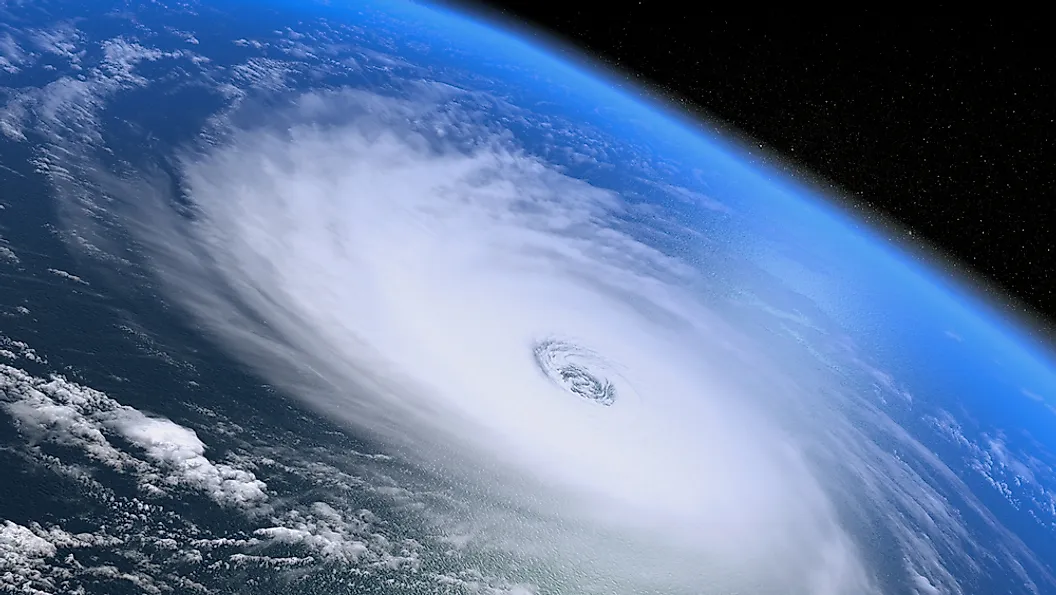
The newest evidence points toward fewer North Atlantic tropical cyclones under strong AMOC weakening. NOAA's Geophysical Fluid Dynamics Laboratory reported high-resolution model experiments in August 2026 that directly tracked individual storms after freshwater forcing weakened the circulation. Tropical cyclone activity fell across the North Atlantic, with the sharpest reduction in parts of the eastern basin.
The ocean cooling associated with the weaker AMOC spread toward lower latitudes along a horseshoe-shaped Atlantic pattern. Drier atmospheric conditions accompanied it, while vertical wind shear increased over the tropical North Atlantic. All three changes make tropical-cyclone development harder. The remaining activity was redistributed instead of declining identically in every part of the basin.
This result fits an older IPCC assessment that gives medium confidence to a reduction in Atlantic tropical-cyclone numbers under substantial AMOC weakening. It is still one of the more model-dependent effects because hurricanes also respond to greenhouse warming, aerosols, El Niño, humidity, and local ocean temperatures. The 2026 NOAA work strengthens the case by tracking simulated storms directly instead of estimating hurricane activity only from broad environmental conditions.