Are There Differences Between Continental Crust and Oceanic Crust?
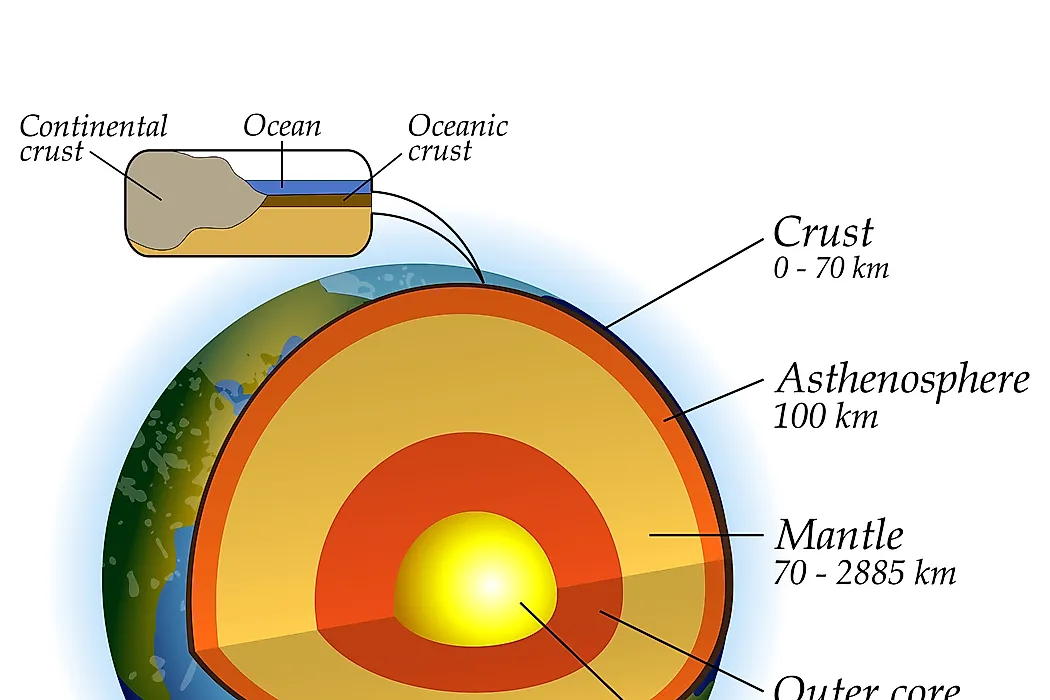
Stand on a granite outcrop in the mountains, then picture the dark, heavy rock that floors the deep ocean. You are looking at two materials so different they could almost belong to separate planets. Earth has two kinds of crust, continental and oceanic, and the short answer to whether they differ is an emphatic yes. They are built from different rocks, sit at different depths, weigh different amounts, and were born at wildly different times. None of this is trivia. These differences are the reason continents stand above the waves, the reason the seafloor keeps recycling itself, and the engine behind earthquakes, volcanoes, and mountain ranges. Here is how the two compare.
The Differences at a Glance
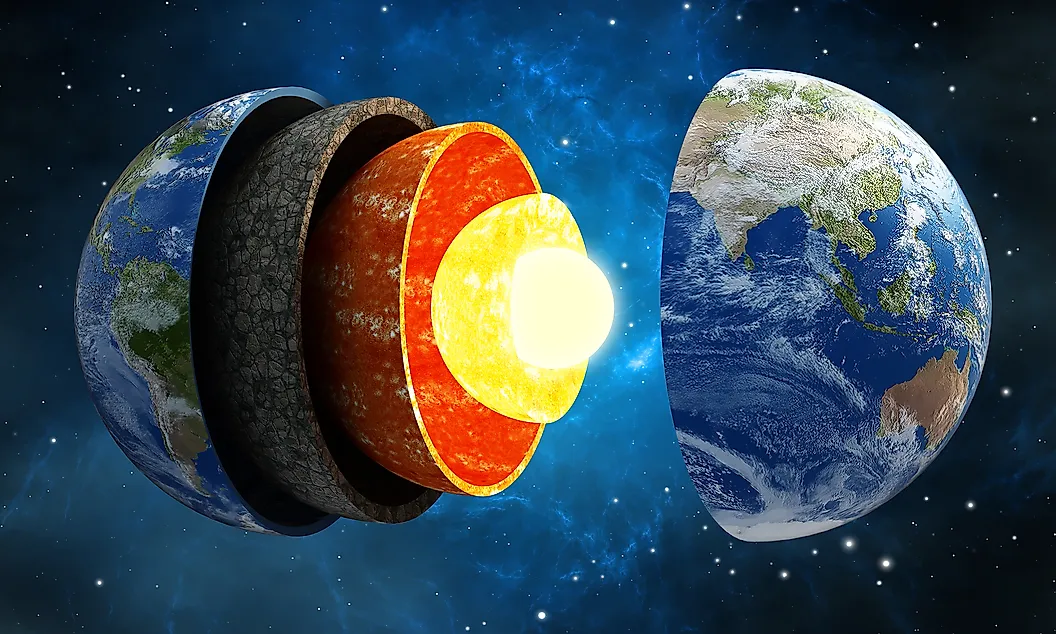
The crust is only the planet's thin outer skin, floating on the hot mantle below, but it comes in two distinct varieties. Set them side by side and the contrasts are immediate.
| Feature | Continental Crust | Oceanic Crust |
|---|---|---|
| Dominant rock | Granite and other felsic rock | Basalt and gabbro (mafic) |
| Chemistry | Silica- and aluminum-rich | Magnesium- and iron-rich |
| Thickness | About 30 to 50 km, up to 70 under mountains | About 5 to 10 km, roughly 7 on average |
| Density | Around 2.7 g/cm³ | Around 3.0 g/cm³ |
| Typical age | Up to about 4 billion years | Rarely older than 180 million years |
| Where it is found | Continents and continental shelves | The floor of the ocean basins |
What They Are Made Of
Every other difference traces back to chemistry. Continental crust is felsic, a term that flags its high silicon and aluminum content. Its signature rock is granite: pale, coarse-grained, and relatively light. Oceanic crust is mafic, meaning it is loaded instead with magnesium and iron. Its building blocks are basalt, the fine-grained rock that erupts and chills fast on the seafloor, and gabbro, the same chemistry cooled slowly at depth into coarse crystals.
That recipe matters because iron and magnesium are heavy elements. A rock packed with them weighs more, volume for volume, than one built mostly on lighter silica and aluminum. So the oceanic crust is not just chemically different from the continental crust. It is fundamentally denser, and that single fact ends up dictating where each type of crust sits and how it behaves. It also makes the two crusts a study in contrast within the wider story of what the planet is made of.
Thick Continents, Thin Oceans
The two crusts are not remotely the same thickness. Continental crust is the heavyweight, averaging around 35 km and ranging between 30 and 50 km. Beneath young mountain ranges it goes deeper still: where plates collide and pile rock skyward, as in the Himalayas, the crust can swell to roughly 70 km, driving a deep "root" down into the mantle to balance the peaks above.
Oceanic crust is wafer-thin by comparison, usually 5 to 10 km thick and about 7 km on average. The boundary where either crust gives way to the denser mantle beneath it is the Mohorovičić discontinuity, better known as the Moho. The crust, in other words, is a thin lid over the rest of the planet, and the continental version is simply a much thicker lid than the oceanic one.
Why Oceanic Crust Sinks
Density is the quiet rule that runs the whole show. Continental crust comes in around 2.7 grams per cubic centimeter, oceanic crust nearer 3.0. The gap sounds small, but it decides the shape of the planet. Both kinds of crust float on the denser mantle the way rafts float on water, a balance geologists call isostasy. The lighter continental raft rides high, averaging about 800 meters above sea level. The heavier oceanic raft sits low, averaging several kilometers below it, which is precisely why oceans fill the basins and continents do not.
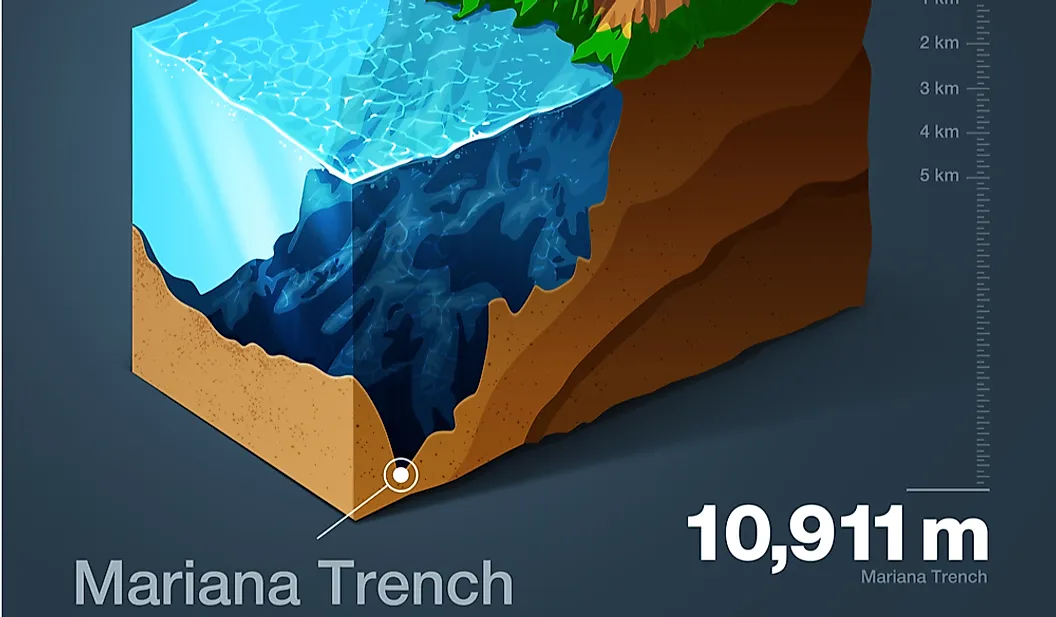
The same rule governs what happens when the two meet. At a plate boundary, the denser oceanic crust loses every time. It slides beneath the continent and plunges back into the mantle in a process called subduction, dragging the seafloor down into deep trenches. The Mariana Trench, the deepest place on Earth at nearly 11 km below the surface, is one such scar, marking where one slab of oceanic crust is diving out of sight.
Ancient Rock, Brand-New Rock
Here is the strangest difference of all. The oldest continental rocks are almost unimaginably old. The Acasta Gneiss in northern Canada dates to about 4 billion years, and zircon crystals recovered from the Jack Hills of Western Australia push back to roughly 4.4 billion years, nearly as old as the Earth itself. The continents are, quite literally, keepers of the deep past.
The ocean floor keeps no such records. Almost nowhere on Earth is the oceanic crust older than about 180 million years, a blink of an eye in geological terms. The reason is brutal efficiency: oceanic crust is constantly being created and just as constantly destroyed. Continental crust, too buoyant to be dragged under, mostly escapes that fate and survives to accumulate age. One crust is a fresh page, the other an ancient archive.
How Each Crust Is Born
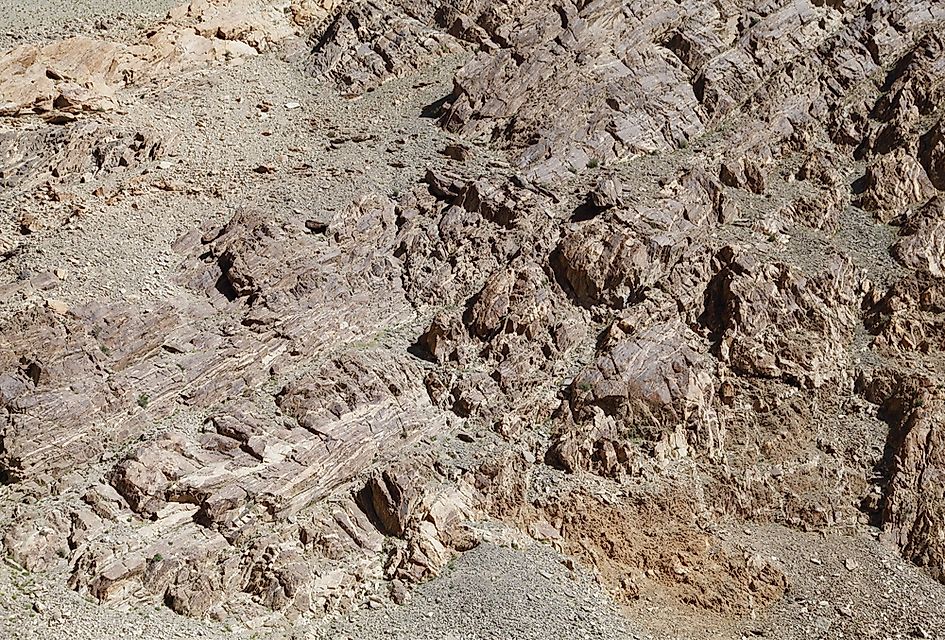
Oceanic crust is manufactured along the mid-ocean ridges, the longest mountain chain on the planet, hidden almost entirely underwater. There, plates pull apart, magma wells up into the gap, and it freezes into fresh basalt that is then shoved outward on either side like a conveyor belt. Tens of millions of years later, that crust reaches a subduction zone and is swallowed. The few places where a sliver of old ocean floor gets scraped onto a continent rather than subducted are called ophiolites, and they let geologists walk across rock that once lay beneath the sea.
Continental crust is built more slowly and by a messier process. It forms mainly above subduction zones, where descending slabs melt and the lighter, silica-rich fraction separates out and rises to weld itself onto the edges of existing continents. Because that material is too light to sink back down, it stays, growing the continents over billions of years rather than recycling away.
Why the Difference Matters
So, are there differences between continental and oceanic crust? Profoundly so, and the planet you live on is the result. The light, thick, ancient continental crust is the reason there is dry land to stand on at all. The dense, thin, endlessly renewed oceanic crust is what keeps plate tectonics running, opening and closing oceans, raising mountains, and feeding the volcanoes and earthquakes that ring the Pacific. Two kinds of crust, one restless planet, and nearly every feature of its surface comes down to which one happens to be underfoot.