How Deep Does The Ocean Actually Go?
Lurking 11,000 meters beneath the surface of the Pacific Ocean is a dark, extreme underwater desert populated with sea cucumbers, huge white and pink amphipods, and the occasional plastic bag. This is Challenger Deep, the deepest known point in Earth's ocean, plunging down approximately 10,935 meters (35,876 feet) below sea level. The water pressure here is 1,086 bar, which is like having an estimated 1,800 elephants standing on top of you in a bizarre pyramid. For context, if Mount Everest were placed inside Challenger Deep, its summit would still be more than a mile below the ocean's surface.
Ocean Depth Changes Dramatically Around the World
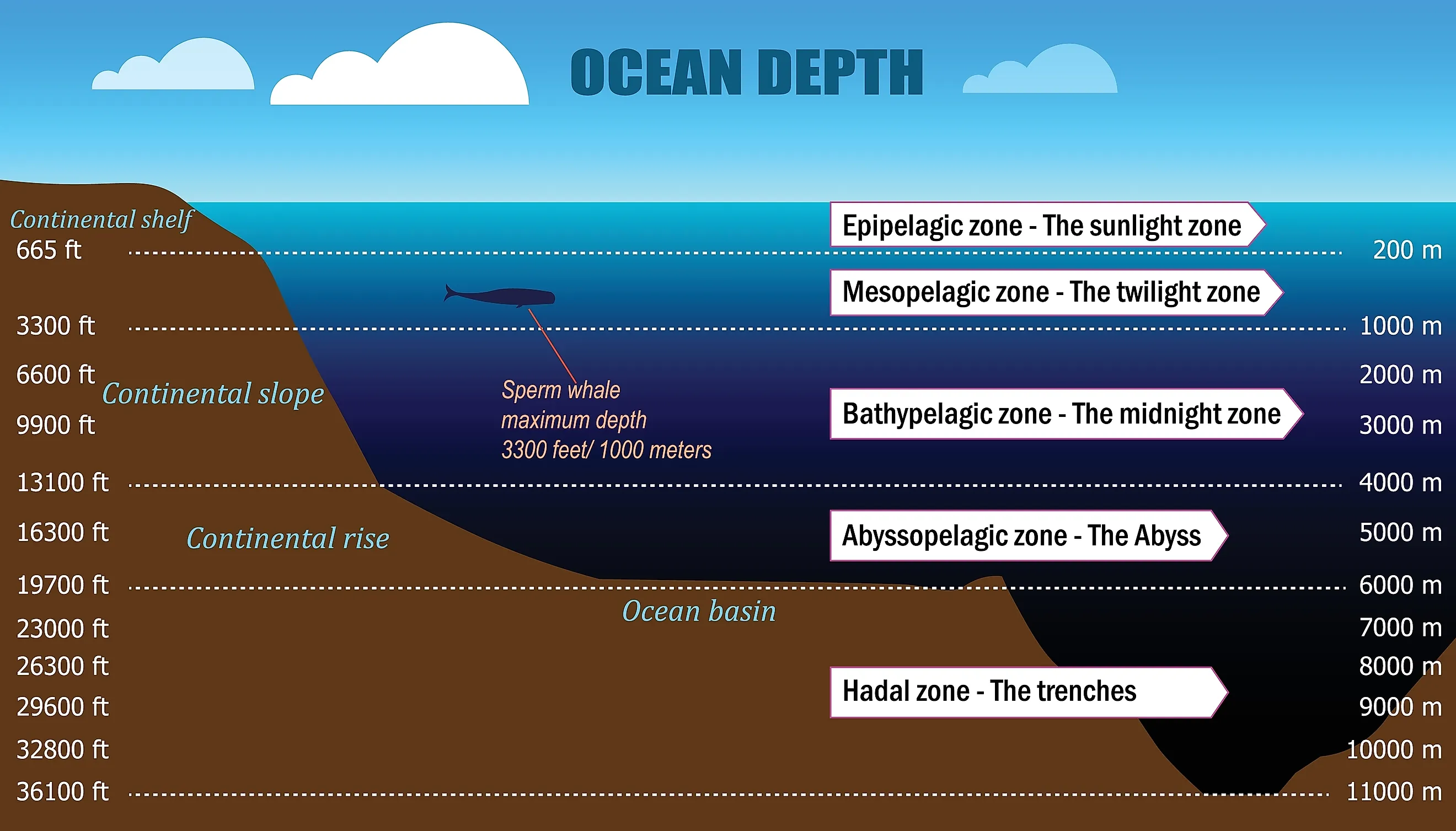
Not every part of the ocean is extremely deep. The average ocean depth is around 3,688 meters (12,100 feet), but the seafloor varies enormously.
Near coastlines, broad continental shelves are often only a few hundred feet deep. Beyond them, the seafloor drops sharply down continental slopes before flattening into abyssal plains that stretch for thousands of miles.
The deepest regions occur where tectonic plates collide, creating narrow ocean trenches. Most of these trenches are found in the Pacific Ocean.
The Five Layers of the Ocean
Scientists divide the ocean into five zones.
| Ocean Zone | Depth |
|---|---|
| Sunlight Zone | 0-200 m (0-656 ft) |
| Twilight Zone | 200-1,000 m (656-3,281 ft) |
| Midnight Zone | 1,000-4,000 m (3,281-13,123 ft) |
| Abyssal Zone | 4,000-6,000 m (13,123-19,685 ft) |
| Hadal Zone | 6,000-11,000 m (19,685-36,089 ft) |
Sunlight Zone (0-200 Meters)

The sunlight zone is where nearly all of the ocean's primary production takes place, and it holds a large share of the marine life scientists have described so far. Light still gets in here, which allows photosynthesis to take place. Phytoplankton, single-celled algae, and bacteria form the foundation of the ocean's ecosystem. They are eaten by larger plankton, which are then eaten by fish and other marine animals.
The seafloor in the sunlight zone is rich with colorful coral reefs, algae, and other sea plants.
Twilight Zone (200-1,000 Meters)

As you move deeper into the ocean, you reach the edge of the continental shelf at around 200 meters (660 feet). Here, the continental slope begins, dropping steeply toward the deep ocean. The light grows dimmer, and there are virtually no plants. The continental slope resembles the surface of the Moon, surrounded by endless, dark water.
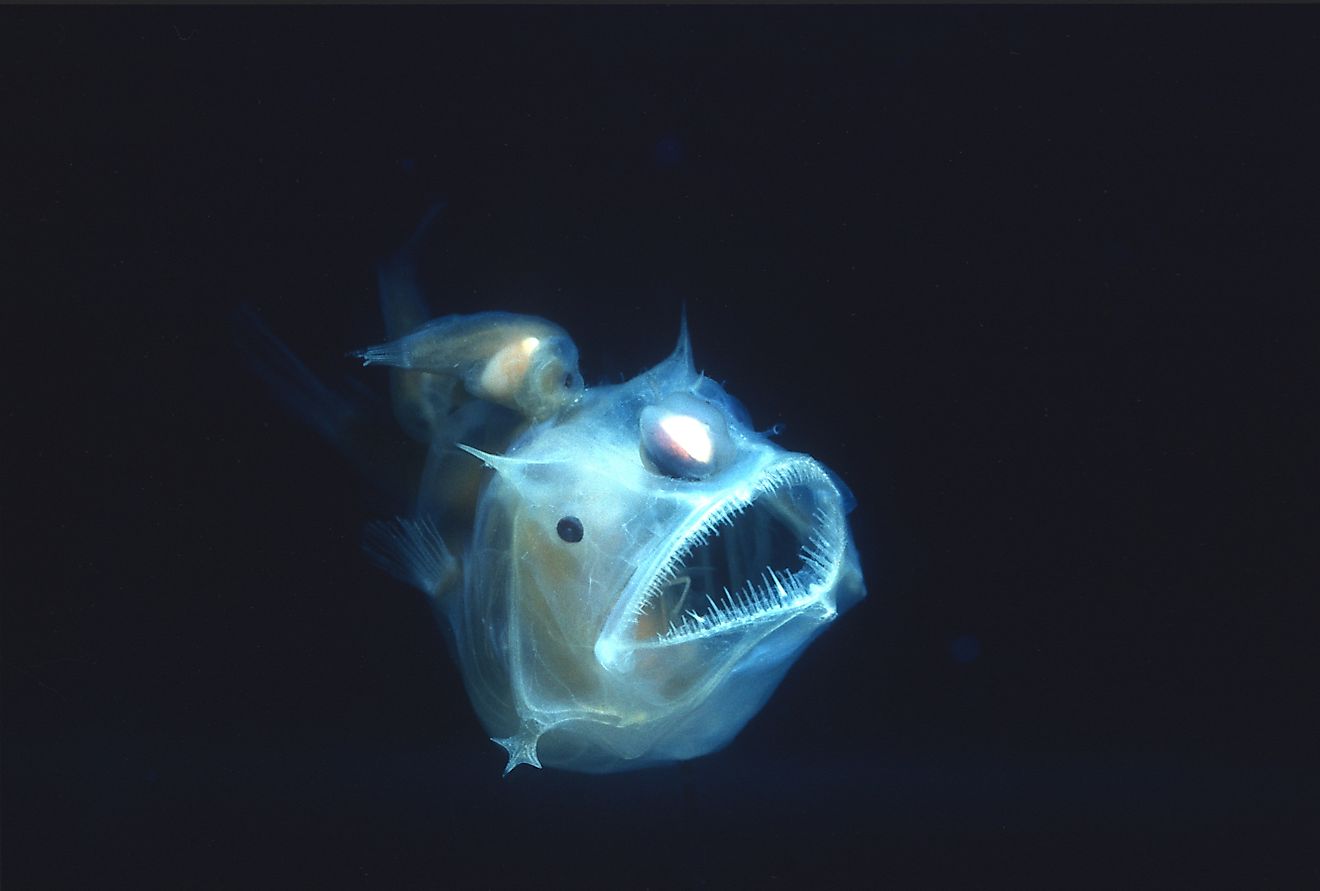
Here lies the twilight zone, which is where the deep sea begins. Water pressure rises dramatically here, and at 330 meters it would feel like being crushed by around 200 cars. The twilight zone isn't as devoid of life as it may appear, however, and many animals and fish live here during the day as the darkness provides safety from predators. This is where indigenous bioluminescent lifeforms live, generating their own light to attract mates and hunt. Giant squid measuring up to 43 feet (13 meters) long also live here.
Midnight Zone (1,000-4,000 Meters)

Deeper still is the midnight zone, which is around 1,000 meters deep, pitch black, and has been barely explored by humans. It is incredibly hard for human beings to swim here, and life forms living down here move very slowly to conserve energy. The 30-centimeter vampire squid lives down here, floating through the water with two long retractable feeding filaments that collect food particles from the surrounding water.
Eyeless shrimp and other non-seeing animals also live down here. Deep-sea predators have several sets of teeth to make it easier to catch their prey, like the frilled shark, which has 300 teeth curved backward.
Abyssal Zone (4,000-6,000 Meters)

Lying 4,000 meters below the surface of the sea is the abyssal zone, a cold, high-pressure environment inhabited by specially adapted animals. Animals move in slow motion here or stay motionless, only speeding up in life-or-death situations. At around 4,000 meters is the abyssal plain, which is a gray, muddy, rocky place where sea cucumbers, shrimp, sea urchins, and sea worms live. In the rift valleys, magma heats seawater and creates hot jets of water where extremophile bacteria create unique ecosystems.
Hadal Zone (6,000-11,000 Meters)
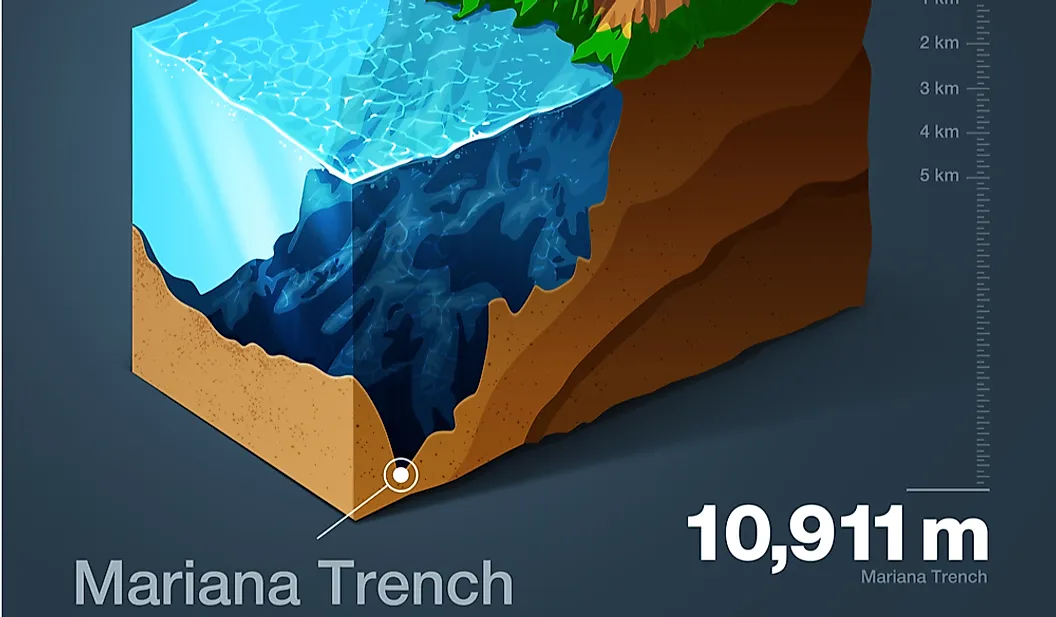
At around 6,000 meters, the hadal zone lurks. Named after Hades, the Greek god of the underworld, the hadal zone consists of long, narrow ocean trenches that make up less than 0.25% of the world's oceans. This is where Challenger Deep, located inside the larger Mariana Trench, marks the deepest known part of the ocean.
What Lives at the Bottom of the Ocean?

Despite the crushing pressure and complete darkness, life still exists in the deepest parts of the ocean.
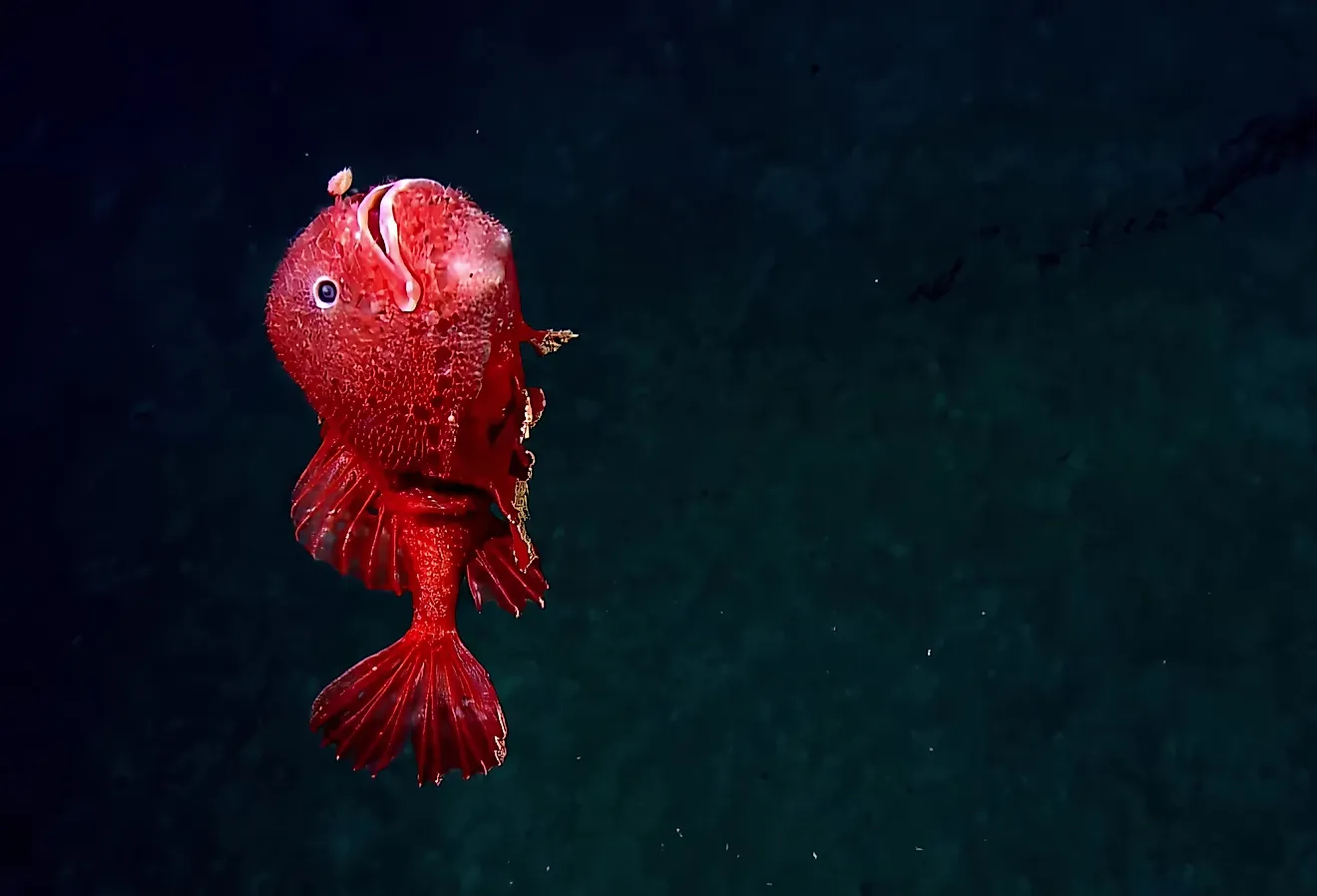
Scientists have discovered snailfish living more than 8,000 meters below the surface, along with white and pink 30-centimeter-long amphipods, sea cucumbers, sea worms, microorganisms, and enormous single-celled organisms called xenophyophores. A plastic bag and candy wrappers were reported on the bottom of Challenger Deep in 2019.
How Have Humans Explored the Deepest Parts of the Ocean?

During the 1870s, the HMS Challenger expedition made the first scientific measurements of the Mariana Trench, and Challenger Deep was later named after the ship. They thought that the Mariana Trench was the deepest part of the ocean at around 8,200 meters. It wasn't until the 1950s that the currently accepted depth of the ocean at just under 11,000 meters was recorded.
In 1960, Jacques Piccard and Don Walsh became the first people to reach the bottom aboard the bathyscaphe Trieste, which was designed to help them withstand the incredibly high water pressure.
Could There Still Be Unknown Creatures in the Deep Sea?
The ocean covers roughly 70% of the Earth's surface, and yet we've only seen about 0.001% of the deep seafloor.
Scientists continue to discover hundreds of new marine species every year. While we have yet to discover Loch Ness's Nessie or other folklore sea monsters, we have already discovered some bizarre sea creatures living down there, and it appears we only know about one third of the species in the deep ocean.
Challenger Deep is only one small part of a vast underwater world that remains largely unexplored. From towering underwater seamounts to mysterious deep-sea creatures, the oceans continue to surprise scientists with every expedition. Even after centuries of exploration, the greatest deep-sea discoveries have yet to be found.