What Happens To Your Body At The Bottom Of The Ocean
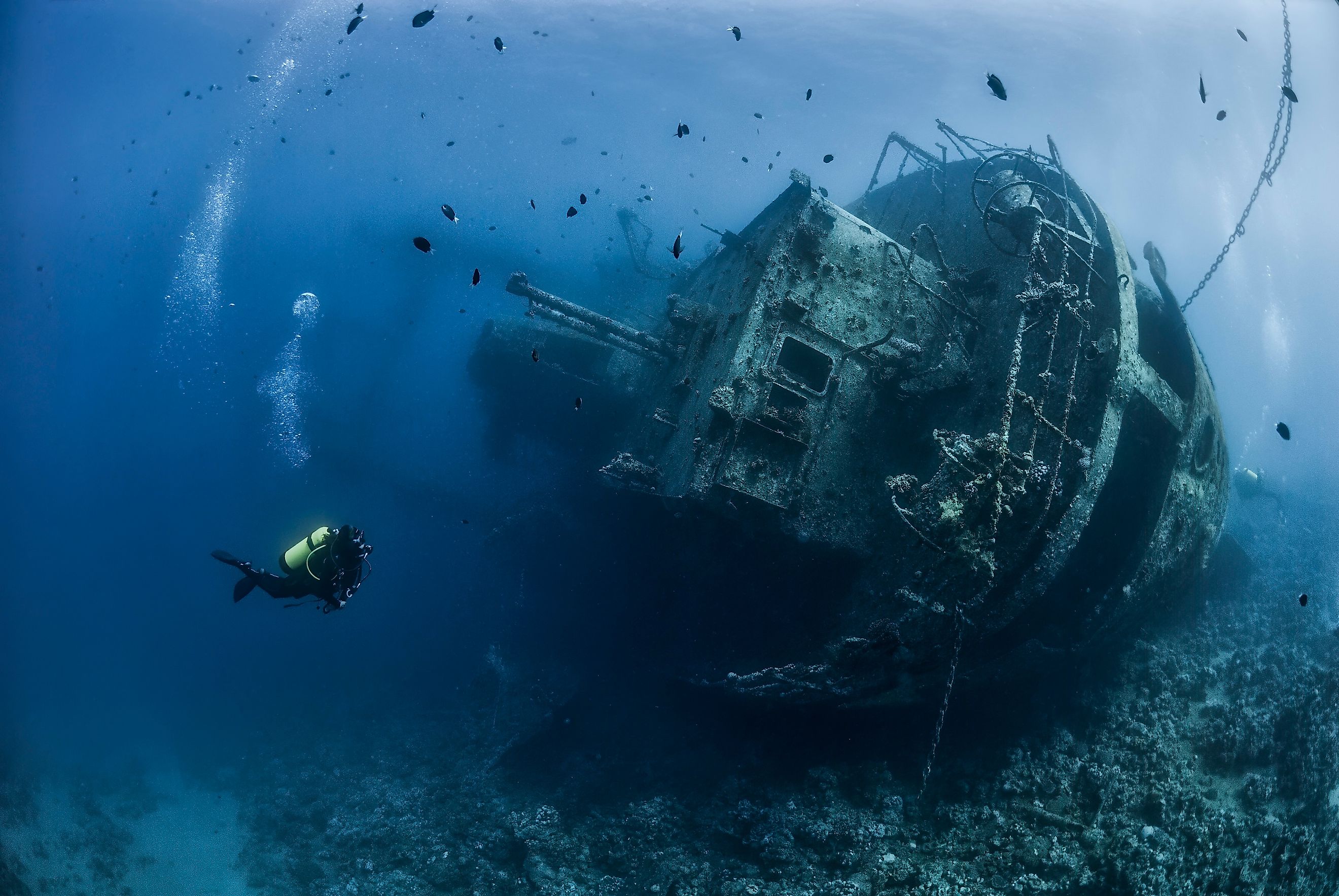
At the bottom of the ocean, the human body is vulnerable to extreme conditions. Unprotected, the body faces near-freezing temperatures, pressure collapse, and marine life scavengers. A human body may find itself at the bottom of the ocean for many reasons, through accidents such as shipwrecks, natural disasters, the result of warfare or crime, falling overboard, or burial at sea. How likely a body would reach the bottom of the ocean depends on the depth of the water, ocean currents, decomposition, and what the deceased person was wearing. The most common ways a human body could end up at the bottom of the ocean are shipwrecks and airplane crashes, where the weight of the craft would ensure a much quicker descent to the bottom than a body on its own. If a body does make it to the bottom of the ocean intact, what happens next depends on many scenarios that may unfold.
What Happens To The Body On The Ocean Floor

Whether a body would remain on the bottom of the ocean depends on several things. The human body is denser than the ocean's water, but because of internal bacteria that produce gases during decomposition, the body may bloat. A decrease in overall density causes it to become buoyant. The body may float on the water's surface for 3 to 5 days. However, in the ocean, a floating body is subject to any number of situations, including scavengers, the heat of the sun, the nature of saltwater, and further decomposition, which may cause the body to sink more quickly. As the outer tissues rupture, the trapped decomposition gases are released, and water floods the cavities. The body's weight and density increase, and what remains of the body will then sink.

For bodies that reach the bottom quickly, such as with shipwrecks and airplane crashes, gas buildup is less likely because of high pressure, cold temperatures, and scavengers. External factors such as heavy clothing, heavy gear, or diving weights can prevent resurfacing. If the body remains inside the craft, movement is limited, but it is still subject to the stresses of the open water. However, if the body was ejected from the craft, it may be moved by ocean currents before settling in one spot. Deep ocean recoveries are difficult due to the depths, the pressure, poor visibility, large search areas, and ocean currents moving human remains and ship debris. Since much of the ocean floor remains unmapped, pinpointing an exact location is difficult. The RMS Titanic, for example, was only found on September 1, 1985, 73 years after it sank. After following a trail of debris, the ship was found by a towed camera sled called Argo.
Timeline of the Impact On the Human Body on the Ocean Floor

If the body sinks quickly to the bottom, several things may happen.
- The lungs, middle ears, and sinuses collapse almost instantly.
- Human tissues are mostly incompressible water, but the body will not flatten on the ocean floor. However, internal organs will deform under thousands of pounds of pressure per square inch.
- The water temperature at the bottom of the ocean ranges from 32°F to 37°F (0°C to 3°C). The water pressure prevents the body from turning into solid ice, but the extreme cold will slow normal bacterial putrefaction.
- Cold water turns the body fat into a hard, waxy soap-like substance called adipocere, which can preserve soft tissues for weeks.
- Scavengers, such as tiny amphipods, may enter through the eyes, nose, and mouth, eating soft organs from the inside out.
- Shrimp, crabs, and hagfish will consume the remaining flesh.
- Scavengers can reduce a body to a skeleton in anywhere from 3 days to a few weeks.
If a human body falls to the bottom of the ocean and is unprotected, the physical and biological results will depend entirely on depth and temperature of the water. The adipocere formation in cold and low-oxygen environments at the ocean floor may create what is called a "soap mummy," although this is not true mummification, which requires dry air and heat. In extremely deep, low-oxygen, and near-freezing water, decay can be slowed down, and if the body manages to avoid scavengers, it can remain relatively preserved for years.
Differences Between Shallow US Coastal Waters And The Mariana Trench

Coastal water depths around the United States vary widely by coastline, and no single figure describes them. The average depth of the ocean floor is 13,100 feet (4,000 meters), while the deepest area on Earth, the Mariana Trench, is 36,000 feet (11,000 meters) at its deepest point, the Challenger Deep. The average deep ocean floor will be dark and cold, such as where the Titanic rests. The process changes from standard decomposition to crushing pressure and rapid biological consumption. The cold slows bacterial activity and the gas production that goes with it, though it stops neither outright. Where the water also stays wet and low in oxygen, body fat can convert to adipocere. In the end, amphipods, tiny crustacean scavengers, will strip the flesh down to the bone in less than two weeks.
At the extremities of the Mariana Trench, roughly 1,100 atmospheres of pressure bear on anything that reaches the bottom. No human body has ever been recovered from those depths, so what would become of one there is inferred rather than observed. The trench also sits below the carbonate compensation depth, or CCD, meaning the water there is undersaturated with calcium carbonate, and bone left exposed in such water can dissolve over time.
Saltwater Vs. Freshwater

The decomposition of the human body on the ocean floor, versus the bottom of a deepwater lake, such as Lake Superior, is a matter of salinity, temperature, and types of scavengers. The ocean's high pressure and crustacean swarms can strip the body in a matter of days. In deep freshwater, freezing temperatures and chemical preservation can turn a body into a soap mummy and keep it perfectly intact for decades. Deep freshwater lakes are governed by a quirk of water itself. Fresh water is densest at 39°F (4°C), so the heaviest water sinks to the bottom and stays near that temperature all year. Gas production still happens in cold fresh water, but it can be slow enough that a body stays down rather than refloating, and whether it does depends on depth, temperature, and the individual. With the lack of salt and different types of anaerobic bacteria, decomposition in freshwater shifts into a chemical reaction called saponification. The adipocere process comes into effect, and the body is sealed from the water.

The floors of deep freshwater lakes lack massive swarms of bone-stripping crustaceans, and what scavengers there are cannot break through the waxy adipocere shell. Bodies at the bottom of a deep freshwater lake can be preserved so well that they will still be wearing their clothes, with recognizable skin, hair, and facial features. The SS Edmund Fitzgerald sank in Lake Superior in 1975, immortalized in the song "The Wreck of the Edmund Fitzgerald" by Canadian singer-songwriter Gordon Lightfoot. The ship rests at the bottom of the lake in Canadian waters, and dives to the wreck are illegal as it is officially a gravesite. None of the 29 crew were recovered, and the condition of their remains is not known. One body has been filmed near the wreck and appeared not to have decomposed, but a single observation cannot speak for the rest.
The Fragile Human Body
The human body is built for many environments and can be found in most places on Earth, adapting to any number of climates. Once dead, the human body becomes vulnerable to the elements, and in the extremes of the deep ocean, human remains stand little chance of staying intact for long. For many, loss at sea is the most profound death, because the families of the dead can never know where their loved one lies.