The Ocean Animals That Have Attacked Boats
Ocean animals have damaged and even sunk boats, despite how enormous and secure a vessel can seem from the deck. Documented animal-initiated incidents include a sperm whale repeatedly ramming a whaling ship, swordfish piercing fishing vessels, sharks biting boats, and Iberian orcas damaging sailboat rudders. These incidents are often described as attacks, although an animal's intent is rarely knowable, and some (including the Iberian orca interactions) are not considered aggressive by experts. Whether intentional or accidental, these encounters reveal just how vulnerable even a modern vessel can be when it shares the water with some of the ocean's largest and strongest animals.
Sperm Whales
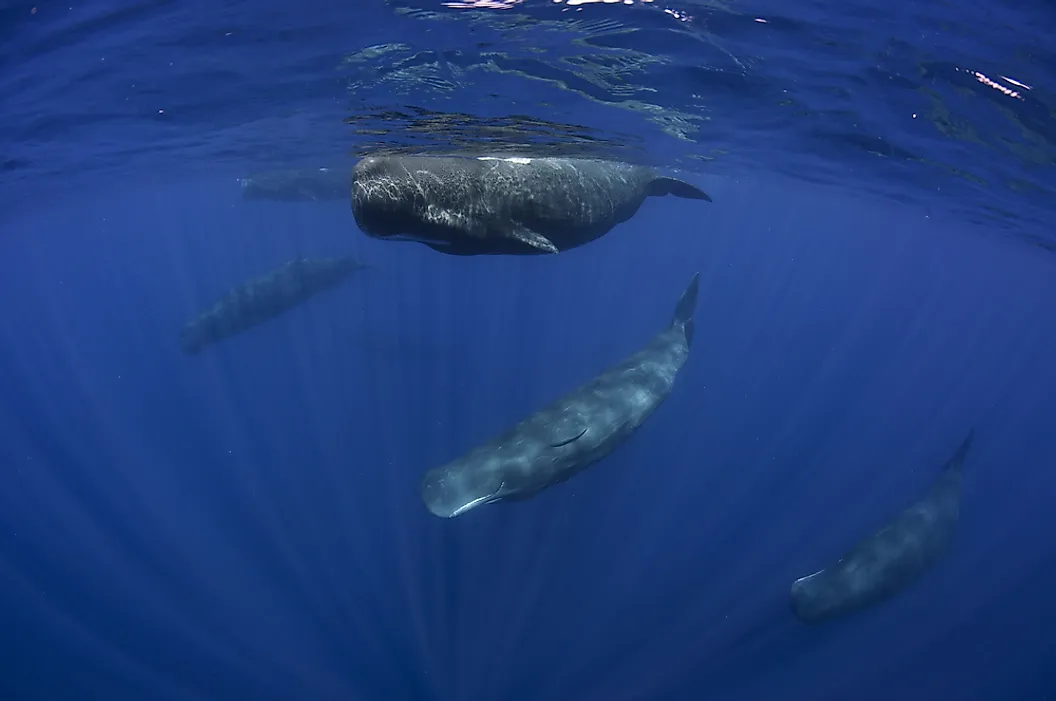
One of the most famous animal-versus-boat encounters in history occurred more than 1,500 nautical miles (2,800 kilometers) west of the Galápagos Islands in 1820. The Nantucket whaling ship Essex was hunting sperm whales in the Pacific Ocean when a large whale suddenly charged the vessel.
According to first mate Owen Chase, the whale first rammed and violently stopped the Essex, then returned and struck its bow again, rupturing the hull. The crew regrouped at the waterlogged wreck, salvaged supplies, and eventually departed in three whaleboats. They spent months at sea facing starvation and dehydration before survivors were eventually rescued.
The disaster later became one of the inspirations for Herman Melville's Moby-Dick, helping create the enduring image of a giant whale capable of deliberately destroying a ship.
The sinking remains one of the clearest historical examples of a marine animal repeatedly striking and destroying a ship. It should not be taken as evidence that sperm whales routinely attack boats. The motive of the whale that struck the Essex cannot be established from the surviving historical accounts, and modern whale-boat collisions are usually treated as accidents rather than attacks.
Swordfish

Some dangerous boat encounters involve an animal that looks far less intimidating than a whale. Swordfish are powerful predators armed with a long, swordlike upper jaw that they use to slash at prey.
That bill can also damage a boat. Swordfish have been documented striking vessels, particularly when anglers are pursuing them. The best-documented case involved a submersible rather than a boat. In July 1967, an eight-foot swordfish rammed the deep-sea research vehicle, Alvin, about 2,000 feet down off the east coast of Florida and wedged its bill in the seam of the hull, forcing the crew to abandon the dive and surface with the fish still attached. When a fish is hooked near a boat, its sudden movements can bring it dangerously close to the hull or anglers. A large swordfish can weigh hundreds of pounds, making an encounter with its bill potentially dangerous.
The danger is not that swordfish routinely hunt boats. Instead, a powerful fish trying to escape or defend itself can turn a fishing trip into a struggle with a very sharp piece of marine anatomy. The same principle applies to other billfish, including marlin, which have occasionally punctured small vessels.
Sharks

Sharks are among the first animals people imagine when they hear about dangerous ocean encounters, but boats are not normally their prey. Sharks may investigate unfamiliar objects in the water, and occasional encounters can result in bites or damage, particularly when fish or bait are present.
A separate conservation concern is that vessels can strike sharks and other marine animals. In April 2024, researchers working off County Kerry, Ireland, recorded a basking shark being hit by a boat on a camera they had attached to the animal hours earlier, the first time a strike on a large marine animal had been captured directly. Basking sharks feed at the surface with their fins showing, which is exactly what makes them hard to see and easy to hit.
NOAA notes that vessel strikes can also involve whales, dolphins, and sea turtles, with collisions posing risks to both animals and boaters. For American boaters, the lesson is less about fearing sharks than recognizing that wildlife can appear unexpectedly in busy coastal waters.
Orcas

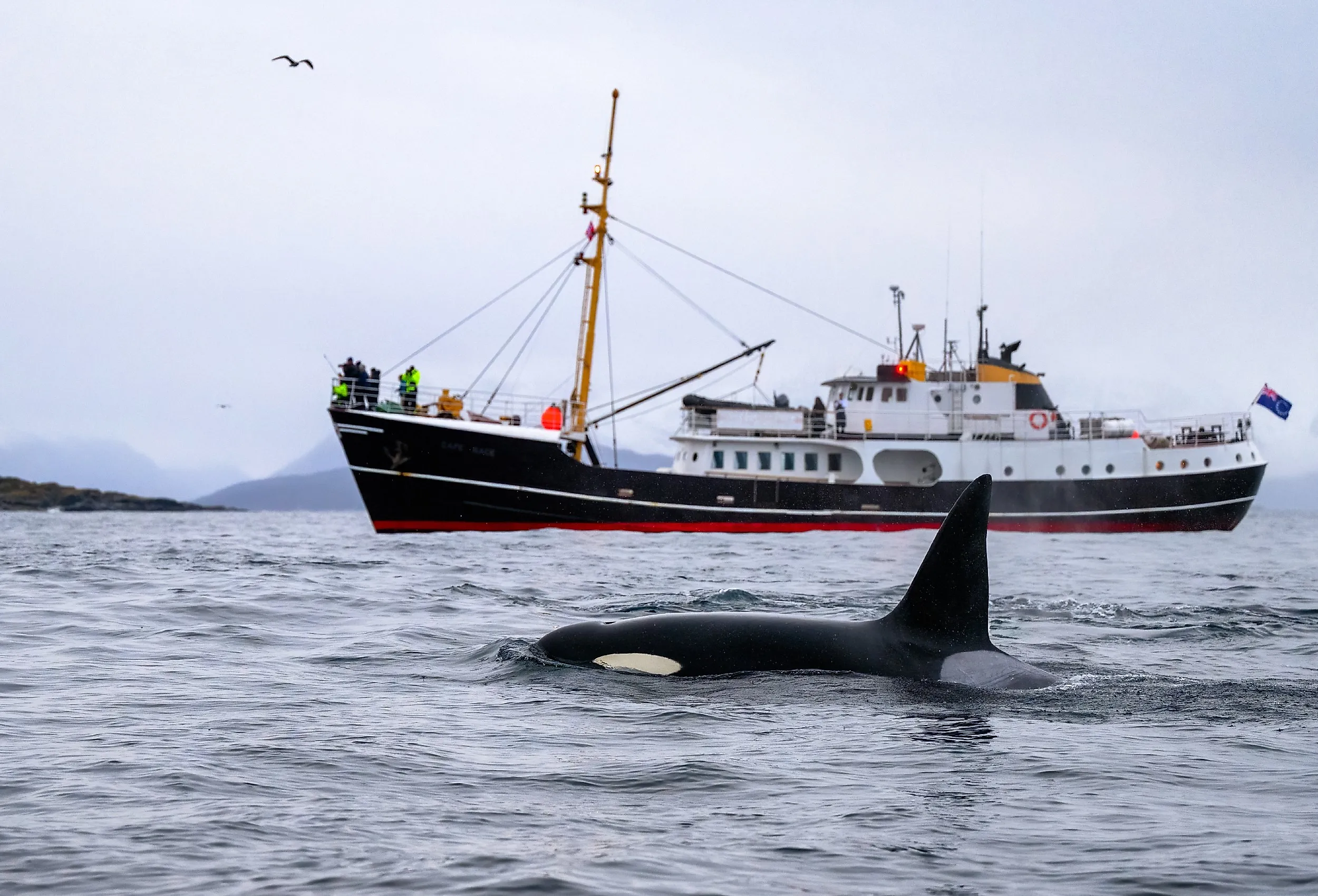
Since 2020, a small population of Iberian orcas has repeatedly approached sailboats off Spain, Portugal, and Morocco, often focusing on the vessels' rudders. Some encounters have left boats unable to steer, while a small number have ended with vessels sinking. The interactions have attracted extensive international attention, and they are frequently called attacks because they can disable or sink a boat. Only the critically endangered Iberian population, roughly 35 to 40 animals in total, behaves this way.
The behavior is unusual because the whales do not appear to be trying to attack the people aboard. Instead, they typically approach from behind and push, bite, or ram the rudder. An international expert workshop held in Madrid in February 2024 concluded that the behavior is most consistent with play or socialization and may spread through social learning, although the event that originally triggered it remains unknown.
In the contiguous United States, orcas regularly travel through Washington's coastal and inland waters, while substantial populations also occur around Alaska. There, however, the primary concern is disturbance and accidental encounters rather than the rudder-targeting behavior seen in Iberia. Washington law requires boaters to stay 1,000 yards from the endangered Southern Resident killer whales, a population of fewer than 80 animals, and federal rules restrict approaches as well. The emphasis is on giving these animals room rather than approaching them.
Gray Whales

Gray whales earned a fearsome reputation during the commercial whaling era, when hunters pursued them into the shallow breeding lagoons of Baja California. Whalers called them “devilfish” after seeing the animals charge, overturn, and smash small whaleboats.
These encounters were not unprovoked attacks. Gray whales were being chased, harpooned, or separated from their calves, and their resistance was usually an attempt to defend themselves or their young. In the confined waters of a lagoon, a whale’s head, tail, or body could destroy a wooden boat and leave its crew in the water.
Modern gray whales are not generally considered aggressive toward vessels. Some even approach whale-watching boats in Mexican lagoons voluntarily. Their history nevertheless shows how forcefully a large whale can respond when threatened.
Leopard Seals

Leopard seals are among Antarctica’s most formidable predators. Their powerful jaws and long canine teeth are adapted for catching penguins and other seals, but they can also puncture the rubber pontoons of an inflatable boat.
Researchers have recorded leopard seals approaching, biting, and attacking inflatable vessels. The risk became serious enough that some United States Antarctic researchers fitted their boats with protective guards designed to prevent the animals’ teeth from penetrating the hulls.
Leopard seals do not routinely hunt boats, and these encounters may stem from curiosity, territorial behavior, or a response to an unfamiliar object. Whatever the motivation, a puncture in an inflatable boat can quickly become an emergency in Antarctica’s freezing waters.
Walruses

An adult walrus can weigh well over a ton and carries two long tusks capable of damaging a small vessel. Although walruses do not normally attack boats, they may respond forcefully when people approach too closely, particularly when calves are nearby.
In 2019, a female walrus attacked an inflatable expedition boat during a landing at Cape Heller in Russia’s Franz Josef Land archipelago. The animal was believed to be protecting its young, and the researchers were forced to retreat. No members of the expedition were injured.
Walruses can also damage anchored boats by climbing aboard to rest, even when aggression is not involved. Their enormous weight may crush railings, tear inflatable sections, or cause a small craft to take on water. As with gray whales and leopard seals, the danger usually arises when human activity enters an animal’s space.
The Ocean Is Bigger Than the Boat
The stories of animals attacking boats are memorable because they reverse the usual relationship between humans and wildlife. A boat gives people a sense of safety and control, but that advantage disappears when a powerful animal suddenly strikes or surfaces beside the hull.
True animal-initiated attacks on boats are rare, but sperm whales, swordfish, sharks, and orcas have all struck, bitten, pierced, or seriously damaged vessels. For American boaters, collisions, unexpected encounters, and animals responding to food or perceived threats are more common hazards than deliberate attacks.
From sperm whales in the Pacific Ocean to orcas off the Iberian Peninsula, these encounters offer a reminder that the ocean is shared territory. Even aboard a modern vessel, humans remain visitors in an environment shaped by animals that have spent millions of years mastering it.