What Are The Differences Between A Lagoon And A Lake?
Here is the quick version. A lake is a body of water sitting in a basin on land, usually fresh, usually with no tie to the sea. A lagoon is a shallow patch of water the ocean almost swallowed, fenced off from it by a reef, a sandbar, or a chain of islands. One is inland and self-contained. The other is the sea's leftovers, held back by a thin wall of sand or coral. They can look identical from a beach chair, which is exactly why people mix them up and why the names on the map are often flat wrong. Let us sort it out.
The One Difference That Actually Matters
Forget size. Forget how blue the water is. The real dividing line is the sea. A lagoon is connected to a larger body of water, almost always the ocean, but separated from it by a barrier. Water sloshes back and forth through gaps in that barrier with the tides, which makes most lagoons salty or brackish and keeps them shallow. A lake has no such relationship. It sits in its own basin, fed by rivers, rain, and groundwater, and drained by an outlet or by evaporation. The ocean has nothing to do with it.
That is the test. Is there a barrier holding back a bigger body of water just on the other side? Lagoon. Is it a self-contained basin minding its own business inland? Lake. Almost everything else people reach for, salinity, depth, color, size, is a tendency rather than a rule, and every one of those tendencies has exceptions willing to embarrass you.
Lakes, Briefly

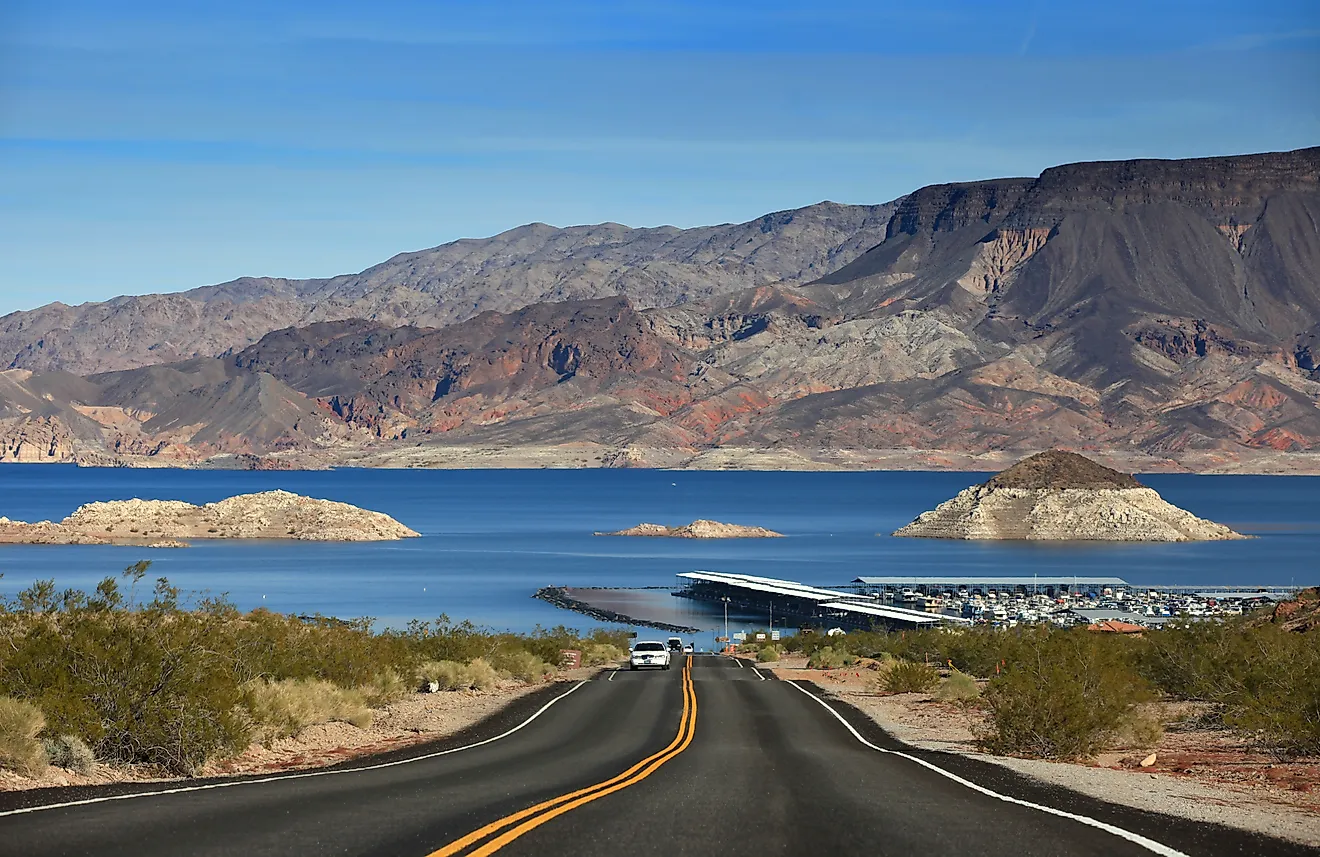
A lake is standing water in a basin surrounded by land. Most are fresh, fed by streams and rivers, with an outlet river carrying the overflow away. They form wherever the ground holds water: in rift valleys pulled open by tectonic forces, in craters left by dead volcanoes, in gouges scraped out by vanished glaciers. A great many lakes in the Northern Hemisphere are just puddles left behind when the last ice age packed up and the glaciers retreated, which is why Canada and Finland are absolutely freckled with them.
Lakes also win on depth. The deepest is Siberia's Lake Baikal, which plunges about 5,387 feet, deep enough to stack four Eiffel Towers and still have room to spare. It also holds roughly a fifth of all the unfrozen freshwater on the planet, which is a lot of water for one hole in the ground. And here is the catch that ruins the salinity rule: not all lakes are fresh. The Great Salt Lake and the Dead Sea are saltier than the ocean, and the Caspian Sea, the largest lake in the world, is called a sea but is technically a lake. Names are not to be trusted, a theme we will return to.
Lagoons, Briefly

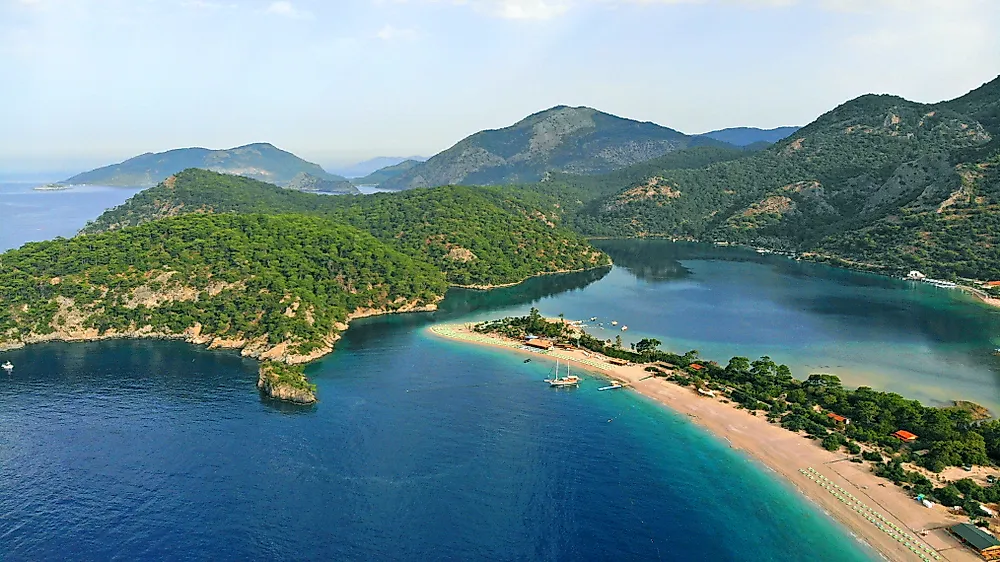
A lagoon is a shallow body of water separated from a larger one by a barrier: a coral reef, a sandbar, a barrier island, or a low spit of land. The word comes from the Venetian laguna, after the famous lagoon that Venice is built on, which should tell you how long humans have been parking cities in these things. Because the barrier is leaky and the tides keep working, lagoons trade water with the sea and tend to be shallow, calm, and salty. They are the gentle, bathwater-warm cousins of the open coast, which is why resorts adore them.
There are two main kinds, and they form in completely different ways. Coastal lagoons sit behind sandbars and barrier islands along gently sloping shores, like the long ribbon of water behind a barrier beach. Atoll lagoons are stranger and far more dramatic, and they deserve their own paragraph.
Atolls: Lagoons Wearing A Dead Volcano
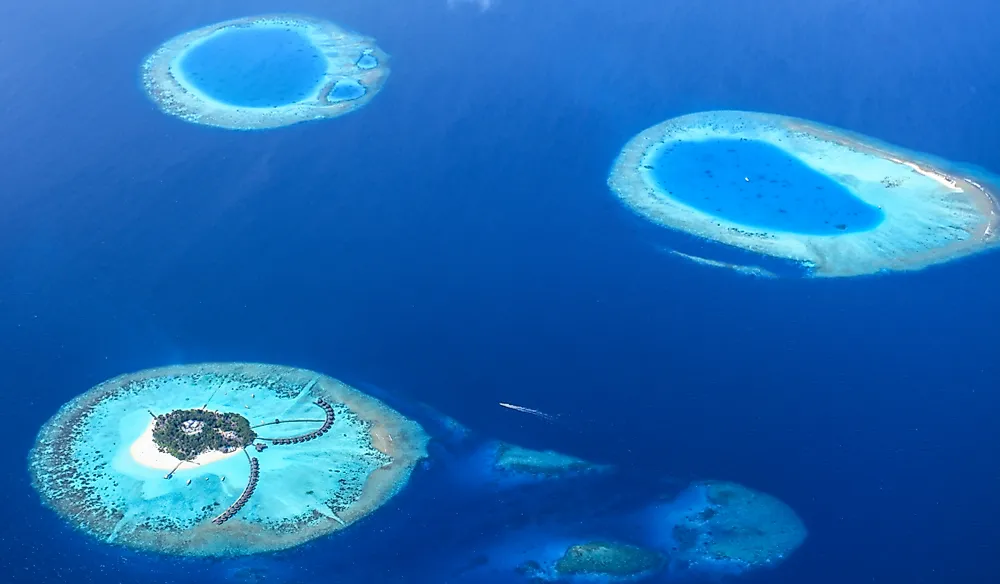
An atoll lagoon is what you get when a volcano dies politely. Charles Darwin worked out the sequence, and it is one of the more satisfying explanations in geology. A volcanic island pushes up out of the tropics, and a coral reef grows around its edges in the warm shallows. Then the island slowly sinks, over hundreds of thousands of years, and the coral keeps building upward to stay near the sunlit surface. Eventually the island disappears entirely beneath the waves, leaving a ring of coral with a lagoon where the mountain used to be. The Maldives and the Marshall Islands are made of these rings. The volcano is gone. Its outline, drawn in coral, remains.
The Three Flavors Of Coastal Lagoon
Coastal lagoons get sorted by how freely they swap water with the sea, and oceanographers gave the categories pleasingly blunt names. Choked lagoons connect to the ocean through a single narrow channel, which throttles the flow and keeps the inside calm and barely mixed. Brazil's Lagoa dos Patos, the largest choked lagoon in the world at roughly 180 miles long, is the textbook case. Restricted lagoons have a couple of inlets and more exchange, so wind and tide stir them properly, like Mexico's Laguna de Terminos. Leaky lagoons have wide openings and water rushing freely in and out, barely holding the line between lagoon and open sea, like the Mississippi Sound. Choked, restricted, leaky: a tidy spectrum from nearly sealed to nearly not a lagoon at all.
Depth, Water, And Why The Rules Keep Breaking
In general, lakes go deep and lagoons stay shallow. Most lagoons are well under 65 feet, since they are essentially flooded coastal flats, while lakes routinely sink into the hundreds and occasionally thousands of feet. But "in general" is doing heavy lifting. There are shallow lakes you could wade across and lagoons deeper than many lakes, so depth tells you the odds, not the answer.
Water source is cleaner. Lakes drink from the land: rivers, rain, snowmelt, groundwater. Lagoons drink from the sea, with the ocean pushing in through the barrier as the main supply. The wrinkle is that some lagoons also take a river. The Curonian Lagoon, shared by Lithuania and Russia and walled off from the Baltic by a 60-mile sandspit, gets about 90 percent of its water from the Neman River, which makes it a freshwater lagoon. Yes, that is a real category, and yes, it cheerfully violates the "lagoons are salty" assumption you just learned.
Why The Map Lies To You
Now for the fun part, which is that the labels are a mess. Naming happened over centuries, in many languages, mostly by people who were not consulting a hydrology textbook. So the world is full of mislabeled water. Laguna Beach in California is not a lagoon; it is a beach. Songkhla Lake in Thailand is a lagoon. The Caspian Sea is a lake. The IJsselmeer in the Netherlands was a saltwater bay until the Dutch threw a dam across it in 1932 and turned it into a freshwater lake on purpose, which is roughly the geographic equivalent of changing your own species. Whenever the name and the definition disagree, trust the definition. The name is just what somebody called it a long time ago and nobody bothered to fix.
So, Lagoon Or Lake?
Run the one test and you will almost never be wrong. Look for the sea. If there is a larger body of water just beyond a barrier of sand, coral, or island, and the tides are sneaking through, you are looking at a lagoon. If the water sits in its own basin on land, fed by rivers and going nowhere near an ocean, it is a lake. Salinity, depth, and color are hints, and the names on the map are barely even that. The barrier and the sea are the whole story, and once you have seen it, you cannot unsee it on the next coastline you visit.