The Deadliest Animals In The Ocean
The box jellyfish has a soft, near-invisible body and tentacles that trail like loose shoelaces, and it carries enough toxin to stop a healthy adult's heart in minutes. The pufferfish looks like dinner, which is exactly the problem, because its organs hold a poison with no antidote. The blue-ringed octopus fits in a closed hand and delivers a bite most victims never feel until the numbness starts. None of these animals is large, and none of them looks like a threat, which is most of the danger. What follows are the ocean creatures worth keeping a careful distance from, and the reasons why.
Beaked Sea Snakes

The beaked sea snake is responsible for the largest share of human deaths from sea snake bites, roughly nine in ten, though it is not the most venomous sea snake by laboratory measure. That title belongs to Dubois' sea snake, which is shy and rarely encountered. The beaked sea snake is the opposite. It grows to about 1.2 meters (3.9 ft) on average, wears a uniformly dark-gray back over a paler underside, and takes its name from the hooked scale on its snout. Its venom runs several times more toxic than a cobra's, and it favors the shallow estuaries and coastlines where fishermen haul nets, which is why it bites people more often than any of its relatives. A bite can turn fatal within hours, so the standard advice is a hospital and antivenom as fast as the victim can get there.
Australian Box Jellyfish
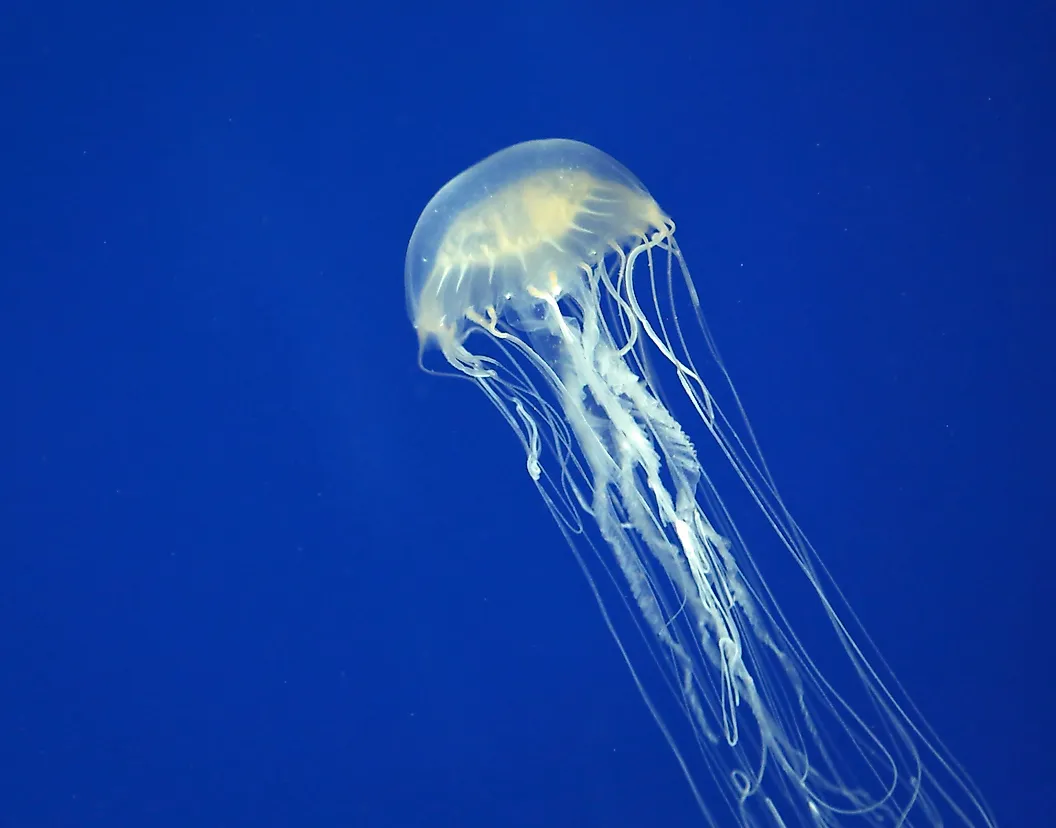
The Australian box jellyfish carries what is widely regarded as the most lethal venom of any marine animal. Its bell is roughly a foot across, box-shaped, and nearly transparent, with four bundles of tentacles that can trail up to 10 feet (3 m). Each tentacle is lined with stinging cells that fire venom on contact, and a serious sting can cause paralysis, shock, and cardiac arrest within minutes. The transparency is the practical hazard, since a swimmer usually cannot see the animal until after contact. Deaths are rare but documented, mostly in northern Australia and the wider Indo-Pacific. In 2021 a 17-year-old boy died after being stung near Bamaga in far north Queensland, the first box jellyfish fatality recorded in Australia in fifteen years, despite treatment at the beach and an airlift to hospital.
In northern Australia, stinger season covers roughly November through April, and swimmers are warned off the water or into full-body stinger suits during those months. Vinegar is the standard field treatment, poured over the sting for about 30 seconds to keep unfired stinging cells from discharging, though it does not neutralize venom already injected. After that, the instruction is the same as for the sea snake: get to a hospital.
Cone Snail

Cone snails hunt with a hollow tooth shaped like a harpoon, firing it into prey to inject a fast-acting neurotoxin. Most species measure a few centimeters, with the largest reaching about 23 cm, and their shells are patterned handsomely enough that people pick them up, which is how the trouble starts. Researchers estimate the venom of a single cone snail could, in principle, kill up to 700 people. Human stings are uncommon, but the medical literature records 36 confirmed deaths over three centuries, most of them attributed to the geography cone, the deadliest of the family. That figure comes from a 2016 review of envenomation cases going back to the 1600s. There is no antivenom; treatment consists of keeping the victim breathing until the toxins clear. Researchers now study that same venom for painkillers and for treatments for diabetes, epilepsy, and Alzheimer's.
Great White Shark

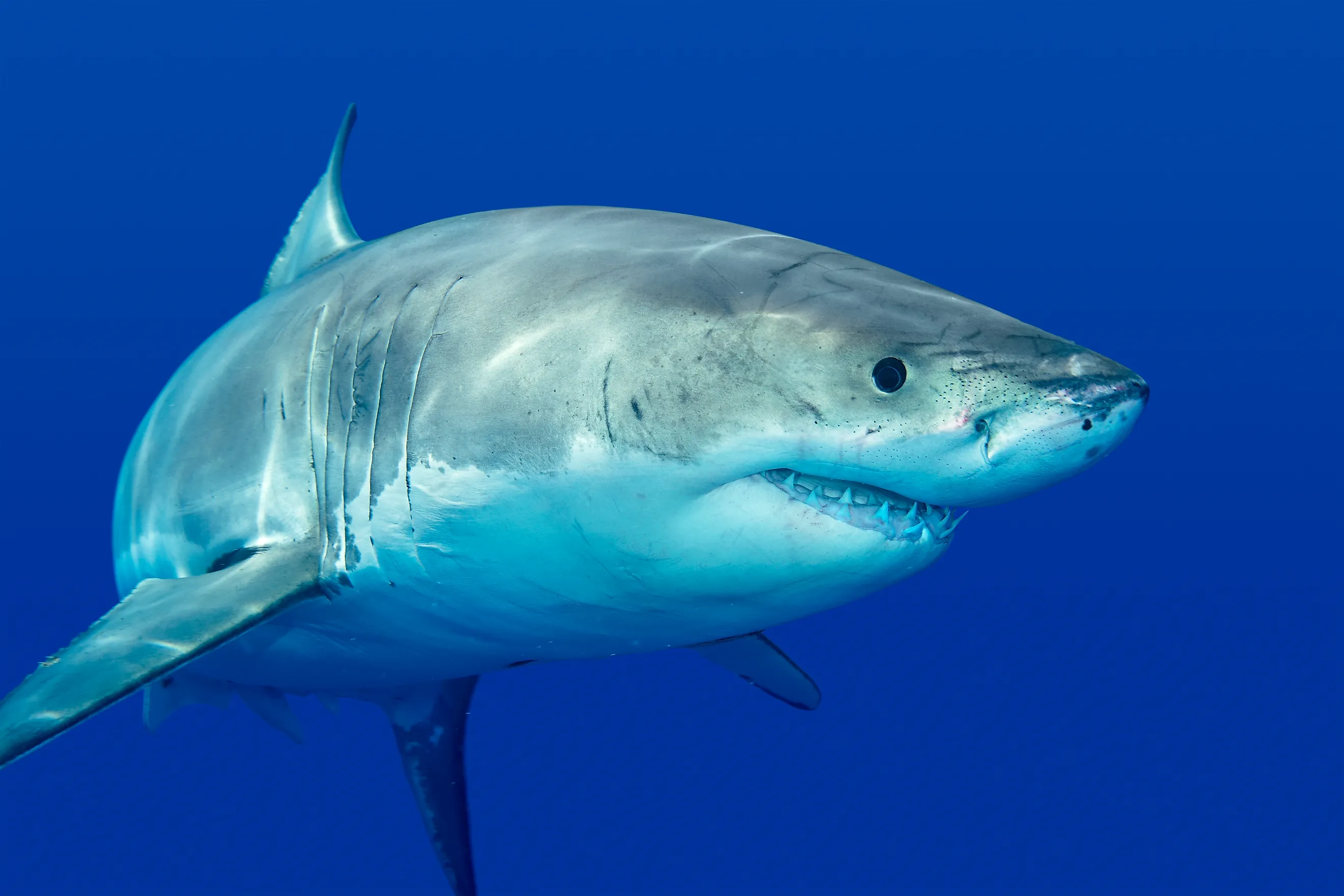
Great white sharks account for more recorded unprovoked attacks on humans than any other shark, according to the Florida Museum's International Shark Attack File. Large adults can weigh around 4,000 pounds (1,814 kg) and reach roughly 20 feet, with triangular serrated teeth built to shear. The important caveat is that great whites do not hunt people; researchers generally read attacks as investigatory bites, cases of mistaken identity by an animal that expected a seal. Even so, the File's cumulative tally credits the species with dozens of human fatalities across its centuries of records, more than any other shark, which is enough to earn its reputation without the movie.
Stonefish

The stonefish is the most venomous fish in the world, and it spends its life looking like a lump of rock. It sits in the tropical shallows of the Indo-Pacific and northern Australia, mottled and motionless, blending into the reef floor. Along its back stand more than a dozen stiff spines, each capable of injecting a venom that produces intense pain, swelling, and in untreated cases paralysis or death within hours. The spines are strictly defensive; the stonefish uses them on things that step on it, not on prey. That is also how people get hurt, by planting a bare foot on what they took for a rock in ankle-deep water. Australia sees stonefish stings most years but has recorded no death from one since European settlement. On Reunion Island in the Indian Ocean, which has a sizable stonefish population, 135 stings were logged between 2020 and 2024 with no fatalities, most treated with hot-water immersion and pain relief.
Blue-Ringed Octopus

The blue-ringed octopus is about the size of a golf ball and one of the deadliest animals in this list. It lives in the Pacific and Indian oceans, and a single bite carries enough neurotoxin to kill a person if treatment is not fast. Its namesake rings turn bright blue when the animal is threatened, the warning that a bite may follow. That bite is small and often painless, and the venom is tetrodotoxin, the same compound the pufferfish carries and for which there is still no antidote. Symptoms begin with numbness, then vomiting, and in severe cases respiratory failure. Treatment is entirely supportive: keep the victim breathing, keep them still, and pressure-wrap the bite to slow the toxin until it wears off. Bites are rare, but a handful have proved fatal, including two deaths in Australia and one in Singapore, according to the Australian Institute of Marine Science.
Pufferfish

The pufferfish is the most famous fish that produces tetrodotoxin, a poison with no known antidote. It is best known for swallowing water or air to swell into a spiny balloon, a defense meant to make it too large and awkward for a predator to swallow. Unlike everything else here, the pufferfish does not sting or bite anyone; the danger is entirely in eating it. The toxin concentrates in its internal organs, and a poorly cleaned fillet can cause paralysis, seizures, and death. Fatal cases turn up regularly in the Pacific, in Japan, Taiwan, Australia, and Southeast Asia. In March 2026, three people died in the Philippines after a meal of it. In Japan, where fugu is a delicacy that only licensed chefs may prepare, poisonings and deaths still happen every year.
Orcas
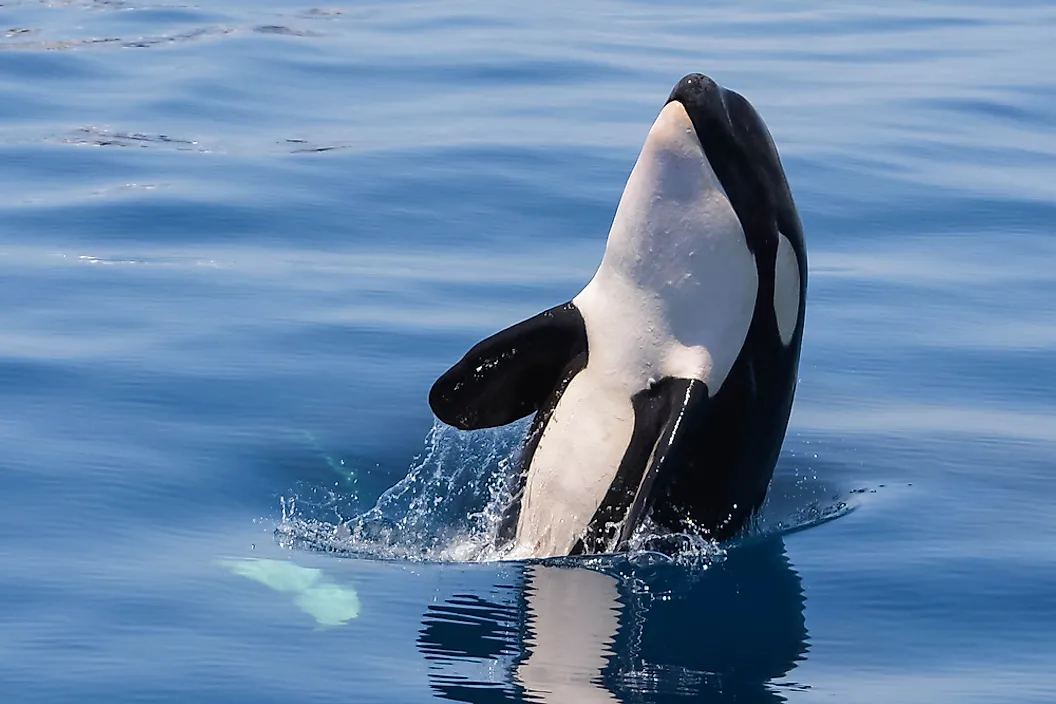
Orcas, or killer whales, sit at the top of the ocean food chain with no natural predators. They hunt in coordinated pods, the way wolves work a hunt, and their prey list is long: fish, seabirds, seals, rays, sharks, and even great whites. In 2019 researchers documented orcas killing an adult blue whale, the largest animal on Earth, for the first time. A large male can reach 32 feet (9.7 m) and 11 tons, with 40 to 56 cone-shaped teeth up to four inches long that interlock when the jaws close. Despite all of that, there is no record of a wild orca killing a person. The four human deaths on the books all happened in captivity, which says less about the animal's capability than about what confinement does to it.
The Pattern Worth Noticing
The most dangerous animals in the ocean are, more often than not, the small and unremarkable ones. The blue-ringed octopus is small enough to hold, which is exactly why people should not; its bite is painless and can be fatal. The box jellyfish and cone snail work the same trick, giving no useful warning until the venom is already in. The stonefish makes no effort to look dangerous either, right up until a bare foot finds its spines. The larger predators, the great white and the orca, are the ones people fear, yet they account for far fewer human deaths than the animals nobody thinks to watch for. The safest approach to all of them is the same: look, and do not touch.