How Big The Mississippi Watershed Is Compared To India
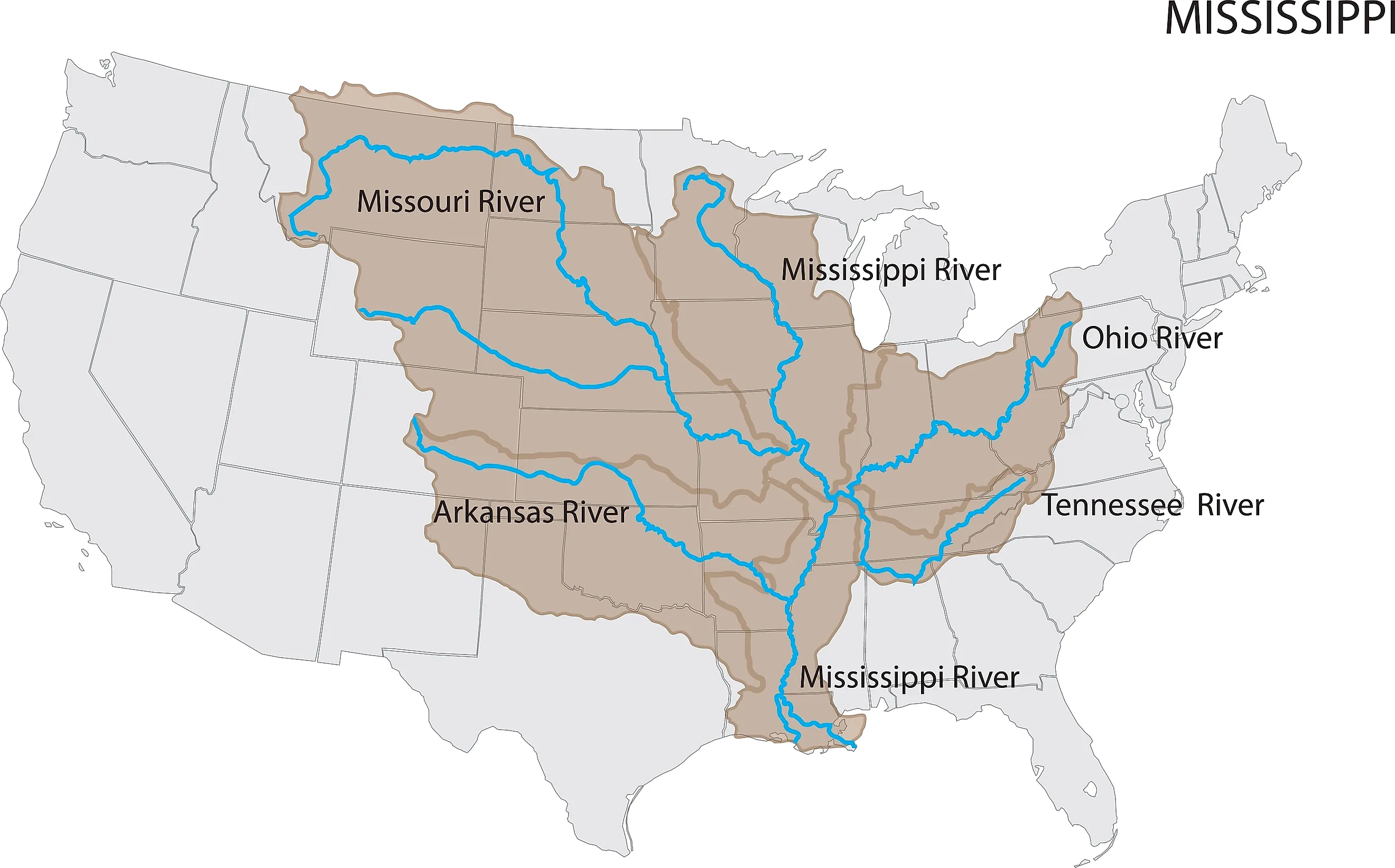
The Mississippi is not so much a river as a drainage system the size of an entire country, and not a dinky one, either. The sprawling expanse of land that funnels its water down to the Gulf is very nearly as big as all of India. So let's do the geographic equivalent of holding two things up next to each other and squinting: here is how one American river's watershed stacks up against the most crowded nation on the planet.
The Numbers

Let's get the tape measure out. The Mississippi River watershed covers roughly 1.2 million square miles, and by the broadest federal measure, which tosses in the connected Atchafalaya basin, it creeps past 1.245 million. India, for its part, covers about 1.27 million square miles. That makes the Mississippi's drainage basin somewhere around 95 to 98 percent the size of the entire Indian subcontinent, which is close enough that if they were runners, you'd need a photo finish. One river's catchment, very nearly the footprint of the world's seventh-largest country. Let that sink in.
What a Watershed Actually Is
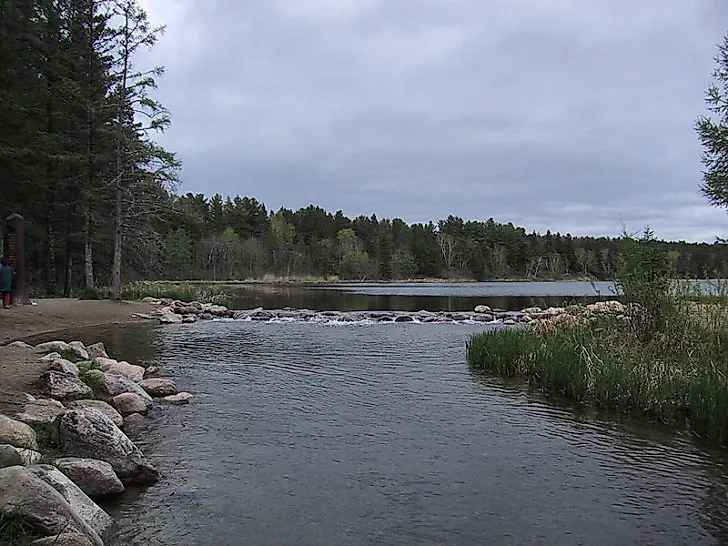
Before anyone pictures a river 1.2 million square miles wide, it is worth clarifying what that number actually measures, because it is emphatically not the width of the river. A watershed is all the land that drains into a river system: every single acre where a raindrop that falls or a snowflake that melts eventually trickles into a ditch, then a creek, then a stream, then a tributary, and finally into the Mississippi itself and out to sea. So this is not the size of the channel you'd lazily paddle a canoe down. It is the size of the enormous funnel feeding it.
41% of America Drains Into It

That funnel is genuinely continental in scale. The Mississippi watershed sprawls across all or part of 31 states and even reaches up to help itself to bits of two Canadian provinces, draining about 41 percent of the contiguous United States, basically everything wedged between the Rocky Mountains out west and the Appalachians back east. And it does not do this alone. It is fed by a crew of rivers that would be famous anywhere else, the Missouri, the Ohio, the Arkansas, the Tennessee, and the Red, plus roughly 250 lesser tributaries all paying their watery dues. Add it up and it is the fourth-largest river basin on the entire planet.
But India Has Something It Doesn't

Here is where the two wildly part ways. Crammed into that India-sized area are roughly 1.4 billion people, which makes India the most populous country in the world by a comfortable margin. The Mississippi basin, covering almost exactly the same amount of ground, is home to a mere few tens of millions. Same footprint on the map, comically different crowd on the ground: one is among the most densely packed places on Earth, the other is a sweep of farms, forests, and prairie where the main local residents are, frankly, a staggering amount of corn.
Putting It in Perspective

So picture the whole of India, from the Himalayas in the north down to the tropical tip in the south, and now imagine nearly all of it politely tilting to drain into a single river. Congratulations, you have just pictured the Mississippi watershed. Every raindrop that lands on a wheat field in Montana, a city sidewalk in Pittsburgh, or a cotton farm in Arkansas is, whether it likes it or not, embarking on the same very long commute to one outlet down in Louisiana. It is a humbling little reminder that a river is never just the water you can actually see. It is an entire, nation-sized landscape quietly wringing itself out toward the sea.