Why Great Lakes Freighters Are Called Lakers
A freighter on the Great Lakes is called a laker because the lakes are where it spends its working life. The word has meant someone or something associated with a lake since at least the early 1800s, and by the late 1800s it was being used for boats on the Great Lakes.
Today it covers the bulk carriers that load taconite pellets at Lake Superior docks and carry them to steel mills on Lake Michigan and Lake Erie, and on the lakes those ship-sized freighters are still traditionally called boats.
The other half of the vocabulary is the saltie, an ocean ship that enters through the St. Lawrence Seaway and eventually leaves the same way. Ship watchers on the piers of Duluth's ship canal sort the two as each freighter approaches the Aerial Lift Bridge, and they count the China-built Algoma Equinox among the lakers because of where it works.
A Long Unloading Boom Usually Marks a Laker

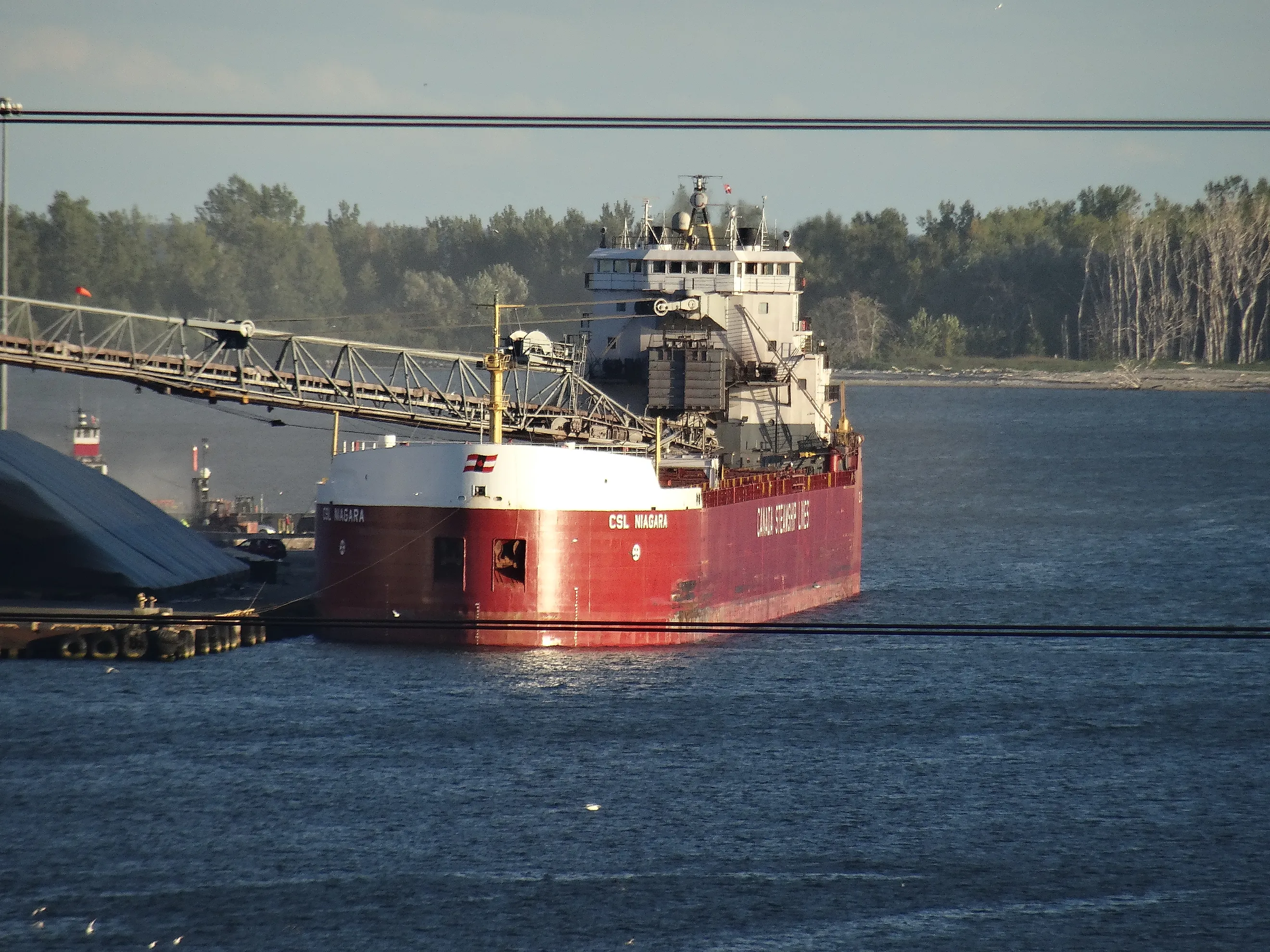
From the canal piers, the quickest tell is the gear on deck. A self-unloading laker carries one long boom along its deck, and a saltie usually has several deck cranes so it can handle cargo in ports around the world. Salties also tend to have a prominent bulbous bow, and many of them arrive after the fall harvest to load grain at Duluth before heading back to the Atlantic. Some lakers, especially in the Canadian grain trade, carry neither boom nor cranes, because gearless bulkers such as Algoma Central's Algoma Equinox are emptied by equipment on the dock.
A Laker's Deck Is Spaced for Lake Docks

The Paul R. Tregurtha, the longest laker in service, can discharge iron ore at 10,000 long tons an hour without any help from the dock. Conveyors beneath its holds lift the cargo onto the boom that watchers see from the pier, and the boom swings out over the dock, so no cranes are needed at the receiving end. Loading works through a long row of hatches, traditionally set 24 feet apart so they line up with the chutes at loading facilities, where ore and stone pour straight into the holds.
The Thousand-Footers Are Too Big for the Seaway

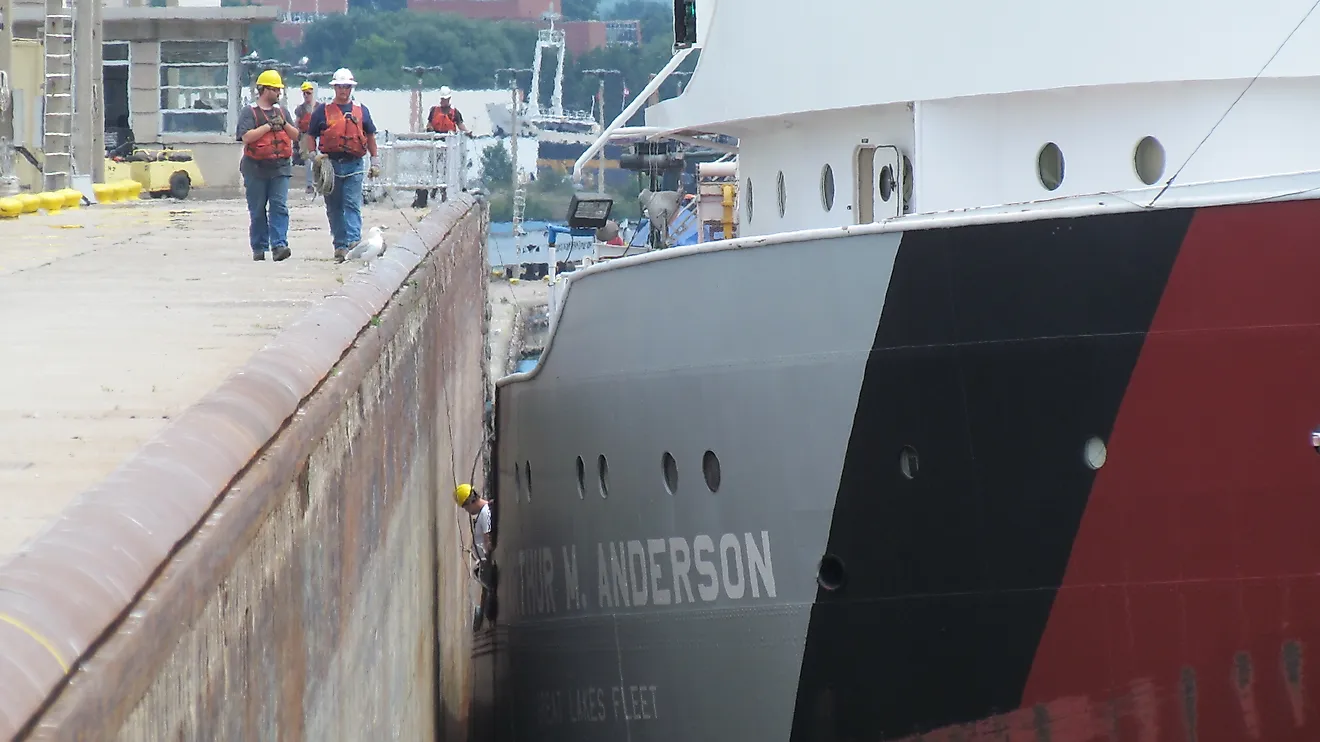
The Great Lakes fleet received 13 thousand-foot freighters between 1972 and 1981. The Stewart J. Cort was the first, the Paul R. Tregurtha was the last, and all of them were designed to fit the Poe Lock at Sault Ste. Marie, Michigan, which is 1,200 feet long and 110 feet wide. The Tregurtha measures 1,013.5 feet by 105 feet, leaving about 2.5 feet on either side inside the lock. At nearby Soo Locks Park, 13 banners about the thousand-footers line 1,013 feet of fence, matching the Tregurtha's length.
Ships using the Welland Canal and St. Lawrence Seaway locks are limited to 740 feet long and 78 feet wide, so a thousand-footer cannot fit through them. These boats stay lakers for good, working above the Welland Canal and carrying mostly iron ore, along with coal and stone, among ports on Lake Superior, Lake Michigan, Lake Huron, and Lake Erie. Any laker longer than 740 feet is confined above the Welland Canal as well.
Canadian Lakers Are Built to the Seaway's Limit

Canadian lakers carry cargo down the St. Lawrence to ports such as Quebec City and the iron ore docks of Quebec's North Shore, which means they must fit the Welland and Seaway locks. Algoma Central's Equinox-class freighters are built to the full Seaway maximum, at about 740 feet long and 78 feet wide.
The first of the class, the Algoma Equinox, came from the Nantong Mingde shipyard in China. After crossing the Pacific and transiting the Panama Canal, it reached Port-Cartier, Quebec, in late 2013, loaded iron ore there, and made its first trip into the Great Lakes through the Seaway that December. Since then it has hauled iron ore and grain between Lake Superior and the St. Lawrence.
The Laker Season Runs Past the Salties

In Duluth, the last saltie of the 2024 season left on December 28, weeks before the lakers finished their own runs. Ocean-going ships usually make their last Duluth calls in December because a saltie has to get back out through the St. Lawrence Seaway before it closes for winter, and the lakers keep working into January.
On the upper lakes, that work continues until the Soo Locks close at 11:59 p.m. on January 15 under federal rules, and the Poe Lock stays open around the clock until that closing unless commercial traffic stops first. The boats then tie up for winter repairs at ports such as Sturgeon Bay, Wisconsin, where the Paul R. Tregurtha has spent its layup, and wait for the Poe Lock to reopen at 12:01 a.m. on March 25.
A Wartime Tanker and a China-Built Ship Both Became Lakers

Interlake's Lee A. Tregurtha was built in 1942 and served in World War II as the ocean tanker Chiwawa. After conversion at Lorain, Ohio, it entered Great Lakes service in 1961 as the Walter A. Sterling, and a 96-foot midbody added in 1976 brought it to its present 826 feet. Fresh water is less corrosive to steel than seawater, which helps explain how a hull from 1942 is still working in Interlake's fleet.
The China-built Algoma Equinox earned the same name by working Canadian routes after its delivery voyage. The 639-foot Mark W. Barker came from a yard on the lakes at Sturgeon Bay, Wisconsin, in 2022 as the first U.S.-flagged freighter built on the Great Lakes in nearly 40 years, and it carries exactly the same label. A grain carrier that loads at Duluth after every fall harvest stays a saltie, because each of its visits ends with a passage back out through the Seaway to the Atlantic.
The Line Between Laker and Saltie
The Welland Canal and St. Lawrence Seaway locks mark the line that the name follows. A thousand-footer is too big to pass through them at all, and a saltie has to pass back through them before the Seaway closes each winter, so the two kinds of freighter end their working years on opposite sides of that line. At Duluth-Superior, the Great Lakes' largest port by tonnage with nearly 800 vessel visits a year, the line shows up as a date on the calendar. Any freighter still loading taconite at the Duluth-Superior docks in mid-January, weeks after the last saltie has sailed for the Atlantic, is a laker on its final trips before the Soo Locks close, whether it came from a shipyard in China or one on the lakes at Sturgeon Bay.