How Deep The Mariana Trench Really Is
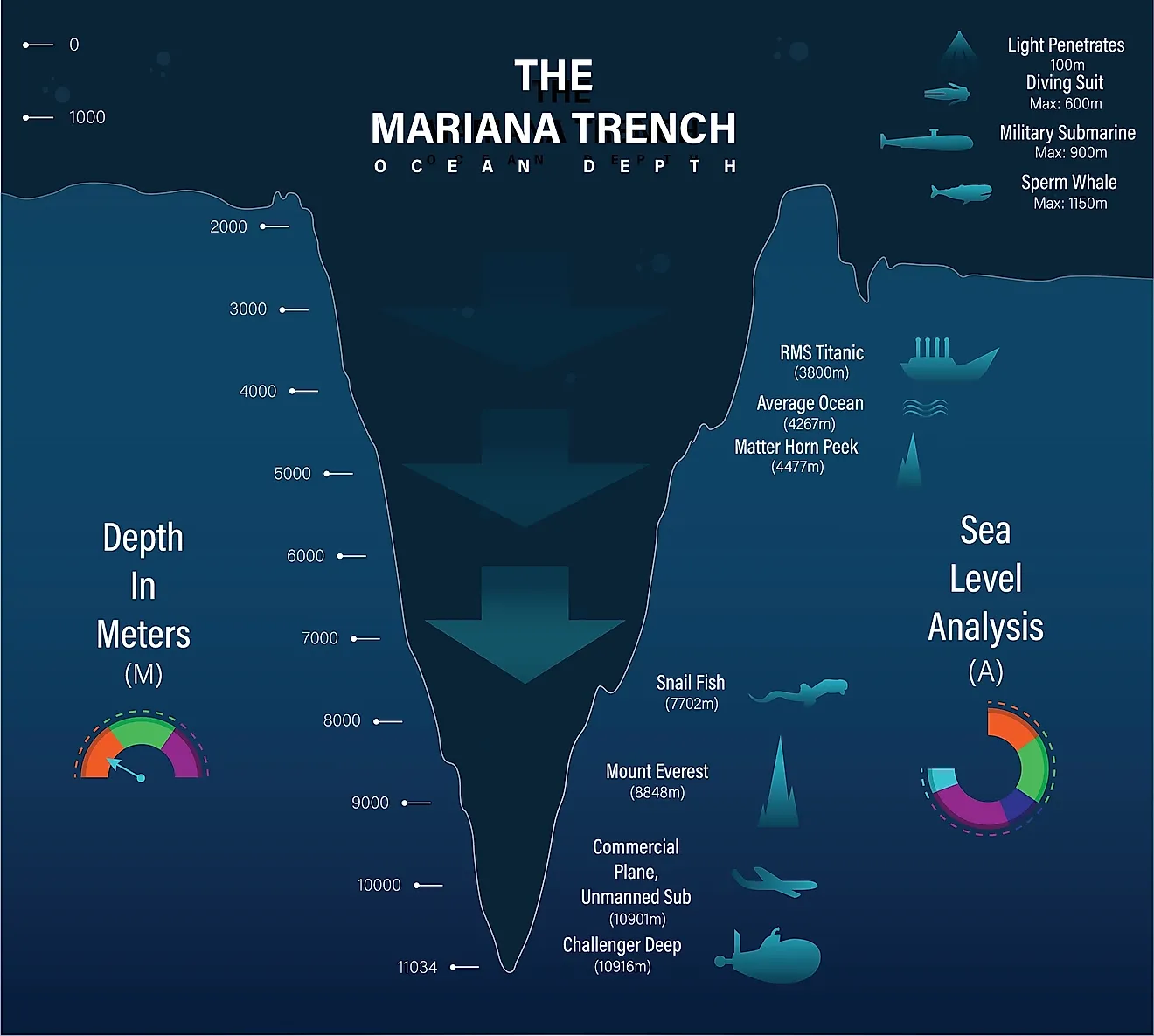
The Mariana Trench is 36,070 feet deep at its deepest point. Converted to miles, this is 6.831 miles deep, which is commonly rounded up to 7 miles in popular science articles. Named after the Mariana Islands to the west of the trench in the Pacific Ocean, this trench was formed by tectonic activity. It is home to sea creatures that have adapted to the intense pressure and darkness of this deep-sea environment. However, only a tiny portion of this trench has been explored by humans.
Geography and Geology

The Mariana Trench sits at 17.75 N latitude and 142.5 E longitude. It is a 1,580-mile-long by 43-mile-wide geographic formation in the shape of a crescent. It sits at an average of 124 miles to the east of the Mariana Islands. Most of the trench falls within the Mariana Trench Marine National Monument, established by President George W. Bush in January 2009, whose Trench Unit is managed as the Mariana Trench National Wildlife Refuge. Challenger Deep itself lies just outside that boundary, east of the limit of the US Exclusive Economic Zone.
The trench is part of a subduction zone, where one plate of the Earth's crust goes under another. In the case of the Mariana Trench, the Pacific plate is going beneath the Philippine plate. The Pacific plate bends as it goes downward, creating a long, deep trench.
The western Pacific seafloor dates back to 180 million years ago, making it some of the oldest seafloor on Earth. It was formed initially by lava at ridges. This lava cooled down and turned into dense rock, allowing the seafloor to sink lower, which contributes to the depth of the Mariana Trench.
As the trench is not close to any landmasses, it is not filled with sediments from rivers, which would reduce its overall depth. In addition, the Pacific plate is cut into a narrower shape by fault lines along the trench. This allows it to bend downward at a steeper angle than with other subduction zones.
On the outskirts of the trench, tectonic activity can result in earthquakes. In fact, scientists used the deep-learning model EQTransformer to measure seismic activity in this area and discovered there were 1,975 earthquakes in the area in the first half of 2017 alone. Some of these were identified as taking place 31 miles below the surface.
What is the deepest point in the Mariana Trench?
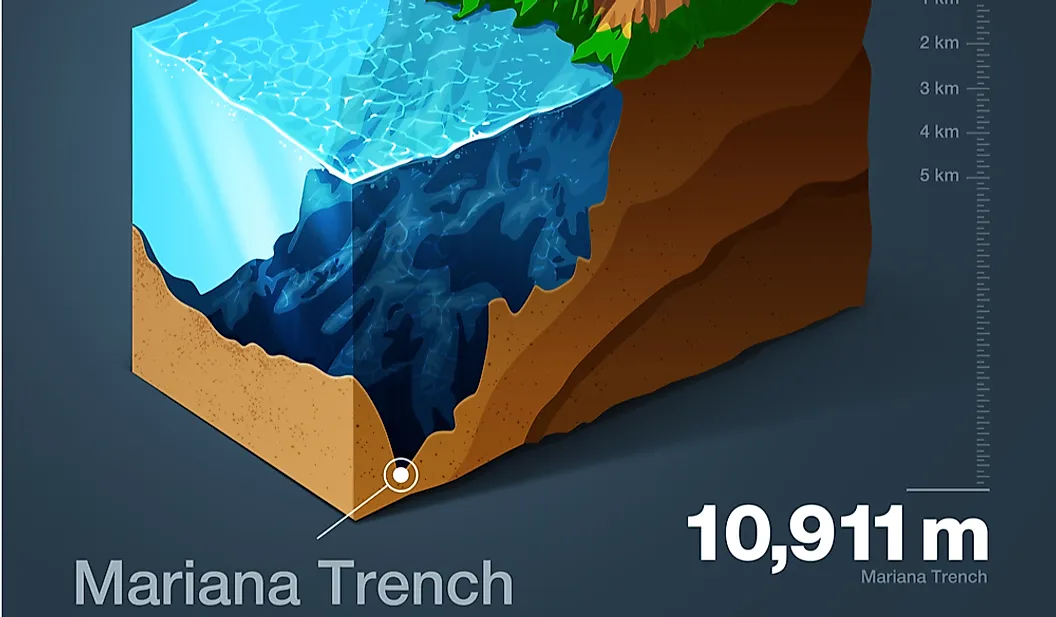
The deepest point in the trench is Challenger Deep. Despite the name, it actually consists of three seafloor basins or pools at the very bottom of the trench. Currently, it is the lowest point on Earth.
The Challenger Deep gets its name from the HMS Challenger, the first boat to chart the area in 1875. It sits on the southern section of the trench, about 200 miles southwest of Guam.
The pressure in Challenger Deep is around 16,000 pounds per square inch. This is about 1,000 times more than the pressure at sea level. The water itself is 5% denser than at the surface, and its temperature sits between 34 and 39 degrees Fahrenheit. The pressure keeps the water above freezing. No light reaches the seafloor.
Within the three basins, the eastern one has the lowest point of 36,070 feet. To put that figure in perspective, Mount Everest could be placed in Challenger Deep, and it would still be more than a mile underwater. At the bottom, there are vents in the seafloor that release carbon dioxide and liquid sulfur.
Exploration
In 1875, the HMS Challenger ship did a depth sounding in the western Pacific. The scientists and sailors on board released a weighted rope into the water. Unlike other such routine inspections, the rope kept on going until it reached close to 27,000 feet. This marked the first identification of the Mariana Trench.
Other ships would return in the late 1800s and 1900s to measure the trench, with the HMS Challenger II recording it at 35,640 feet using an echo sounder in the 1950s.
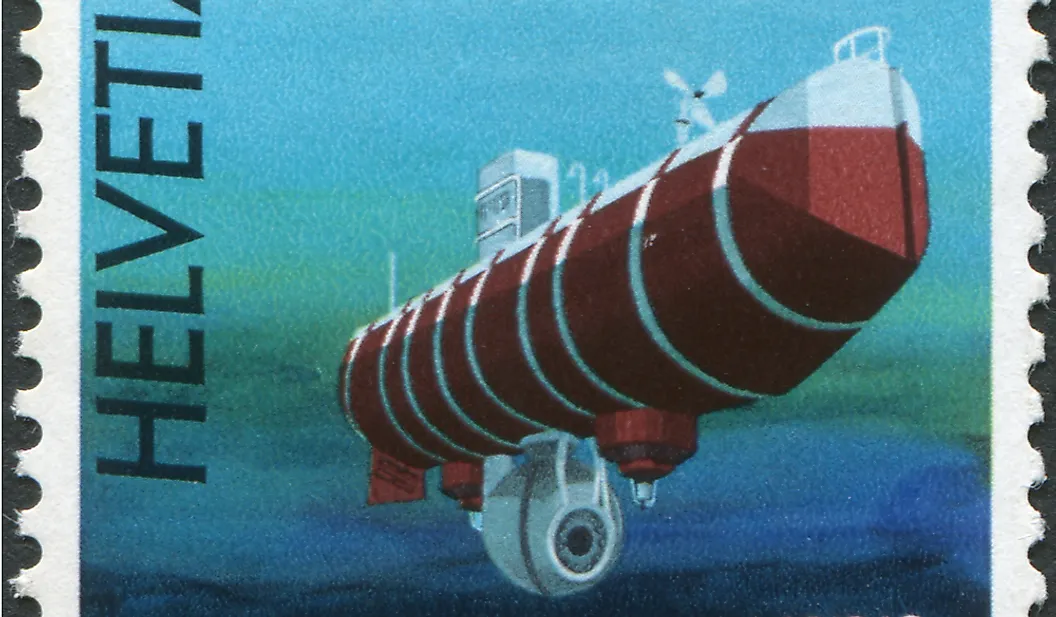
The first humans to see the Challenger Deep were Jacques Piccard and Don Walsh, who used a bathyscaphe to descend to 35,814 feet in 1960. The pressure was so intense that the window cracked in the submarine. The pair spent 20 minutes on the ocean floor.
On March 26, 2012, filmmaker James Cameron took the first solo mission to the Eastern Pool of the Challenger Deep using the Deepsea Challenger submarine.
There has been a recent surge of explorations of the Challenger Deep since 2019, with most being performed by the Limiting Factor submarine, a 2 passenger vessel with a titanium hull, LED lights, and 4K cameras. It has been used for a total of 19 missions, with the most recent one taking place on July 12, 2022, by Dawn Wright, the first Black person to go down into Challenger Deep.
A Chinese submarine called the Striver reached more than 33,000 feet in 2020 with three researchers on board.
Wildlife
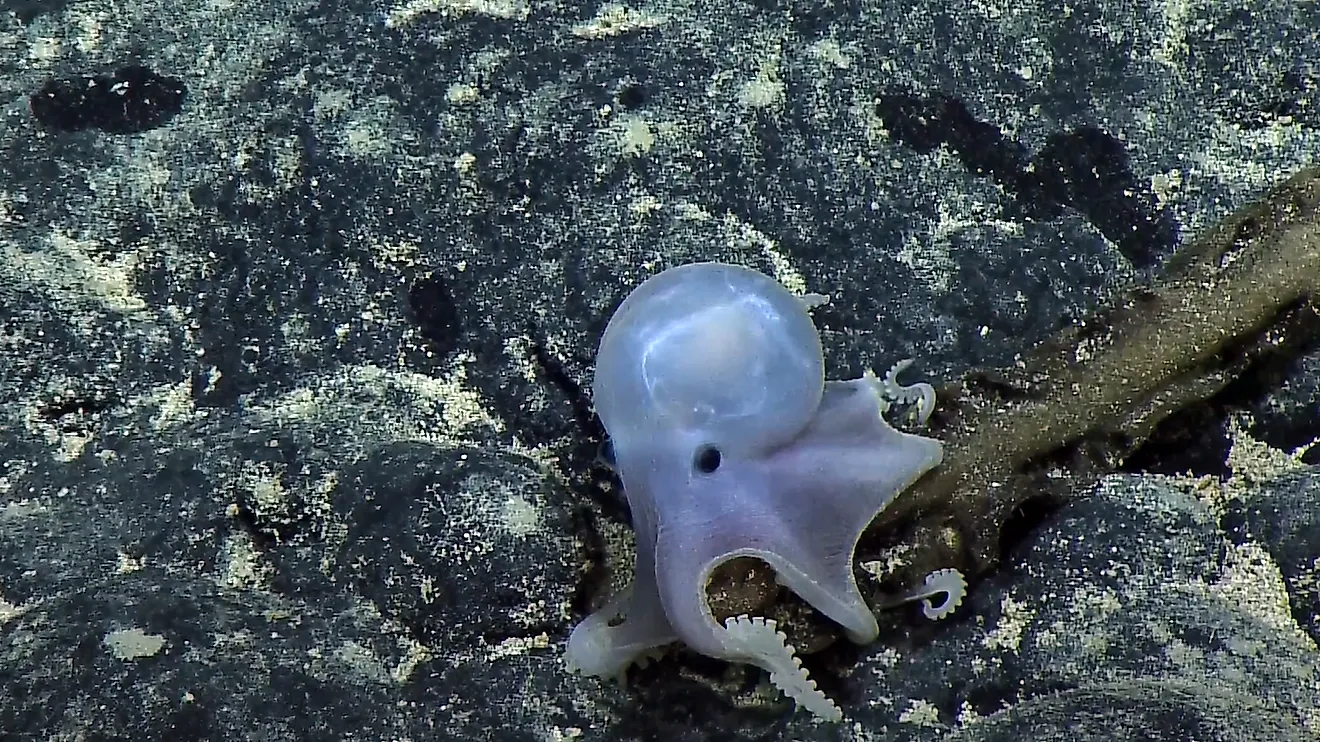
The types of wildlife found in the Mariana Trench depend on the depth. At Challenger Deep, only a few creatures are known to live, such as amphipods, polychaete worms, and sea cucumbers.
James Cameron photographed a gray sea cucumber during his descent. The amphipods closely resemble shrimp and have been identified as Hirondellea gigas. They have a strong layer of aluminum hydroxide gel over their exoskeletons, which enables them to withstand the intense pressure. Scientists analyzed sediment from the Challenger Deep with chemicals from the guts of the amphipod. They found that this combination produced the aluminum hydroxide gel.
Higher up in the trench, there are shark species that have existed for millions of years, such as the Goblin shark, the only surviving member of the Mitsukurinidae family. The deepest fish in the trench is the snailfish, which can be found at 26,200 feet. It has translucent skin, so thin that its internal organs are visible through it, and no swim bladder, which would collapse at that depth.
One of the most recognizable animals from the trench is the black seadevil, which has a bioluminescent lure on the top of its head that it uses to attract prey. Once there, it uses its rows of sharp teeth to catch the prey. This fish lives at depths of 656 feet and beyond, reaching more than 4,900 feet beneath the surface.
How much have we seen of the Mariana Trench?
The entirety of the Mariana Trench has been mapped using sonar, but much of it remains unexplored. The deep sea in general remains unexplored, with less than 0.001% of it being seen by humans. Sonar itself has only mapped out just under 30% of the seafloor. Until recently, only two crewed missions had gone down to Challenger Deep itself, but with the increase in missions since 2019, scientists will likely have far more information to work with on the geology of the trench and the sturdy lifeforms that can withstand the pressure nearly 7 miles beneath the ocean's surface.