The Deepest Anyone Has Ever Gone In The Ocean
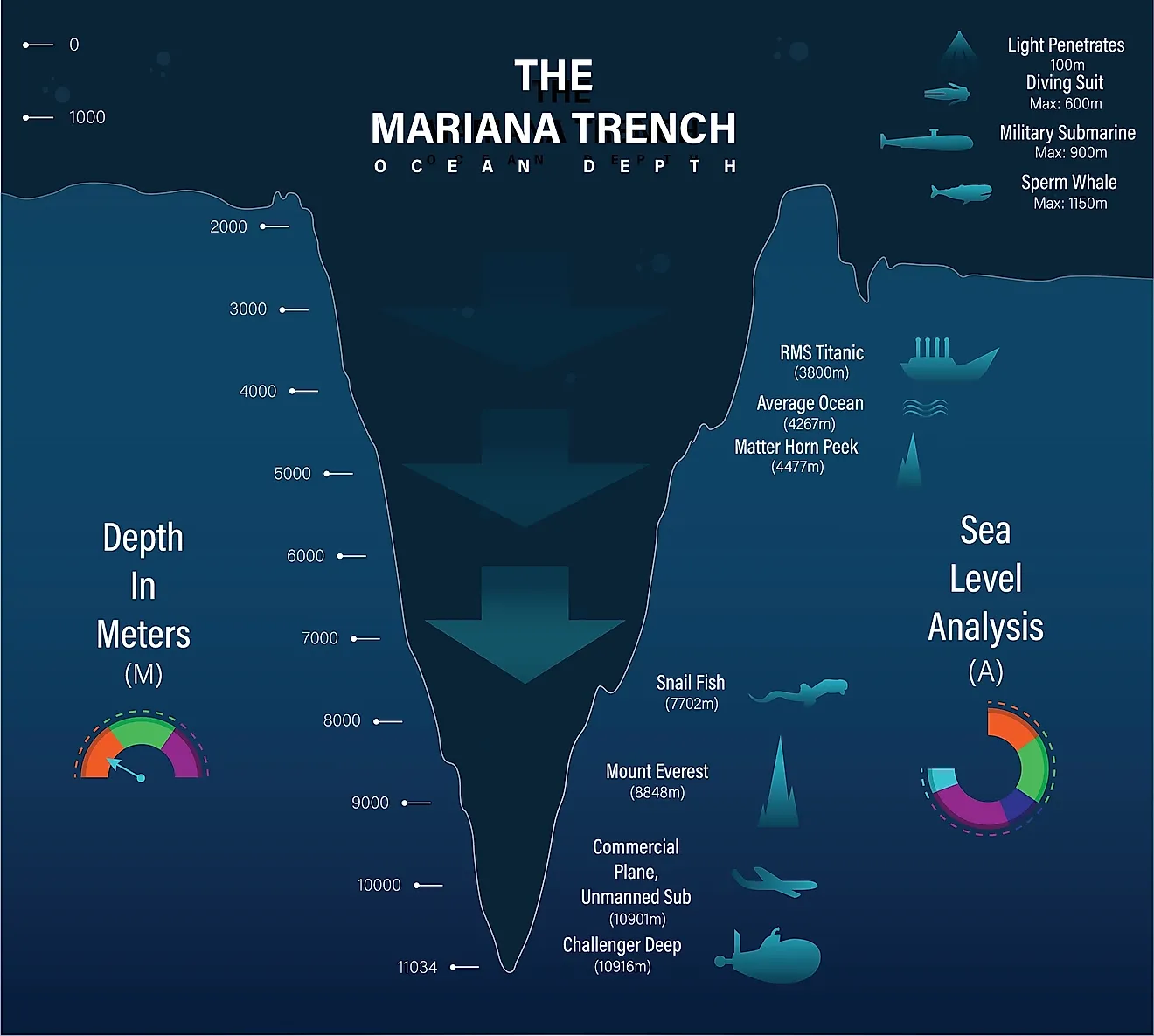
The deepest humans have ever traveled into the ocean is the Challenger Deep, a depression in the Mariana Trench nearly seven miles below the western Pacific. At roughly 35,800 feet, it lies deeper than Mount Everest is tall and under pressure more than 1,000 times greater than at sea level. Reaching it requires a submersible strong enough to survive that pressure while operating in complete darkness and near-freezing water. That difficulty explains why crewed visits remain extraordinarily rare. Jacques Piccard and Don Walsh first reached the bottom in 1960, followed decades later by James Cameron, Victor Vescovo, and a small group of other explorers. Their dives have gradually turned one of Earth's least accessible environments into a place scientists can directly observe.
What Makes the Deep Ocean So Hard to Reach

Water is heavy, and there is a lot of it stacked above the deep ocean. Pressure increases by about one atmosphere for every 33 feet you descend. At the bottom of the Mariana Trench that adds up to more than a thousand times the pressure at the surface. Picture eight tons pressing on every square inch, roughly the weight of a few dozen jumbo jets.
Sunlight fades fast on the way down. Past about 3,300 feet the water turns fully black. It also turns cold, holding at just a few degrees above freezing, around 39 degrees Fahrenheit. A submarine built for that floor has to hold off crushing pressure, total darkness, and near-freezing water all at once.
The Deepest Place on Earth: Challenger Deep

The Challenger Deep is a narrow, slot-shaped dip at the southern end of the Mariana Trench. It lies about 200 miles southwest of Guam, and recent surveys put its floor near 35,876 feet down. Different measurements land a little higher or lower, since sonar and submarines read the depth in slightly different ways. Oceanographers call this deepest layer the hadal zone, named for Hades, the Greek god of the underworld.
Drop Mount Everest into this hole and its peak would still sit more than a mile underwater. More people have traveled to space than have ever touched this floor. The spot takes its name from HMS Challenger, the British survey ship that first sounded these depths in the 1870s.
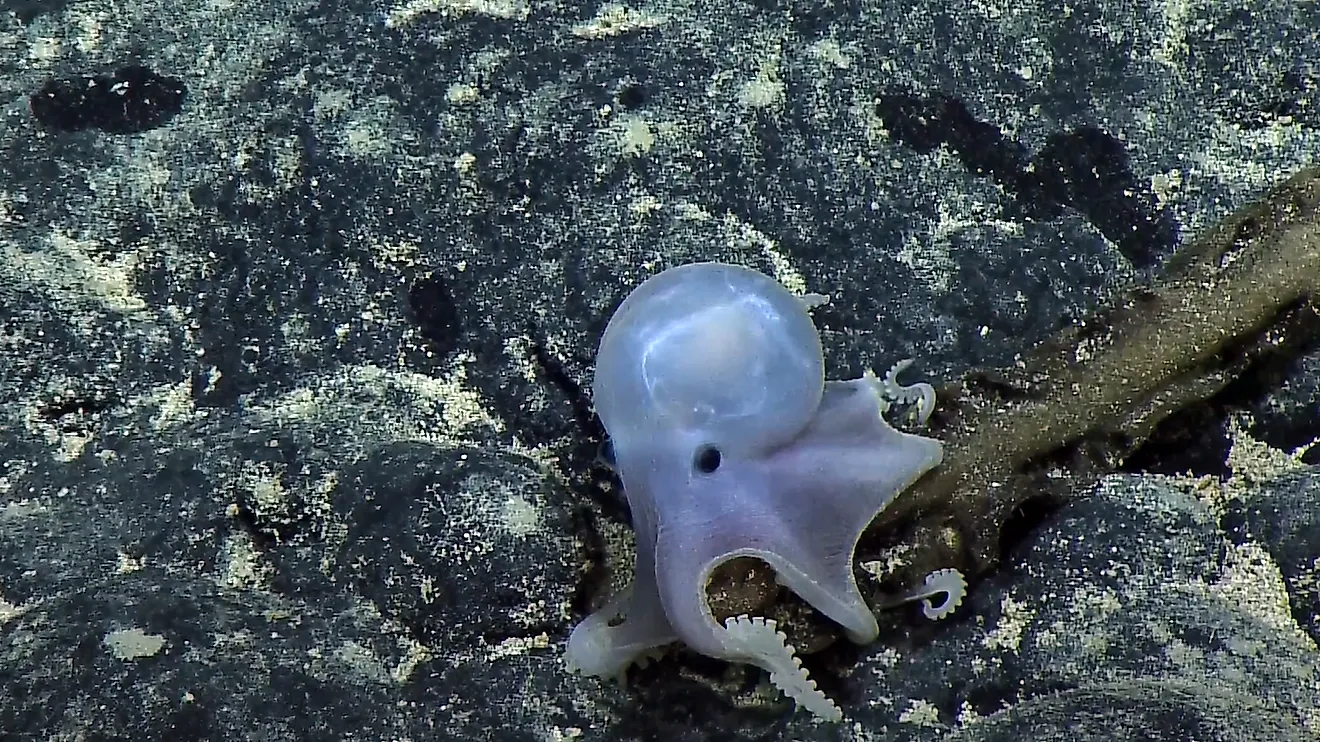
Scientists once figured the bottom was lifeless, too dark and too crushing for anything to hang on. That idea turned out to be wrong. In 2005, researchers found single-celled plankton called foraminifera living in the mud down there. Piccard and Walsh, the first men to reach the floor, reported a flatfish in their lights, though nobody has confirmed one since.
The First People to Reach the Bottom

On January 23, 1960, two men climbed into a strange-looking craft called the Trieste and pointed it straight down. Jacques Piccard, a Swiss engineer, and Don Walsh, a US Navy lieutenant, rode inside a steel ball barely wide enough for the pair of them. Above that ball sat a large float filled with gasoline, which is lighter than water and kept the craft steady on the way down. The trip to the bottom took nearly five hours.
On the descent, one pane of an outer window cracked with a bang that rattled the whole cabin. Piccard and Walsh pressed on and settled onto the floor near 35,800 feet. They stayed about twenty minutes, long enough to prove a person could reach the bottom and live to talk about it. The climb back to daylight took another three hours.
The Return to Challenger Deep

For 52 years, Piccard and Walsh had the deepest spot on the planet to themselves. That changed on March 26, 2012, when filmmaker James Cameron made the first solo trip to the bottom. His sub, the Deepsea Challenger, touched down near 35,787 feet. Cameron had hoped for a long look around, maybe six hours, but a hydraulic problem with the sub's robotic arm forced him to head up early. He described the floor as a soft, almost gelatinous plain, and the only company he spotted were tiny shrimp-like amphipods.
Seven years later, explorer Victor Vescovo turned the bottom into a place people could visit more than once. His submarine, the Limiting Factor, reached about 35,853 feet on April 28, 2019, the deepest a person had ever gone. He came back for several more dives over the following days. Vescovo saw creatures drifting in the dark, and he also saw something that stopped him cold: what looked like a plastic bag and a few candy wrappers resting on the seabed.
What the Deepest Dives Taught Us
Each crew came back with a lesson nobody could have guessed from the surface. The first two men proved that a person could survive the pressure at all. Later dives showed that life hangs on even in that cold, black mud, including single-celled plankton and pale amphipods. The newest visitors found our own plastic on the deepest floor on Earth, a reminder that people now leave a mark even in the most remote place around. Fewer than thirty people have seen this spot with their own eyes, and there is still plenty left to learn about it.