The National Parks Most People Skip But Shouldn't
The 63 parks that carry the "national park" title do not draw crowds evenly. A handful absorb most of the traffic, while others sit near the bottom of the visitation rankings year after year, and the reason is rarely a shortage of scenery. What keeps visitors away is usually distance, a missing road, or a stretch of water that only a boat or a bush plane can cross. The nine parks below all rank among the country's least visited, yet each holds terrain that ranges from Arctic sand dunes to a brick fortress ringed by coral reefs. For anyone tired of timed-entry lines and full parking lots by sunrise, these are the parks where solitude is still the norm.
Kobuk Valley National Park, Alaska

Kobuk Valley National Park was the least-visited national park in 2025, partly because of its location. No roads lead into the park, so visitors typically reach it by air or by boat.
The reward is one of Alaska's strangest landscapes. The Great Kobuk Sand Dunes rise from the boreal forest, enormous hills of sand across a terrain that seems more suited to a desert than the Arctic. Twice each year, the Western Arctic Caribou Herd migrates through the park, and thousands of animals cross the dunes and river valleys during the passage. Few national parks can match that kind of wilderness.
Gates Of The Arctic National Park, Alaska

Gates of the Arctic in Alaska is among the most remote national parks in the country. No roads, trails, or established campgrounds exist within the park, and visitors must travel through an enormous wilderness largely without developed infrastructure.
The park spans more than eight million acres of Brooks Range mountains, wild rivers, tundra, and boreal forest. Six designated rivers cross the land, including the Alatna, Noatak, and Tinayguk. Dall sheep, caribou, wolves, and other wildlife move freely through the region.
For experienced backcountry travelers, the absence of roads is an attraction rather than an obstacle. No scenic drives or crowded overlooks frame the experience. Instead, visitors navigate valleys, mountain passes, and rivers on their own. Few places in the US offer such a direct experience of wilderness on such a vast scale.
North Cascades National Park, Washington

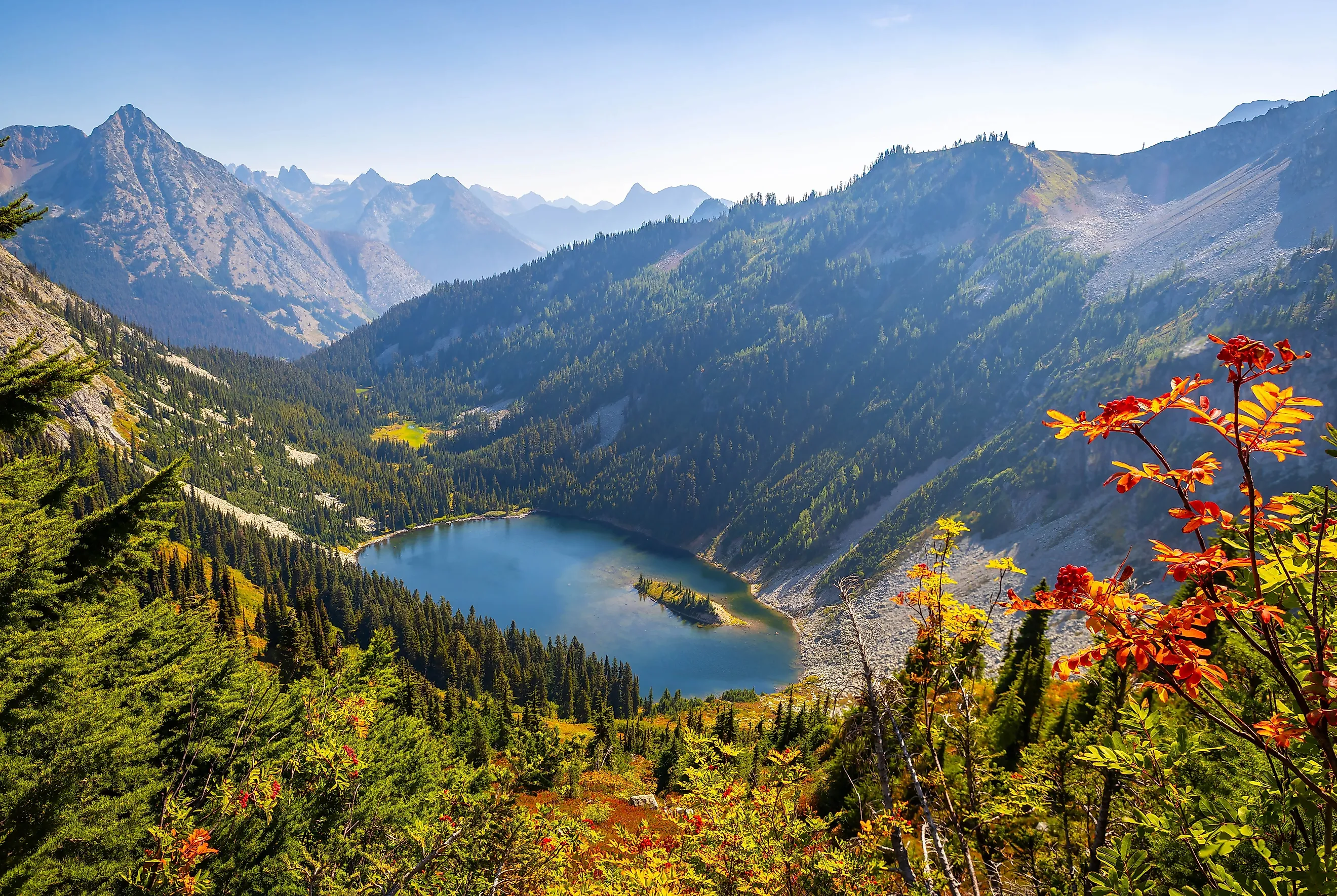
North Cascades National Park is sometimes called the "American Alps" for its rugged peaks and deep valleys, with more than 400 miles of trails through forests, meadows, and alpine terrain. More than 300 glaciers sit within its boundaries, yet far fewer visitors come here than to Washington's better-known parks.
Black bears, mountain goats, and deer live in the steep mountain environment. Extensive old-growth forests fall within the park too, and the dense evergreen valleys set off the rugged alpine landscape above them.
North Cascades looks its most dramatic in autumn, when alpine larches turn golden against the dark mountains. With so few crowds, a visit here feels like a vast wilderness rather than a road trip between scenic overlooks.
Lassen Volcanic National Park, California

Lassen Volcanic National Park holds something most California parks lack: four major types of volcano in a region that has been volcanically active for about three million years. Lassen Peak, considered the largest plug dome volcano in the world, rises alongside boiling springs, fumaroles, and mud pots.
Bumpass Hell is the park's major hydrothermal area, where a boardwalk runs through steaming vents and bubbling pools. The volcanic terrain shifts with elevation, from forests and meadows to barren mountains.
Lassen is also a quieter alternative to more famous parks in California. Snow can linger well into summer at higher elevations, and winter storms sometimes close portions of the park. Those seasonal swings are part of why such dramatic geography stays relatively uncrowded.
Great Basin National Park, Nevada

Great Basin National Park is home to ancient bristlecone pines, some of them thousands of years old. They rank among the oldest individual trees known to science, with twisted trunks and weathered branches that survive freezing temperatures, strong winds, and thin mountain soils.
Beneath the surface lies a completely different environment. Lehman Caves, formed over millions of years, is a marble cave full of stalactites, stalagmites, and unusual formations, and guided tours pass through room after room of them.
At the other extreme, the park reaches more than 13,000 feet at Wheeler Peak. Alpine terrain there contrasts sharply with the surrounding Nevada desert. At night, with no nearby cities, the skies turn exceptionally dark, and stargazing becomes another major draw.
Guadalupe Mountains National Park, Texas

Texas is better known for Big Bend National Park, but the highest point in the state sits in the Guadalupe Mountains. Guadalupe Peak reaches 8,751 feet above sea level, high above the surrounding Chihuahuan Desert. The mountain is part of an ancient fossilized reef, laid down when the region lay beneath a tropical sea hundreds of millions of years ago.
McKittrick Canyon falls within the park too, a surprisingly green pocket of trees in the middle of the desert. Hikers can climb Guadalupe Peak or follow the canyon trails, where the rise in elevation marks a striking transition from desert scrub to forested slopes.
That mix of desert, mountains, fossils, and forests makes it one of the most geographically unusual parks in the Southwest, and still Guadalupe Mountains draws far fewer visitors than many other parks in the country.
Isle Royale National Park, Michigan

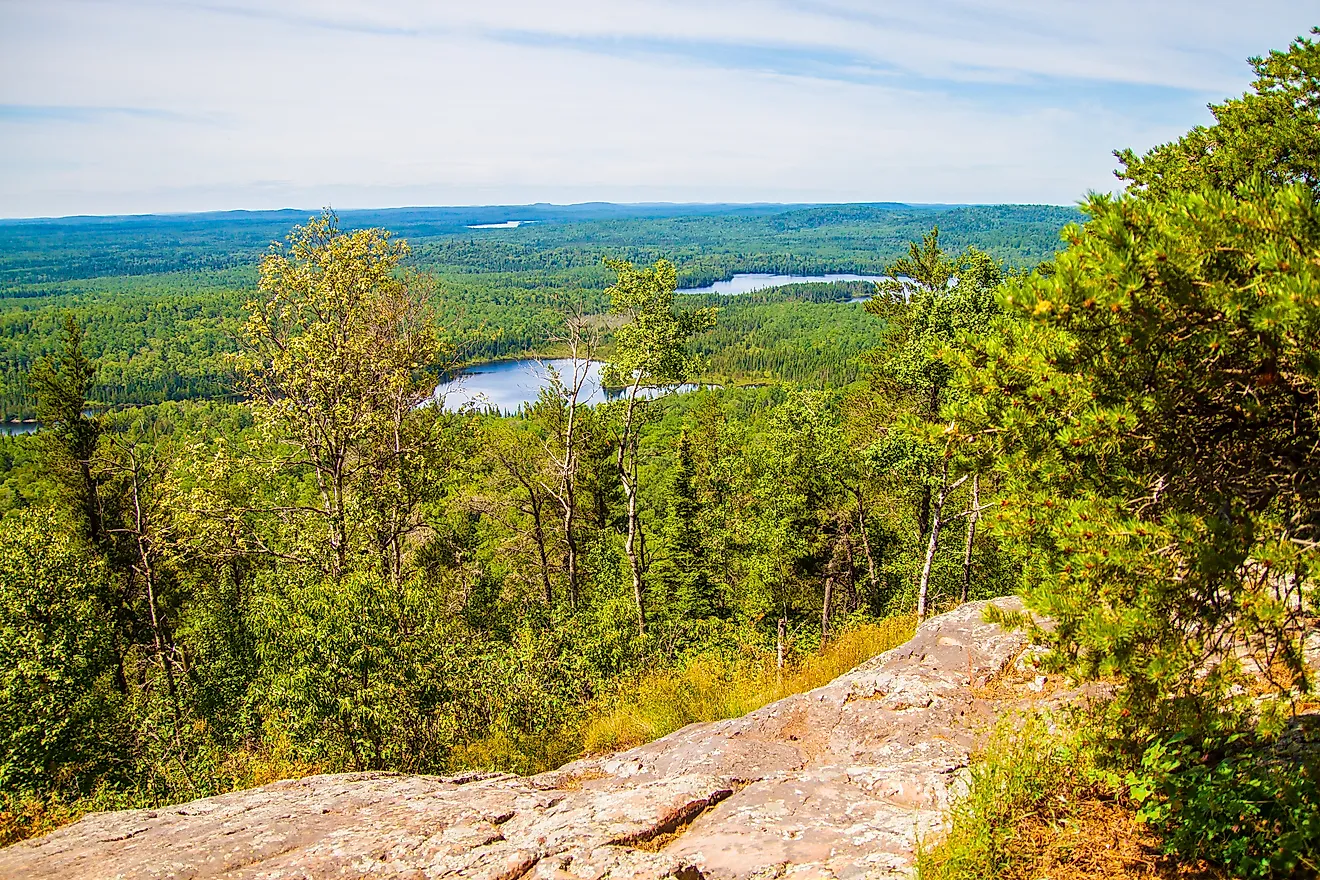
Isle Royale is a rare national park, an island out in Lake Superior. Getting there requires a boat or seaplane, and the park's seasonal operating period narrows access further. Once on the island, visitors can hike more than 160 miles of trails, paddle along the shoreline, or walk to the historic lighthouses and abandoned mining sites.
Isle Royale is especially famous for its moose and gray wolves. Scientists have studied the two species here for decades, which makes the island one of the world's longest-running predator-prey research sites.
Congaree National Park, South Carolina

Congaree holds one of the largest remaining expanses of old-growth bottomland hardwood forest in the southeastern US. Seasonal flooding shapes the landscape, and for part of the year the floodplain sits under water. It remains an important habitat for wildlife, including river otters, deer, and wild turkeys.
The park's trees form one of the tallest natural canopies in the eastern United States, with bald cypress, tupelo, and other hardwoods towering above the floodplain. During periods of high water, visitors can take in the forest a completely different way, from the boardwalk or from a paddle down Cedar Creek.
Dry Tortugas National Park, Florida

Dry Tortugas National Park is a cluster of islands and surrounding waters nearly 70 miles west of Key West. Reaching the park requires a boat or seaplane, and that isolation is part of what sets it apart.
The park's centerpiece is Fort Jefferson, an enormous 19th-century coastal fortress built from millions of bricks. The unfinished fort covers much of Garden Key, a hard-edged shape against the turquoise water around the island. Coral reefs, tropical fish, and sea turtles fill the surrounding shallows, which makes the park especially popular for snorkeling and swimming.
National Parks That Fly Under The Radar
For travelers willing to trade convenience for something less familiar, the reward is more than an escape from the crowds. The most overlooked national parks are not the ones with the least to see. More often, they simply lack the single iconic landmark or the easy access that sends millions of visitors to America's most famous parks, and what they offer instead is room to experience the landscape alone.