How Many National Parks Have Never Had A Visitor Death?
According to the U.S. National Park Service, or NPS, there are approximately 330-400 people who die annually across the national park system. The risk of death when visiting a park is quite low, and the modern NPS mortality rate sits at roughly 0.11 death per 100,000 recreational visits, found by dividing the total confirmed deaths by the total recreational visits and multiplying by 100,000. Now, the number of "total confirmed deaths" is admittedly a little fuzzy, in part because NPS has a strict policy that prevents staff from publicly registering or detailing some sensitive fatality metrics. The "total recreational visit" metric is also a little fuzzy because some parks have "porous boundaries" that allow some visits to go uncounted. But what is certain is that while a small number of parks have reported 0 mortality rates for a decade, or for the majority of years in a decade, there is no national park that has never had a visitor death. So let's explore the national parks with the fewest and most fatalities, the main causes of death, and the paradox of what most people perceive as the real risks when they're out in the wild.
The National Parks With The Fewest Fatalities

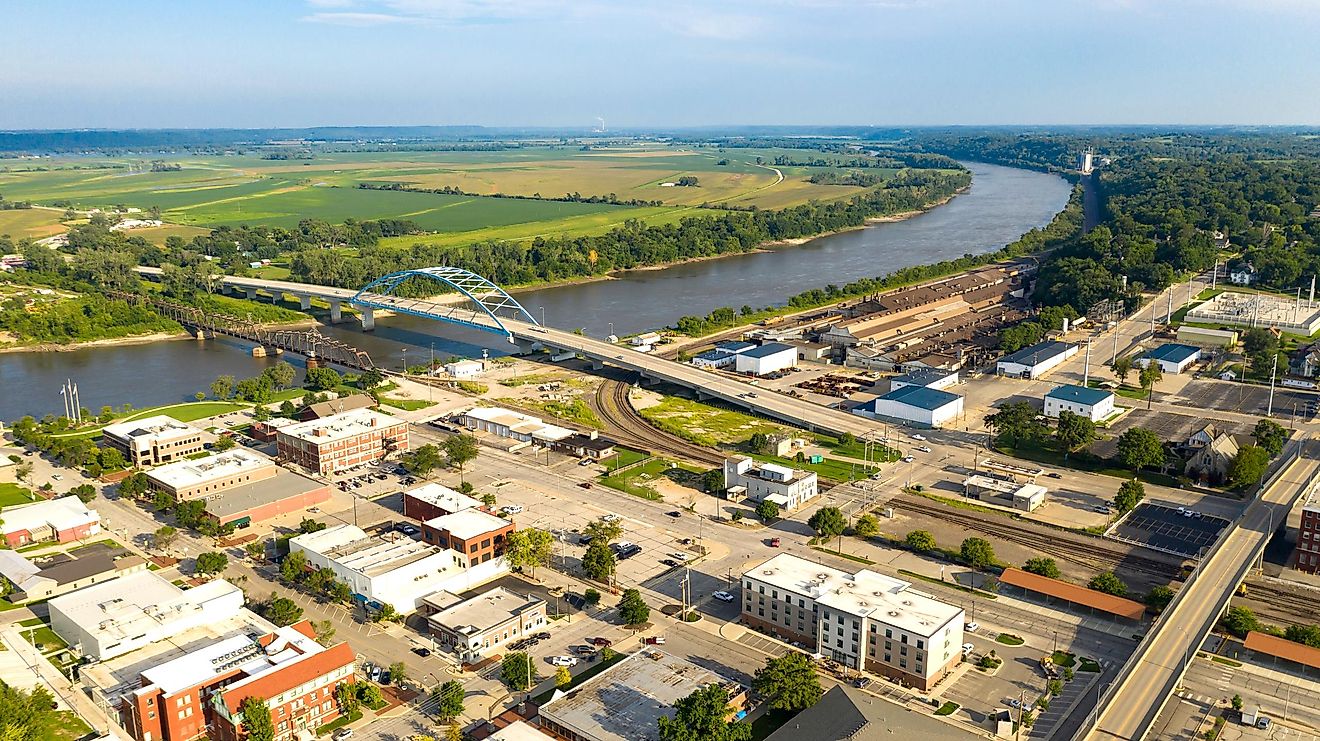
The record for safest park is routinely earned by Gateway Arch National Park in Missouri. Gateway Arch is somewhat atypical for a national park because it's a small, paved, urban landscape. Therefore, in the past recorded decade, it has reported 0 wilderness, wildlife, or environmental fatalities. That said, a decade is not an historic count, and because it is a popular park to visit, deaths are bound to happen eventually, if only from a medical event.
Another park with very few recorded fatalities is the National Park of American Samoa. Located in the South Pacific, this park receives extremely low annual visitor numbers, which is the main reason for its low mortality rate.
Third place for park with the fewest fatalities in modern record goes to Kobuk Valley National Park in Alaska. This is one of the most isolated parks in the entire system. It has no roads, virtually no formal infrastructure or trails to attract people to it, and as such it's the least visited national park, receiving fewer than 15,000 visits each year. Mainly due to the fact that so few people are visiting this park, it has successfully managed to report 0 fatalities for the majority of years in the last recorded decade.
The National Parks With The Most Fatalities

The vast majority of deaths that happen in a national park are happening in just a few highly visited and geographically volatile parks. One park consistently ranks as the deadliest in the entire system, the Grand Canyon National Park in Arizona averages roughly 11 deaths each year. You may think the majority of these deaths would be caused by falling from the steep canyon walls, especially since at least 8 "selfie-related falls" have received media coverage. But in fact, the majority of deaths that happen at the Grand Canyon are due to medical incidents such as suffering from heat stroke, dehydration, or cardiac arrest from the exertion of a climb.
Second place for the national park with the highest number of fatalities goes to Yosemite National Park in California. If you have visited this beautiful park you can already imagine that the majority of these deaths are caused by climbing accidents, especially slips from high-altitude ledges, and also by drowning near swift flowing waterfalls.
Third place for the deadliest national park can consistently be given to Yellowstone National Park shared by Wyoming, Montana, and Idaho. The causes of death here vary but can be categorized into three main groups, motor vehicle crashes on the winding roads, thermal pool incidents, and severe winter exposure.
Special note should also be given to the North Cascades National Park in Washington. In terms of deaths per visit, this park is the deadliest in the entire system, with a death rate of about 60 deaths per 1 million visitors, far above the park system's average. This rugged wilderness possesses an extreme, glaciated terrain, which attracts relatively few visitors each year, but offers experienced mountaineers extremely rewarding climbing experiences, and equally high risks.
Top Causes of Death Across The Entire Park System

Each park in the national park system is unique, and as such, each park presents unique risks for visitors. That said, there are 4 main categories for the causes of most fatalities. Around 21% of total deaths across the park system can be attributed to drowning. Some 17% of deaths can be attributed to motor vehicle crashes, whether from distracted driving, sharp mountain curves, animals on roads, or speeding. 12% of deaths are categorized as medical/natural, with the most frequent natural cause being a cardiac event brought on by exertion or exposure. Finally, 11% of deaths can be attributed to falls and slips, most often occurring when visitors step off designated trails, or step on loose rocks near a ledge.
What About The Animal Attacks?

According to comprehensive NPS mortality tracking reports, getting killed by a wild animal in a U.S. National Park is extremely rare. Over a recent ten-year period, out of more than 3 billion combined recreational visits to the national park system, only 5 fatalities were officially attributed to wildlife. Statistically, animal attacks account for less than 0.2% of all national park deaths. When fatal wildlife incidents do happen within a national park or on an immediate coastal boundary, they are almost exclusively caused by bears, with a single exception involving a shark.
Grizzly bears are historically responsible for the majority of lethal animal encounters. Of the five fatalities caused by wildlife in the past decade, grizzly bears caused 3. In some historic cases, hikers have accidentally approached mother bears protecting their cubs, and in others, the bears have intentionally approached a hunter who was field-dressing game.
The one important clarification is that grizzlies are themselves a subspecies of the brown bear, Ursus arctos, not a separate animal. The larger coastal brown bears of Alaska tend to be better fed and less inclined to seek out conflict with people, though they are still occasionally responsible for predatory attacks. Of the five fatalities caused by wildlife in the past decade, a coastal brown bear caused one.
Finally, the great white shark is responsible for one of the five deaths caused by wildlife in the last decade. This happened in September of 2018 when a boogie boarder was fatally bitten by a great white at the Cape Cod National Seashore in Massachusetts. This was the area's first fatal shark attack since 1936.
There is a common misconception that bison, elk, snakes, and alligators would be responsible for more deaths in the national park system. It's true that every year there are videos of tourists having violent encounters with some of these animals, like being tossed by a bison in Yellowstone, and it's also true that venomous snakes like cottonmouths in the Everglades, in Florida, do occasionally bite visitors unprovoked. But it's also true that none of these animals have been responsible for a fatality in at least a decade.
Acts Of God

Because the national park system covers so much and such varied terrain, all manner of accidents can happen within their boundaries including plane crashes, freak accidents, and acts of God. Typically acts of God are classified by NPS as "environmental deaths." These events are quite rare and generally average about 7-15 deaths each year. Among the most "common" are lightning strikes, which make up about 1-3 deaths each year. According to a geographic study on lightning casualties in the U.S. National Parks, the vast majority of victims are hikers standing at high altitude mountain overlooks, or beside exposed canyon rims. Rockfalls and landslides claim an average of 2-5 lives in the national parks each year. These events happen most often in glacial or high weather alpine areas like in Yosemite or Mount Rainier. Avalanches account for 1-3 deaths each year, and almost without exception the victims are skiers, snowboarders, and mountaineers who are out in peak winter or spring melt seasons. Flash floods also cause an average of 1-2 deaths each year. This specifically impacts canyon hikers who are caught off guard by a rainstorm causing waters to rapidly swell.
A Visitor Is Most Likely To Die In The Parks That Feel The Safest
A visitor is statistically most likely to die in the parks that feel the safest, and are statistically safest in the parks that are inherently the deadliest. To break down that paradox, what's meant by "feeling safest" is essentially, when a visitor steps out of their car at Mather Point in the Grand Canyon, or walks the valley floor in Yosemite along with thousands of other tourists, or sees paved roads, gift shops, and park rangers, they "feel safe" to explore "nature with guardrails." Because conversely, when we think of stepping alone into desolate lands, we "feel" like we're going into an extremely dangerous place, because there are no trails, no cell service, no nearby medical facilities, and plenty of apex predators. But at the end of the day, it's mainly a matter of numbers. The most statistically dangerous places to visit look like the safest parks in the system, because those national parks get an extremely high number of visitors each year, and so it's statistically more likely to have more visitor deaths. However, that doesn't mean that visiting an isolated and relatively unfrequented park is actually safer, even if it's statistically safer. Remember, if you fall and twist your ankle in the Great Smoky Mountains, a ranger will most likely have you in an ambulance within an hour. If you twist your ankle in the Gates of the Arctic, you may be stranded in the elements for days.