The National Parks With No Roads At All
Overall, America's National Park System is quite easy for visitors to explore. The system's many parks and other properties hosted 323 million visitors in 2025. But among the 63 National Parks are a handful that stand out precisely because of their inaccessibility. Hard as it might be to believe, six of them contain no roads at all. Some are islands like Isle Royale and the Dry Tortugas while others sit in the remote reaches of Alaska. Here's a closer look at these distinctive spaces and what it takes to explore them.
Gates of the Arctic

Among the most remote reaches of the National Park system, Gates of the Arctic National Park and Preserve spans about 8.5 million acres of Alaska, centered around the Brooks Range. These vast expanses make Gates of the Arctic the second-largest national park after Wrangell-St. Elias. They preserve fully intact ecosystems of snow-covered peaks, rivers, and lakes. Most visitors access the park via air taxi, although it's possible to hike into portions, as well. Once they arrive, there are no campgrounds, trails, or services, and no cell phone service is available, either. That's why the National Park Service warns that those exploring this beautiful but unforgiving wilderness must be proficient in outdoor survival skills. For travelers adventurous enough to explore it, they'll be rewarded with hikes through incredible scenery, opportunities to float remote rivers, and extensive wildlife viewing.
Kobuk Valley

Roads would be useless at Kobuk Valley National Park, which sits hundreds of miles from the nearest city of any size. This northwest Alaska park protects a stretch of wilderness surrounding the Kobuk River, spanning 1.8 million acres. This includes the best-known feature, the Great Kobuk Sand Dunes, which soar up to 100 feet over the nearby landscape. Fishing the river and observing the massive herds of caribou that migrate through the park are also top draws. Visitors must fly from Alaska's larger airports to one of the smaller wilderness communities nearer the park, then take an air taxi to their chosen location within it, or a snowmobile in winter. Once there, they'll find no roads, established trails, campgrounds, or visitor services, allowing them to focus on the nature surrounding them.
Lake Clark

Alaska's beautiful but remote parks score another spot on the roadless list with Lake Clark National Park and Preserve, spanning over 4 million acres in the state's southwest region. Aside from its namesake body of water, it protects a mix of glaciers, volcanoes, lakes, forest, and coastline, all of which require some careful planning to reach. Exploring Lake Clark itself is doubtless one of the highlights of any visit, with the turquoise waters stretching for dozens of miles beneath soaring, snow-covered peaks. There's also seemingly boundless wilderness available for hiking, kayaking, fishing, and viewing the area's memorable wildlife, which include brown bears. However, this wild expanse also offers a bit more modern comfort than many other roadless parks, thanks to the Lake Clark Resort, a lodge that provides accommodations and guided excursions, one of several in-park and near-park options.
Isle Royale

The lower 48 states still offer some roadless exploration opportunities in America's national parks, headlined by Isle Royale. Located on Lake Superior between the Upper Peninsula of Michigan, Minnesota, and Ontario, Canada, this unspoiled escape is roadless not just because of its remote location, but also because of its island geography, with over 400 different islands making up the park. Visitors must arrive via ferry, seaplane, or private boat and will find the only other permanent inhabitants to be the vast array of wildlife, including moose, foxes, wolves, beavers, and countless types of birds. The water is the centerpiece of Isle Royale's best-known activities, which include boating, fishing, canoeing, and even scuba diving, but the park is also a popular spot for backpacking and hiking.
Dry Tortugas

The islands that make up Dry Tortugas National Park are just tiny dots amid the waters of the Gulf of Mexico, located roughly 70 miles west of Key West. This combination of remote location and the tiny amount of land that's part of this park means visitors won't find any roads here, either, forcing them to arrive by ferry, private boat, or seaplane. The vast majority of the 100-square-mile park is made up of open water, meaning many explore the area by boat to swim, snorkel, and fish in the tranquil blue Gulf. Those who'd prefer to stay dry have plenty to do too, as the islands are home to Fort Jefferson, a 19th-century brick fort with a fascinating history that includes time as a prison. For a truly unique experience, make it an overnight visit by taking advantage of the waterfront campsites that are among the most memorable in the National Park System.
North Cascades

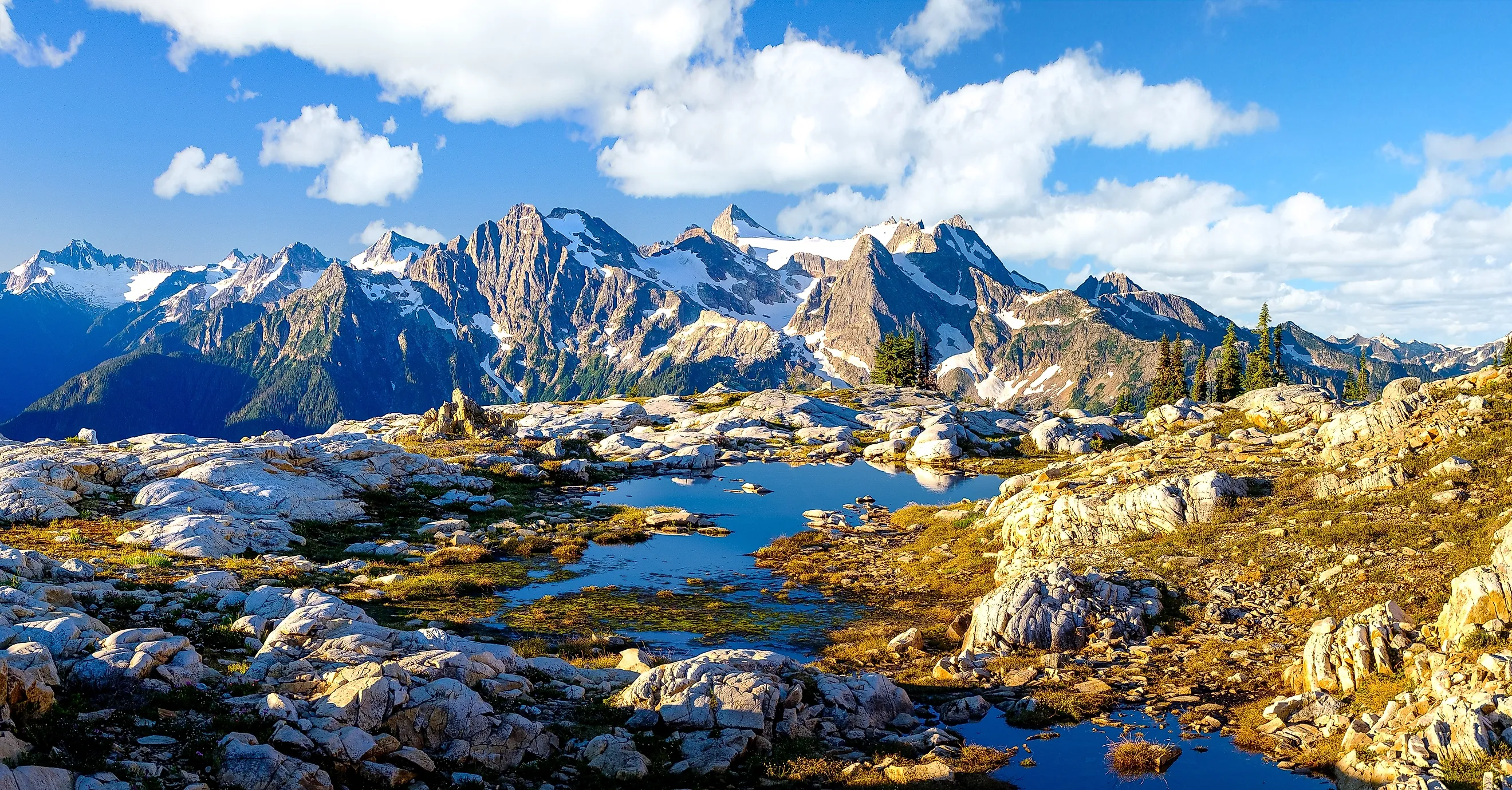
Along the Canadian border in Washington state, North Cascades National Park is the final roadless option within the system. Although roads run along the periphery within the surrounding National Park Service Complex, the park itself is completely roadless. It preserves a mix of jagged mountain peaks, glaciers, evergreen forests, lakes, and much more. In order to explore North Cascades, visitors need to drive themselves to one of the park's gateways, then hike in the rest of the way, a less costly or complicated route than some other remote parks, but a far more physically challenging one. Those who make the trek can enjoy some of the region's most memorable mountain hiking and fishing, as well as camp in this unique wilderness. Mountaineering is also a noteworthy pursuit, as is checking out the park's wild inhabitants, which include bears, mountain goats, and bald eagles.
To Explore These National Parks, You Don't Need Roads
There's no doubt that convenience can be a major factor in how frequently a National Park is visited. However, these six parks prove that there's an incredible amount to see and do beyond the end of the road. Whether you have to hop a plane, boat, or walk in on your own two feet, they're worth considering for those seeking an out-of-the-ordinary National Park adventure.