The National Parks With The Most Bear Attacks
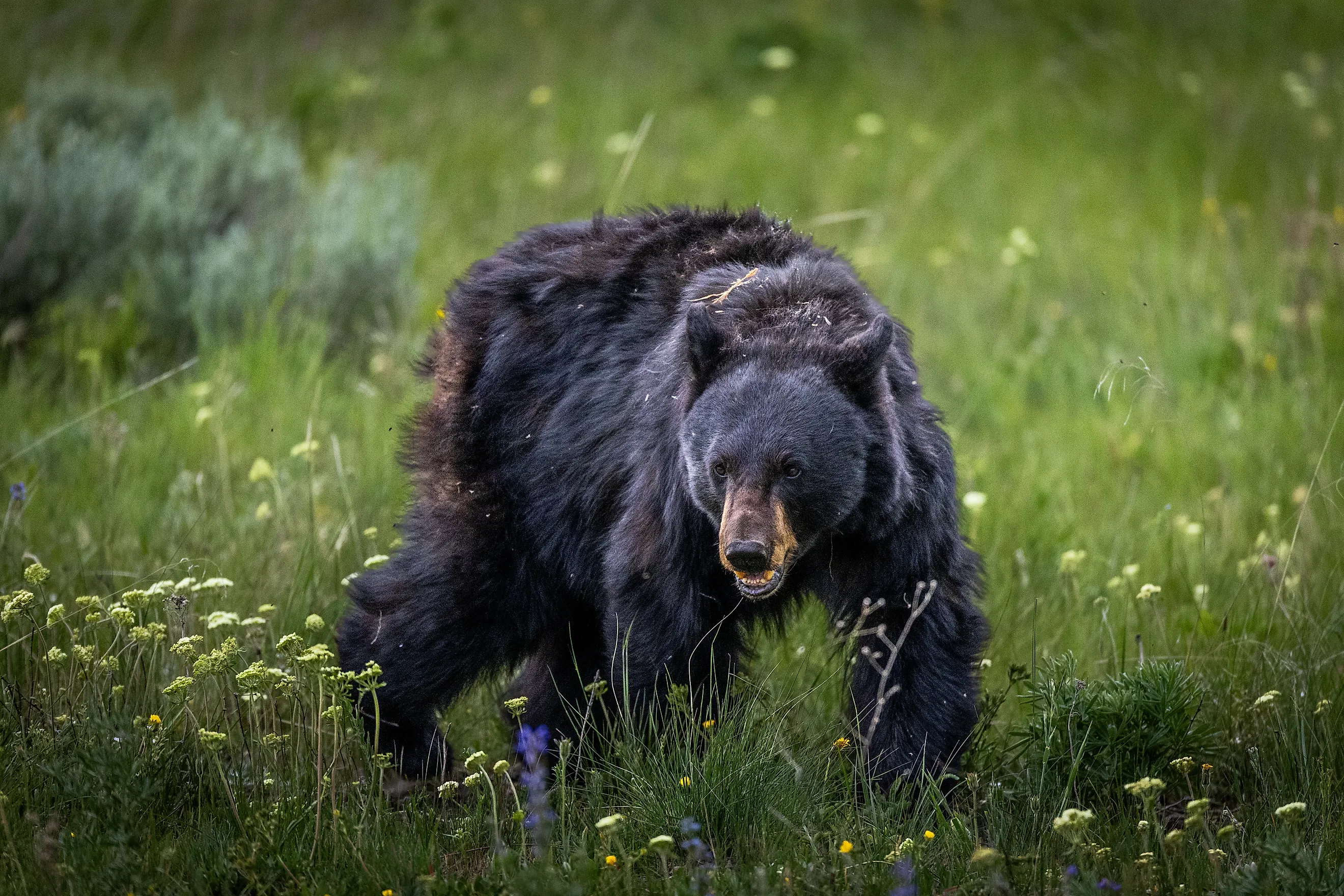
A bear sighting tops many a national park bucket list. Millions of people hike into black and grizzly country every year. Almost all of them go home with only a photo. The U.S. holds roughly 31,000 to 33,000 grizzlies (Ursus arctos horribilis) and upward of 250,000 black bears (Ursus americanus). Fatal attacks stay spectacularly rare against those numbers. To put the risk in perspective, here are five national parks with the most documented fatal bear attacks.
Glacier National Park

Unlike many national parks in the U.S. NPS, the one-million-acre Glacier National Park in Montana is largely rugged and wild beyond its main roads and three visitor centers: Apgar, Saint Mary, and Logan Pass. Its biggest draw is its famous 52-mile Going-to-the-Sun Road, but outside the roadway, much of Glacier remains backcountry and prime habitat for grizzlies and black bears. In 2025, the park welcomed over 3.1 million outdoor enthusiasts who visited the park in search of scenic overlooks, dramatic scenery, and remote hiking expeditions.
Estimating bear population in national parks is not an exact science, but scientists in Glacier National Park collect bear scat and hair snagged in barbed wire to estimate the population, which hovers around 300 grizzly bears and 600 black bears living in the park. On the east side of Glacier, grizzlies spend summers in the meadows and aspen groves, foraging for grass, roots, berries, and acorns, only returning to the high country to hibernate during the winter months.

Since 1910, there have been eleven recorded fatal bear attacks in the park, with the most recent occurring on May 3, 2026, when a hiker encountered a grizzly on the Mount Brown Lookout Trail. The attack was the first deadly attack at the park since 1998. On May 28, 2026, another hiker sustained non-life-threatening injuries when he met another grizzly on the Grinnell Glacier Trail.
Yellowstone National Park

According to the NPS website for Yellowstone National Park, all 2.2 million acres of the national park that spans Wyoming, Montana, and Idaho are considered grizzly and black bear country, including off-the-beaten-path hiking trails, boardwalks, and even the parking lots around one of the park's most famous natural landmarks, Old Faithful. In 2025, the park welcomed 4.7 million tourists, drawn by its vast wilderness, geothermal features like the Grand Prismatic Spring, and abundant wildlife, including bison, elk, wolves, bald eagles, rattlesnakes, and bears.

Grizzly bears represent a remarkable comeback story in Yellowstone, where their population has grown from 136 in 1975 to 1,050 in 2024. In the park's 150-year+ history (it was established in 1872), there have been 8 fatalities due to interactions with bears. The last recorded death was in August 2015 when a lone hiker encountered an adult female grizzly bear and her cubs on the Elephant Back Loop Trail in Lake Village. Since 2021, there have been about 5 grizzly-related incidents with humans per year in Yellowstone. Still, the risk of grizzly bear attacks in the park depends on what you're doing. If you stay in designated areas like roadsides and boardwalks, your chances of a bear attack are 1 in 69.7 million visits, according to the NPS website.
Denali National Park and Preserve

Denali National Park and Preserve attracts people who want to see the highest peak in the state of Alaska and in North America, Mount Denali (also known as Mount McKinley) at 20,310 feet. It is located about 240 miles north of Anchorage, Alaska's most populous city. The park spans more than 6 million acres, and saw 543,300 visitors in 2025. Encounters with bears are not uncommon in Denali, with videos of a grizzly bear chasing a moose calf onto the Denali Boardwalk appearing on social media in June 2026.

No official population surveys have been done since the mid-1990s and early 2000s, but NPS estimates of grizzly bear populations run between 300 and 350 on the north side of the Alaska Range, whereas the Alaska Department of Fish and Game figures that there are about 2,900 black bears in the park.
To date, there has only been a single fatal bear attack on record in Denali, which occurred in August 2012, when a grizzly bear mauled a solo backpacker. Photographs later discovered on the man's camera showed that he was filming the bear for eight minutes from 50 yards away before the attack.
Great Smoky Mountains National Park

At about 522,000 acres, Great Smoky Mountains National Park is about half the size of Glacier and much smaller than both Yellowstone and Denali. In 2025, the Great Smoky Mountains was the most visited national park with over 12 million visitors, attracted by its misty mountain scenery, dense forests, and diverse wildlife. It is home to one of the largest protected populations of black bears in the eastern U.S., with estimates hovering around 1,900. There are no resident grizzly populations in the park.

Statistics from the National Park Service at Great Smoky Mountains report an average of 339 negative human-bear encounters annually from 2015 to 2025, although many incidents go unreported. In April 2026, park rangers responded to six back-to-back bear incidents in areas near the Ramsey Cascades Trail and Abrams Fall Trail, which led to trail closures. In one case, an aggressive black bear bit a hiker who wandered off a trail.
The first recorded fatality due to a bear attack took place in May 2000 when a female hiker encountered a sow and her yearling on the Little River Trail. In September 2020, hikers discovered a bear standing over a dead body on the Hazel Creek Trail. An autopsy a year later confirmed that the death was the result of a bear attack.
Katmai National Park and Preserve

Katmai National Park and Preserve in Alaska has one of the highest densities of brown bears in the world, with estimates putting the population at 2,200 within the 4.2 million acres of the park. Brown bears are the same species as grizzly bears, but are often referred to as coastal brown bears in Alaska because they are found along the coastline. Black bears are not commonly seen in Katmai, although there was one verified sighting of a black bear in 2005.
The national park is a haven for bear-watching enthusiasts, nature lovers, and wildlife photographers, who have famously captured incredible images of the bears fishing for sockeye salmon inBrooks Falls as the fish make their way upstream every summer.

Human-bear conflicts are not especially common in the park, with the first bear incident in twenty years occurring in 2018. Another incident occurred in the summer of 2021 when a bear injured a tourist. Sadly, Katmai is the scene of a tragic fatal bear attack that saw bear enthusiast and environmentalist Timothy Treadwell and his girlfriend, Amie Huguenard, attacked, killed, and partially consumed by a 28-year-old male bear. His life later became the subject of Werner Herzog's 2005 critically acclaimed film, "Grizzly Man."
The Risk is Real, but Rare
By no means an exhaustive list, these five national parks make up almost fifty percent of all U.S. bear attack fatalities. When attacks do occur, however, they tend to follow recognizable patterns, such as a bear being surprised at close range, a mother defending her cubs, or a bear becoming accustomed to human food. It is hard to say whether any of these encounters could have been prevented, but basic bear safety rules posted on the National Park Service website should be followed. Given the sheer number of visitors to the national parks in the U.S., bear attacks remain exceedingly uncommon.