7 Best Attractions To Visit In Hawaii
Two of the world's most active volcanoes, Kilauea and Mauna Loa, sit inside a single national park on the Big Island, still building new land with every eruption. A few hundred miles away on Kauai, sea cliffs rise 4,000 feet straight out of the Pacific along a coast no road has ever reached. On Oahu, the rusted hull of the USS Arizona still rests where it sank on December 7, 1941. There is far more to Hawaii than sand and surf, and its seven best attractions span volcanic craters, historic memorials, walk-through shark tunnels, and a canyon Mark Twain reportedly nicknamed the Grand Canyon of the Pacific. Here are the attractions worth building a trip around across Hawaii's main islands.
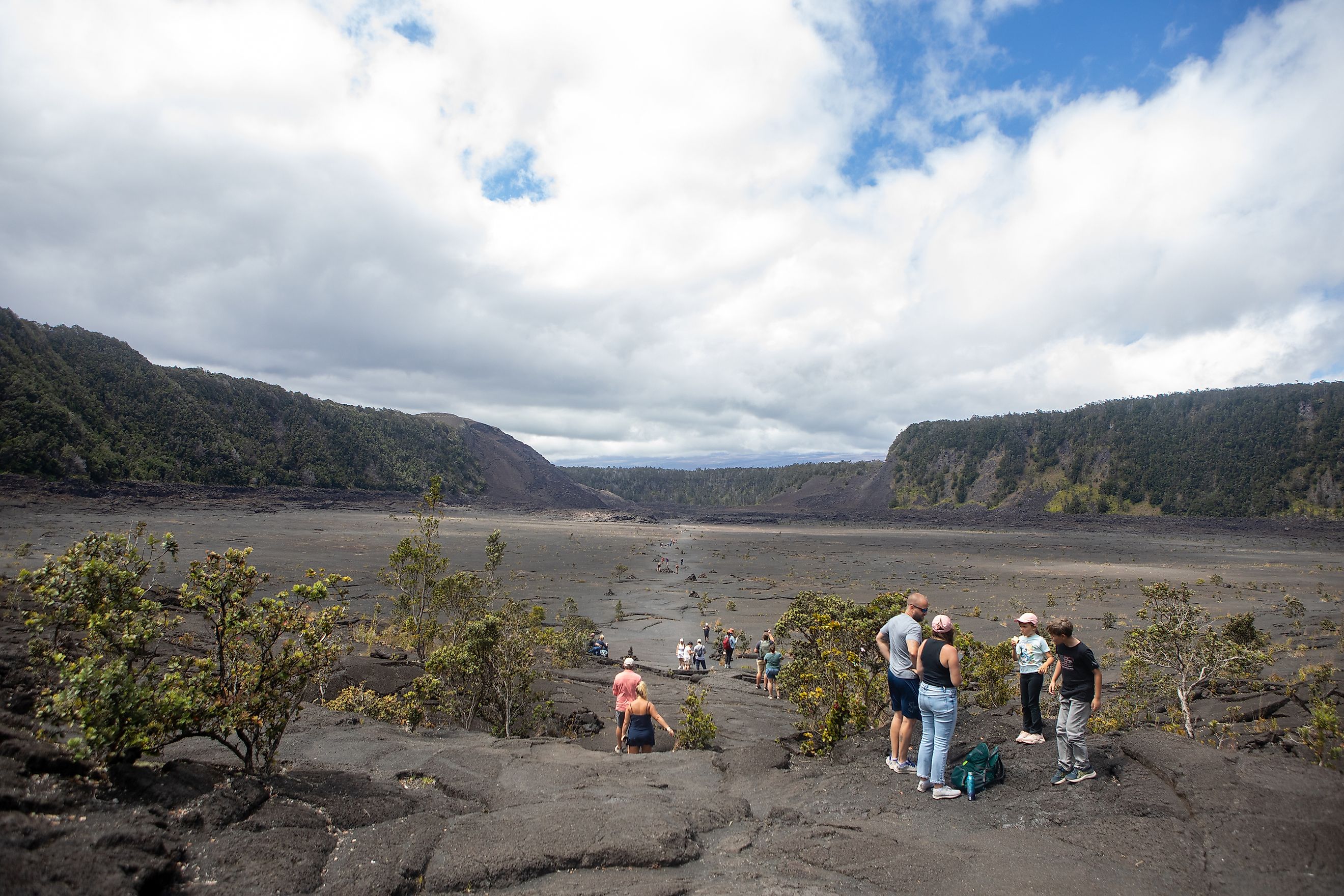
Hawai'i Volcanoes National Park (Big Island)

Rising from sea level to the 13,679-foot summit of Mauna Loa, Hawai'i Volcanoes National Park takes in two of the most active volcanoes on the planet, Kilauea and Mauna Loa. Its boundaries enclose a rare span of geological, biological, and cultural landscapes, and it holds both an International Biosphere Reserve designation and a UNESCO World Heritage listing granted in 1987. Ongoing eruptions give scientists a live view into how the Hawaiian islands took shape, while visitors get dramatic lava fields, plant and animal life found only in this volcanic setting, and a window into the Hawaiian traditions tied to these mountains. The park covers 354,461 acres. Roughly half of that became the Hawaii Volcanoes Wilderness in 1978, opening 130,790 acres of backcountry hiking and camping across one of the most geologically active places on Earth.
Pearl Harbor National Memorial (Oahu)

The Pearl Harbor National Memorial stands in memory of the surprise attack of December 7, 1941, when the Imperial Japanese Navy Air Service struck the U.S. Pacific Fleet and killed more than 2,400 Americans, drawing the country into World War II. The memorial sits at Joint Base Pearl Harbor-Hickam on Oahu and takes in the USS Arizona Memorial, the USS Utah Memorial, and the USS Oklahoma Memorial, along with a visitor center and park. Galleries cover the Pacific theater of the war, a theater screens a film on the attack, and a stark white memorial spans the sunken hull of the Arizona, where more than 1,100 sailors and Marines remain entombed. It is one of the most visited historic sites in the country, tied to a morning that reshaped United States history.
Na Pali Coast State Wilderness Park (Kauai)

Kauai's Na Pali Coast is one of the most recognizable landscapes in the state, its emerald ridges dropping toward the sea in sharp vertical folds. Kauai is the oldest of the main inhabited Hawaiian islands, and the coast took its shape over roughly five million years as rain and runoff carved the deep valleys down through the volcanic rock. Today the shoreline forms a 6,175-acre state park created to protect the Kalalau Valley on Kauai's northwest side. No road reaches it, so access comes only on foot, by helicopter, by kayak, or by paddleboard. Hikers and campers work its cliffside trails, waterfalls, and rugged shoreline mainly between mid-May and early September, when the surf calms enough for access.
Road to Hana (Maui)

Maui's Road to Hana is best driven slowly, with waterfalls, forests, and coastal overlooks strung along a single winding route. The 64-mile road connects Kahului with the town of Hana along Maui's northeast edge, threading 620 curves and 59 one-lane bridges. Driving straight through takes three to four hours each way, but the trip works best as a full day. Twin Falls, at mile marker 2, is a popular early stop with an easy walk to the water, while farther on, Waiʻanapanapa State Park is known for its black sand beach and coastal caves. Past Hana in the Kipahulu District of Haleakalā National Park, the roughly four-mile Pipiwai Trail climbs through a dense bamboo forest to 400-foot Waimoku Falls. Roadside food stands and trucks line the route, including the Huelo Lookout stand and the Nahiku Marketplace.
Maui Ocean Center (Maui)

At the Maui Ocean Center, visitors walk through a glass tunnel while sharks and rays glide overhead. The three-acre open-air marine park sits in Maalaea and holds the title of the largest living tropical reef aquarium in the Western Hemisphere. It differs from most aquariums by displaying only species native to Hawaiian waters, among them whitetip reef sharks, sandbar sharks, blacktip reef sharks, stingrays, octopus, and green sea turtles. Other exhibits include the Humpbacks of Hawaii 3D Sphere and the Living Reef, which holds more than 40 species of live Pacific corals, one of the larger collections of its kind anywhere.
Polynesian Cultural Center (Oahu)

The Polynesian Cultural Center is one of the clearest introductions to traditional Hawaiian life and to the wider Pacific. Ranked among Hawaii's top paid attractions, the 42-acre living museum sits on Oahu's North Shore in Lāʻie. Its core is the set of six island villages representing Hawaiʻi, Fiji, Aotearoa (New Zealand), Samoa, Tahiti, and Tonga, each running hourly presentations, cultural demonstrations, and hands-on workshops. Every afternoon, performers stage the Huki Canoe Pageant on the central freshwater lagoon, dancing atop moving double-hulled canoes in elaborate traditional dress. In the evening, a feast includes an imu ceremony, where a pig roasts in an underground oven.
Waimea Canyon State Park (Kaua'i)

Nicknamed the Grand Canyon of the Pacific, Waimea Canyon State Park holds a colorful gorge roughly 14 miles long, a mile wide, and over 3,000 feet deep. Crimson-red volcanic soil, steep side canyons, and thin cascading waterfalls fill the view. The canyon formed through a mix of geological faulting, including a collapse of the shield volcano that built Kauai, and millions of years of heavy rain and erosion by the Waimea River. Waimea translates to "reddish waters," a reference to the iron-rich soil that tints the river after storms. Key overlooks include the Waimea Canyon Lookout, the main panoramic platform, the Puʻu Ka Pele Lookout, a smaller, quieter pullout with a clear angle on the 800-foot Waipoʻo Falls, and the Puʻu Hinahina Lookout, which frames the canyon from a different vantage. Several trails of varying length and difficulty run through the park.
Cultural, Natural, And Historic Wonders
For a small archipelago in the middle of the Pacific, Hawaii offers a remarkable range of things to see. The Pearl Harbor National Memorial stands over the wreck of a morning that changed the course of American history and cost more than 2,400 lives, while the red rock walls of Waimea Canyon are the product of millions of years of faulting, rain, and river erosion. Between those two poles sit active volcanoes, roadless sea cliffs, a scenic drive with 620 curves, and an aquarium built entirely around Hawaiian waters. Together, the seven make the case that the islands reward curiosity far beyond the beach.