The Smallest National Park In The United States
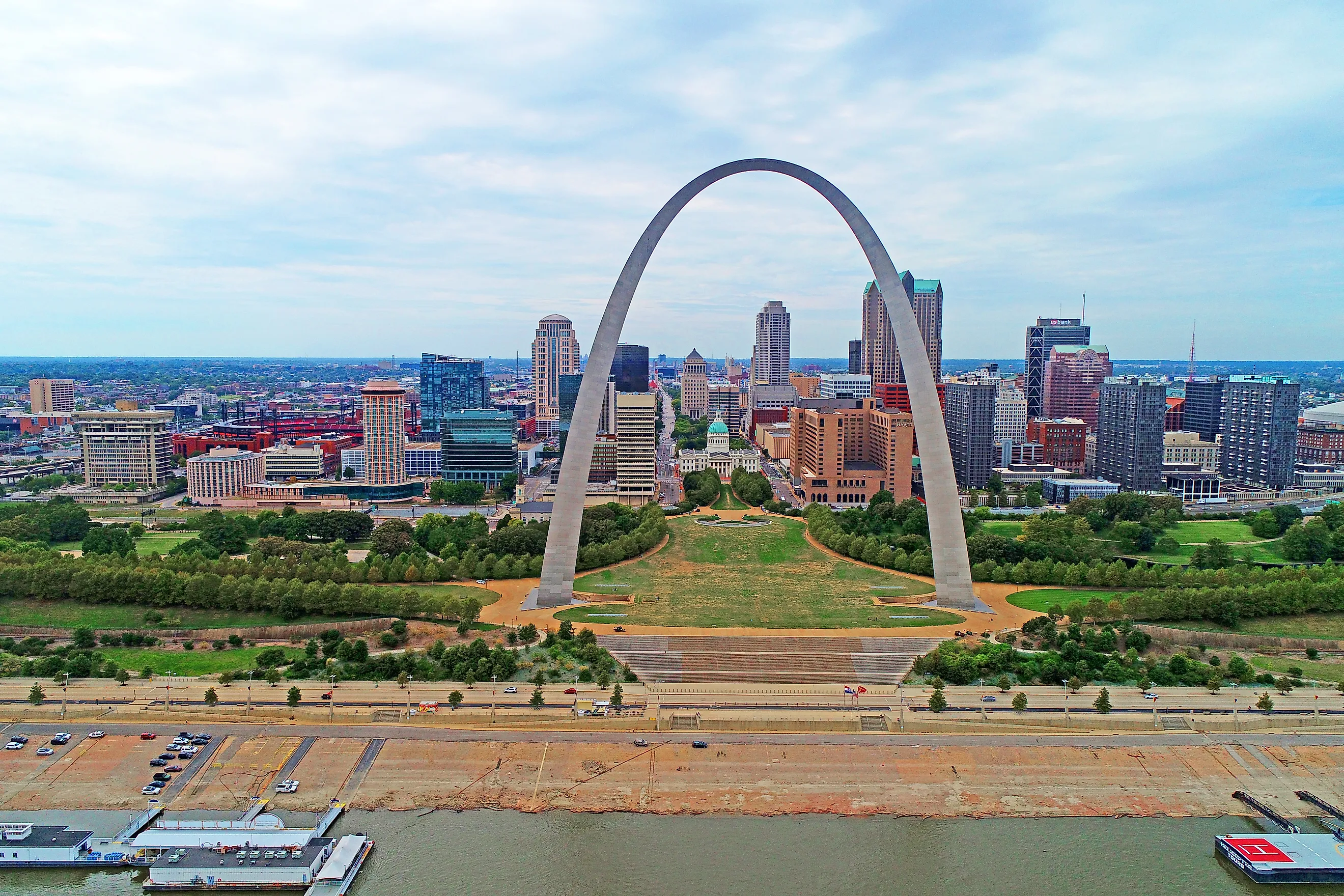
Ninety-one acres does not sound like a national park. It sounds like a golf course. That is the entire footprint of Gateway Arch National Park in St. Louis. The runner-up for smallest is Arkansas' 5,550-acre Hot Springs National Park. It could swallow Gateway Arch sixty times over.
The little park wins on height instead. Above it stands the tallest man-made monument in the country. That 630-foot steel curve packs a full day of things to see into a patch of downtown riverfront.
Why the arch is here

The park exists to mark the Louisiana Purchase, the 1803 deal that doubled the size of the United States. Napoleon needed cash for a coming war, so France sold 828,000 square miles for $15 million, about three or four cents an acre. Thomas Jefferson had only sent James Monroe and Robert Livingston to Paris to buy New Orleans. They came home with a stretch of land that would become fifteen states. St. Louis sat at the front door of the push west that followed, which is why the government chose it in 1935 for a memorial to the whole expansionist era.
The arch itself came later. A nationwide design contest ran across 1947 and 1948, and judges picked Finnish-American architect Eero Saarinen out of 172 entries. His idea was a 630-foot stainless steel arch built to read as a giant doorway to the West. Crews raised the two legs separately from 1963 to 1965, bracing them with rods so they would meet cleanly at the top. The last section dropped into place on October 28, 1965. The site carried the label of national memorial for decades, until it was officially redesignated Gateway Arch National Park on February 22, 2018.
Ride the tram to the top

The signature experience is the trip to the observation deck. You climb inside the arch itself, in a tram of small egg-shaped pods that ratchet up the curve of the leg. The ride takes about four minutes each way. At the top, a row of small windows looks out over the Mississippi on one side and the St. Louis skyline on the other, roughly 630 feet down. Tickets are timed and sell out fast in spring, summer, and around holidays, so book online before you go rather than gamble on same-day openings.
Explore the Museum at the Gateway Arch

Directly under the monument sits the Museum, and it is free to walk through. Six galleries carry the story across more than 200 years. Colonial St. Louis opens with the Native and Creole residents who were here long before the purchase. Thomas Jefferson's Vision follows his campaign to stretch the country west. New Visions covers the settlers and the industrial rise of the 19th-century city, and it holds a shirt worn by Red Cloud, the Lakota leader who beat the U.S. Army in the war that carries his name. Riverfront Era turns to the steamboats. Manifest Destiny takes on the contested belief that the nation was meant to reach the Pacific. Building the Dream closes on the arch and the crews who raised it.
Two indoor experiences fill out the visitor center. "Monument to the Dream" is the Academy Award-nominated documentary on how the arch was built, and it holds up as the best short primer on the engineering before you ride to the top. The newer draw is the Virtual Reality Theater, which drops you into the 1850s St. Louis riverfront through a headset. Both are ticketed, and combo passes bundle them with the tram if you want the full run.
Walk the grounds and the riverfront

The 91 acres are worth time on foot. More than five miles of paved paths thread through gardens, reflecting ponds, and the North Gateway green space that now bridges over I-44 to reconnect the arch with downtown. The Grand Staircase drops from the monument down to the Mississippi levee, where riverboat cruises run in season. The one-hour Riverfront Cruise is the easiest way to get the arch and the skyline in a single frame, and the dock has a cafe if you want to linger by the water.
Visit the Old Courthouse

A short walk west stands the Old Courthouse, built between 1839 and 1862 and now part of the park. The Greek Revival building is where Dred and Harriet Scott first sued for their freedom, in the case that reached the Supreme Court in 1857 and helped push the country toward civil war. Virginia Minor argued here too, for a woman's right to vote. Restored courtrooms and new exhibits on both cases reopened after a multi-year renovation, and admission is free.
Know before you go
A little planning saves the day here. The Museum and grounds cost nothing, while the tram, the movie, and the VR theater each carry a ticket, with a $3 National Park Service fee folded into the tram and documentary. An America the Beautiful pass covers that fee for up to four tickets. Preferred parking is the Stadium East Garage, about a 7-to-10-minute walk from the entrance, and everyone passes through security screening at the visitor center before any ticketed activity. Give yourself a buffer so a slow line does not cost you a timed tram slot.
The smallest park is one of the most complicated
Small does not mean simple here. The arch is an engineering knot, demanding deep foundations and precision steel just to stand. The history underneath it is knottier still. One reading celebrates American nerve and reach across a new continent. Another counts the cost, the tribes displaced and the wildlife erased, the bison chief among them. Gateway Arch earns its place in the park system on neither size nor scenery. It earns it on the weight of the story it holds and the day it gives you above the river.