The Only American Mountain Taller than Kilimanjaro
Two mountains, separated by thousands of miles, and 66 degrees of latitude share a very exclusive designation: both are among the Seven Summits, the highest peaks on each of the world's seven continents. Yet the United States' Denali and Africa's Kilimanjaro could hardly be more different. One is a subarctic giant shaped by colliding tectonic plates and glaciers, while the other is an ancient equatorial volcano rising high above the African savanna. Their climates, geological origins, climbing histories, and cultural significance reveal two very different stories despite their similar heights.
Two Giants, Two Different Worlds

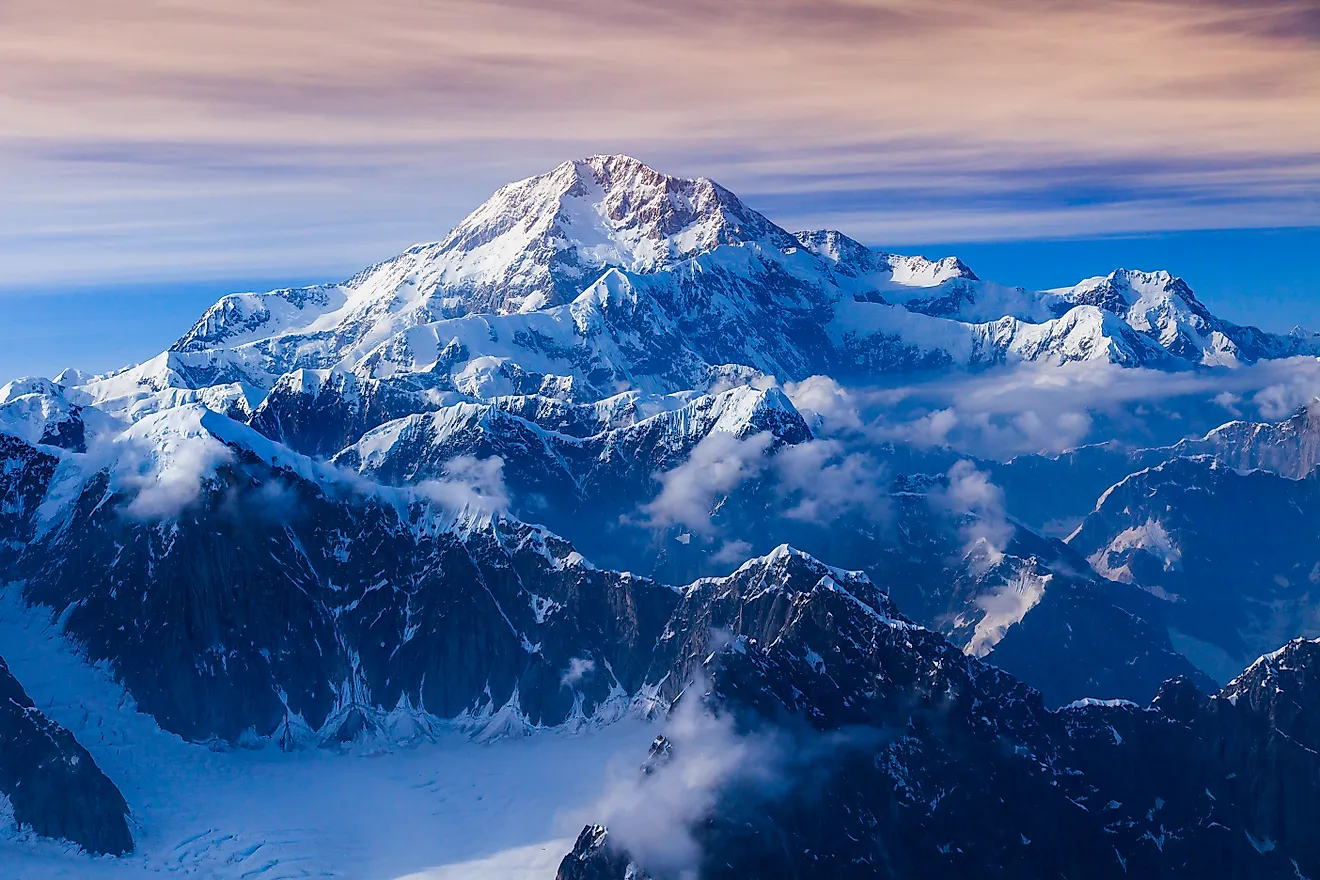
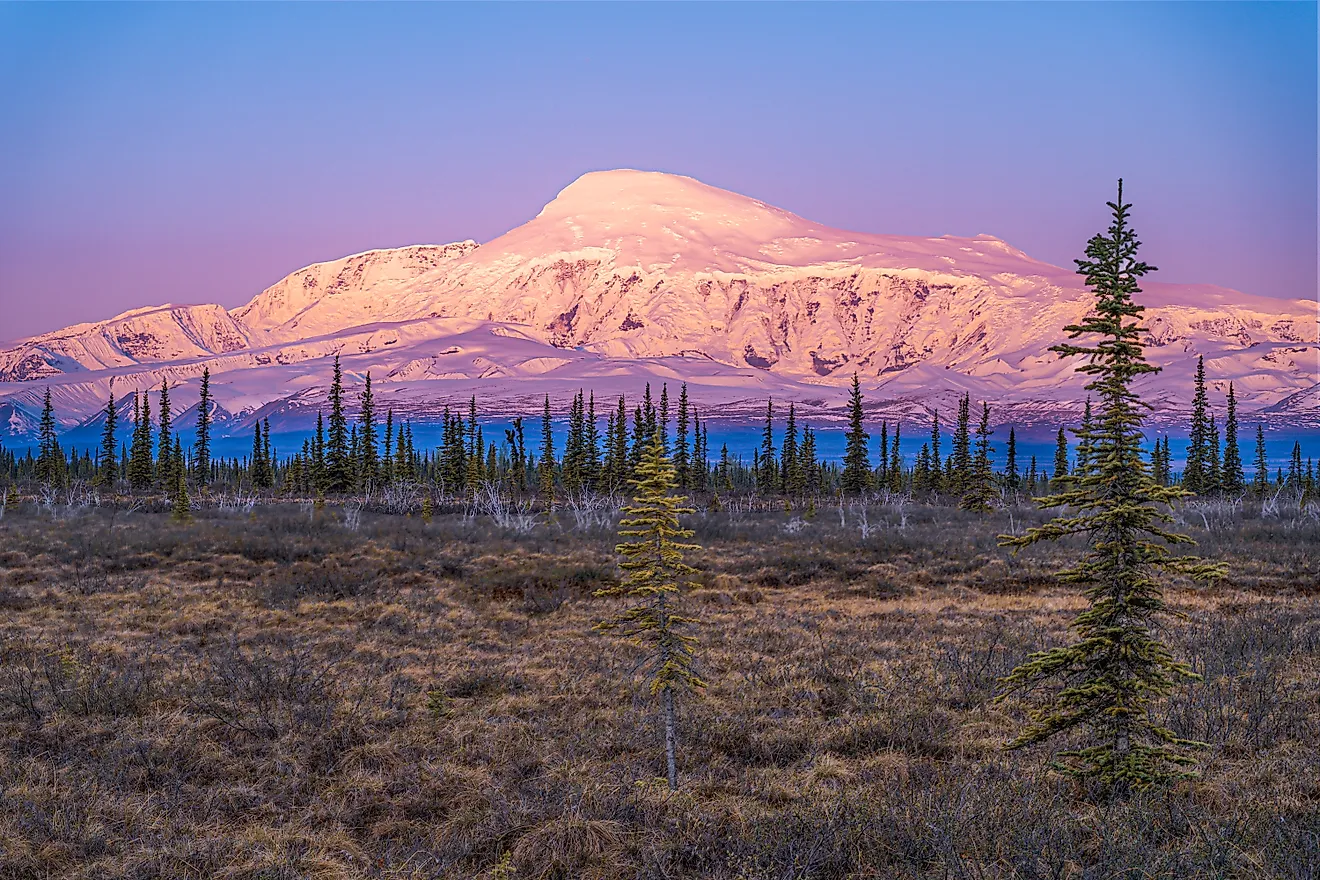
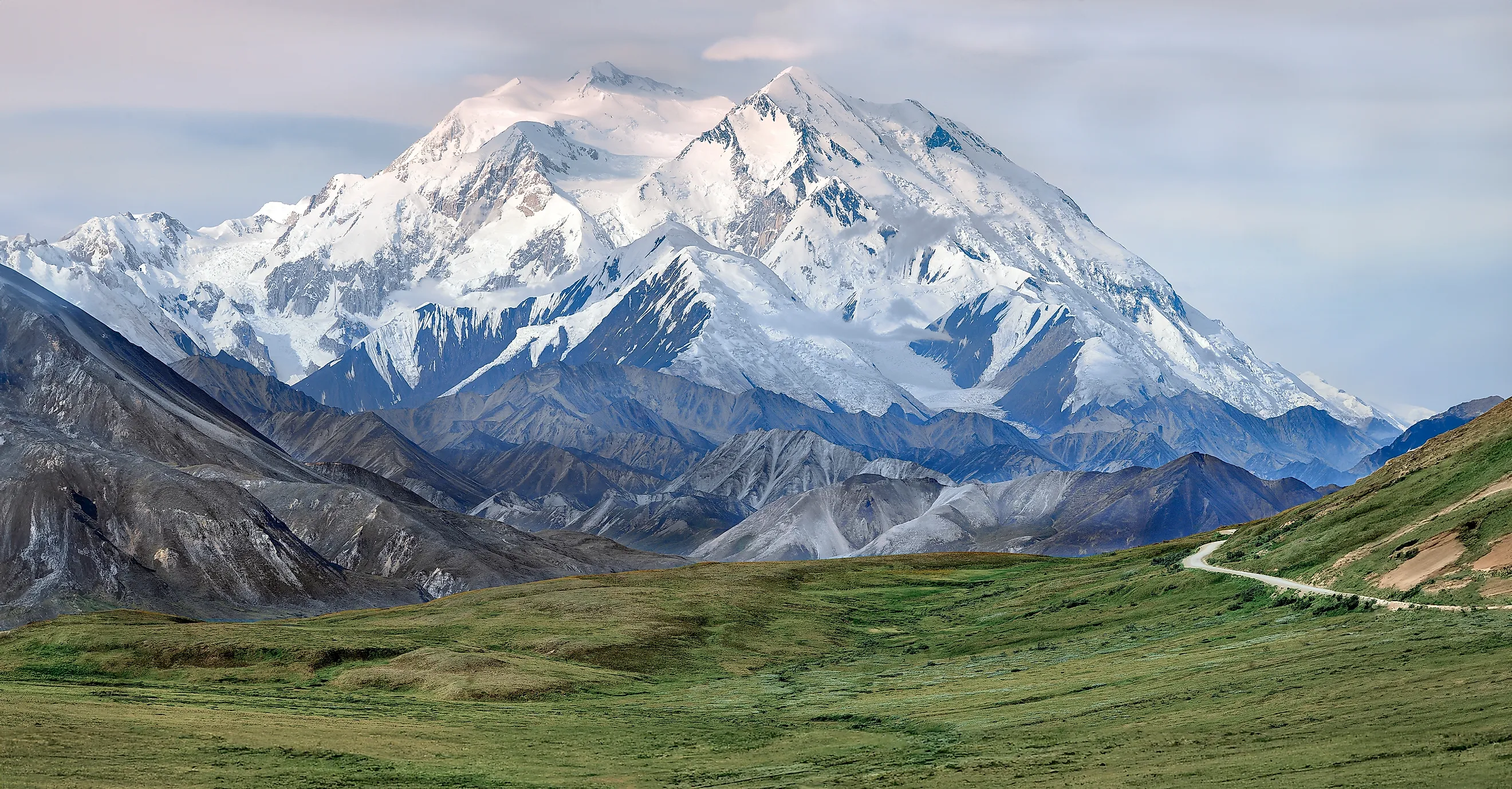
At 20,310 feet (6,190 meters), Denali is the highest mountain in North America and the only mountain in the United States taller than Mount Kilimanjaro. Africa's highest peak reaches 19,341 feet (5,895 meters), leaving Denali ahead by just 969 feet (295 meters). Although their summit heights are relatively close, their geographical settings couldn't be more different.
Denali rises from the Alaska Range, a 600-mile-long mountain system extending across southern Alaska. Its summit dominates a frozen landscape of jagged peaks, deep valleys, and glaciers. Kilimanjaro, meanwhile, stands alone above the East African plains in northeastern Tanzania, near the Kenyan border. It's the world's highest free-standing mountain, rising dramatically from surrounding savanna and foothills without belonging to a larger mountain range.
Their respective latitudes explain much of what follows. Denali lies at 63 degrees north latitude, deep in the subarctic latitude, while Kilimanjaro sits just three degrees south of the equator. These different geographical locations influence everything from weather to vegetation zones encountered by climbers.
Tectonic Uplift Versus Volcanic Fire

The geological differences between Denali and Kilimanjaro are as different as their climates. Denali owes its towering elevation to the collision of tectonic plates deep beneath the Earth's surface. The Pacific Plate and the smaller Yakutat microplate move northward against the North American Plate, generating immense upward forces along the entire Alaska Range.
Denali also contains a vast body of granite that crystallized from magma deep underground about 50 million years ago. Known by geologists as the McKinley pluton, this hard rock forms much of the mountain's central mass. Tectonic uplift along the Denali Fault and surrounding geological structures, combined with erosion by glaciers, helped create the mountain's remarkable relief. From its surrounding terrain, Denali rises more than 18,000 feet to its summit.
Kilimanjaro's formation involved a much different process. Rather than being pushed upward through tectonic compression, the mountain was instead built through successive volcanic eruptions associated with the East African Rift system. Kilimanjaro consists of three overlapping volcanic cones: Shira, Mawenzi, and Kibo.
Shira and Mawenzi are long extinct, while Kibo, the highest and youngest of the three, is considered dormant. Its last major eruption was around 150,000-200,000 years ago, although fumaroles still release gases within its summit crater from time to time. Kilimanjaro's volcanic origins also helped create fertile soils along its lower slopes, supporting agriculture and communities that have lived in the region for centuries.
Arctic Chill Versus Equatorial Climate Zones

Denali's northern latitude and considerable height combine to create some of the harshest climbing conditions in North America. Temperatures routinely plunge dramatically, while powerful winds, sudden storms, and deadly windchill make even a summer expedition dangerous. The mountain's extensive glaciers and permanent snowfields contribute to its intimidating terrain.
Perhaps the most important difference for climbers, its latitude affects atmospheric pressure. At Denali's summit, the combination of elevation and latitude produces lower atmospheric pressure than climbers would encounter at the same elevation near the equator. This reduces the partial pressure of oxygen available for breathing, adding to the physical challenge of climbing the mountain. Oxygen still makes up 21 percent of the atmosphere, but there are fewer oxygen molecules in each breath as atmospheric pressure decreases.
Despite sitting near the equator, Kilimanjaro's 19,341-foot summit is surrounded by ice and snow, though hardly to the extent of Denali. Its elevation creates five distinct ecological zones within a relatively short distance as climbers ascend its slopes. Climbers begin the climb among cultivated hills and tropical vegetation before entering a zone of dense rainforest, where abundant rainfall supports a rich variety of plants and animals.
Higher up, the forest gives way to heathland and moorland, with unusual giant groundsels and lobelias adapted to colder conditions. Above 13,000 feet (4,000 meters), vegetation becomes sparse as the landscape transitions into an alpine desert of ancient volcanic rock and exposed earth. Finally, trekkers reach the icy summit area surrounding Kibo's crater.
The contrast is stark: Denali's environment is dominated by rock, snow, and ice, while a journey up Kilimanjaro offers tropical, temperate, desert, and arctic environments. Its summit ice fields, however, have retreated dramatically over the past century, losing 85 percent of its coverage since 1912. Researchers have identified global warming as the reason, and the ice could disappear as soon as 2050.
Indigenous Climbers Key To First Ascents

Kilimanjaro was first climbed on October 6, 1889, by German geographer Hans Meyer and Austrian mountaineer Ludwig Purtscheller. Their success came after earlier unsuccessful attempts by Meyer, who returned to the mountain better prepared and with more appropriate equipment.
An important member of the climbing group was Yohani Kinyala Lauwo, a young Chagga man from the mountain's foothills who served as a guide. According to Tanzania National Parks, Lauwo was only 18 years old when he led the expedition to the summit. His contribution is an important part of Kilimanjaro's climbing history, although European accounts emphasize Meyer's and Purtscheller's success.
Denali proved to be more of a challenge to climbers. After numerous unsuccessful attempts over a number of years, four climbers finally reached the summit on June 7, 1913. Their names were Hudson Stuck, Harry Karstens, Robert Tatum, and Walter Harper.
Harper, a young Koyukon-Athabascan man, was the first person ever to step on Denali's summit. While Harper's achievement was largely overshadowed by public history for decades because Stuck and Karstens organized and led the climb, both Stuck and Karstens openly credited Harper's skills and endurance for the team's success. Karstens even arranged their rope order near the summit so that the 20-year-old Harper could be the first to step on the summit. Stuck named the nearby Harper Glacier in his honor. Tragically, Harper died on the Princess Sophia when it sank in 1918, 54 miles south of Skagway, Alaska. He was just 25.
Mountains At The Heart Of Local Cultures

For the Koyukon-Athabasca people, Denali is more than just a geographical landmark. Its name comes from the Koyukon word deenaalee, meaning "the tall one." Other indigenous groups in Alaska have their own traditional names for the mountain, supporting its cultural importance to people in the region.
The mountain was originally given the name Mount McKinley in 1896 by a gold prospector, in honor of William McKinley, who later became US president. Its traditional name of Denali was restored in 2015, although the federal naming of the mountain has remained politically contested with President Donald Trump giving an executive order in January, 2025 to revert back to the name Mount McKinley.
Kilimanjaro is similarly important to the communities surrounding its slopes. The Chagga people have cultivated the mountain's fertile lower slopes and foothills for generations, developing an agricultural system that makes use of its volcanic soils and abundant rainfall. Coffee, bananas, and other crops grow in the lower elevations while the upper portions provide water and resources.
Local traditions and stories have also connected Kilimanjaro with spiritual beliefs and the natural forces associated with its impressive summit. Like Denali, its presence is woven into the region's cultural identity.
Technical Mountaineering Versus High-Altitude Trekking

Because of their vastly different environments and formations, Denali and Kilimanjaro offer two very distinct climbing experiences. Denali demands technical mountaineering skills, knowledge of glacier travel, crevasse awareness, and advanced self-sufficiency skills. Most climbers attempt the West Buttress route, usually spending two to three weeks on the mountain. The logistics of transporting required amounts of food, fuel, and equipment are considerable.
In contrast, Kilimanjaro can be climbed without ropes, crampons, or other technical mountaineering equipment. Established trekking routes allow hikers to ascend the mountain with licensed guides and supporting crews. However, it's far from an easy stroll. Altitude sickness is a real concern, and allowing for sufficient acclimatization is often the difference between success and failure.
Each year, Denali typically receives about 1,000 registered climbers, with weather determining how many summit. In 2026, the National Park Service recorded 976 registered climbers and 582 successful summits. Kilimanjaro attracts thousands of trekkers each year, though numbers for trekkers and successful summits aren't recorded.
Two Different Mountains, One Exclusive Club

Despite their vastly different geological formations, environments, and climbing experiences, Denali and Kilimanjaro share a place among the Seven Summits. That might be the only trait they have in common. Their similar elevations conceal two extraordinarily different geological histories and very different mountain environments. As the US's only mountain taller than Kilimanjaro, Denali could scarcely be more different.