The Appalachian Peaks With The Most Copperheads
If you've ever hiked the Appalachian Mountains, you may have walked right past a copperhead snake without noticing it. They are the most commonly encountered venomous snakes in the eastern United States, though their venom is the mildest of the region's pit vipers. Their banded bodies blend into fallen leaves, and they wait motionless for prey to come within reach. Three Appalachian ranges stand out as copperhead country, each for a different reason. In one, a roadside survey turned up hundreds of the snakes. Another trades thick forest for cracked, sun-warmed rock. And in all three, the snakes rarely climb as high as the hikers do.
What Are Copperheads?

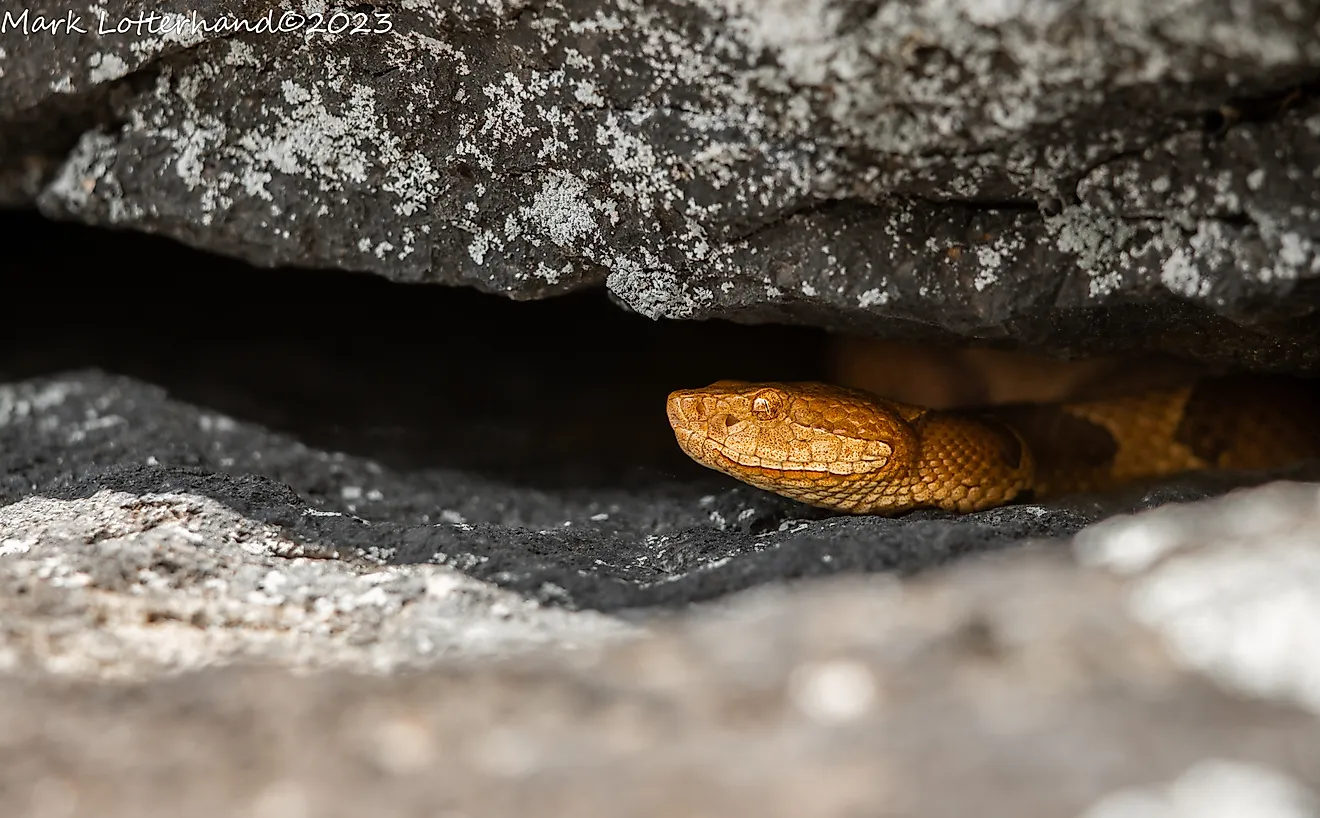
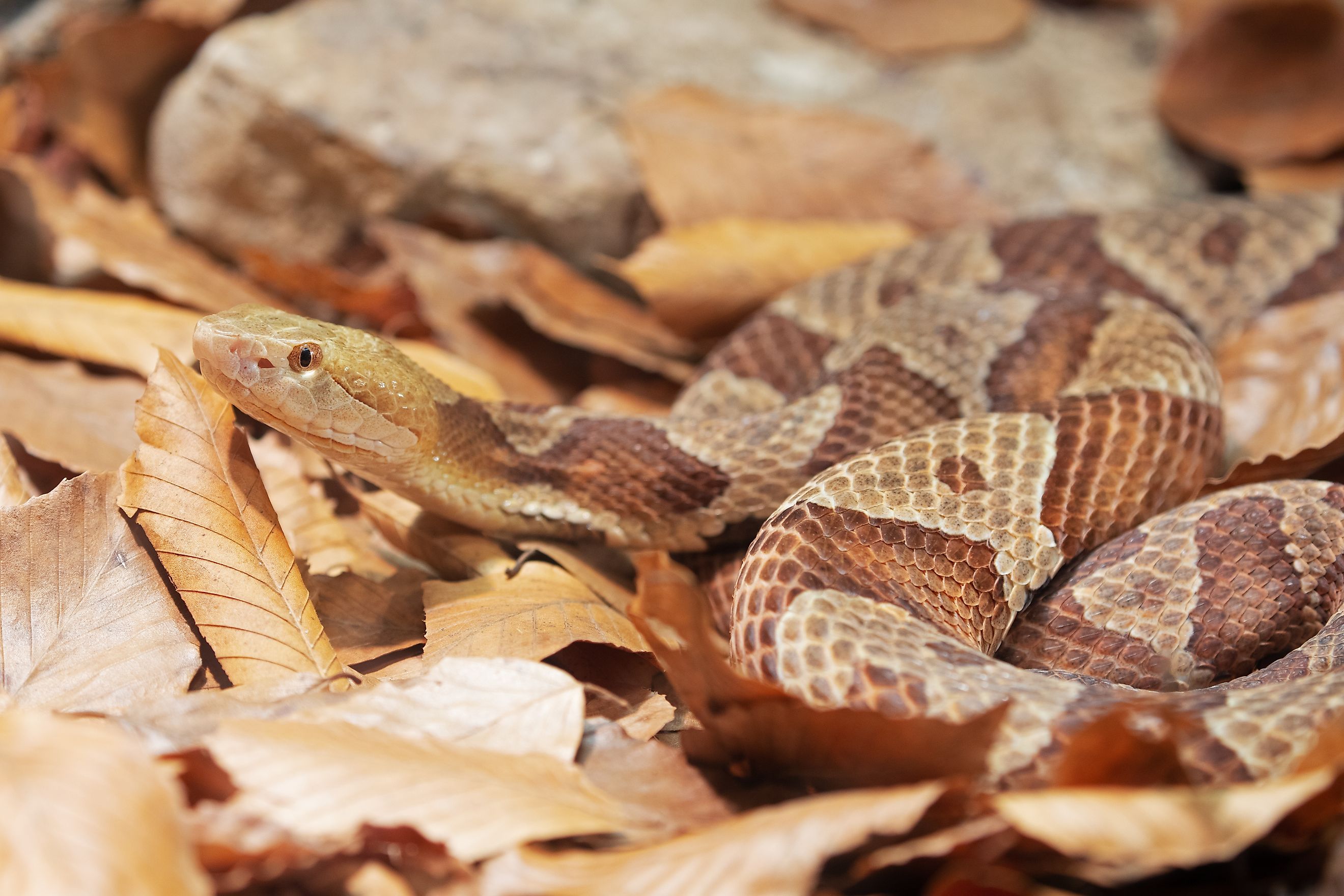
Copperheads, also known as Agkistrodon contortrix, are snakes commonly found in the Appalachian region and the Eastern US; however, they are also found in southern regions and in Mexico. Adult snakes have copper-colored heads with dark, hourglass-shaped markings on their bodies to help them camouflage in the forest. Unlike snakes that typically pursue specific prey, copperheads are venomous pit vipers with heat-sensing organs that help them detect prey, and they ambush motionless until an unsuspecting victim comes within reach. They blend in so well that it's hard to distinguish between leaves on the ground and their bodies.
Blue Ridge Mountains

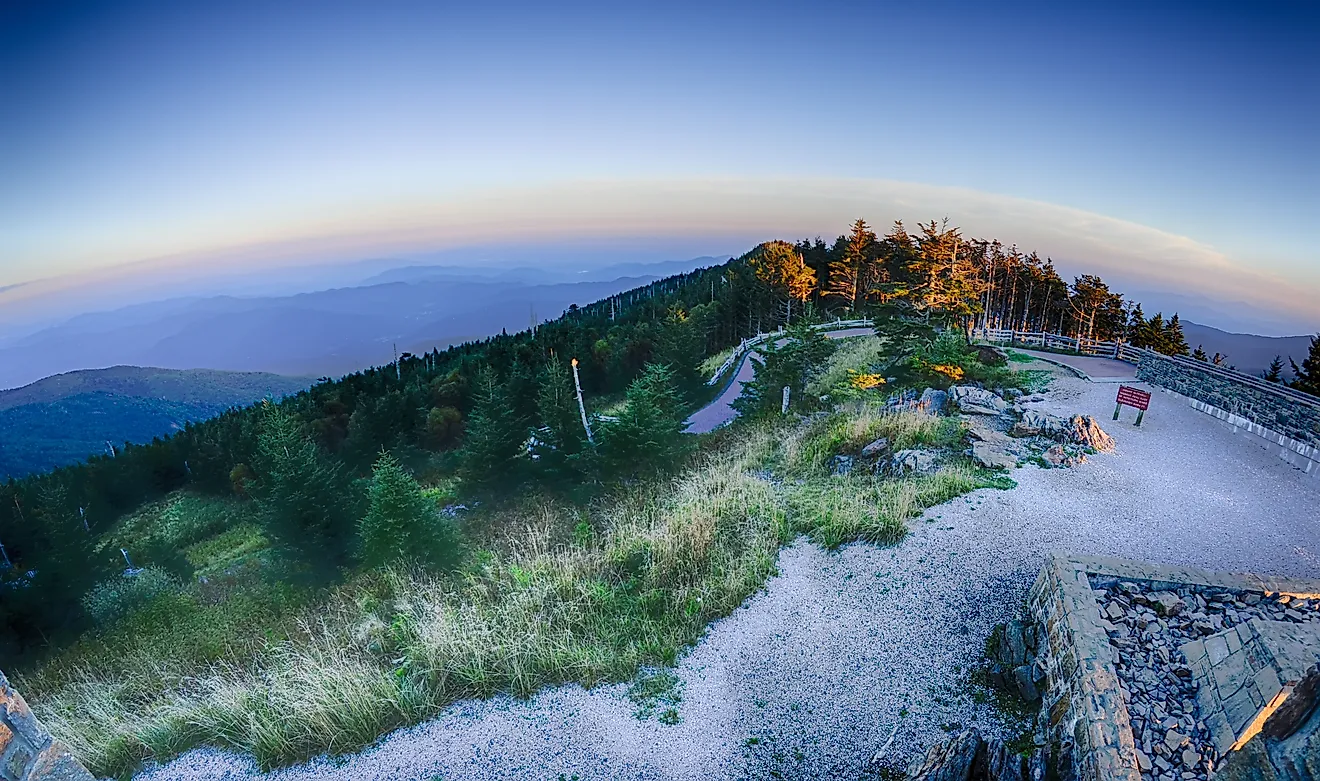
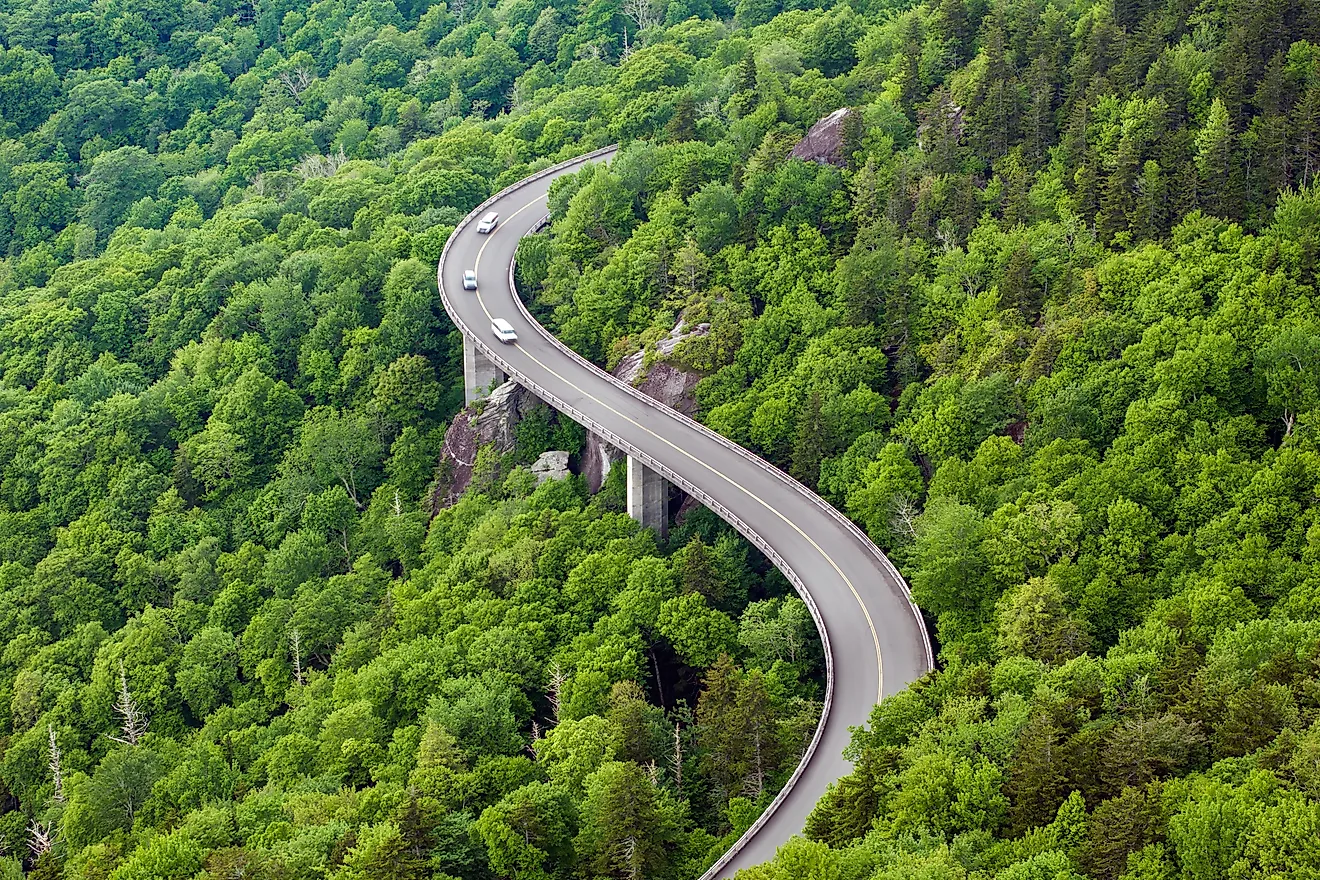
The Blue Ridge Mountains form the eastern front of the Appalachians and climb as high as 6,684 feet at Mount Mitchell. These Appalachian mountains run through Virginia, North Carolina, and Georgia, and two of the region's best-known scenic roads follow their crest. Skyline Drive winds 105 miles through Shenandoah National Park, and the Blue Ridge Parkway picks up where it ends, continuing 469 miles to Great Smoky Mountains National Park. Along the way, the roads cross wooded slopes and farmed valleys before reaching the high, rugged peaks of western North Carolina.

The range's lower wooded slopes offer copperheads better habitat than its high summits. A roadside survey published in 1976 recorded 243 copperheads among 545 snakes along the Blue Ridge Parkway and Skyline Drive over three seasons, more than any other species in the count. It's not surprising, because the low, wooded slopes of the Blue Ridge are stocked with mice, birds, lizards, and frogs, providing copperheads with a reliable, consistent food source. In addition to food, there are dense forests, loose branches, and large rocks to bury themselves in, as well as sun-drenched areas to warm up in. When winter arrives, copperheads in these mountains often gather in rocky dens, sometimes alongside timber rattlesnakes.
Great Smoky Mountains

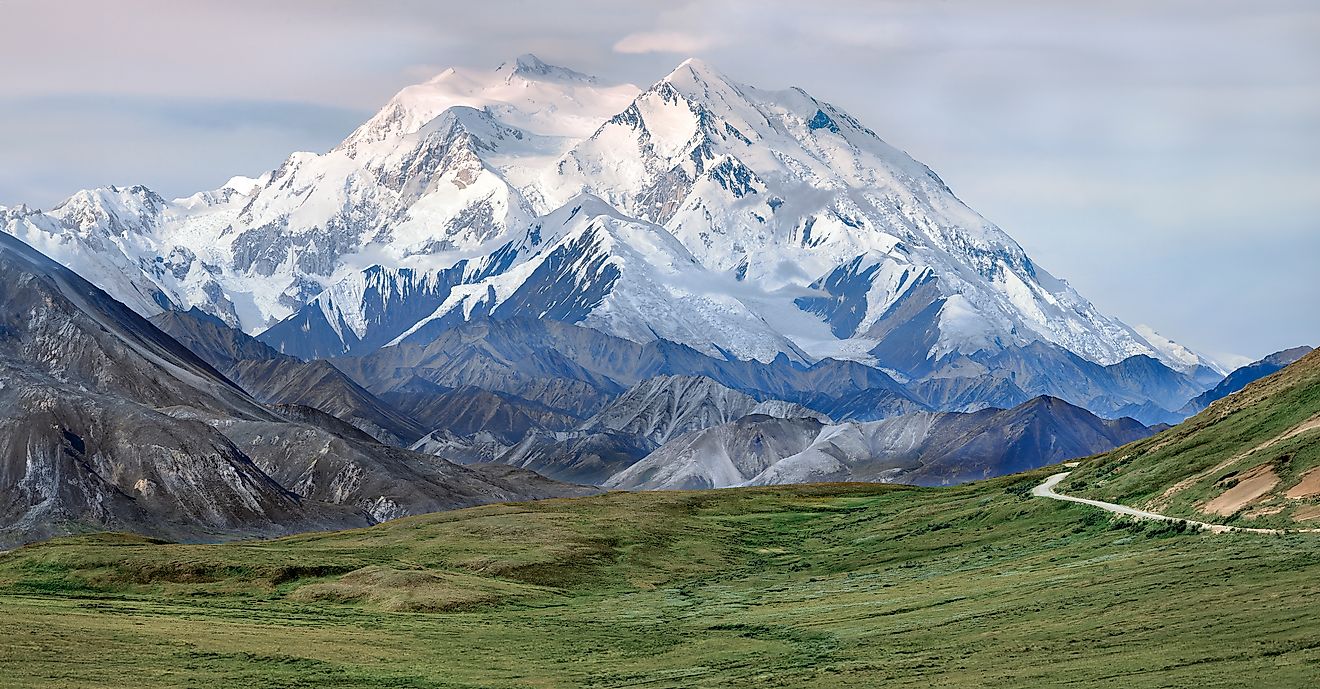
The Great Smoky Mountains, which reach 6,643 feet at Kuwohi, span Tennessee and North Carolina, with dense forests, streams, and deep valleys. Most of the range is protected within Great Smoky Mountains National Park, which spans more than 520,000 acres. It is the most visited national park in the country, drawing more than 11.5 million visitors in 2025. Cades Cove, on the Tennessee side, is the park's largest valley.

The copperhead is one of only two venomous species among the park's 23 snakes, alongside the timber rattlesnake. Like their Blue Ridge neighbors, the snakes tend to favor the middle and lower elevations, where it's warmer and food sources are plentiful. In the hot summer months, copperheads are more active at night, hunting prey and resting in cool shelter during the day. According to the National Park Service, they prefer to stay hidden from people among the leaves in forests and valleys rather than be seen. However, in the Cades Cove area, many visitors have crossed paths with them, even though Park officials note they are actually shy and that human bites from them are rare.
Ridge-and-Valley Appalachians

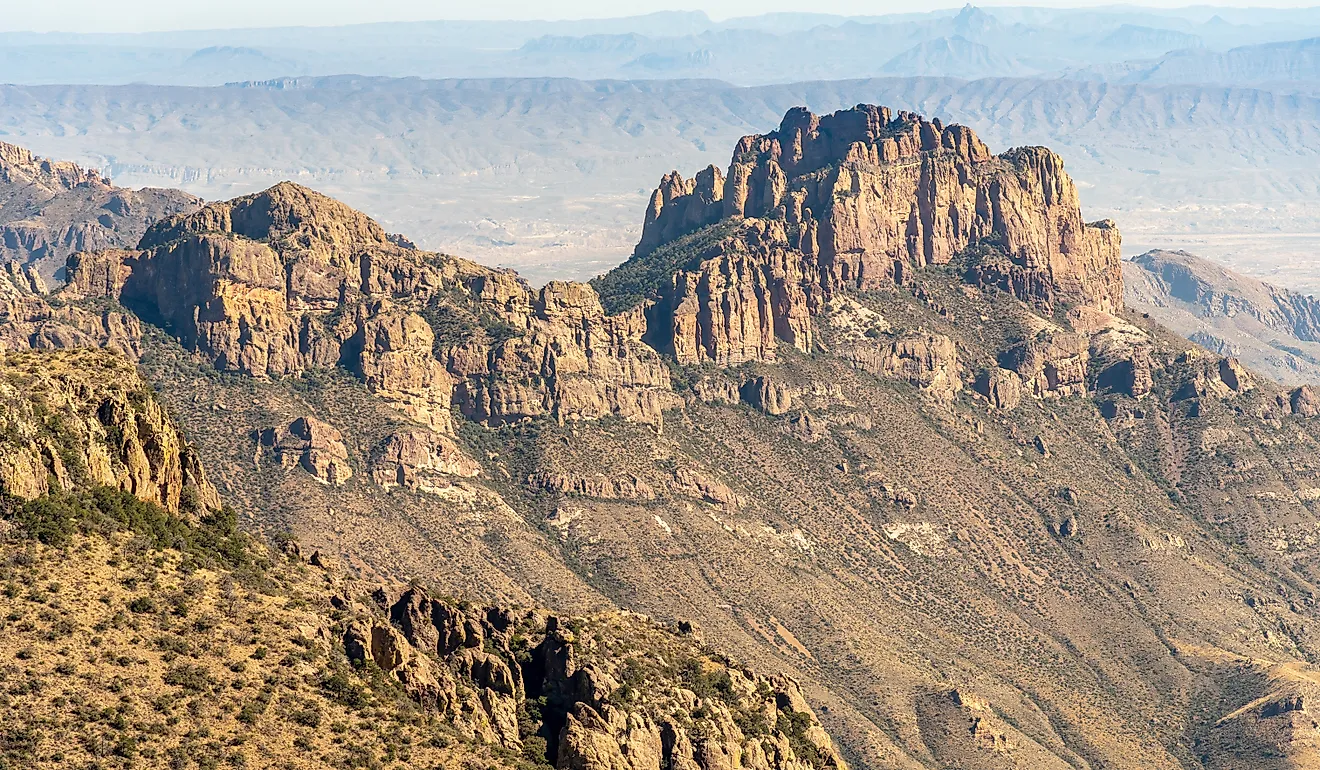
Parts of Pennsylvania, Virginia, Tennessee, and West Virginia are home to the Ridge-and-Valley Appalachians, which feature long mountain ridges separated by deep valleys. They differ from the denser forest areas in other parts of Appalachia because they have more exposed rock with sharp edges and cracked stones, providing great hiding spots for venomous copperheads.

During the warmer months, the snakes like to emerge onto the rock formations to regulate their bodies before returning to their cooler hiding areas. In the winter, they enter a period of reduced activity called brumation, during which they shelter in specific locations rather than being as active as they are in the summer. A steady food supply is also essential for their long stay, with a variety of rodents, frogs, small birds, and insects for them to choose from. These venomous snakes are also considered beneficial to the ecosystem, as they prey on mice and other small mammals, helping regulate rodent populations.
Why Lower Elevations?

One of the biggest misconceptions about copperhead snakes in the Appalachian regions is that they roam at all elevations. In fact, they are found mostly at low and middle elevations, where warmer temperatures linger, and more prey makes survival easier. The higher elevations mean colder, harsher weather and fewer small animals to hunt. The rocky slopes and deep valleys at lower elevations also provide shelter in small crevices where copperheads can spend all winter. As spring arrives and warmer weather returns, the snakes come out to bask in the sunlight on the rocks.
The Hidden Residents
The highest Appalachian mountain ranges attract hikers who seek long views, while the lower mountain ranges attract venomous copperhead snakes. The Blue Ridge Mountains, Great Smoky Mountains, and Ridge-and-Valley Appalachians show that geography influences how a specific species interacts in the wild and survives by seeking shelter, warmth, and food. With their ability to camouflage in mountains that draw millions of visitors yearly, they are successful reptiles, waiting for prey and warmer days ahead in the Appalachians.