What Happens To The Salinas Valley If Its Groundwater Turns Salty
The Pacific Ocean is creeping under one of America's biggest farm valleys. Seawater from Monterey Bay has been seeping into the groundwater beneath California's Salinas Valley since the 1940s. Today, the salt sits several miles inland, under fields that grow much of the lettuce sold in the country.
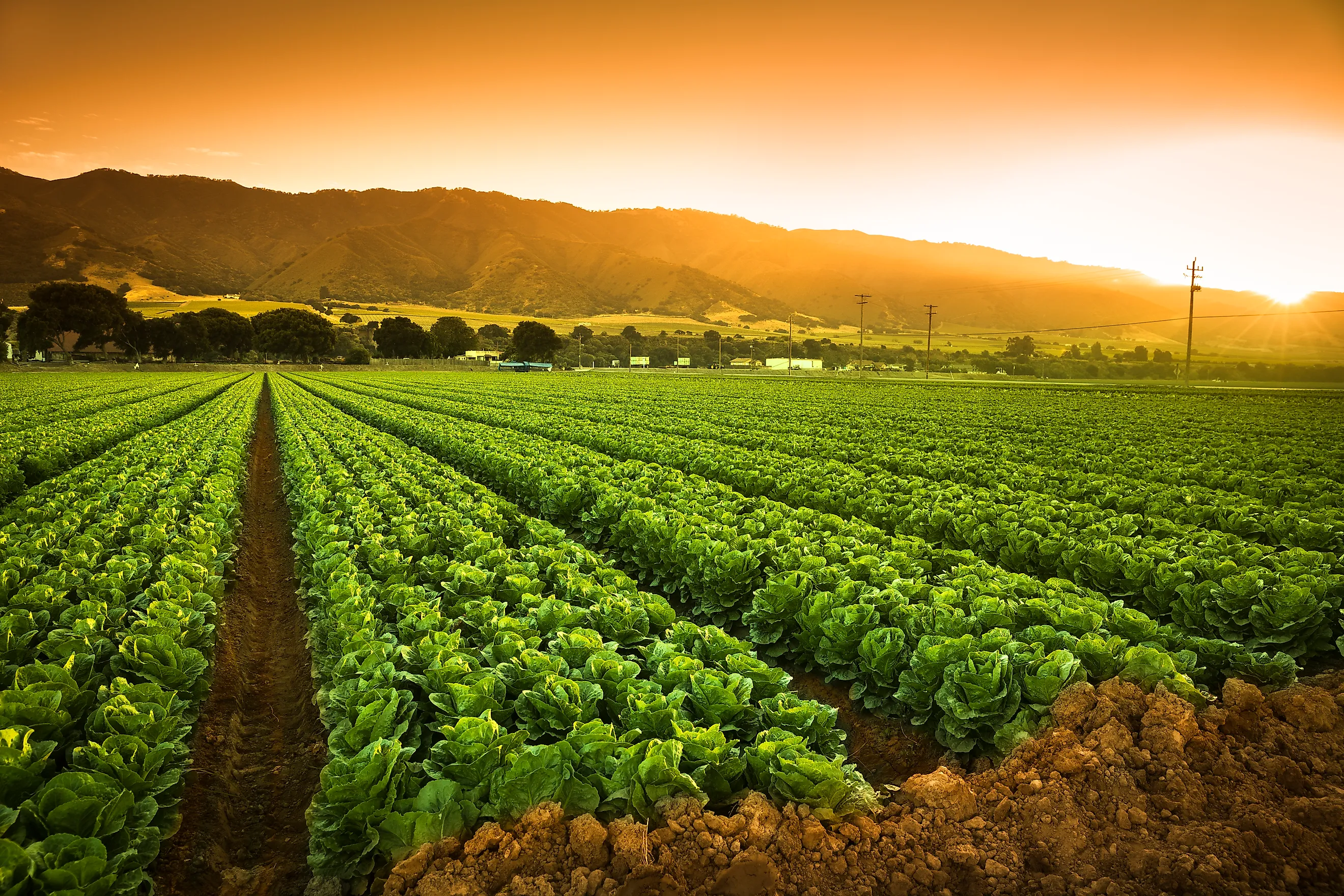
That groundwater is nearly all the valley has. About 95 percent of the water used in Monterey County is pumped from underground, and the county grows more lettuce than any other in the nation. Lettuce does not handle salt well. The same underground water also flows from kitchen taps in the valley's towns.
The valley has already lost wells to the salt, and the salty zone is still spreading. Each step it takes inland changes something for the farms and towns above it.
Coastal Farm Wells Are the First to Go

Near the coast, growers whose wells turned too saline switched in 1998 to the Castroville Seawater Intrusion Project, a county system that delivers recycled water and river water to their fields. The system still keeps wells of its own for when those sources fall short. Salinity has cut those backup wells from 22 to nine.
Monterey County counts groundwater as intruded once it carries 500 milligrams of chloride per liter, twice the federal secondary drinking-water standard of 250. By that measure, the salt is spreading fastest in the 400-foot aquifer, named like the 180-foot aquifer above it for its rough depth. From 2015 to 2019, the 400-foot layer added 1,545 acres of intruded ground, more than 20 times the 68 acres added in the 180-foot layer. Many wells in the shallower layer have already been taken offline because of seawater intrusion.
Lettuce and Strawberry Harvests Would Shrink

Strawberries and lettuce, the two crops that earn Monterey County the most money, both handle salt poorly. Strawberries, worth $1.069 billion in 2025, can show injury and yield losses at a soil salinity of 1 decisiemens per meter under University of California guidelines, and chloride harms them even below that level. Lettuce starts losing yield at 1.3, and each unit above that costs about 13 percent of the harvest.
Lettuce from these fields reaches much of the country. All lettuce varieties together were worth $1.58 billion in Monterey County in 2025, a third of its crop value, and the Monterey County Farm Bureau credits the Salinas Valley with about 61 percent of the nation's leafy lettuce and 57 percent of its head lettuce, based on 2023 figures.
Artichokes hold up far better. Their yields stay steady up to a soil salinity of 6.1, and Castroville, long viewed locally as ground zero for seawater intrusion, is the town the USDA calls the nation's artichoke capital. Monterey County grows about 75 percent of California's fresh artichokes, which make up 97 percent of the country's supply.
Farms Would Have to Water Crops With Treated Sewage

Treated wastewater has irrigated farm fields around Castroville since 1998. Purple pipes carry recycled water from Monterey One Water's regional plant in Marina to about 12,000 acres of farmland, an average of 12,300 acre-feet a year. Its use on food was tested first: a study at Castroville that ran from 1976 to 1987 grew artichokes, broccoli, cauliflower, lettuce, and celery with recycled water and found filtered, treated wastewater acceptable for spray-irrigating crops eaten raw.
In the mid-2010s, recycled water met about two-thirds of the growers' needs, so the system also pulls Salinas River water from a rubber dam near Marina that began operating in April 2010. Releases from Nacimiento and San Antonio reservoirs, far upstream, keep water moving down the river to that diversion. Chris Bunn of the Salinas Basin Water Alliance says the river permit allows 135,000 acre-feet to be diverted but not stored, so the water has to be used within 30 days.
Towns Would Lose Their Drinking-Water Wells, Starting With Castroville

In March 2021, Castroville's water district shut down one of its three 400-foot wells because the water had become too salty. The Castroville Community Services District serves more than 7,000 customers through 2,145 connections, all from wells. By December 2022, its general manager said seawater intrusion was within 1,800 feet of all of its operating wells and estimated that the two remaining 400-foot wells could be forced out of service within three to five years.
As of its 2025 water quality report, the district was still drawing on 400-foot wells, with salt water intrusion listed as a concern in its supply. A connection to a neighboring supplier has been proposed. In 2022, the Marina Coast Water District board approved $50,000 to design a pipeline to Castroville's system, and its general manager put the cost of building it at $5 million to $7 million.
Farther inland, Espinosa Lake sits between Castroville and Salinas in an area at risk of seawater intrusion into the 400-foot aquifer. Groundwater levels there fell 20 to 25 feet from 2021 to 2022. Salinas, the county seat, depends on the same groundwater basin. California Water Service's Salinas District has no other source, pumping from 55 wells, partly in the 180/400-Foot Aquifer Subbasin, for 127,365 people.
The Valley Would Fall Back on Water Thousands of Years Old

Castroville's deep well, about 900 feet down, brings up water believed to be several thousand years old, and it comes out of the ground at 99 degrees. It taps the Deep Aquifers, which lie below the 400-foot aquifer and a layer of clay, starting roughly 500 feet down. Farms and water suppliers turned to these layers as salt spoiled the shallower water, and pumping from them rose from 2,151 acre-feet in 1999 to 10,347 acre-feet in 2019. The Marina Coast Water District drew about half of its 2017 supply from them. A December 2025 state environmental filing describes a grower's plan to replace shallow 180/400-foot wells with two new wells about 1,710 feet deep, screened in the Deep Aquifers.
A 2024 study of the Deep Aquifers found no sign of recharge from surface water since at least 1953 in the areas it sampled and warned that seawater intrusion and subsidence "pose severe economic risk" if falling water levels are not reversed. By 2020, Deep Aquifer levels had been dropping since about 2014 and sat below those in the 400-foot aquifer above them. Seawater has not been detected in the Deep Aquifers so far. In a 2002 report, though, the US Geological Survey found water levels below sea level in a deep monitoring well at Marina and in the local water district's deep supply wells, which means the potential for intrusion exists.
Fighting the Salt Would Cost More Than $1 Billion

On August 13, 2026, the board of the Salinas Valley Basin Groundwater Sustainability Agency voted 9 to 2 for a package of projects with an estimated capital cost of more than $1 billion and $74 million a year to run. According to Monterey County Weekly's report on the vote, the package does not meet the minimum threshold for slowing seawater intrusion, though it comes close.
It includes a small version of a coastal barrier. Wells near the shore would pump out salty groundwater and treat it with reverse osmosis, sending part of the water to Salinas and injecting part back underground. The package also adds Salinas River recharge in the Castroville and Eastside areas, optimizes the existing recycled-water system around Castroville, and calls for a 10 percent cutback in pumping.
The vote picked a preferred pathway. That June, a Monterey County civil grand jury had found that no basin-scale seawater intrusion project had reached approval, long-term funding, permitting, or construction. Before the vote, Chris Bunn called the question of whether intrusion is a valley-wide problem or one for the northern valley to solve "the biggest bone of contention."
The State Could Step In and Cut Farm Pumping

California classifies the 180/400-Foot Aquifer Subbasin, where the intrusion is concentrated, as critically overdrafted, and the Sustainable Groundwater Management Act gives it until 2040 to reach sustainability. If local plans fall short, the State Water Resources Control Board can place the basin on probation and impose pumping restrictions, which could mean fallowed farmland. In April 2024, the board put the Tulare Lake Subbasin, mostly in Kings County, on probation, the first basin in California to get the designation, which required pumpers there to measure, report, and pay fees on their pumping.
In the Salinas Valley, agriculture accounts for about 90 percent of groundwater extractions, on nearly 200,000 acres under cultivation. If pumping restrictions are imposed, losses could reach $1.3 billion to $1.9 billion a year, according to estimates reported by Monterey County Now. Farming directly supported 56,365 jobs in Monterey County in 2023, more than one in five jobs in the county.
For nearly 80 years, the Salinas Valley has handled the salt by moving away from it, onto recycled wastewater at the coast and into deeper layers inland. The front has kept coming anyway. Saline groundwater now sits several miles inland in the 180-foot and 400-foot aquifers, and the 400-foot layer, where it has spread fastest, is the one Castroville still pumps for drinking water.
The August 2026 vote put a price of more than $1 billion on a package meant to slow that advance, and state law sets the deadline at 2040. Until something is built, the valley's fallback is the Deep Aquifers, where tests found no surface water arriving since at least 1953 in the areas sampled. Some of the paths downward are already in the ground. Monterey County's program to protect drinking water in the lower valley calls for destroying at least 100 abandoned or inactive wells, which can let seawater-contaminated groundwater migrate down to drinking-water supply wells.