How Long It Takes To Drive The Entire Blue Ridge Parkway
Four hundred and sixty-nine miles at a 45 mile per hour speed limit works out at just over ten hours of pure driving. Almost nobody does it that way, and the people who have tried generally report it taking twelve to fifteen hours once traffic, tunnels and the simple inability to pass anybody are factored in. The honest answer is three to seven days, and the reason is built into the road. It was designed in 1935 to be driven slowly.
The Arithmetic Says Ten Hours

Start with the figure the road itself produces.
The Parkway runs 469 miles from Milepost 0 at Rockfish Gap, Virginia to Milepost 469 at Cherokee, North Carolina. At a steady 45 miles per hour that is 10 hours and 25 minutes.
Published estimates for the uninterrupted drive cluster between 10 and 13 hours. Nobody disputes the sum. They dispute whether it is achievable.
Forty-Five Is The Maximum, Not The Average

The speed limit is the single factor that governs everything else.
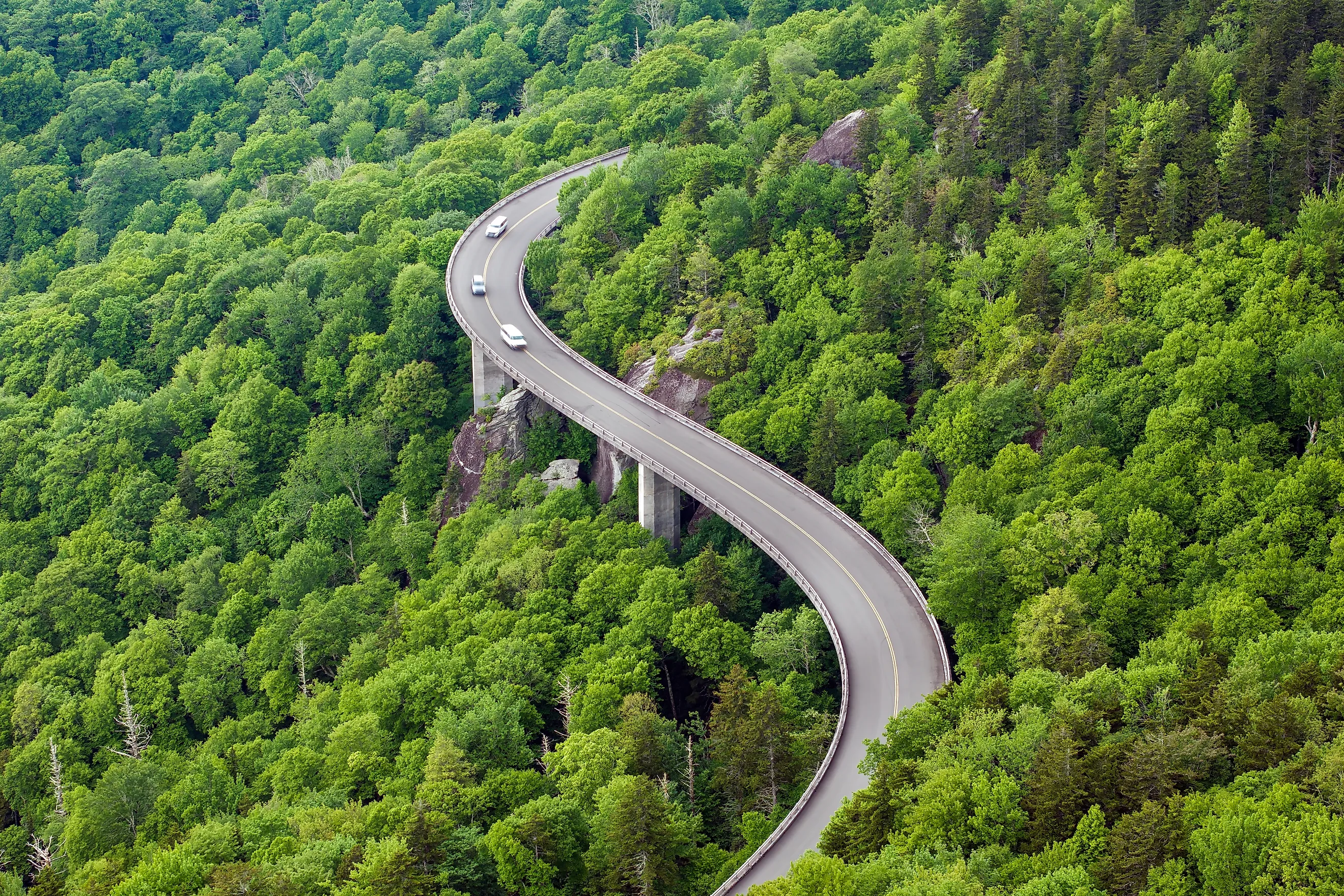
Forty-five is the posted maximum for the whole route, and it drops to 25 or 35 in sections with tighter curves. There are single-lane tunnels, wildlife crossings, and traffic constantly pulling in and out of overlooks.
You cannot make up time on this road. Several guides say so in almost identical words, because it is the defining practical fact about driving it.
Real-World Times Run Longer

The gap between the theoretical figure and reported experience is substantial.
Many travelers report the drive taking closer to 15 hours, and slow traffic alone can add up to three hours if the timing goes badly. AAA's routing for the North Carolina section alone puts 303.8 miles at 8 hours 52 minutes.
That works out at about 34 miles per hour, well under the posted limit, which is a reasonable planning figure.
Budget Three To Four Hours Per Hundred Miles

The most useful rule of thumb circulating among guides is a per-distance one rather than a total.
At 45 miles per hour with overlook stops, 100 miles takes three to four hours. A 170-mile day is therefore a legitimate six to seven hours behind the wheel.
Apply that across 469 miles and you get 14 to 19 hours of driving, which is why nobody sensible attempts it in one.
Three Days Is The Realistic Minimum

The guidance converges on a range once you stop measuring in hours.
Most sources put the full route at a minimum of three days of driving, with four to seven recommended to take in the overlooks, short hikes and gateway towns. Even a two-day attempt means seven to eight hours on the road each day.
Five days allows comfortable overnights in Roanoke, Blowing Rock and Asheville. Seven is the unhurried version.
Half The Route Is A Sensible Trip

Splitting it is the most common solution for people without a week.
Two or three days covers either the northern section down to Blowing Rock or the southern section from Blowing Rock to the Smokies. A single day handles a highlight stretch such as Asheville to Cherokee.
Cherokee to Asheville is 100.2 miles and about 3 hours 10 minutes by AAA's reckoning. Asheville to Blowing Rock is 117.4 miles and 3 hours 28 minutes.
It Connects Two National Parks

The route exists to link two places rather than to get anywhere itself.
Construction began in 1935 to connect Shenandoah National Park with Great Smoky Mountains National Park, and the road was not finally completed until 1983. The northern end picks up where Skyline Drive finishes.
Continuing into Shenandoah from the northern terminus adds about an hour and fifty minutes.
Timing Costs More In Fall

The season you choose changes the arithmetic as much as the speed limit does.
Fall color peaks from mid to late October in western North Carolina, which is also when the road carries the most traffic. The Parkway has been the most visited road of its kind in the National Park System since 1946.
Add the leaf-season queues at popular overlooks and the practical day length shortens further.
Closures Change The Route

One factor no estimate can account for is whether the whole road is open.
Sections of the Parkway close in winter and after storm damage, which forces detours onto lower roads and adds unpredictable time. Checking current closures before setting out is standard advice.
A closed section does not just slow you down. It removes a stretch of the route entirely.
The Short Answer

Driving the entire 469-mile Blue Ridge Parkway takes about 10 to 13 hours without stopping, and closer to 15 in practice. The realistic planning figure is three to four hours per 100 miles, which makes the full route a minimum of three days and comfortably a five to seven day trip.
The 45 mile per hour limit is not an obstacle to the journey. It is the journey. A road built over 48 years to connect two national parks through the southern Appalachians was never meant to be a way of getting from one to the other quickly.