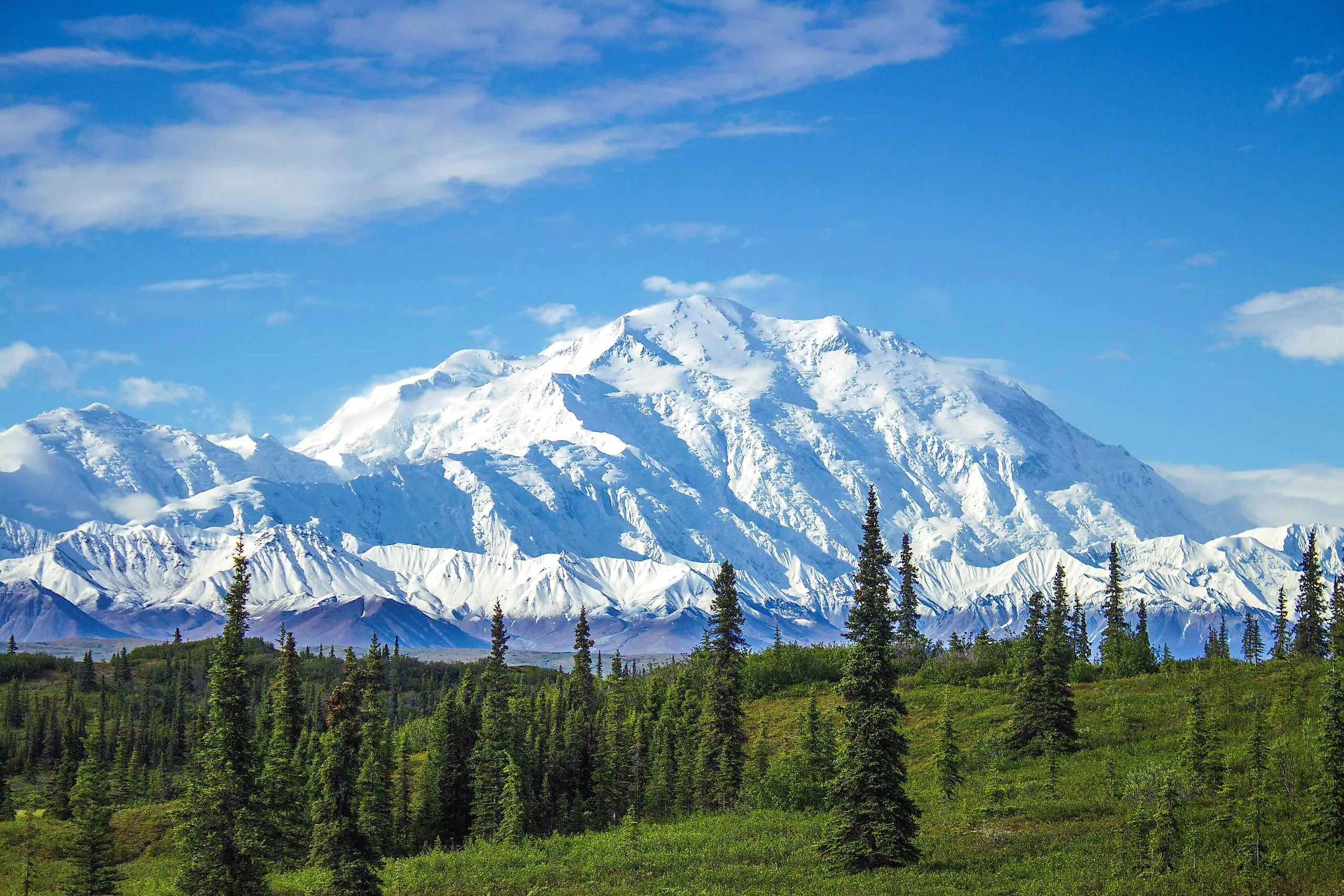
The 10 Highest Mountains In The United States
Every one of the ten highest mountains in the United States sits in Alaska. Not most of them, all ten. The eleventh-highest peak is the first to turn up outside the state, down in California, and even the smallest mountain on this list stands taller than Mount Whitney, the highest summit in the Lower 48. These are glacier-armored, storm-battered peaks, several of them barely climbed. Here they are, tallest first.
Contents
- Denali - 6,190 m
- Mount Saint Elias - 5,489 m
- Mount Foraker - 5,304 m
- Mount Bona - 5,044 m
- Mount Blackburn - 4,996 m
- Mount Sanford - 4,949 m
- Mount Fairweather - 4,671 m
- Mount Hubbard - 4,557 m
- Mount Bear - 4,520 m
- Mount Hunter - 4,442 m
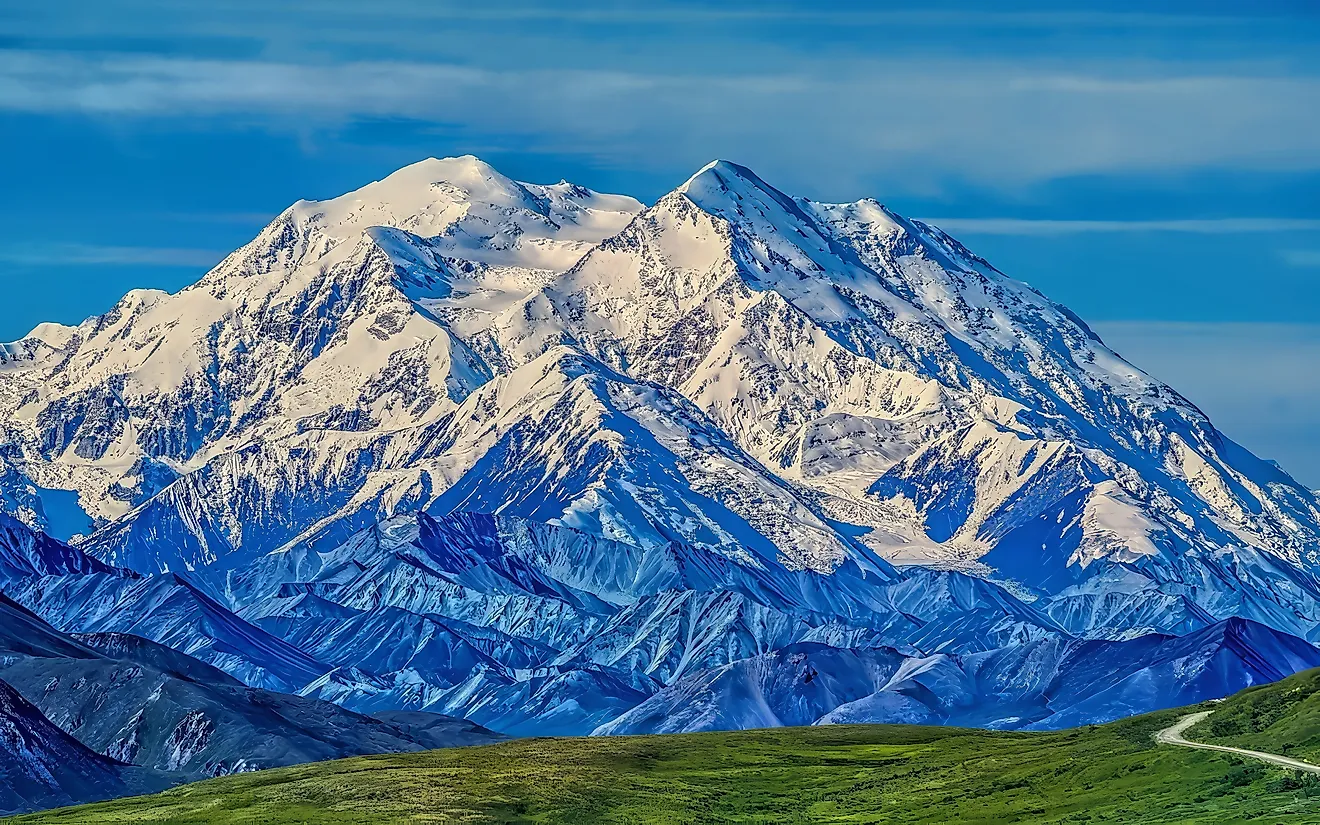
1. Denali - 6,190 m

Denali is not just the highest point in the United States, it is one of the most extreme mountains on the planet: the third most topographically prominent and third most isolated summit on Earth, behind only Everest and Aconcagua. It reaches 20,310 feet, and its subarctic latitude combined with that sheer height makes it one of the coldest mountains anywhere. The Koyukon people called it Deenaalee, "the high one," long before it carried any other name.
Its official name has changed more than once. The peak was federally named Mount McKinley in 1917 after the 25th president, renamed Denali in 2015, and then changed back to Mount McKinley by executive order in 2025. Through all of it the surrounding national park has stayed Denali National Park and Preserve, and Alaska and most Alaskans continue to use Denali. The first climbers reached the summit in 1913: Hudson Stuck, Harry Karstens, Walter Harper, and Robert Tatum, with Harper, an Alaska Native, the first to set foot on top.
2. Mount Saint Elias - 5,489 m

Mount Saint Elias pulls off one of the most dramatic entrances in North America: it climbs to 18,008 feet within about ten miles of the ocean, a wall of rock and ice rearing almost straight out of the sea. It straddles the Alaska-Yukon border inside Wrangell-St. Elias National Park and Preserve, which at more than 13 million acres is the largest national park in the United States, bigger than nine of the fifty states. First climbed in 1897 by an Italian expedition under the Duke of the Abruzzi, it remains a brutally hard mountaineering objective, not the amateur ski destination it is sometimes mistaken for.
3. Mount Foraker - 5,304 m

At 17,400 feet, Mount Foraker is the third-highest mountain in the country and spends its life being overlooked. It stands in the Alaska Range right beside Denali, on a fork of the Kahiltna Glacier, and climbers marching toward the more famous neighbor tend to walk straight past it. The Koyukon called it Sultana, "the woman," and it later picked up the nickname Denali's Wife. The name on the map dates to 1899 and honors Joseph Foraker, an Ohio governor and US senator who never came within a thousand miles of the peak. The first ascent waited until 1934.
4. Mount Bona - 5,044 m

Mount Bona, 16,550 feet of ice-plastered stratovolcano in the eastern Saint Elias Mountains, is the highest volcano in the United States. It feeds the Klutlan and Russell glacier systems and is buried so completely in ice that climbing it is largely an exercise in glacier travel. Its eruptions belong to the distant prehistoric past, and it has been quiet in all of recorded history. The summit was first reached in 1930.
5. Mount Blackburn - 4,996 m

Mount Blackburn, 16,390 feet, is the highest peak in the Wrangell Mountains and the frozen source of the Kennicott Glacier. An eroded old shield volcano sheathed in icefields, it draws few climbers, thanks to both its remoteness and some of the harshest weather on the continent. The true summit was not reached until 1958.
6. Mount Sanford - 4,949 m

Mount Sanford is a broad shield volcano, 16,237 feet high, rising over the Copper River country in the Wrangell Volcanic Field. Its summit is sheathed in ice and seldom visited. The legendary mountain photographer and cartographer Bradford Washburn made the first ascent in 1938, alongside Terris Moore.
7. Mount Fairweather - 4,671 m

Mount Fairweather may carry the least fitting name in Alaska. Captain James Cook christened it in 1778 during a rare stretch of clear skies, and the peak has been mocking him ever since with some of the foulest weather on the coast. At 15,325 feet it is both a Saint Elias peak and, sitting astride the Alaska-British Columbia border, the highest point in the province of British Columbia. It rises within Glacier Bay National Park and Preserve and was first climbed in 1931.
8. Mount Hubbard - 4,557 m

Mount Hubbard, 14,951 feet, straddles the Alaska-Yukon line and is really the tallest of a three-summit cluster that also includes Mount Alverstone and Mount Kennedy. It was named in 1890 for Gardiner Hubbard, the first president of the National Geographic Society, which bankrolled the expedition that first mapped its flanks. Climbers reached the top in 1951.
9. Mount Bear - 4,520 m
Mount Bear, 14,831 feet, stands just west of the Alaska-Yukon border and pours ice into both the Barnard and Klutlan glaciers. Protected within Wrangell-St. Elias National Park, it is one of the loneliest big peaks on the list, overshadowed by taller neighbors and rarely climbed. The drop from its summit to the Barnard Glacier is a dizzying 10,000 feet.
10. Mount Hunter - 4,442 m

Rounding out the list at 14,573 feet is Mount Hunter, about thirteen kilometers south of Denali in the Alaska Range. It is shorter than everything above it and far more feared: its steep, technical lines, including the notorious Moonflower Buttress, make it one of the hardest climbs in North America, and few who start up it reach the top. The Koyukon name is Begguya, "Denali's Child." The first ascent, in 1954, fell to a heavyweight trio: Fred Beckey, Henry Meybohm, and Heinrich Harrer, the Austrian later famous for the memoir Seven Years in Tibet.
Ten mountains, one state, and a staggering amount of ice. What makes Alaska's roster so lopsided is plate tectonics: the Pacific Plate grinding beneath North America has thrown up the Alaska Range and the Saint Elias Mountains, the highest coastal range on Earth. The result is a cluster of peaks so remote and so hostile that most will never see more than a handful of climbers in a good year.