Which States Have the Most Active Volcanoes?
This is barely a competition. One state has more active volcanoes than all the others put together, and it is not close. Alaska is home to over 130 volcanoes that have erupted within the last couple of million years, and more than 50 that have gone off since the 1700s. The other 49 states are essentially fighting for second place. Then again, second place includes Kilauea, Mount Rainier, and a supervolcano buried under Wyoming, so it is worth sticking around.
Alaska, Where Nobody Else Stood a Chance

Alaska is the runaway winner, and the numbers are almost rude about it. The USGS counts more than 130 Alaskan volcanoes that have been active in the last two million years, roughly 90 active within the last 10,000 years, and over 50 that have erupted in recorded history. That is about half of every volcano in the United States, strung out along the 1,550-mile Aleutian arc. The catch, and the reason Alaska's eruptions rarely lead the news, is that most of them go off over empty water and uninhabited islands. When Shishaldin hurled an ash column more than 40,000 feet into the sky in 2023, the main casualties were transpacific flight paths, not towns. Great Sitkin has been quietly erupting since 2021 on an island whose population is zero.
Hawaii, the One That Actually Erupts

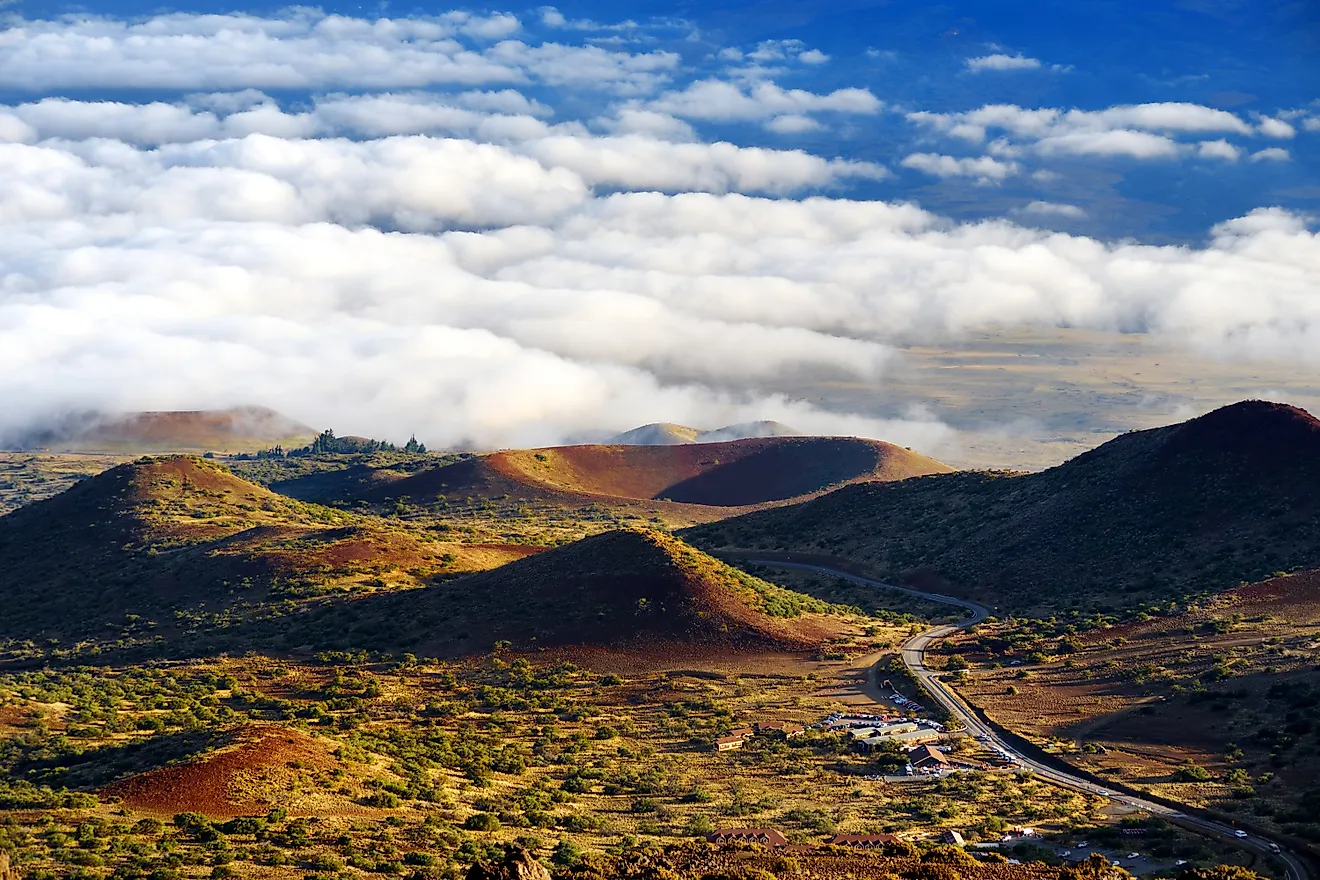
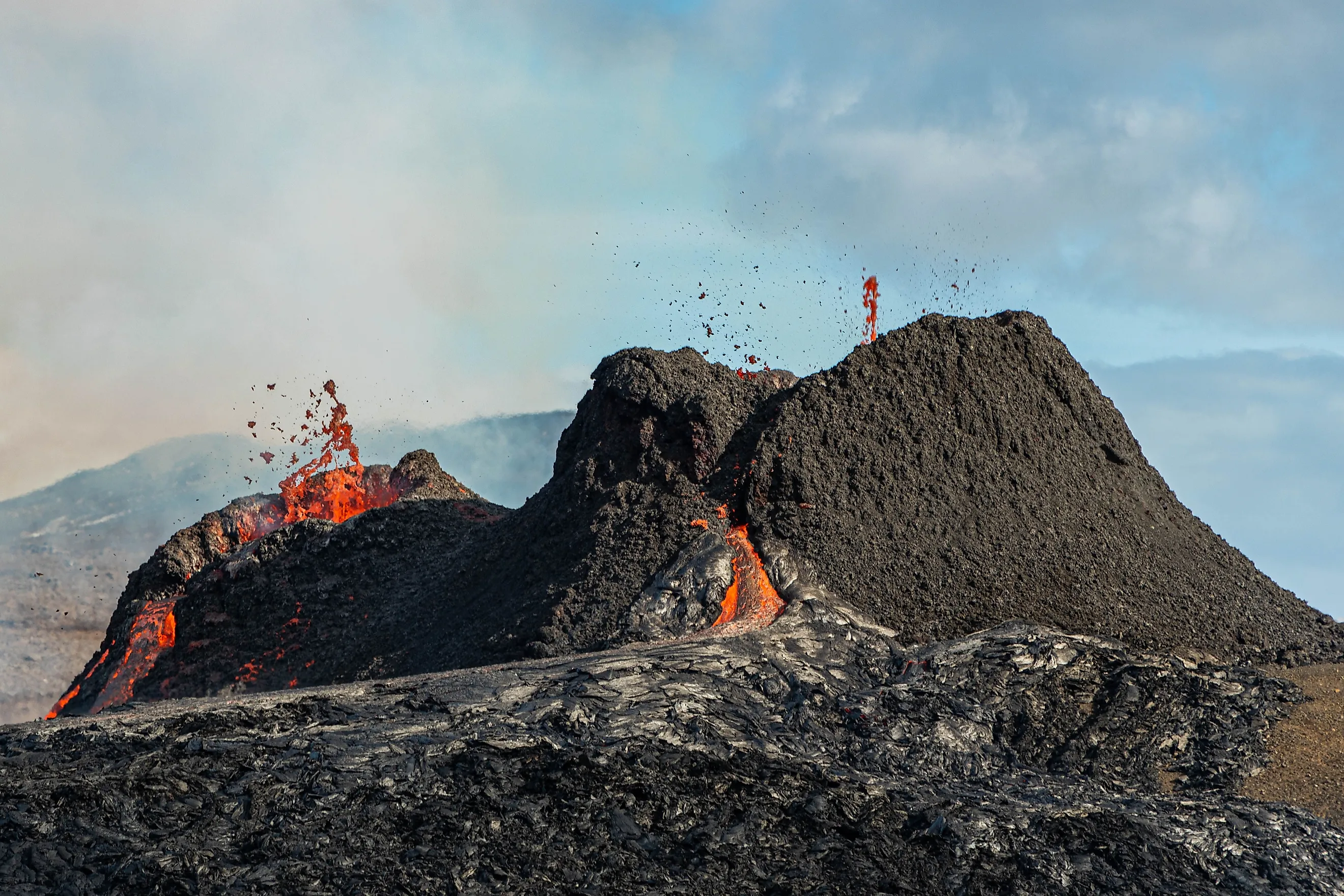
While most of the country's volcanoes are busy threatening to erupt someday, Hawaii's simply do it. Kilauea ranks among the most active volcanoes on Earth, and it has spent much of 2024 through 2026 staging episodic eruptions, with lava fountains and lava lakes filling its Halemaumau crater. Downhill sits Mauna Loa, the largest volcano on the planet by volume, which woke up in November 2022 for its first eruption since 1984. Hawaii has only about six active volcanoes, a rounding error next to Alaska. Pound for pound, though, they are the busiest in the nation.
Washington and the Cascade Time Bombs

Washington is where American volcanoes get genuinely frightening, mostly because people live right next to them. Mount St. Helens made the case in 1980 with the deadliest volcanic eruption in US history, an event that flattened the mountain's north face and rebuilt the science of volcano monitoring around it. Then there is Mount Rainier, which the USGS rates as one of the volcanoes most likely to erupt in the near term. It also happens to tower over the Seattle and Tacoma suburbs, its glacier-loaded summit primed to send mudflows racing down populated valleys. Washington has roughly five major Cascade volcanoes, and the scary part is not how many there are. It is who lives downhill.
Oregon and California, the Quiet Overachievers

The two states to the south are volcano country as well, even if they rarely advertise it. Oregon's most famous volcano is not even a mountain anymore. Crater Lake is what remains after Mount Mazama collapsed in a catastrophic eruption around 7,700 years ago, leaving the deepest lake in the country sitting in the crater. California counters with Mount Shasta, which has erupted at least 10 times in the past 3,400 years, and the Long Valley Caldera, a vast volcanic depression that still rumbles with unrest. Between them, Oregon and California hold six of the 18 volcanoes the USGS classifies as "very high threat," which is a polite way of saying keep an eye on these.
The Threat List, by State

Raw count is one thing; danger is another. The USGS scores every American volcano on a national threat assessment that weighs eruption history, current unrest, and how many people sit nearby. Eighteen of them rank as "very high threat," and here is how those break down by state.
| State | "Very high threat" volcanoes |
|---|---|
| Alaska | 6 |
| Oregon | 4 |
| Washington | 4 |
| California | 2 |
| Hawaii | 2 |
Source: USGS National Volcanic Threat Assessment. Worth noting that this score reflects population exposure as much as raw activity, which is exactly why the crowded Cascade states rank so high despite erupting far less often than Alaska.
And Then There Is Yellowstone

No volcano article gets to skip Yellowstone. Technically, Wyoming's headline volcano is not a mountain at all but a caldera, a cauldron dozens of miles across that sits atop one of the planet's few supervolcanoes. Its ancient eruptions were among the largest known anywhere on Earth, which is why it haunts every documentary and disaster movie ever made. The reassuring part is that the USGS monitors it around the clock, and the present-day hazard is dominated by ordinary earthquakes and hydrothermal explosions rather than anything apocalyptic. The less reassuring part is the unrelenting popularity of the phrase "no sign of an eruption yet." Wyoming is proof that a state can make this list with a single volcano, provided that volcano is terrifying enough.
So Who Actually Wins?

The answer to the headline is Alaska, by a margin that makes the question almost unfair. But "most" and "most dangerous" are not the same thing. Alaska's volcanoes mostly erupt where nobody is standing. Hawaii's erupt constantly but politely. The Cascades barely erupt at all, which is precisely the problem, because when they finally do, millions of people are within reach. Factor in the supervolcano breathing slowly under Yellowstone, and the country ends up with an odd sort of geological fortune: more active volcanoes than almost any nation on Earth, and a real gift for building cities next to them.