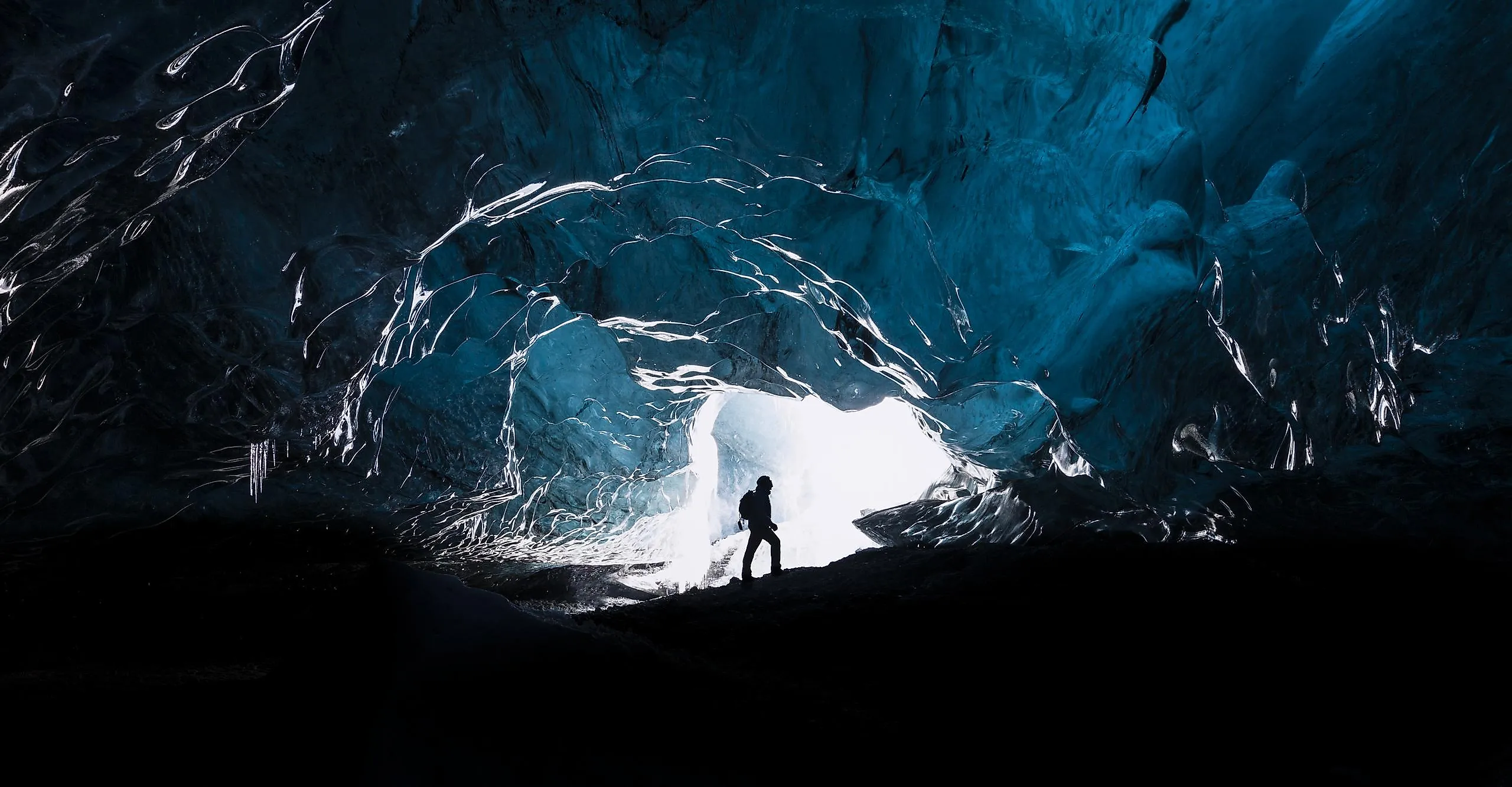
The Deepest Caves In The World
The deepest cave on Earth plunges more than 2,200 meters below its entrance, roughly seven times the height of the Eiffel Tower, and cavers still have not found its true bottom. That is the pull of deep caves: they are one of the last places on the planet where a person can stand somewhere no one has stood before and bring back the data to prove it. Nearly all of them form the same way, as slightly acidic rainwater seeps into soluble limestone and other carbonate rock and, over millions of years, dissolves out a network of shafts and passages. The stalactites hanging from their ceilings grow at a crawl, often less than a millimeter a year, one mineral-rich drip at a time. One caveat before the descent: a cave's depth is only what explorers have physically reached, so these rankings stay provisional, and a single expedition can rewrite them.
- Krubera-Voronja Cave (2224 m / 7,297 ft deep, 14.3 mi long)
- Veryovkina Cave (2209 m / 7,247 ft deep, 10.9 mi long)
- Sarma Cave (1830 m / 6,004 ft deep, 11.9 mi long)
- Snezhnaja Cave (1760 m / 5,774 ft deep, 25.4 mi long)
- Lamprechtsofen (1727 m / 5,666 ft deep, 37.9 mi long)
- Gouffre Mirolda (1661 m / 5,449 ft deep, 13.7 mi long)
- Gouffre Jean-Bernard (1612 m / 5,289 ft deep, 18.3 mi long)
- Sistema del Cerro del Cuevon (1589 m / 5,213 ft deep, 4.3 mi long)
- Hirlatzhohle (1560 m / 5,118 ft deep, 73.2 mi long)
- Sistema Huautla (1560 m / 5,118 ft deep, 62.3 mi long)

1. Krubera-Voronja Cave (2224 m / 7,297 ft deep, 14.3 mi long)

Krubera-Voronja, in the Arabika Massif of Abkhazia, a disputed region of Georgia, is the cave that opened the deep-caving era, and after a quarter-century of back-and-forth it is once again the deepest known cave on Earth. A Ukrainian team pushed it past every other cave on record in 2001, and in 2004 nine of them dropped into a sandy chamber at 2,080 meters, the first time anyone had crossed the 2,000-meter mark; they named it Game Over. Krubera held the world's-deepest title from 2001 until 2018, when neighboring Veryovkina edged ahead, but a 2024 reevaluation of its depth returned it to the top of the standard lists at roughly 2,224 meters (7,297 feet). The two caves sit within survey error of each other, so the record has see-sawed between them. Krubera's map forks early into the Nekuybyshevskaya and Main branches, and cavers reach the bottom only by diving the flooded passages called sumps; snow plugs the entrances in winter, and hypothermia, falls, and flash floods shadow anyone who goes in.
2. Veryovkina Cave (2209 m / 7,247 ft deep, 10.9 mi long)

Veryovkina, in the same Arabika Massif, is the other of only two caves on Earth known to drop past 2,000 meters, and for six years it held the crown as the deepest of all. Soviet speleologists found its entrance in 1968, logged only the first 115 meters, and filed it away as cave S-115. It sat mostly ignored until Moscow's Perovo team came back decades later and kept going, reaching the floor in 2018 at 2,212 meters and renaming the cave for the late cave diver Alexander Veryovkin. Then in August 2024 a precise satellite-GNSS measurement, made possible by a confirmed link between the cave's bottom stream and a lake on the surface, trimmed the depth to 2,209 meters (7,247 feet) and dropped it to second behind Krubera. It stays lethal either way: sudden floods can fill the lower passages in minutes, and in 2021 the team recovered the body of a caver who had gone down alone.
3. Sarma Cave (1830 m / 6,004 ft deep, 11.9 mi long)
Third-deepest and no less punishing, Sarma sits in the same Arabika Massif as the two caves above it. Discovered in 1990 and surveyed to its full 1,830 meters (6,004 feet) in 2012, it runs as a chain of vast, dark halls and tangled side passages, and only professional cavers are cleared to attempt it. Surveyors suspect unmapped tunnels could eventually push it past 2,000 meters, which would make it the third cave in this one massif to break that barrier. The hazard here is water: heavy rain can raise levels fast and without warning, turning the route out into a trap.
4. Snezhnaja Cave (1760 m / 5,774 ft deep, 25.4 mi long)
Snezhnaja carries a reputation among cavers as one of the hardest systems anywhere, especially for teams trying to run it without diving its siphons. Its maze of passages formed across four separate erosion levels, each a slice of the region's geologic past. Near the bottom sit two of the largest known underground chambers in the Caucasus, the Throne Hall and Hall X, with ceilings tens of meters overhead. Soviet cavers first entered in the late 1960s, but the system's full 1,760-meter (5,774-foot) depth did not come into focus until the early 1990s. Heavy speleothems throughout make it one of the more striking deep caves as well as one of the toughest.
5. Lamprechtsofen (1727 m / 5,666 ft deep, 37.9 mi long)

Lamprechtsofen threads through the Leogang Mountains of Austria and comes wrapped in legend: locals told for centuries of a fortune that a knight named Lamprecht hid near its mouth after the Crusades, a story that drew generations of treasure hunters. What the diggers never found, twentieth-century cavers eventually did, mapping the system to 1,727 meters (5,666 feet). Part of the cave runs as a show cave open to the public, a rare bit of easy access among the world's deep systems. Inside are hidden waterfalls, thickets of dripstone, and chambers big enough to lose a building in.
6. Gouffre Mirolda (1661 m / 5,449 ft deep, 13.7 mi long)
Gouffre Mirolda opens high in the French Alps, in the Samoens valley of France, its entrance perched near 2,330 meters. Cavers found it in 1971 but did not measure its full reach until 2003, when a dive of the terminal sump put the depth at 1,733 meters and briefly made it a contender for the deepest in the world. Later surveys have since revised that figure to about 1,661 meters (5,449 feet), a reminder of how much these numbers depend on the last team through. The bottom has been reached only once, and beyond the lower siphons the galleries branch toward older, still-unexplored drainage.
7. Gouffre Jean-Bernard (1612 m / 5,289 ft deep, 18.3 mi long)
A short way off in the same Samoens highlands, Gouffre Jean-Bernard drops 1,612 meters (5,289 feet) through Jurassic limestone, its shafts and galleries cut by water working the rock over eons. Explorers uncovered it in 1963, and after a breakthrough past a blocked passage in 1979 it held the world-deepest title through much of the following decade. Its name is a memorial: Jean Dupont and Bernard Raffy, two of the cavers who found it, died the same year in an unrelated accident.
8. Sistema del Cerro del Cuevon (1589 m / 5,213 ft deep, 4.3 mi long)
Spain's deepest cave, Sistema del Cerro del Cuevon, cuts 1,589 meters (5,213 feet) into the Picos de Europa in northern Spain, ranking eighth in the world. A Franco-Spanish team first touched bottom in 1998, setting the national depth record. The system has two entrances; the harder of them, Torca del Cerro del Cuevon, runs so deep that a full descent takes about three days. In 2015 a team of four made that push with roughly fifty other people supporting them from the surface, over four days underground.
9. Hirlatzhohle (1560 m / 5,118 ft deep, 73.2 mi long)
Hirlatzhohle winds through the Dachstein limestone near Hallstatt, Austria, one of the country's longest caves at more than 117 kilometers (73 miles) and among its deepest at 1,560 meters (5,118 feet). It has at least six entrances, and three of them are springs, which means cavers have to dive to get in. Reaching the far chambers can take days of hauling gear through tight passages and camping underground, which puts Hirlatzhohle among the most demanding expeditions in European caving.
10. Sistema Huautla (1560 m / 5,118 ft deep, 62.3 mi long)

Sistema Huautla, in the mountains of Oaxaca, Mexico, is the deepest cave in the Western Hemisphere at 1,560 meters (5,118 feet), a limestone maze of shafts and galleries carved by water over millions of years. Cavers from Austin, Texas, first entered in 1965, but reaching the bottom took years of expeditions and a string of underground camps. In 2013 a team using rebreathers dived the still lake at its lowest point, about 100 feet across, and pinned the full depth at 1,560 meters. To the Mazatec people of the region, these caves have long held sacred meaning, and stories of powerful human-like beings below are still told today.
These ten caves share more than extreme depth. Each has exacted a real price in the reaching: years of grinding expeditions, and at times lives lost. And none is finished: unmapped passages wait at the bottom of every one, which is exactly why the order keeps shifting. The next challenger may not even be in the top ten yet. In Mexico, water traced through the Cheve Cave system in Oaxaca suggests it could run close to 2,570 meters deep, and a U.S. Deep Caving Team expedition set out in February 2026 to link it with a lower system; if that connection holds, Cheve would leap past the Caucasus caves to become the deepest on Earth. For now the title stays in Abkhazia, but these rankings reflect only the best surveys to date, and the next team down could redraw them, just as the caves themselves are still being drawn, one dissolved millimeter at a time.
30 Deepest Caves In The World
| Rank | Name | Depth (m) | Length (km/mi) | Country |
|---|---|---|---|---|
| 1 | Krubera-Voronja Cave | 2224 | 23.0 km (14.3 mi) | Abkhazia / Georgia |
| 2 | Veryovkina Cave | 2209 | 17.5 km (10.9 mi) | Abkhazia / Georgia |
| 3 | Sarma Cave | 1830 | 19.2 km (11.9 mi) | Abkhazia / Georgia |
| 4 | Snezhnaja Cave | 1760 | 40.8 km (25.4 mi) | Abkhazia / Georgia |
| 5 | Lamprechtsofen | 1727 | 61.0 km (37.9 mi) | Austria |
| 6 | Gouffre Mirolda | 1661 | 22.0 km (13.7 mi) | France |
| 7 | Gouffre Jean-Bernard | 1612 | 29.5 km (18.3 mi) | France |
| 8 | Sistema del Cerro del Cuevon | 1589 | 7.0 km (4.3 mi) | Spain |
| 9 | Hirlatzhohle | 1560 | 117.8 km (73.2 mi) | Austria |
| 10 | Sistema Huautla | 1560 | 100.2 km (62.3 mi) | Mexico |
| 11 | Cheve Cave | 1538 | 87.2 km (54.2 mi) | Mexico |
| 12 | Boybuloq | 1517 | 18.4 km (11.4 mi) | Uzbekistan |
| 13 | Pantjuhinskaja Cave | 1508 | 7.9 km (4.9 mi) | Abkhazia / Georgia |
| 14 | Sima de la Cornisa | 1507 | 6.4 km (4.0 mi) | Spain |
| 15 | Cehi 2 | 1505 | 5.5 km (3.4 mi) | Slovenia |
| 16 | Sistema del Trave | 1441 | 9.1 km (5.7 mi) | Spain |
| 17 | Lukina-Trojama system | 1431 | 3.7 km (2.3 mi) | Croatia |
| 18 | Egma Sinkhole | 1429 | 3.1 km (1.9 mi) | Turkey |
| 19 | Gouffre de la Pierre Saint-Martin | 1410 | 88.1 km (54.7 mi) | France, Spain |
| 20 | Kuzgun Cave | 1400 | 3.1 km (1.9 mi) | Turkey |
| 21 | Hochscharten-Hohlensystem | 1394 | 14.6 km (9.1 mi) | Austria |
| 22 | Crnelsko brezno | 1393 | 20.0 km (12.4 mi) | Slovenia |
| 23 | Abisso Paolo Roversi | 1360 | 4.2 km (2.6 mi) | Italy |
| 24 | Sistema Aranonera-Tendenera | 1349 | 46.3 km (28.8 mi) | Spain |
| 25 | Sima del Sabbat (B112) | 1346 | 6.7 km (4.2 mi) | Spain |
| 26 | BU 56 | 1340 | 38.9 km (24.2 mi) | Spain |
| 27 | Siebenhengste-Hohgant-Hohle | 1340 | 164.5 km (102.2 mi) | Switzerland |
| 28 | Nedam | 1335 | 3.3 km (2.1 mi) | Croatia |
| 29 | Slovacka jama | 1324 | 6.4 km (4.0 mi) | Croatia |
| 30 | Renetovo brezno | 1322 | 13.3 km (8.3 mi) | Slovenia |