The Least Forested Countries In The World
Forests are among the planet's most important ecosystems. They store carbon, shelter much of the world's wildlife, regulate the water cycle, and provide food, fuel, and income for billions of people. The UN Food and Agriculture Organization (FAO) defines a forest as land covering at least half a hectare, with trees taller than five metres and a canopy shading more than ten percent of the ground. Land used for crops or built up into towns and cities does not count, even where tall plants grow on it.

By that definition, forests cover about 4.06 billion hectares, or roughly 31 percent of the world's land, according to the FAO's most recent global assessment. About 1.1 billion hectares of that, more than a quarter of the total, is primary forest that is largely undisturbed and dominated by native species. The cover is not spread evenly. Europe, including the vast woodlands of Russia, holds about a quarter of the world's forest, more than any other region, while Oceania holds only about five percent. Asia carries the smallest share of any region except Oceania, even though it is by far the largest continent.
Just ten countries hold about two-thirds of the world's forest, and more than half of it sits in only five: Russia, Brazil, Canada, the United States, and China. Russia alone accounts for roughly a fifth of the global total, and forest still covers about half of its enormous territory. At the other end of the scale, more than 90 percent of Suriname is forested, the highest share of any country. Dozens of nations sit far below that. More than a dozen have forest on less than one percent of their land, and around thirty have five percent or less. The countries with the least tree cover fall into a few clear patterns, set mostly by climate and crowding.
Small, Crowded Countries Run Out Of Room For Trees

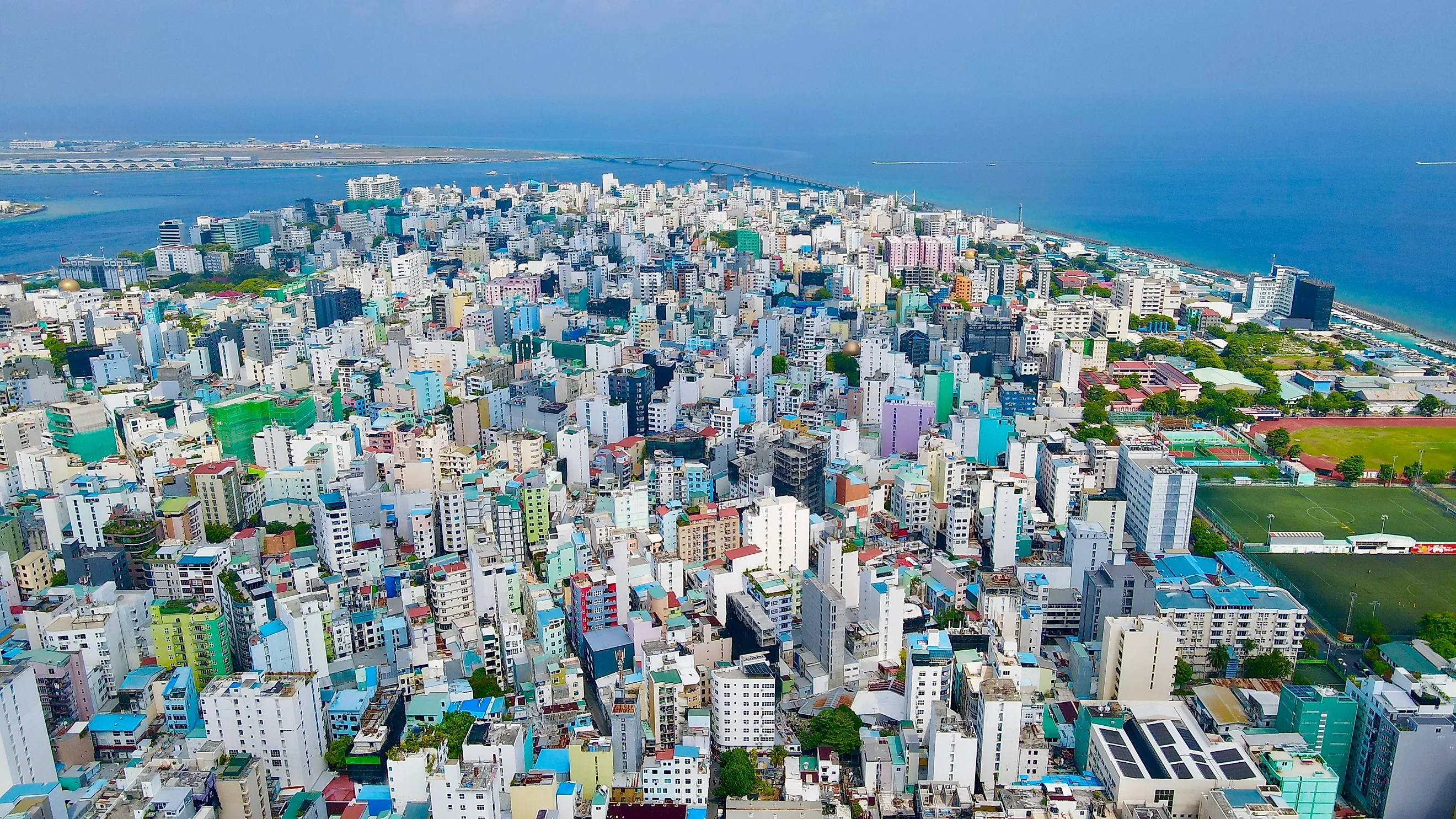
In a handful of very small and very crowded countries, there is simply little land left for forest. Monaco, the most densely populated country on Earth, packs tens of thousands of people into about two square kilometres and has no forest at all. The Pacific island of Nauru, just 21 square kilometres, is in the same position. Two other island nations do only a little better: Kiribati and the Maldives each keep a sliver of forest, somewhere between one and three percent of their land. At this size, housing, roads, and farmland leave almost nothing for trees.
The Arid Heart Of Western And Central Asia

Asia holds only about 15 percent of the world's forest, the smallest share of any inhabited continent apart from Oceania, even though it is the largest landmass on Earth. Much of it is dry. Some of the least forested countries anywhere lie in Western Asia, on and around the Arabian Peninsula. Qatar, Oman, and Kuwait have effectively no forest, while Saudi Arabia and Yemen sit at about one percent or less. The United Arab Emirates, at roughly five percent, is the greenest country on the peninsula. The cause is the Arabian Desert, which covers some 2.3 million square kilometres. It is the largest desert in Asia and the fourth largest in the world, and its heat gives trees almost no chance.

Central Asia tells a similar story. Forest covers under ten percent of Turkmenistan and Uzbekistan (each around eight to nine percent), Kyrgyzstan (about seven percent), Tajikistan (three percent), and Kazakhstan (barely one percent), and the numbers are just as low in Afghanistan (two percent) and Pakistan (under five percent) to the south. Two great deserts dominate the region: the Karakum, which covers roughly 70 percent of Turkmenistan, and the Kyzylkum, which spreads across Uzbekistan and Kazakhstan.
The Sahara Dominates North Africa

Africa's forests cover about 637 million hectares, roughly a fifth of the continent's land. The Sahara explains much of the shortfall. It is the world's largest hot desert and the third largest desert of any kind, behind only the Antarctic and Arctic, and it sweeps across the whole of North Africa over some 9.2 million square kilometres. Egypt, Libya, Mauritania, Algeria, Niger, Chad, and Tunisia all sit within or along it, and each has tree cover of five percent or less. With almost no rain and punishing heat, forests cannot take hold.
South of the Sahara lies the Sahel, a semi-arid belt about three million square kilometres wide. Its countries are greener than the desert states to the north, but several still rank among Africa's least forested, including Mali, Sudan, South Sudan, and Eritrea. Tree cover then rises steadily as the dry land gives way to wetter savanna and tropical forest further south.
The Dry Corners Of Southern Africa

Forest is scarce in the driest parts of southern Africa as well. Namibia, wedged between the Namib and Kalahari deserts, is among the driest countries in sub-Saharan Africa and has only about eight percent forest cover, nearly all of it in the wetter north. Lesotho is a different case. It sits high in the mountains with a cool climate, yet forest covers barely one percent of its land. Poor mountain soils and a long reliance on wood for fuel and building have kept its woodlands small.
The 50 Least Forested Countries
The table below ranks the 50 countries with the lowest forest cover as a share of their land area, using the latest World Bank data. Small island states and desert nations fill the bottom of the list.
| Country | Forest cover (% of land area) |
|---|---|
| Monaco | 0.0 |
| Nauru | 0.0 |
| Qatar | 0.0 |
| Oman | 0.0 |
| Egypt | 0.0 |
| Libya | 0.1 |
| Djibouti | 0.3 |
| Mauritania | 0.3 |
| Kuwait | 0.4 |
| Saudi Arabia | 0.5 |
| Iceland | 0.5 |
| Niger | 0.8 |
| Algeria | 0.8 |
| Bahrain | 0.9 |
| Yemen | 1.0 |
| Jordan | 1.1 |
| Lesotho | 1.1 |
| Kazakhstan | 1.3 |
| Malta | 1.4 |
| Kiribati | 1.5 |
| Palestine | 1.7 |
| Afghanistan | 1.9 |
| Iraq | 1.9 |
| Maldives | 2.8 |
| Syria | 2.8 |
| Tajikistan | 3.1 |
| Chad | 3.2 |
| United Arab Emirates | 4.5 |
| Tunisia | 4.6 |
| Pakistan | 4.7 |
| Kenya | 6.2 |
| Israel | 6.5 |
| Iran | 6.6 |
| Kyrgyzstan | 7.1 |
| Namibia | 7.8 |
| Ivory Coast | 7.9 |
| Uzbekistan | 8.5 |
| Eritrea | 8.6 |
| Turkmenistan | 8.8 |
| Mongolia | 9.1 |
| Somalia | 9.2 |
| Sudan | 9.6 |
| Argentina | 10.3 |
| Burundi | 10.9 |
| Mali | 10.9 |
| Uganda | 11.0 |
| Netherlands | 11.1 |
| Rwanda | 11.3 |
| South Sudan | 11.3 |
| Ireland | 11.5 |
Data source: World Bank, forest area as a share of land area (2023).