Why Lake Erie Freezes Before The Other Great Lakes
Every winter runs the same race on the Great Lakes, and every winter has the same early leader. While Lake Superior is still steaming into the Arctic air and Lake Ontario is barely bothering with ice at all, Lake Erie is already skimming over, whitening outward from its western shallows, and in a properly cold winter it does what none of its four siblings can reliably do: it closes, nearly end to end, 10,000 square miles of freshwater turned to a plain of ice with fishing shanties and snowmobile tracks on top. Erie freezes first, freezes hardest, and freezes most often, and the reason is not that its winters are colder, because they are in fact the mildest on the lakes. The reason is in the bathtub math: Erie is the shallowest of the five by a wide margin, which means it banks the least summer heat, spends that bank fastest, and reaches the freezing line while its deep siblings are still making change.
The Shallowest Of The Five

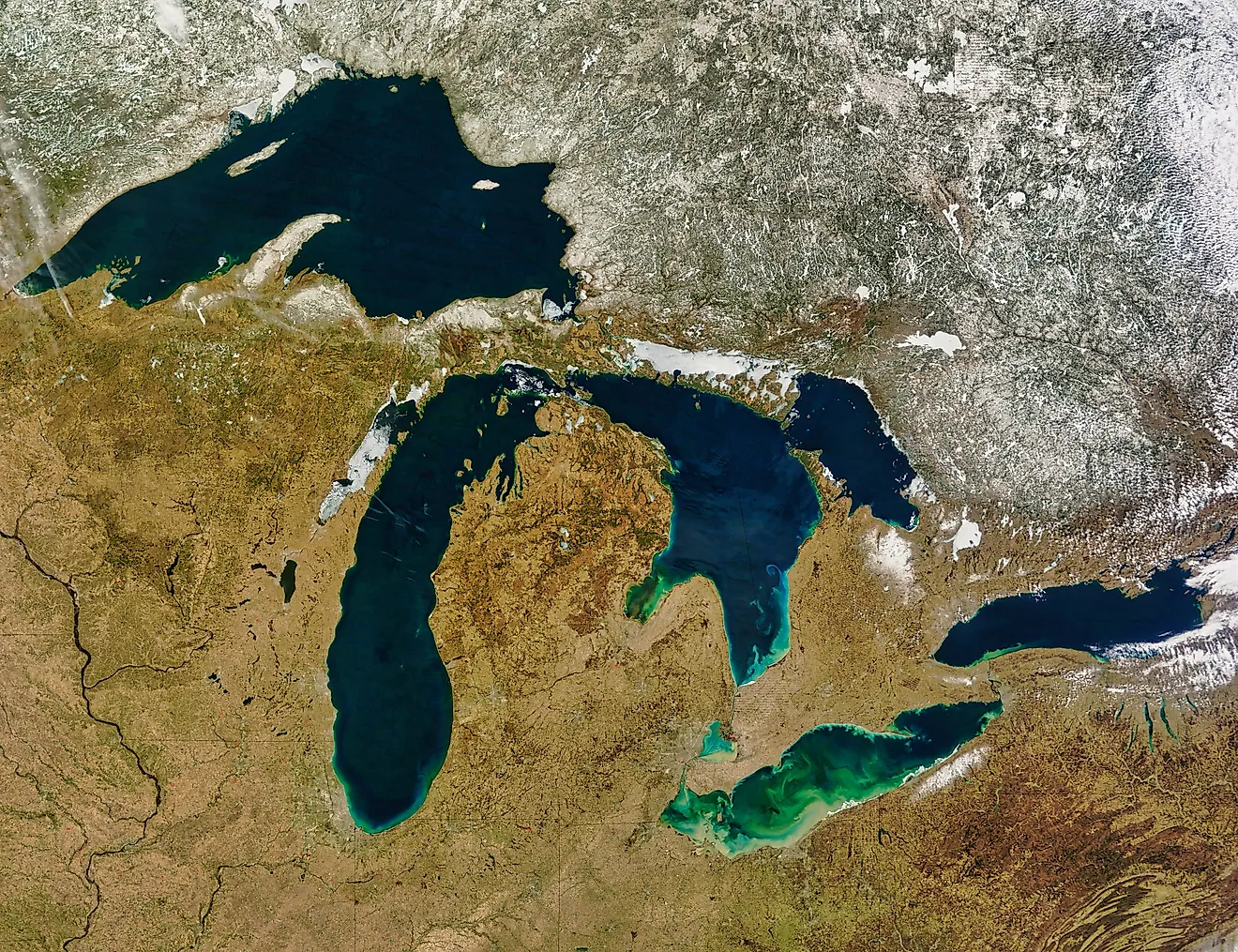
The numbers set the whole story. Lake Erie averages only around 60 feet deep, with a maximum of about 210, against an average of nearly 500 feet for Superior, close to 300 for Michigan and Ontario, and about 200 for Huron, and the volume gap is even starker: Erie holds the least water of the five by far, with Superior carrying roughly 25 times as much and even look-alike Ontario, nearly Erie's twin in surface area, holding more than three times Erie's water thanks to its depth. Erie is, by the standards of its own family, a pan of water set among cauldrons.

The shallowness is lopsided in a way that matters. Erie's western basin, the island-studded end around Put-in-Bay and Pelee, runs astonishingly shallow, much of it under 30 feet, while the eastern basin toward Buffalo holds the lake's deepest water, and the ice follows the map: freeze-up begins in the western shallows and spreads east, with the prevailing southwest winds herding the loose ice down the lake's length toward Buffalo as the season deepens. By midwinter in a cold year, the island communities are iced into place, and the lake that carried ferries in November carries ice roads.
The Heat Bank Runs Dry First

Why does depth decide everything? Because a lake in autumn is a savings account of summer heat, and it cannot grow ice until the account is nearly empty. Water stubbornly resists cooling, and a big lake must shed heat from its whole mixed depth, not just the surface: as the surface chills, that dense water sinks and warmer water rises to take its place, a conveyor that keeps delivering stored summer warmth to the top, and the lake cannot begin serious freezing until most of the water column has been dragged down to around 39 degrees Fahrenheit, the temperature at which fresh water is heaviest. The deeper the lake, the more heat that conveyor can bring up, and the longer the freeze is postponed.

Erie's account is the smallest on the street, so it empties first, often reaching the freezing threshold weeks before its neighbors, while deep Ontario, hoarding three Eries' worth of heat under a similar surface, typically peaks at only about a quarter ice coverage and deep Michigan at around a third. The contrast is sharpest with Ontario precisely because the two lakes share latitude, size, and weather and differ almost only in depth, a natural controlled experiment that the satellite images publish every February: Erie white, Ontario blue, 30 miles apart.
What A Frozen Erie Looks Like

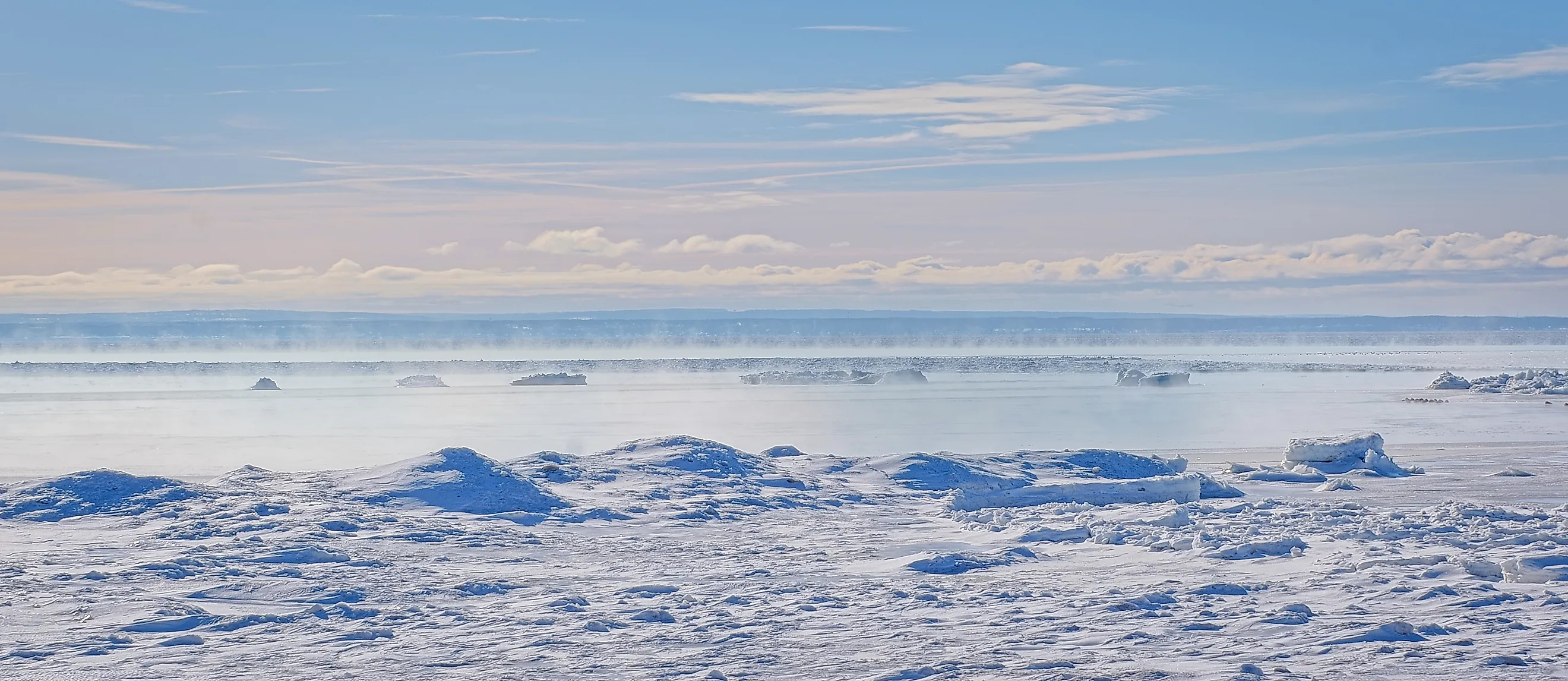
In a hard winter, Erie's coverage climbs toward totality, approaching 100 percent after sustained cold spells, a feat it has managed repeatedly in the modern record, with big ice years like 2014 and 2019 standing out in recent memory, while the basin-wide Great Lakes record maximum remains 1979's 94.7 percent, a figure Erie's near-closures anchor. The frozen lake becomes its own seasonal economy and culture: one of North America's great ice fisheries sets up over the western basin's walleye water, shanty villages and snowmobile highways appear off Catawba and the islands, and the ice stacks itself into ridges and shoreline dunes that draw photographers to lighthouses armored in frozen spray.

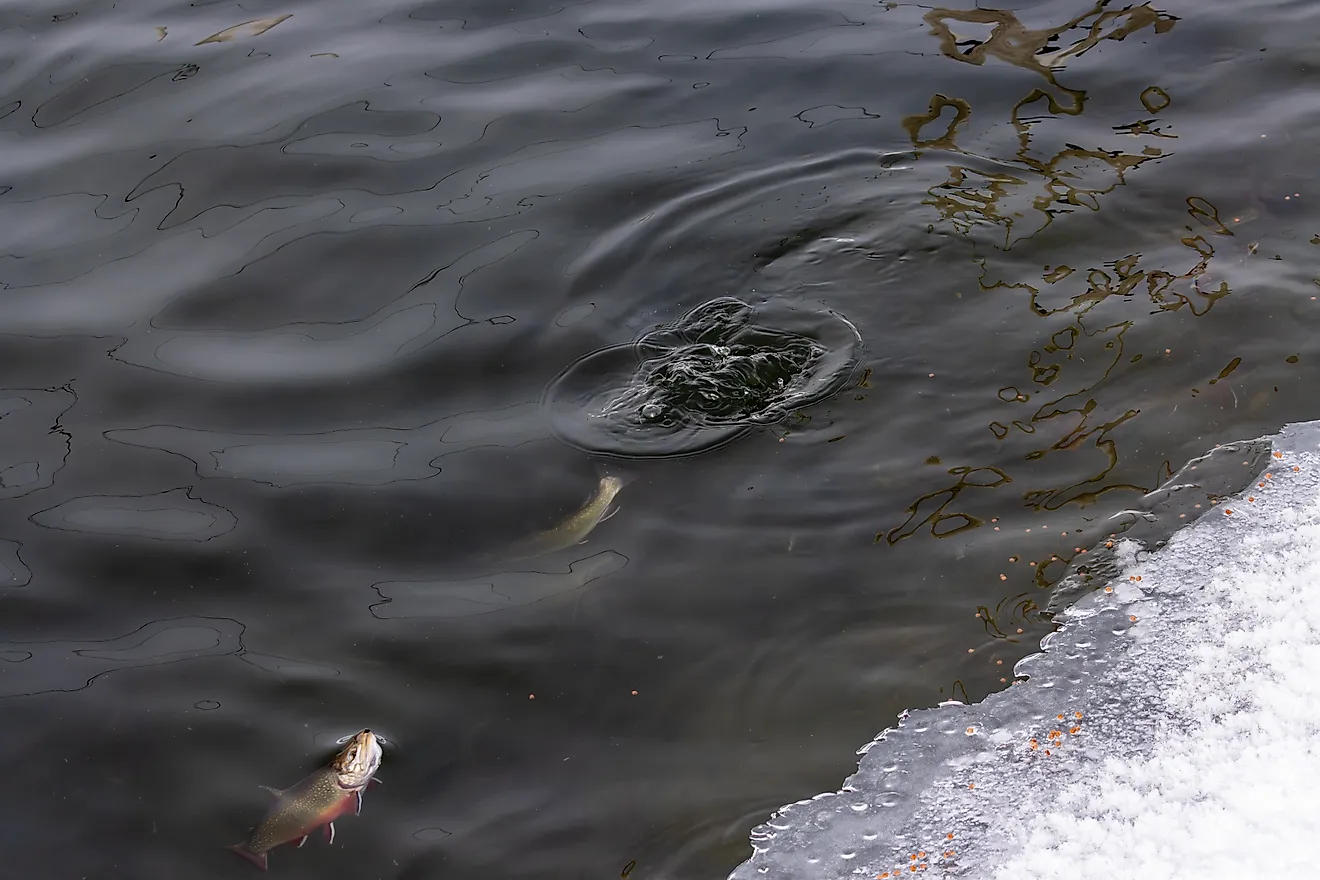
Under the lid, the lake runs its quiet winter protocols, the same ones every frozen lake keeps: fish idling through the cold on the oxygen the fall banked, turtles wintering in the mud, the whole system living off stored summer until the light returns. And because Erie flushes its water faster than any Great Lake, replacing itself in under three years, the lid is temporary in the deepest sense; the lake that freezes first also thaws and renews fastest, which is part of why its fishery rebounds so explosively every spring.
The Snow Machine Switches Off

Erie's early freeze rewrites the region's weather in a way its residents can set their calendars by. Lake-effect snow, the machine that buries Buffalo and the Chautauqua ridge, runs on open water: cold air crossing the warm lake loads up on moisture and dumps it downwind, and the machine runs only as long as the lake stays liquid. When Erie ices over, usually weeks to months before the other lakes quiet down, the moisture tap closes and Buffalo's famous snow guns fall silent, which is why the city's most savage snow events cluster in early winter, off a still-open lake, and why late winter downwind of Erie turns comparatively calm.

The never-freezing lakes run the opposite schedule. Ontario's open water keeps its snowbelt firing all winter, burying the Tug Hill country east of the lake under some of the heaviest snowfall in the East, with lake-effect totals that dwarf what cities on frozen Erie receive after January, and Superior's long-open expanses do the same for the UP. On the Great Lakes, the snowiest places downwind are the ones whose lake refuses to close, and Erie's early lid is, for its own lee shore, a kind of mercy.
The Boom At The Bathtub Drain

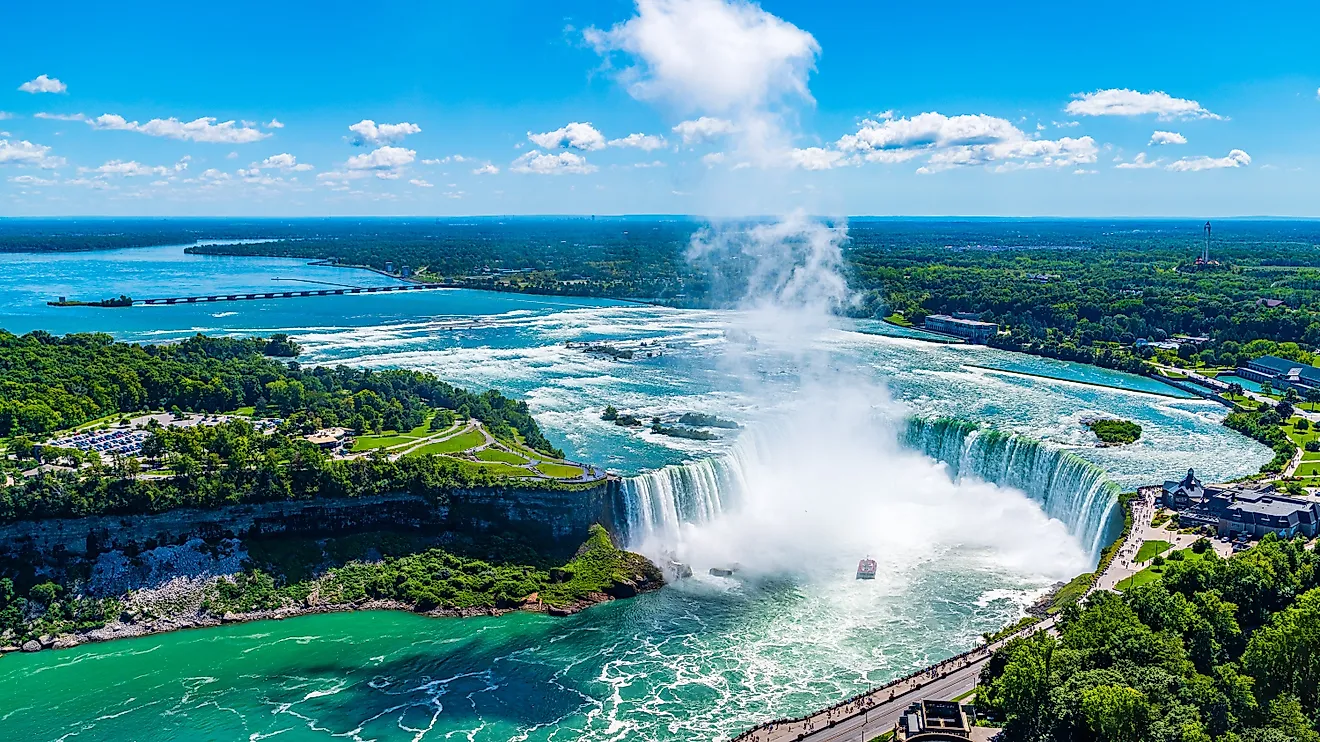
All of Erie's ice has only one exit, the Niagara River, and history taught the region what happens when too much tries to leave at once. In March 1848, a wind-driven ice dam at the lake's outlet throttled the river so completely that Niagara Falls itself went nearly dry for a day and more, the only such stoppage in the record, and ice runs out of Erie kept wrecking docks, intakes, and hydro operations into the 20th century. The answer, installed every winter since 1964, is the Lake Erie-Niagara River Ice Boom, a floating chain of pontoons strung near the lake's outlet that helps a natural ice arch form and hold, keeping the frozen lake's pack parked in the lake.
The boom has its own calendar and its own fan base: in it goes each December, out it comes around the start of April, with the standing rule that it stays if more than 250 square miles of ice linger in the eastern basin, and its removal is reported in Buffalo as a genuine sign of spring. In warm recent winters it has come out historically early, one more line on the chart of a warming lake, and in cold ones it quietly does its job while roughly 98 percent of Erie's ice never reaches the river at all, melting at home in the lake that made it.
Why The Other Four Stay Open
Each sibling declines to freeze for its own reasons. Superior, 25 times Erie's volume, carries a heat account so vast that even its brutal northern winters usually close only part of it, though its cold climate lets it ice more than its depth alone would predict; Michigan's depth and north-south sprawl across climate zones keep its lower half reliably open; Huron lands in between, often the second-iciest; and Ontario, the deep one in the warm south, barely freezes at all, which Superior's cold-water legends notwithstanding, makes Ontario the system's true refusal. Wind and waves pile on everywhere, breaking young ice faster than calm Erie bays would, so the deep lakes spend winter as patchwork, shelves of shore ice around stubborn open centers.

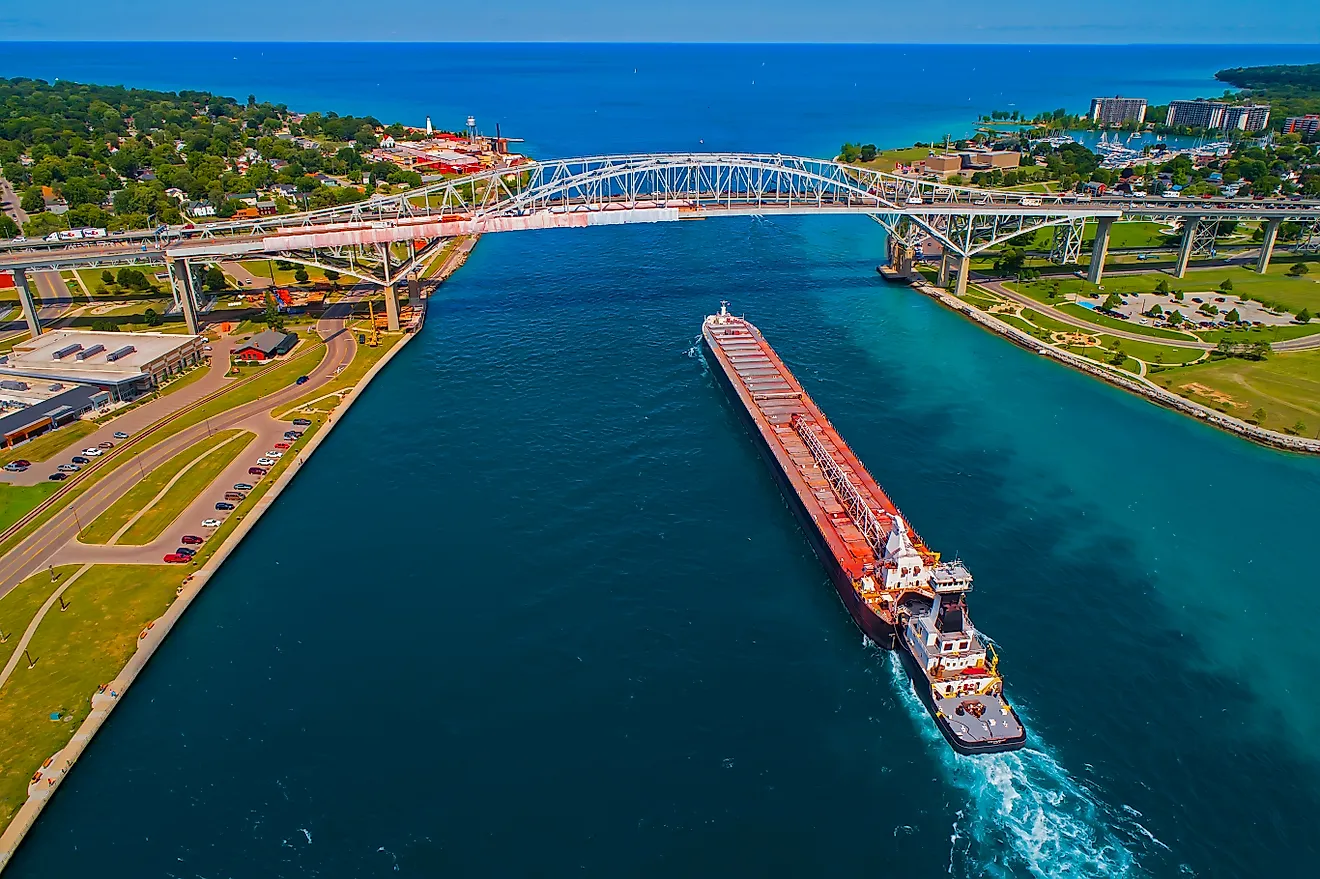
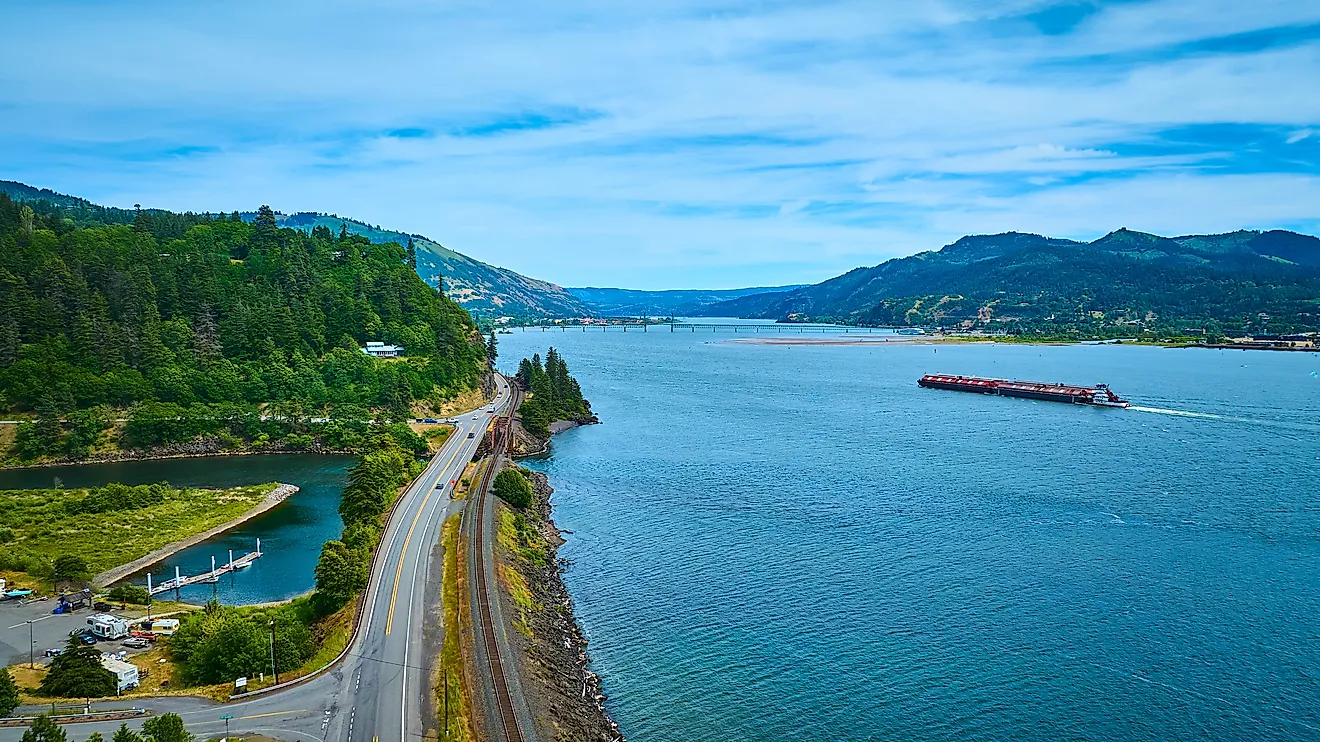
The split shapes the shipping year: the freighter fleet works the deep lakes under icebreaker escort into January and resumes in late March, while iced-in Erie ports simply close the book, and the ice everywhere sets the spring schedule, since Erie's famous summer troubles germinate in how early and how warm its shallow water opens. On the lakes, winter is not one season; it is five different negotiations with the same cold, and Erie concedes first every year.
First To Close, First To Open

So Lake Erie freezes before the other Great Lakes because it carries the smallest heat bank over the shallowest basin: least water, least stored summer, fastest ride down to 39 degrees and the first real ice, spreading from the western islands to the Buffalo shore while deep Ontario next door stays stubbornly blue. The early lid switches off Buffalo's snow machine, builds one of the continent's great ice fisheries, and leans its whole frozen weight on a 60-year-old chain of pontoons guarding the Niagara drain. The shallowest Great Lake lives its whole year in fast-forward, first to warm, first to bloom, first to freeze, first to thaw, and winter is simply the season when being the smallest sibling finally looks like winning.