The Gas Wells Drilled Into The Bottom Of Lake Erie
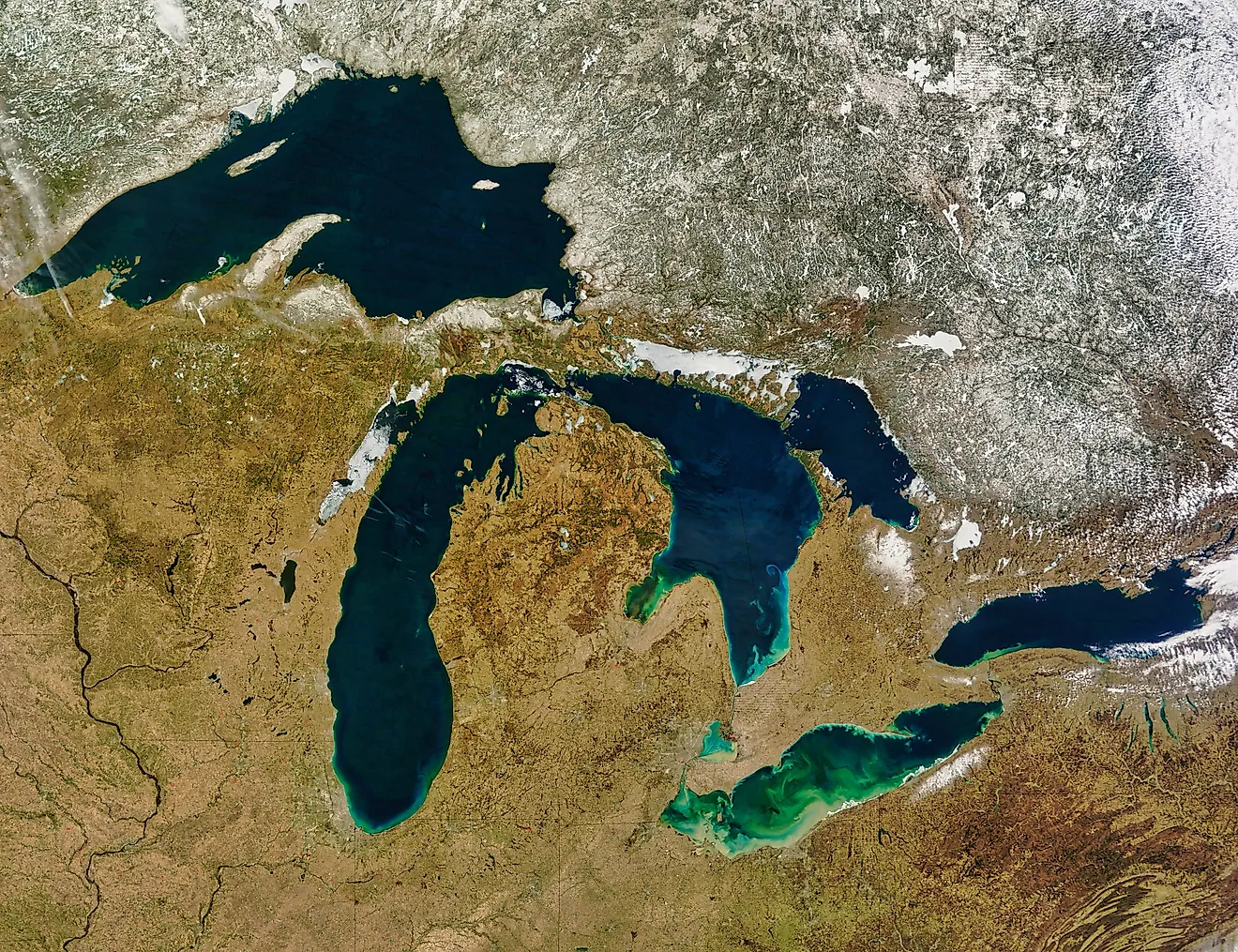
Lake Erie has an offshore gas industry and most people living on its shores have no idea. Roughly 500 wells are producing beneath the Canadian side at any given time, out of around 2,000 drilled since 1913, connected to shore by about 1,600 kilometers of pipeline lying on or buried just under the lakebed. On the American side there is nothing, because Congress banned it.
Two Thousand Wells Since 1913

The industry is older than most people assume and the totals are larger.
Lake Erie's first offshore gas well was drilled in 1913. Since then roughly 2,000 to 2,200 wells have been sunk in Canadian waters, of which somewhere between 480 and 550 are currently producing.
Figures vary between sources and years. The commonly cited current number is around 500 producing gas wells.
The First Rigs Went Out On The Ice

Early drilling used a method that would be unthinkable today.
Several of the first wells were drilled using cable tool rigs pushed out onto the lake during winter, working from the frozen surface rather than from a vessel.
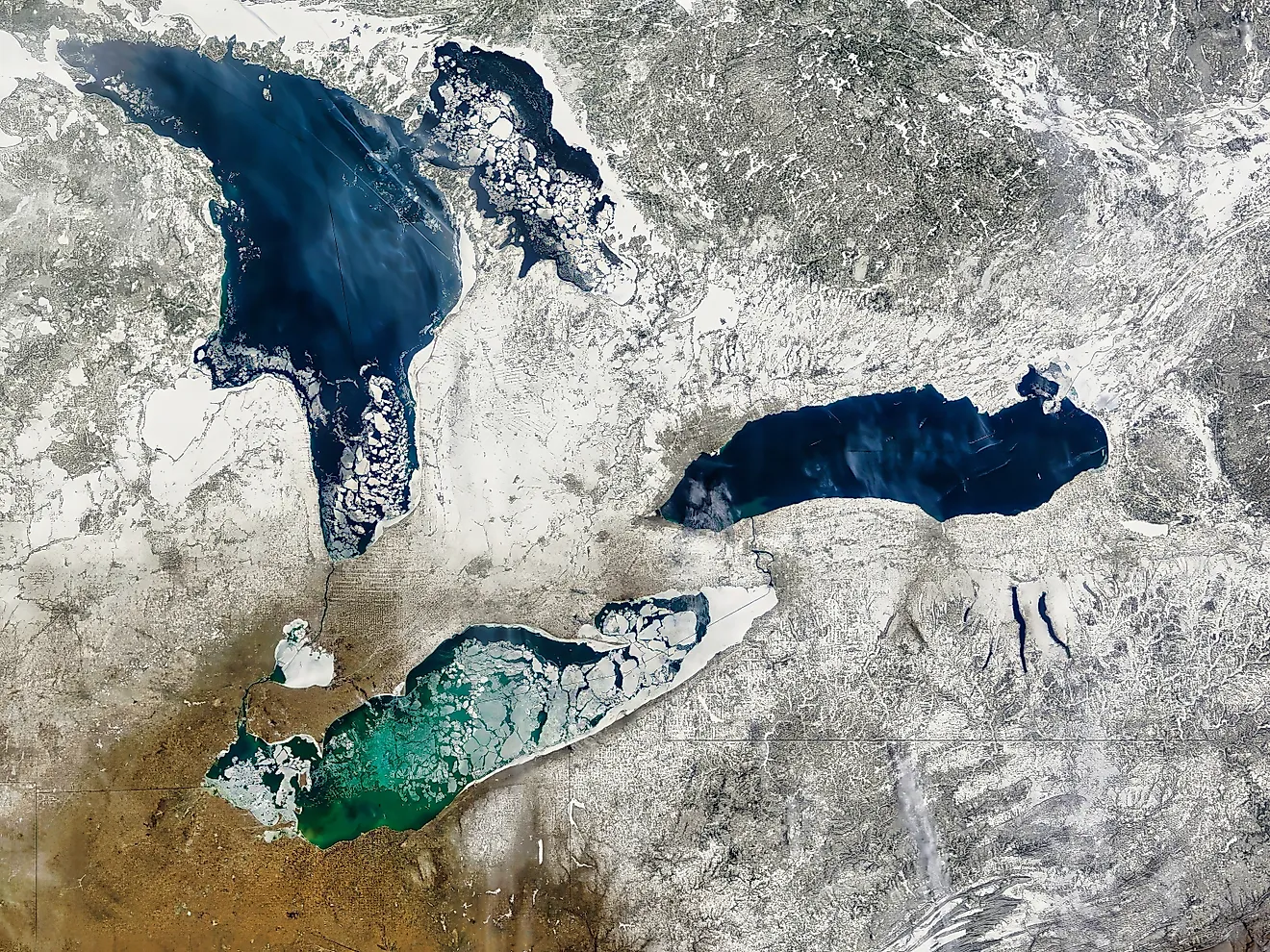
That was only possible because Erie freezes more completely than any other Great Lake, averaging 62 feet deep against Superior's 483.
Gas Is Allowed And Oil Is Not

Ontario draws a hard line between the two hydrocarbons.
Offshore gas wells are permitted in the Canadian Great Lakes. Offshore oil wells are prohibited outright, on the reasoning that a gas leak disperses while an oil spill does not.
Oil is still extracted from beneath the lake, but only through directional wells drilled from onshore surface locations. Ontario has 23 of those slant wells reaching under Lake Erie.
America Banned It In 2002

The asymmetry across the border is the result of one piece of legislation.
In 2002 Congress imposed a moratorium on drilling on or directionally beneath the Great Lakes, later made permanent. The text states that no federal or state permit shall be issued for new oil and gas slant, directional or offshore drilling in or under the lakes.
The governors of Michigan, Wisconsin, Pennsylvania, Minnesota, Indiana, Ohio, Illinois and New York had already signed a joint statement opposing it.
Ohio Tried And Gave Up

The American side came close to having an industry of its own.
The Ohio General Assembly built the policy framework for extracting oil and gas from under Lake Erie, with leasing and production procedures established by the Ohio Department of Natural Resources. Opposition began in 1957 and the program was abandoned by 1968.
No wells were drilled in Ohio state waters afterwards, and several temporary bans followed, the most recent in 2003.
It Supplies Three Quarters Of Ontario's Gas

The output is not marginal for the province producing it.
The producing wells in Lake Erie account for around 75 percent of Ontario's total natural gas production. Most individual wells are expected to produce for 10 to 20 years.
The Ontario Ministry of Natural Resources estimates roughly 156 million barrels of oil and a trillion cubic feet of gas remain on the Canadian side.
The Gas Sits In Silurian Rock

What they are drilling into is the same ancient formation that produces elsewhere in the basin.
The Silurian rocks holding Lake Erie's oil and gas lie between 100 and 1,100 meters below the lakebed. Wells target the Clinton Sand, the same formation that produces from onshore wells on the American side.
Two types of gas come out. Sandstones and shales at the eastern end produce sweet gas, free of hydrogen sulfide.
Sixteen Hundred Kilometers Of Pipeline

Getting the gas ashore requires infrastructure most lake users never see.
The wells connect to onshore production facilities through approximately 1,600 kilometers of small-diameter pipeline, buried near shore and lying directly on the lakebed further out.
In a lake averaging 62 feet deep, that network sits well within reach of anchors, nets and winter ice scouring the bottom.
Dead Wells Get Cemented Shut

Of the two thousand drilled, most are no longer in service.
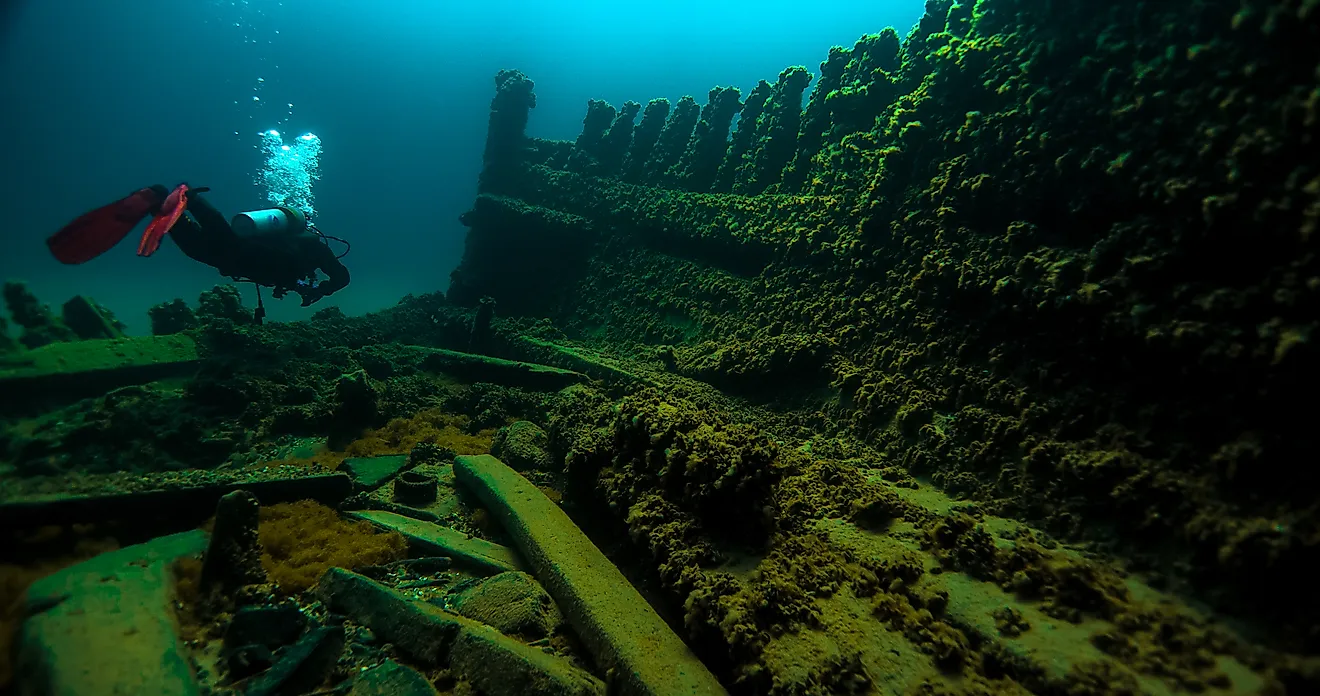
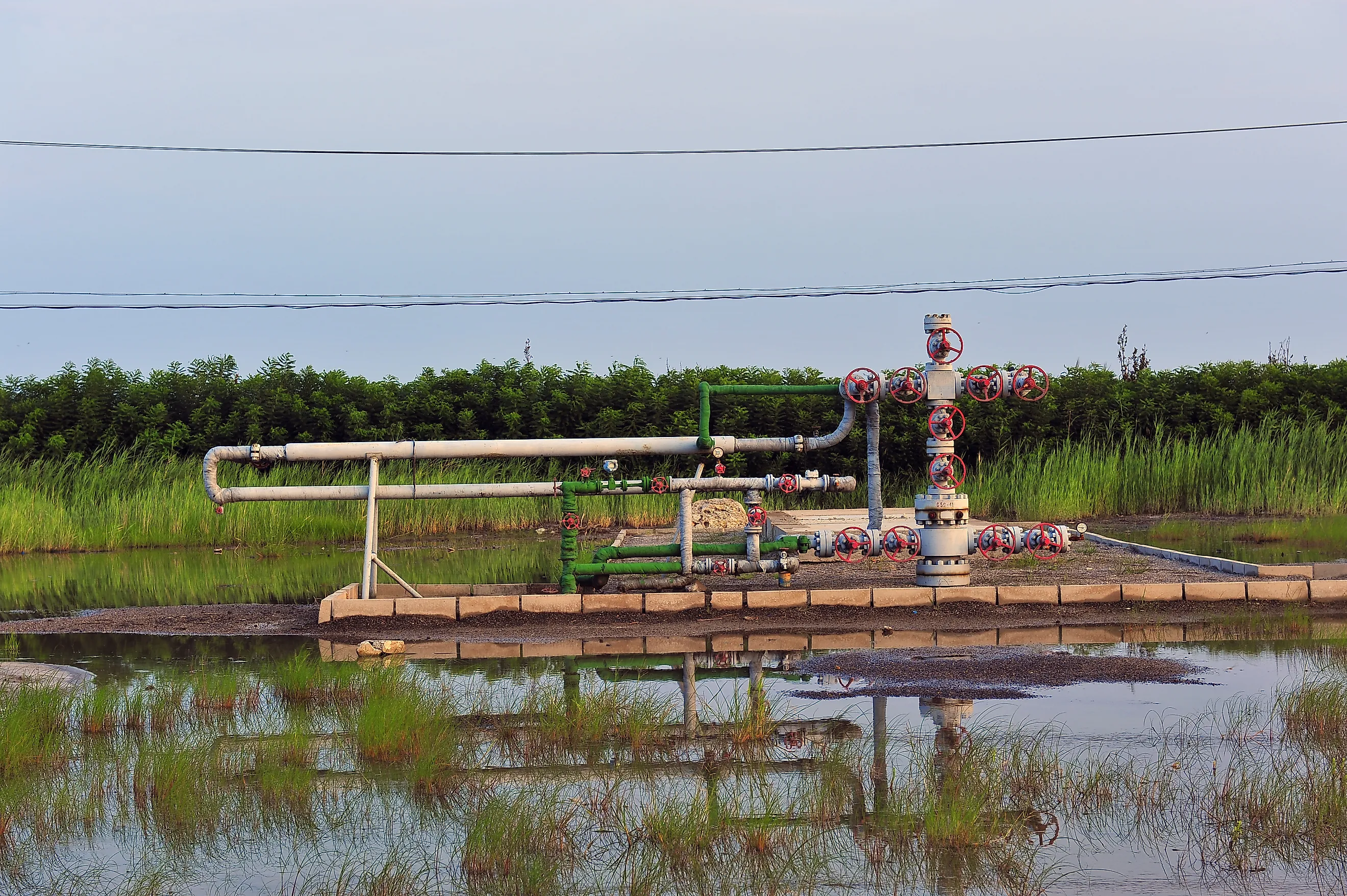
Around 180 wells are shut in or suspended and the remainder have been abandoned. Abandonment means plugging the well with cement, then removing the wellhead and casing below the level of the lake bottom.
Done properly, an abandoned well leaves nothing standing above the lakebed to snag anything.
Drinking Water Is The Objection

The argument against the industry rests on what the lake is used for.
Lake Erie supplies drinking water to Ontario, New York, Pennsylvania, Ohio and Michigan. An environmental review also found that for most drilling programs, cuttings are washed and discharged directly into the lake.
Senator Debbie Stabenow of Michigan has called for Canada to end the practice and for assurances it could handle a major incident.
The Safety Record Is The Defense

The industry's answer is a century of operation without a serious release.
An Ontario Petroleum Institute vice president described the safety record for gas drilling in Lake Erie as perfect for over 100 years, citing stringent protocols. The offshore gas industry accounted for one percent of the total volume of reported spills in one review period.
Gas also behaves differently from oil in water, which is the basis for Ontario permitting one and banning the other.
The Short Answer

Around 500 natural gas wells are producing under the Canadian half of Lake Erie, out of roughly 2,000 drilled since 1913, feeding about 75 percent of Ontario's gas supply through 1,600 kilometers of lakebed pipeline. The earliest were drilled from cable tool rigs pushed out onto winter ice.
There is not one well in American waters. Congress banned drilling on or beneath the Great Lakes in 2002, and Ohio had already abandoned its own program in 1968 after a decade of public opposition.