How Long Navy Submarine Crews Go Without Seeing Daylight
Sailors on U.S. Navy missile submarines can go months without seeing the sun. Once the boat leaves its base in Washington state or Georgia and dives, there is no window to look out of and no port to stop at until the crew comes home. On one patrol, a crew left in the middle of winter and did not get back until it was almost summer.
With no sunrise or sunset to go by, the crew has to keep track of day and night some other way, and the Navy has changed how that works more than once. Some of what all those weeks in the dark do to a sailor's body does not show up until a blood test.
On a Typical Missile Patrol, the Sun Is Gone for About 77 Days

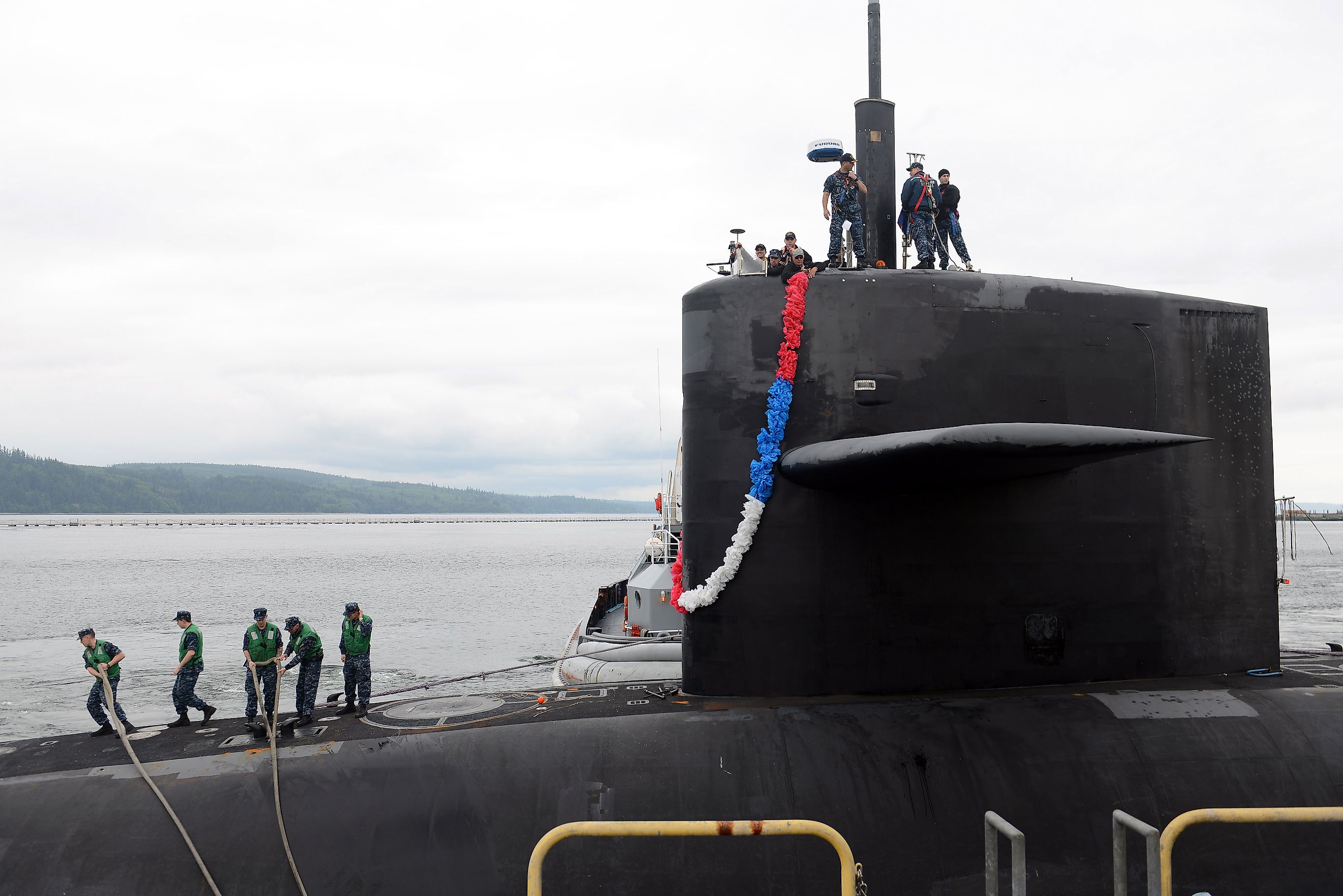
The Navy's ballistic-missile submarines are the Ohio-class boats based at Bangor, Washington, and Kings Bay, Georgia, and each one has two crews, Blue and Gold, that take turns. One crew spends an average of 77 days at sea on patrol while the other trains ashore, and the boat then gets about 35 days in port for maintenance before the crews switch. These submarines make no routine port visits until they return home, because they stay hidden at sea for the whole patrol. During a 2010 media visit to the USS Rhode Island, submariners described the job as three months mostly submerged, and for most of the crew, the sun stays out of sight for nearly all of it.
One former sonar technician on the Ohio-class boats wrote that as his submarine headed north through Puget Sound toward the Pacific Ocean, he heard someone aboard say, "Say goodbye to the sun. You will see it again in 83 days."
The Longest Patrol Kept a Crew at Sea for 140 Days

The USS Pennsylvania's Gold crew began its patrol in January 2014 and came home to Naval Base Kitsap-Bangor on June 14, after 140 days at sea, so its sailors went out in the middle of winter and returned a week before the summer solstice. No Ohio-class ballistic-missile submarine has completed a longer patrol, and it was the longest in Navy patrol records going back to the early 1970s.
The USS Alabama came close in 2021, when its 100th patrol began in May and lasted 132 days, the fourth longest in Ohio-class history, so that crew spent the whole summer at sea.
In 1960, Triton's Crew Spent 83 Days Underwater

Before the missile patrols began, the Navy's first nuclear submarines were finding out how long a crew could live on clock time alone. The USS Seawolf stayed down for 60 days in 1958, nearly double the USS Skate's earlier record of 31 days. Two years later, the USS Triton circled the globe underwater, and its captain, Edward L. Beach, reported the run at 83 days and 10 hours when the boat surfaced off Rehoboth Beach, Delaware, on May 10. Twice before that, Triton came up only far enough to raise its sail above the water, once off Uruguay so a sick sailor could be transferred off the boat, and again off Cádiz, Spain, to take a commemorative plaque aboard.
Fast-Attack Crews Go Shorter Stretches Between Port Visits

Fast-attack crews, who serve on the submarines built to hunt other submarines and surface ships, live on a different calendar. Their deployments last about six months, as the USS Virginia's did before the boat returned to Groton, Connecticut, in August 2026, and the time underwater is broken up by port visits. On a deployment that ended in 2018, Virginia's crew stopped in Faslane, Scotland, and Rota, Spain, so the crew's longest stretches underwater were the legs between those stops.
Every two years, a few attack submarines head under the sea ice of the Arctic Ocean for the Navy's Ice Exercise, where they surface through the ice. The USS Pasadena opened ICEX 2022 by surfacing in the Beaufort Sea on March 5. Two years earlier, after the USS Connecticut came up inside the Arctic Circle during ICEX 2020, its crew got ice liberty, time off out on the frozen surface.
Sailors Tell Night From Day by the Lights

On a submarine underway, the crew tells night from day by which lights are on. In the berthing spaces where sailors sleep, the lights are usually off, which Lt. Cmdr. Joseph DeCicco of the Naval Submarine Medical Research Laboratory in Groton said means "it's always nighttime when you need to go in." In the common areas, he said, "the lights are almost always generally on, so it's always day."
Red lighting, which most people picture inside a submarine, was introduced during World War II to help eyes adjust to the dark. By 1985, it was used mainly as a step before all lights went out for the move to periscope depth, and the officer of the deck wore red goggles through the entire night watch.
In late 2020, on an underway to South America, about half of 42 volunteers aboard the attack submarine USS Vermont wore light-emitting frames at the start of their day and blue-blocking goggles at the end of it, a test of whether timed light could give sailors' bodies the cues that sunrise and sunset normally supply.
Without the Sun, a Submarine Day Used to Last 18 Hours

For decades, submarine sailors also slept on a schedule that did not match their body clocks. They stood watch six hours on and 12 hours off, which created an 18-hour "day" that repeated around the clock, and studies later found that their internal clocks settled better on schedules built around 24 hours.
In May 2013, submarine commanders were authorized to switch to a 24-hour schedule, and the USS Scranton became the first boat to use it on a full deployment. Under the new system, three watch sections stand eight hours each, so each sailor stands one watch a day at the same hours. The rest of the submarine force began moving onto it in the spring of 2015, and sailors on the USS Providence, back from a six-month deployment on the new schedule, reported better sleep and less disorientation about the time of day.
Months Without Sunlight Show Up in a Sailor's Blood

The skin makes vitamin D from sunlight, and on a patrol with no sun, a sailor's level of it falls. During one 68-day patrol, the crew's average vitamin D level dropped by more than a third, and a later study found that a daily 400 IU supplement was not enough to keep levels steady while the boat was underway.
In 2008, the Navy's submarine medical researchers recommended a daily 1,000 IU dose of vitamin D2 for submariners, which they described as well within safe limits. Lamps built to match the spectrum of sunlight had already been tested in the 1980s, and they showed no sign of preventing the decline.
Until Homecoming, Daylight Comes Through a Periscope or a Rare Surfacing
On a missile patrol, the only view of the outside comes through the periscope in the control room, where the officer of the deck stands watch. The former sonar technician who heard the 83-day farewell was offered a look several days into his patrol and saw "sun, water, ocean spray. Broad daylight." On Virginia-class attack submarines, which entered service in 2004, a camera system called a photonics mast takes the periscope's place.
On a patrol that ended in late 2025, the USS Nebraska's Blue crew had a surfaced moment on what the Navy's account called "a beautiful, hot day in Hawaii," and one sailor chose it to be pinned with her dolphins, the insignia earned by qualifying in submarines. Off the coast of Florida, during an underway with visiting midshipmen aboard, the USS Maryland's captain authorized a swim call, a chance to jump into the sea from the boat, and a steel beach picnic, a cookout on deck, and the crew spent a couple of hours of the afternoon in the sun.
Most of the crew sees full daylight again only at the pier. When the USS Louisiana's Blue crew came home to Bangor on May 6, 2012, after a 56-day patrol, families met them on a sunny day. The body responds to that light quickly. On one 76-day deployment where sailors taking 400 IU of vitamin D still lost about a fifth of their level, six days of liberty ashore made up for the 49 days underwater before them. Back on land, the 24-hour day the crew kept below lines up with sunrise and sunset again. The submarine then spends about 35 days in port for maintenance, and the other crew takes it back out to start its own count of days without the sun.