Why Great Lakes Storms Are More Dangerous Than Ocean Storms
On November 10, 1975, a 729-foot ore carrier built to ocean-going standards sank on a lake. The Edmund Fitzgerald went down on Lake Superior with all 29 hands and never sent a distress call, in a storm throwing waves that approached 35 feet. Sailors who have worked both waters have said it for two centuries: the ocean is bigger, but the lakes are meaner. The reasons are not folklore. They are physics, and they stack up fast: steeper waves arriving twice as often, fresh water that floats a ship lower and ices it faster, shorelines that leave nowhere to run, and autumn storms that feed on the lakes themselves.
Twice The Waves In Half The Time

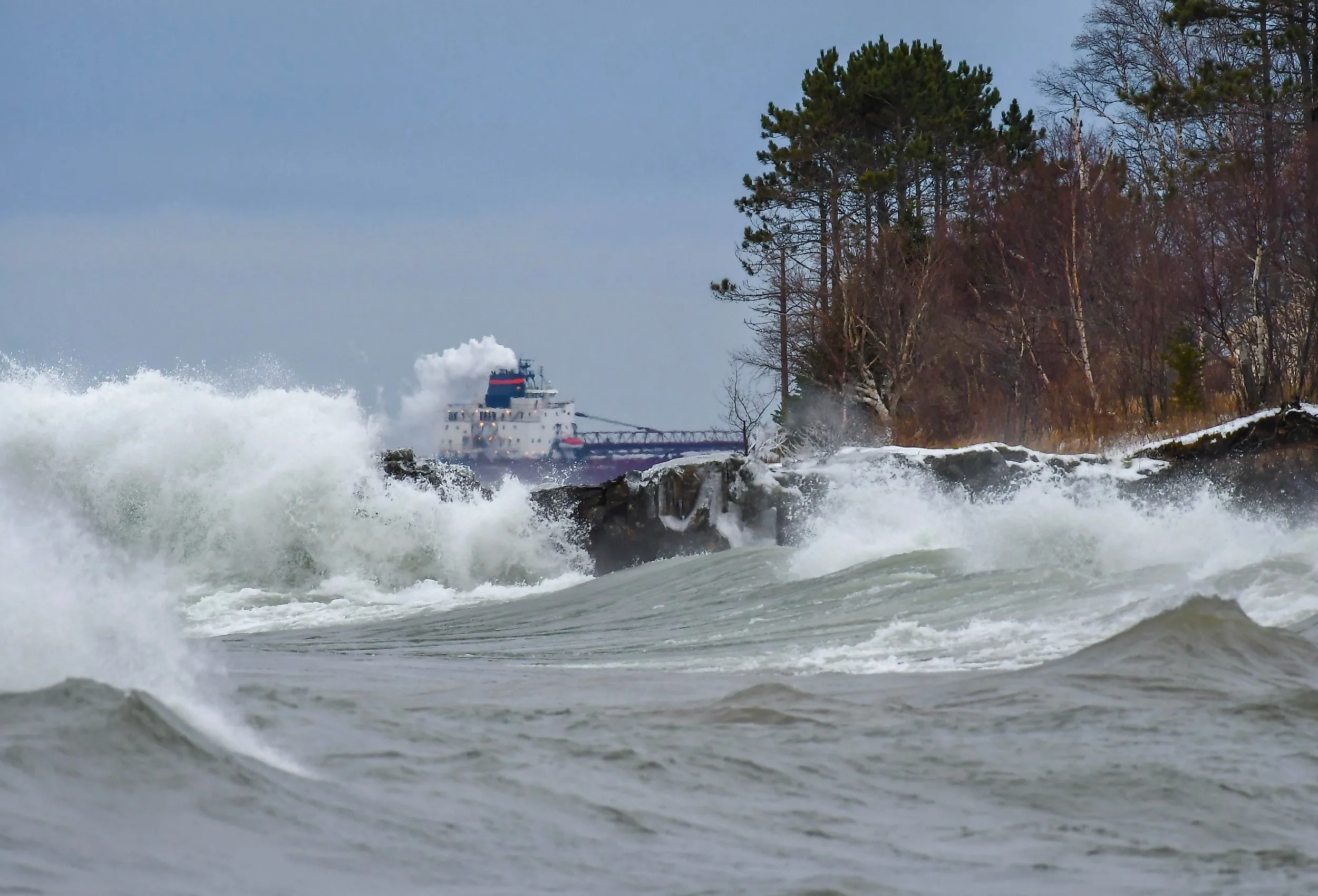
Ocean storm waves are giants with manners. Built over thousands of miles of open water, they organize into long swells with periods of 13 to 20 seconds between crests, and a ship rides them like rolling hills. The Great Lakes cannot build that wavelength; even Superior's 350 miles is a sprint by ocean standards. The result is a shorter, nastier sea: storm waves with periods of just 6 to 9 seconds, arriving roughly twice as often as ocean swells of similar height.
Mariners call them square waves for their steep faces and cliff-like backs. A 20-foot lake wave hits harder than a 20-foot ocean swell because the hull has no time to recover before the next blow lands: the bow buries, the next crest strikes before the ship rises, and the pounding becomes a rhythm. That relentless cadence is a key reason lake freighters have broken in half in storms their paperwork said they could survive.
Fresh Water Is The Worse Friend

The water itself takes the lakes' side. Fresh water is about 2.5% less dense than seawater, so the same ship floats slightly lower and carries less reserve buoyancy when green water starts coming aboard. The margin sounds small; in a storm that is already burying the deck, small margins are the whole game.
The deadlier freshwater trick arrives with the cold. Sea spray does not freeze until the air falls several degrees below the freshwater mark, but lake spray freezes at 32°F, which means a November gale can sheathe a vessel's decks, rails, and superstructure in tons of ice while an identical ocean storm leaves them merely wet. Topside ice raises a ship's center of gravity with every passing hour, and stability quietly drains away in the dark.
There Is Nowhere To Run

A captain caught by a storm in mid-ocean has a priceless asset: room. With a thousand miles of sea in every direction, a ship can turn, slow, and ride out a system for days without touching anything harder than water. On the lakes, that option does not exist. The far shore is always hours away, not days, and in a shifting gale every one of those shores can become a lee shore, the rock-and-breakwall trap that drowned sailing crews by the hundreds in the 1800s and still closes harbors today.
The geometry squeezes modern freighters just as it squeezed schooners. A thousand-footer making a run for shelter must thread island channels, river mouths, and harbor piers while the storm does its worst, and the piers themselves become the hazard: more than one Great Lakes ship has been lost within sight of the harbor lights it was trying to reach.
Shallow Lakes Build Steep Walls

Depth is a shock absorber, and the lakes barely have any. Lake Erie averages just 62 feet deep, which makes it the chop machine of the system: storm waves feel the bottom almost immediately, shoaling into short, steep, breaking walls that have earned Erie a reputation out of all proportion to its size. Even the deeper lakes shallow abruptly near their shores and shoals, so the final miles of any storm passage are fought in the worst water of the trip.
Shallow basins also let the wind move the entire lake. In a strong southwest gale, water piles up at Erie's eastern end in a seiche, a basin-wide slosh that has tilted the lake's surface by more than 15 feet between Toledo and Buffalo, flooding one shoreline while exposing lakebed on the other, then surging back for hours. The ocean's tides are predictable; a seiche arrives on the storm's schedule, not the moon's.
November Builds Its Own Monsters

The lakes do not just host storms; they feed them. Each autumn, the first Arctic air masses pour south across water still holding summer's warmth, and the temperature clash pumps heat and moisture into passing low-pressure systems, deepening them explosively over the water. Sailors named the result the witch of November, and the record keeps her reputation: the Great Storm of 1913, the White Hurricane, raked the lakes for days with hurricane-force gusts near 90 mph, killed more than 250 sailors, and sank a dozen ships, most of them on Lake Huron in a single night.
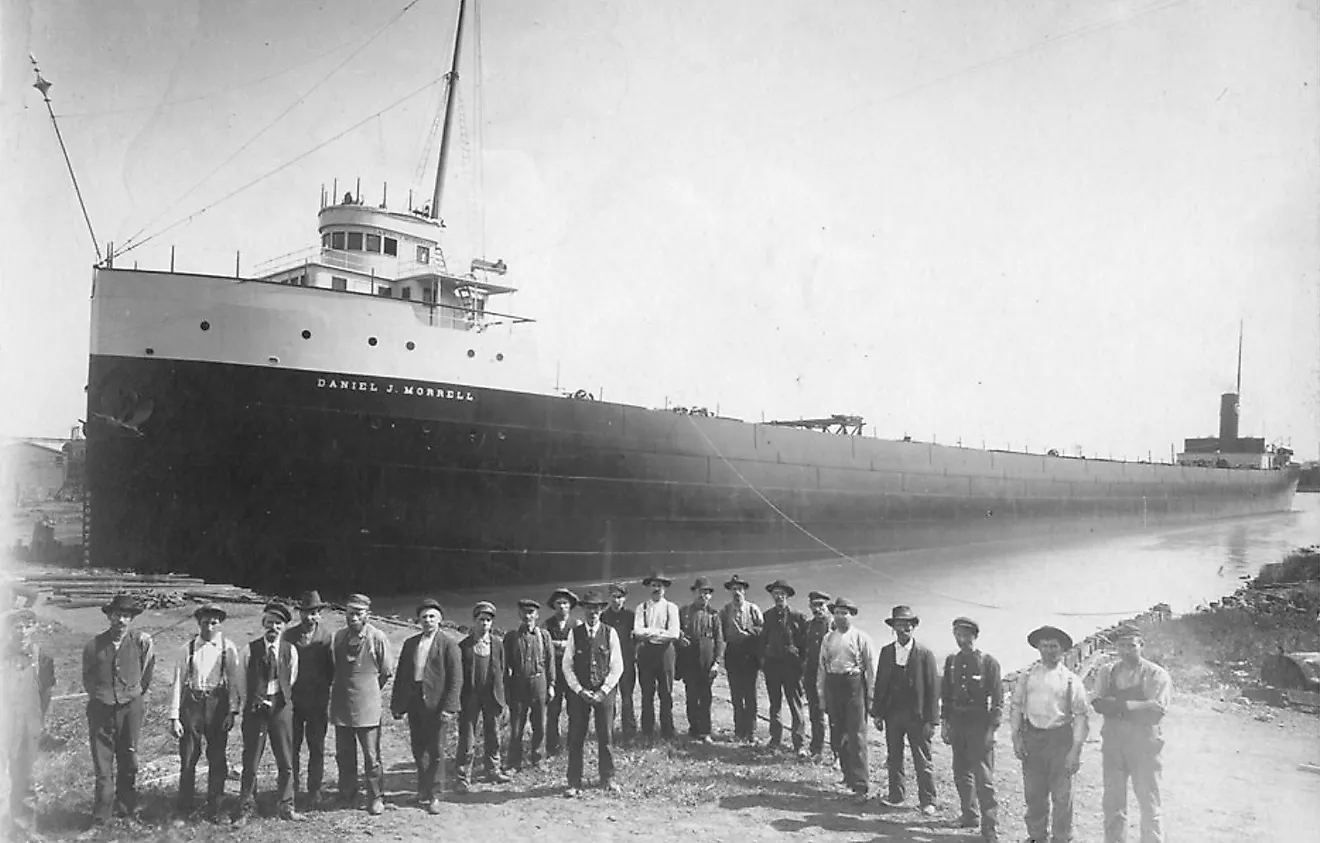
November 1905 showed how personal the lakes make it. The Mataafa storm wrecked or damaged some 29 vessels on Superior, and the Mataafa herself broke apart against Duluth's harbor entrance while thousands watched helplessly from shore as nine crewmen froze in the stern. The outrage helped get Split Rock Lighthouse built. The season has never been repealed: the Fitzgerald sank on November 10, the Carl D. Bradley on November 18, the Daniel J. Morrell on November 29.
The Scoreboard Is The Lakebed

The bottom of the Great Lakes holds an estimated 6,000 or more shipwrecks, with some tallies running far higher, and as many as 30,000 lives lost with them, a toll concentrated in five freshwater basins smaller than many single seas. The cold, oxygen-poor depths preserve the evidence almost perfectly, which is why Superior never gives up her dead and why divers still find schooners standing upright with masts in place.
The modern era has not retired the danger, only raised the stakes per ship. The Bradley took 33 men on Lake Michigan in 1958 with two survivors; the Morrell broke in two on Huron in 1966 and left one man, Dennis Hale, alive on a raft; the Fitzgerald still lies where she fell in 1975. Superior's sailors still speak of the Three Sisters, the sequence of three outsized waves said to stalk the lake's worst storms, and whatever the physics behind the legend, the lakebed gives it a respectful audience.
The Ocean Warns You
None of this makes the ocean safe; it makes the comparison honest. An ocean storm is usually larger, longer-lived, and visible days in advance, but it grants a ship the mercy of space, rhythm, and salt. A Great Lakes storm revokes all three: waves twice as frequent and twice as steep, fresh water that carries less and freezes sooner, a coastline always within reach and never on your side, and a November engine that turns ordinary lows into killers overnight. The lakes are not oceans in miniature. They are a different opponent, and the 6,000 ships on their bottom were beaten by water their captains could see across.