How Long It Would Take Niagara Falls To Drain Lake Erie
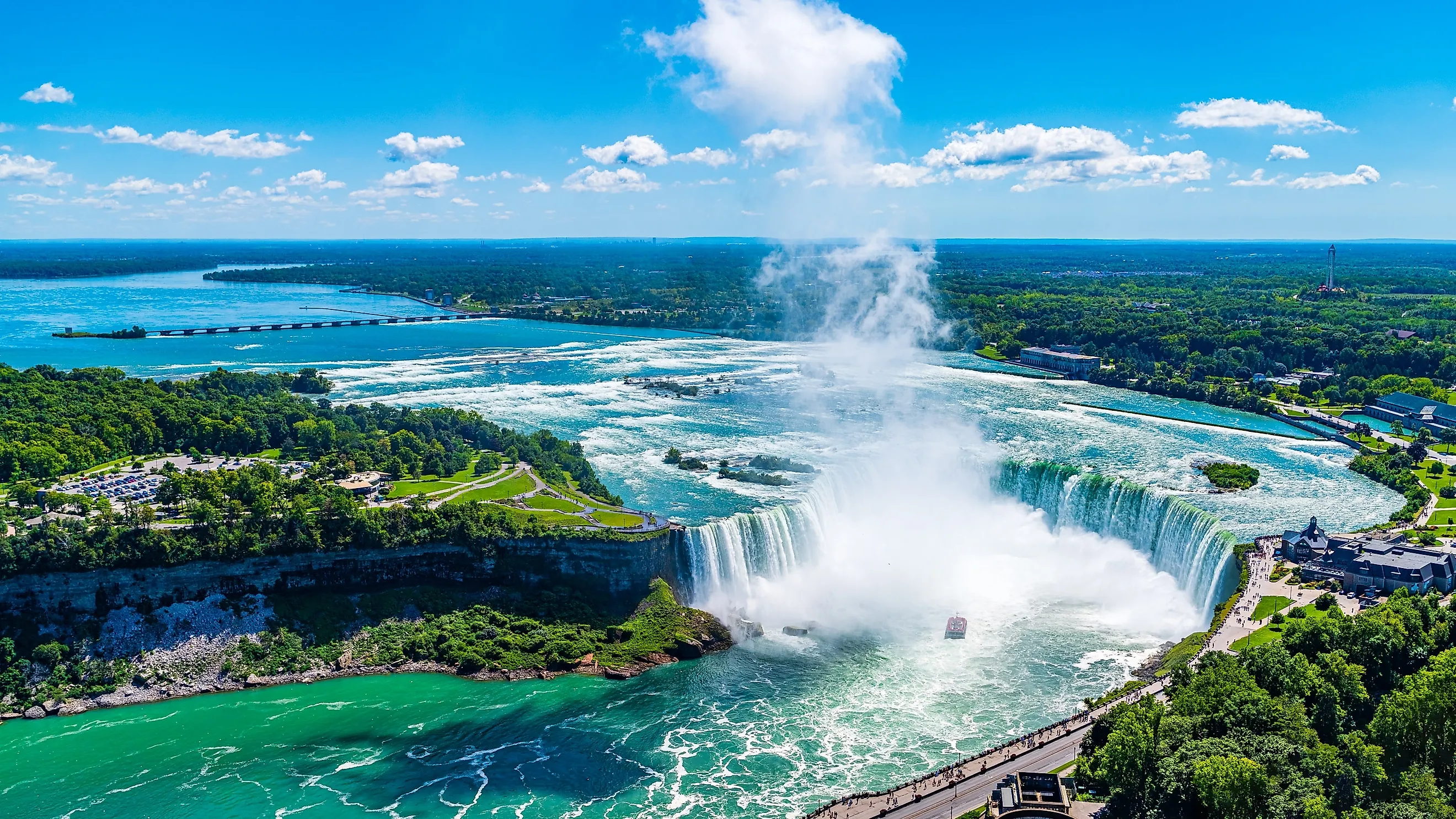
Standing at the brink of Niagara Falls, watching an ocean's worth of water thunder over the edge every second, it is natural to wonder: how long would it take all that to simply empty out Lake Erie? After all, every drop going over the falls comes straight from Erie, the lake that feeds the river. The answer is a fun little exercise in enormous numbers, and it is shorter than you might guess. There is just one gigantic catch that completely ruins the plan. Here is how long it would take Niagara Falls to drain Lake Erie.
The Short Answer: About Six Years

If you could somehow pour all of Lake Erie over Niagara Falls and nothing refilled it, the lake would run dry in roughly six years. That is at the falls' average flow rate, with the water pouring out nonstop, day and night, for more than 2,000 straight days. Six years sounds almost quick for an entire Great Lake, and in a way it is, but you would still be standing there for a very long time. And that number comes with some seriously large fine print.
How Much Water Is in Lake Erie?

To start, you need to know how much water you are trying to get rid of. Lake Erie holds about 480 cubic kilometers of water, which works out to roughly 116 cubic miles, or around 127 trillion gallons. That is a genuinely staggering amount, enough to keep lakeside cities like Cleveland supplied essentially forever. The lucky break, for our purposes, is that by Great Lakes standards this is actually the small end of the scale.
How Fast Does Niagara Flow?

Niagara Falls moves an absurd amount of water, but it is still a finite amount. On average, about 2,400 cubic meters go over the falls every second, which is roughly 85,000 cubic feet per second, or something like 3,000 tons of water a second. All of it is Lake Erie water on its way down the Niagara River toward Lake Ontario. It is one of the highest flow rates of any waterfall on Earth, and yet, measured against 480 cubic kilometers, even that firehose takes years to make a dent.
Doing the Math

The calculation itself is refreshingly simple. Take Lake Erie's 480 cubic kilometers of water, divide by Niagara's average flow of 2,400 cubic meters per second, and you get about 200 million seconds. Convert that into something more human, and it comes out to roughly six and a third years of continuous draining. Speed the falls up to their record peak flow and you could do it in under three years; slow them to their trickling winter minimum and it would stretch past a full decade.
Erie Drains Faster Than You'd Think

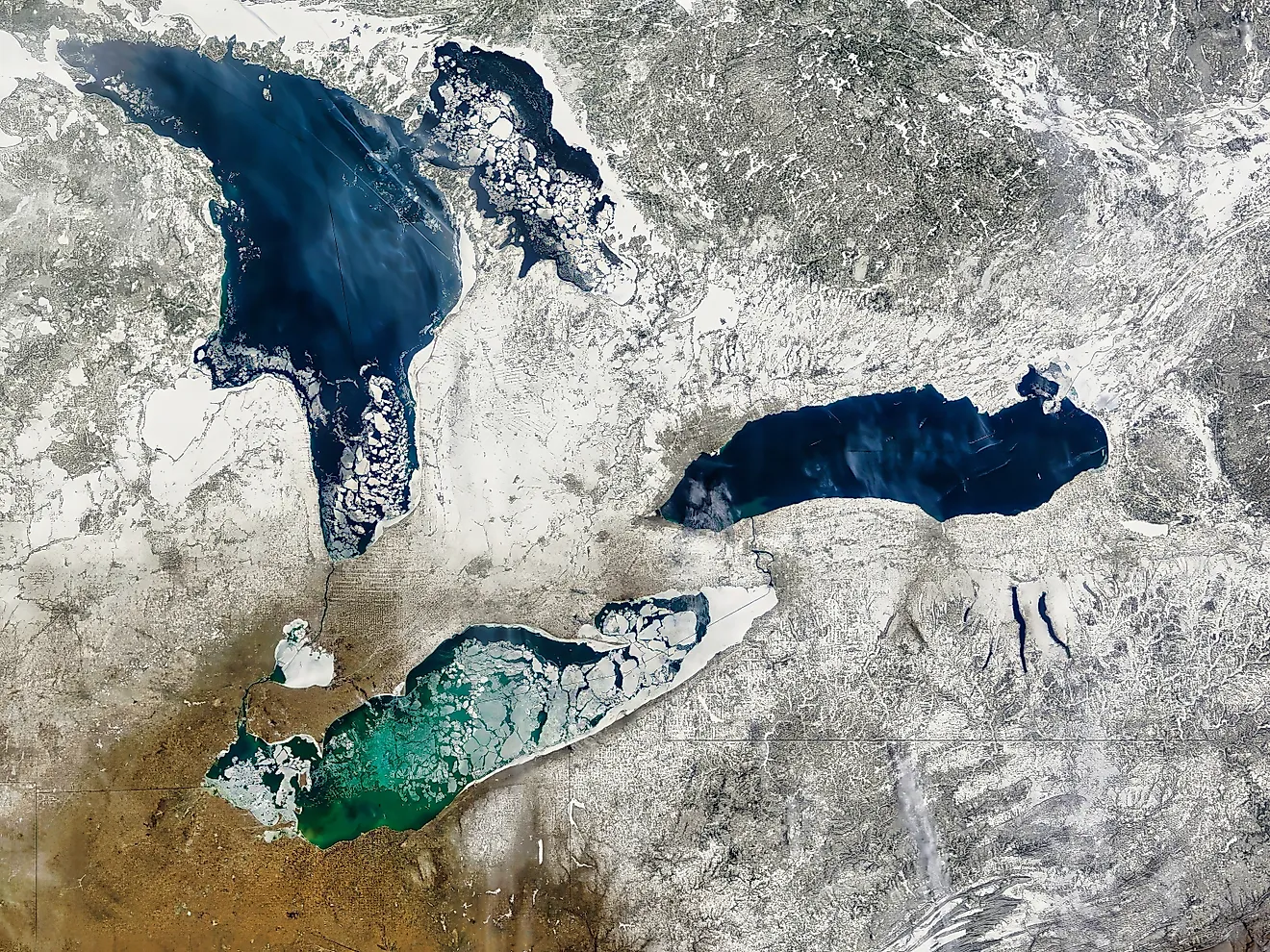
Six years is surprisingly fast for a Great Lake, and the reason is that Erie is the lightweight of the family. It is the shallowest of the Great Lakes and the smallest by volume, holding only a tiny fraction of the water in a giant like Superior despite having plenty of surface area. All that surface spread over so little depth means there simply is not that much water to move. Erie is, in essence, a wide, shallow puddle compared to its deeper siblings.
The 2.6-Year Catch

Here is a neat wrinkle. Scientists already have a name for roughly this idea: Lake Erie's retention time, the stretch it takes for the lake's water to completely cycle through, is about 2.6 years, the shortest of any Great Lake. That figure counts every bit of water leaving Erie, including the enormous volume quietly diverted around the falls to hydropower plants. So depending on whether you count only the water tumbling over the falls or all the water leaving the lake, the honest answer lands somewhere between about three and six years.
You'd Have to Turn Off the Rivers

And now the catch that wrecks the entire thought experiment. Lake Erie is not a bathtub you can simply unplug, because water is constantly pouring into it even as it drains out. The Detroit River alone, carrying runoff from the three upper Great Lakes, supplies something like 80 to 90 percent of Erie's water, and it never shuts off. To actually drain the lake, you would first have to turn off the Detroit River and every other inflow, which is a bit like trying to empty a sink with the tap running at full blast.
And Stop the Rain

Even with every river shut off, nature would keep sabotaging you. Rain and snow fall directly onto Erie's enormous surface all year round, topping it back up a little with every storm that rolls through. You would have to somehow switch off the weather too, halting all precipitation across the entire region for the full six years. At that point you are no longer draining a lake; you are rewriting the climate of the eastern United States. The thought experiment, in other words, is gloriously impossible.
Try This on Lake Superior Instead

If six years sounds slow, be grateful we picked on Erie. Running the same experiment on Lake Superior, the deepest and most voluminous Great Lake, would be a true nightmare of patience. Superior holds so much water that its natural retention time is around 191 years, so even a full-blast, Niagara-style drain would take something closer to two centuries. Erie empties in a handful of years precisely because it is the runt of the group; Superior would make you wait for generations.
So Could You Watch It Drain?

In the end, the fun answer is about six years, and the real answer is never, because Erie refills just as fast as Niagara can empty it. The falls and the lake are locked in a permanent standoff, with water flooding in from the west just as quickly as it roars out over the edge in the east. That balance is exactly why Niagara Falls has kept thundering for thousands of years without Lake Erie ever running low. So you can stop holding your breath; the lake is not going anywhere.