How Lake Huron Has More Shoreline Than Lake Superior Despite Being Smaller
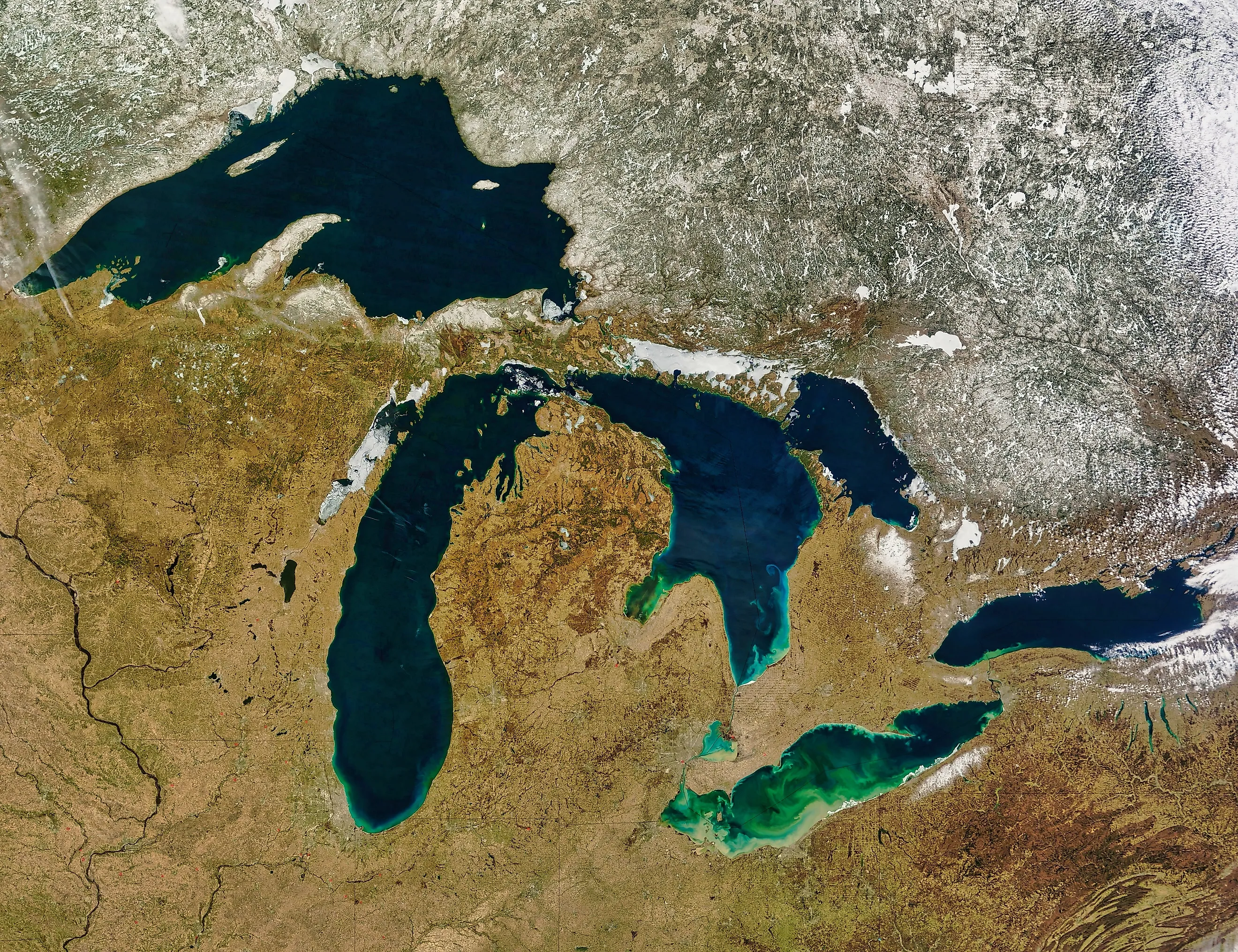
In the contest for biggest Great Lake, Lake Superior wins in a landslide; it is larger, deeper, and holds more water than the other four combined. So here is a fact that feels like a glitch in the system: smaller Lake Huron somehow has a far longer shoreline than mighty Superior. We are talking 3,827 miles for Huron versus a mere 2,726 for Superior, a result that seems to break basic geometry. The secret, it turns out, is one lake's spectacular refusal to keep a tidy coastline. Here is how Lake Huron pulls off this watery upset.
Superior Is Bigger, Hands Down

Let's give Lake Superior its due, because by almost every measure it is the undisputed heavyweight. It covers about 31,700 square miles, making it the largest freshwater lake in the world by surface area, and it holds more water than all the other Great Lakes put together. Huron, by comparison, covers around 23,000 square miles, a respectable second place but clearly the smaller lake. On paper, Superior should win any size-based contest without breaking a sweat. And then someone brings out the tape measure.
But Huron Wins the Shoreline

Here is where things get strange. When you measure the total shoreline of each lake, Lake Huron stretches an astonishing 3,827 miles, while the far larger Superior manages only 2,726. That is a gap of more than 1,000 miles, all in favor of the smaller lake. It is a bit like discovering that a crumpled-up napkin has a longer edge than a flat bedsheet. So how does the little guy end up with over a thousand extra miles of coast?
The Secret Is the Islands
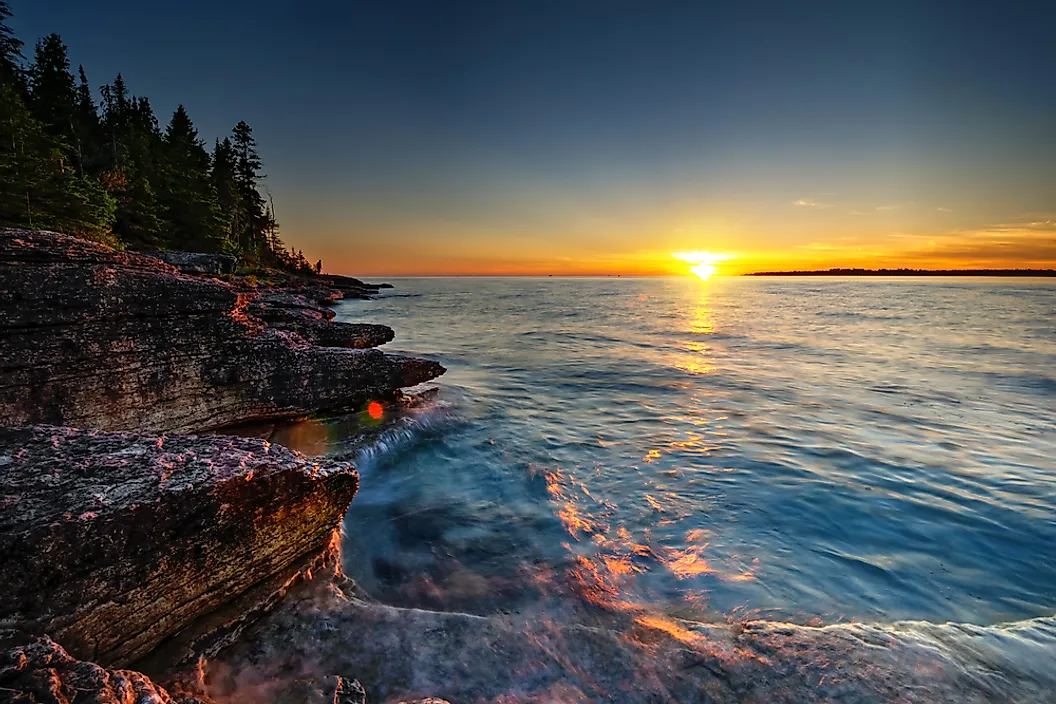
The answer is islands, and Huron has a frankly ridiculous number of them. Lake Huron is studded with more than 30,000 islands, by far the most of any Great Lake, and every single one adds its own little rim of coastline to the grand total. Lake Superior, for all its vastness, has only around 500 islands, which barely moves the needle by comparison. Since the official shoreline figures count all those island edges, Huron's 30,000-island hoard hands it a colossal, almost unfair advantage.
Georgian Bay, the Crinkly Overachiever

Most of that island chaos is packed into Georgian Bay, a northeastern arm of Lake Huron so enormous it is sometimes called the sixth Great Lake. Its shoreline is a maze of rocky coves, inlets, and the famous Thirty Thousand Islands, a coast so jagged and complicated it almost seems designed to rack up mileage. The nearby North Channel, hidden behind Manitoulin Island, piles on even more convoluted coastline. If Superior's shore is a smooth, confident curve, Georgian Bay's is a frantic scribble.
Manitoulin, an Island With Its Own Lakes

The crown jewel of Huron's island collection is Manitoulin Island, the largest freshwater-lake island on the entire planet. At over 1,000 square miles, it is bigger than some small countries, and here is the wonderfully absurd part: Manitoulin has its own lakes, and some of those lakes have their own islands. That means Lake Huron contains an island that contains a lake that contains an island, a nesting-doll of geography that would make any cartographer dizzy. Every one of those nested shores, naturally, adds still more coastline to the pile.
A Coastline That Refuses to Behave

What is really going on is a famous quirk of geography sometimes called the coastline paradox. A smooth, round edge stays short, but a wrinkly, in-and-out edge can grow almost without limit as you trace every little bump and notch. Lake Superior's shore is relatively clean and simple, so its mileage stays modest. Huron's shore, by contrast, is a tangle of bays, peninsulas, channels, and tens of thousands of islands, with each wrinkle quietly padding the total. The lake basically cheats by refusing to ever travel in a straight line.
Superior's Simpler Shores

Lake Superior is not exactly featureless, of course; it has dramatic cliffs like the Pictured Rocks and handsome island clusters here and there. But its coastline is, on the whole, far more straightforward, with big open arcs of cliff and beach rather than an endless scatter of islets. The lake is so large and so deep that it simply did not end up with the same fractured, island-choked edges as its neighbor. It is the bigger lake with the cleaner outline, and in the shoreline game, clean loses.
Huron's 30,000 to Superior's 500

The island gap between the two lakes really is staggering. Superior's prettiest archipelago, the Apostle Islands, numbers around two dozen members, and the lake's grand total sits near 500. Huron's total is somewhere north of 30,000, meaning it holds the overwhelming majority of all the islands in the Great Lakes. Each of those tens of thousands of islands is its own tiny coastline, and added together they bury Superior's mileage without much of a contest.
The Wrecks and Coves Add Up

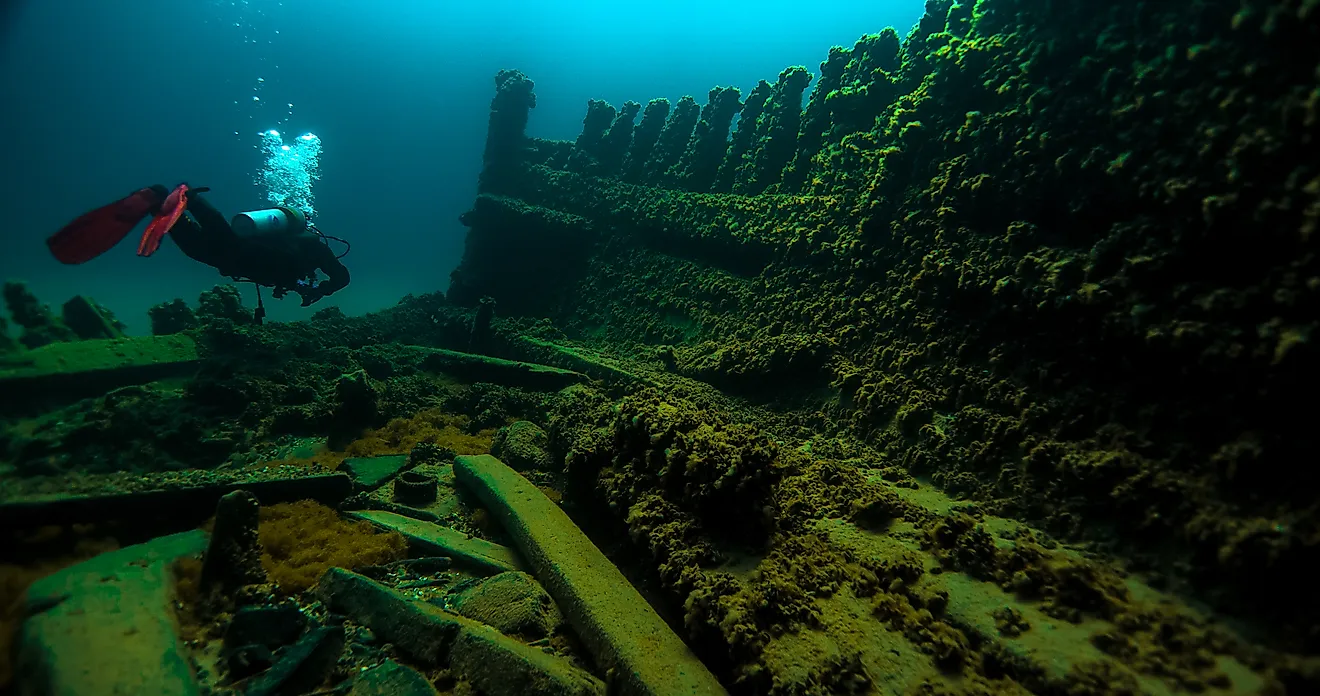
All those nooks and inlets do more than pad a statistic; they make Huron's coast one of the most intricate and interesting around. The clear, shallow waters off the Bruce Peninsula hide shipwrecks you can see straight down to, while the tangle of islands creates countless sheltered coves and channels for boaters. In other words, the same wrinkly geography that wins Huron the shoreline title also makes its coast a genuinely fun place to explore. Superior may be grander, but Huron is more of a labyrinth.
So Who Really Wins?

In the end, it depends entirely on which trophy you care about. Lake Superior remains the champion of size, depth, and sheer volume, and nothing about Huron's shoreline record changes that. But when it comes to raw coastline, the smaller lake wins going away, purely because it crammed in 30,000 islands and refused to keep its edges tidy. It is a perfect reminder that in geography, how wrinkly you are can matter just as much as how big. Lake Huron, the undisputed king of the crinkle, will happily take the win.